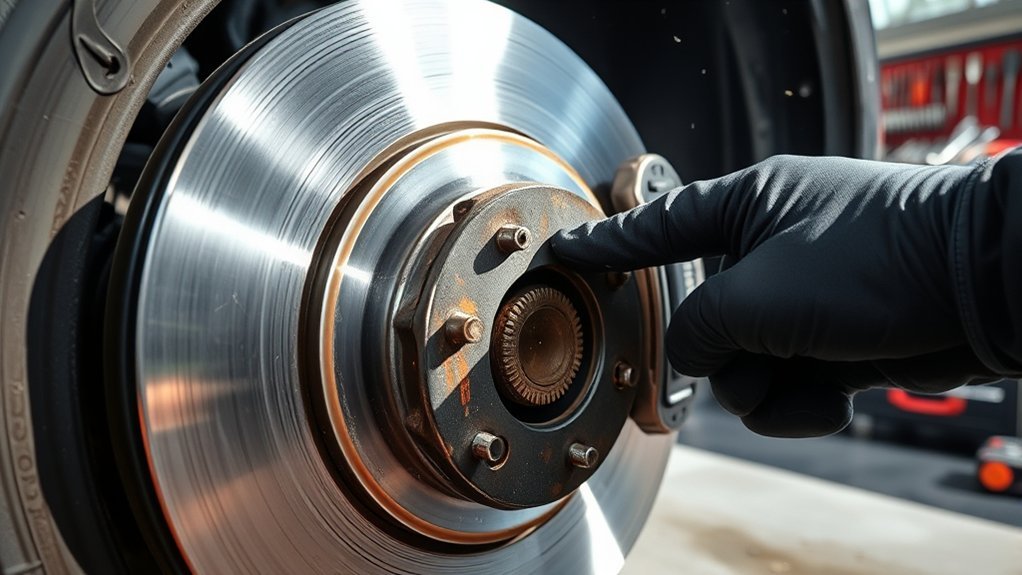
If your Camry’s making a grinding noise when braking, it could be due to worn brake pads, debris caught in the system, or surface rust on the rotors. Misalignment or damaged components can also contribute to the issue. To diagnose, visually inspect the brakes and listen for noise patterns. Regular maintenance, including pad and rotor replacements, can prevent these problems. For thorough solutions and preventive tips, keep exploring the specifics about your braking system.
What Grinding Noises Mean for Your Camry’s Brakes
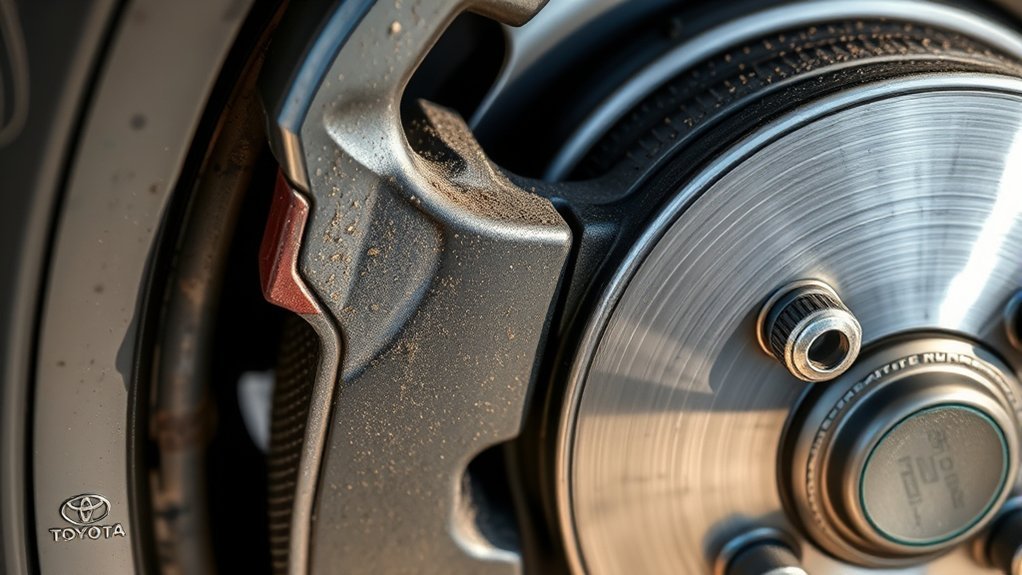
Grinding noises when braking in your Camry can signal serious issues with your brake system. These sounds often indicate brake pad wear, leading to metal-on-metal contact with the rotors. If you ignore this, you risk causing further damage, increasing repair costs. Additionally, debris or small stones caught in the brake components can produce grinding noises, highlighting the importance of regular inspections to clear contaminants.
A bent or misaligned metal shield behind the rotor can also contribute to unwanted noise frequency, making it essential to check its condition during maintenance. If your Camry’s been inactive for a while, surface rust on the rotors might create temporary grinding sounds, which usually clear up after driving. Finally, verify proper lubrication of caliper slides; without it, uneven brake pad contact can lead to grinding and compromised braking performance. Address these factors to maintain your brake system’s integrity and guarantee safe driving.
Common Causes of Camry Grinding Noise
When you hear grinding noises while braking in your Camry, it often points to specific issues that require immediate attention. One common cause is brake pad wear; if the pads are worn down, they can make metal-on-metal contact with the rotors, potentially causing damage. Additionally, debris or foreign objects trapped between the brake pads and rotors can lead to intermittent grinding sounds, underscoring the need for regular brake inspections. Surface rust on rotors, especially after your car’s been inactive, may also create a grinding noise during initial braking, which typically resolves after a short drive. Misalignment or improper installation of brake components, such as calipers or rotors, can result in unusual noises as well. To prevent these issues, regular maintenance, including simultaneous replacement of brake pads and rotors, is essential for maintaining peak performance and avoiding further grinding noises.
How Can You Diagnose Camry Grinding Noise Issues?
To diagnose grinding noise issues in your Camry, start with a thorough visual inspection of the brake components. Listen for specific noise indicators that can signal worn pads or debris interference. If you notice irregular wear or persistent noise, further evaluation may be needed to pinpoint the problem.
Visual Inspection Techniques
Start by conducting a thorough visual inspection of your Camry’s brake components to diagnose any grinding noise issues. Focus on brake component inspection, checking for signs of wear, damage, or misalignment. Look closely at the rotor surface; surface rust can develop if the vehicle’s parked for a while, causing temporary grinding sounds. Make sure calipers are properly mounted and secured, as any movement can lead to abnormal noises. Inspect the brake pads for uneven wear or glazing, which may indicate improper seating. Finally, compare the left and right sides of the braking system. Discrepancies in movement or sound can help pinpoint the source of the grinding, making your evaluation more effective.
Common Noise Indicators
Diagnosing grinding noise issues in your Camry requires attention to several common indicators. First, listen for noise patterns during braking; consistent grinding often signals brake wear, suggesting worn pads may be making metal-on-metal contact with the rotors. Check for surface rust on rotors, especially after your vehicle’s been parked for a while; this can cause temporary grinding that usually fades after some driving. Additionally, inspect for debris lodged between the brake pads and rotors, as this can also create grinding sounds. Finally, uneven wear or misaligned calipers can lead to abnormal noises. Regular inspections of brake components are essential to catch these issues early, preventing more serious damage down the line.
Preventive Measures to Avoid Brake Problems in Your Camry
Maintaining your Camry’s brakes is essential for guaranteeing safety and performance. Regularly inspect brake components during tire rotations or oil changes to spot wear indicators early. This proactive approach helps prevent grinding noises. When replacing brake pads, do so alongside rotors to guarantee peak performance and reduce the risk of uneven wear or noise issues.
Lubricating caliper slides and other contact points promotes smooth operation, enhancing noise reduction during braking. Pay attention to your driving habits—avoid hard stops and refrain from resting your foot on the brake pedal, as this can extend the lifespan of your brake components.
Be alert for any changes in braking noise or feel; early detection can save you from significant issues and costly repairs. Regularly checking brake fluid levels also contributes to maintaining caliper condition and overall brake efficacy.
When to Get Help for Brake Noises in Your Camry?
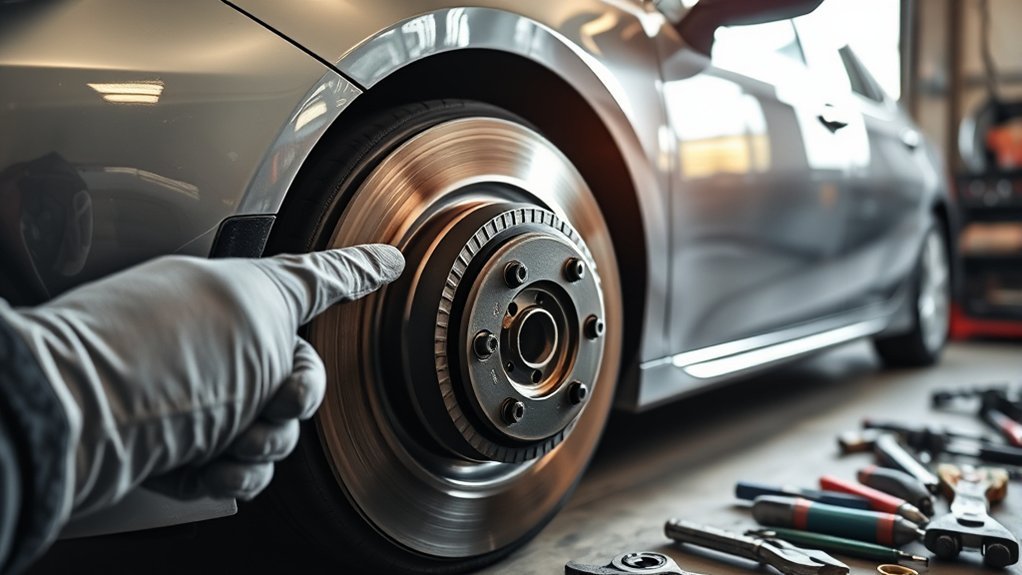
Hearing grinding noises when braking in your Camry isn’t something you should ignore, as it signals potential brake issues that need immediate attention. If you notice any of the following symptoms, it’s time to seek professional help:
- Persistent grinding sounds, indicating possible metal-on-metal contact.
- A significant increase in stopping distance or a loose brake pedal, compromising your safety.
- Your vehicle pulling to one side during braking or excessive brake dust, suggesting malfunctioning components.
Ignoring these sounds could lead to costly repairs and further damage. It’s vital to check your brake fluid levels regularly, as low fluid can affect pedal feel and overall braking performance. Timely inspections not only guarantee your safety but also help maintain peak performance and extend the lifespan of your braking system. Don’t wait—address these issues promptly.
Essential Maintenance Tips for Your Camry’s Brake System
To keep your Camry’s brake system in top shape, regularly inspect components like pads and rotors during oil changes. Always choose quality parts that meet factory specifications for better performance and longevity. Proper installation techniques are essential; make certain everything is aligned to prevent uneven wear and potential grinding noises.
Regular Brake Inspections
While regular brake inspections might seem like an inconvenience, they’re essential for ensuring your Camry operates safely and efficiently. To maintain peak brake lifespan, aim for inspections every 6,000 to 10,000 miles. During these checks, focus on:
- Uneven wear on brake pads and rotors, indicating alignment issues.
- Caliper slides for proper lubrication to prevent noise and uneven contact.
- Brake fluid levels and quality to avoid potential malfunctions.
Quality Parts Selection
Choosing high-quality parts for your Camry’s brake system is essential, as it directly impacts performance and safety. Opting for OEM (Original Equipment Manufacturer) brake components guarantees part compatibility, maintaining the integrity of your braking system. Premium brake pads made from advanced friction materials enhance stopping power while reducing noise, greatly improving your driving experience. Regularly replacing both brake pads and rotors together prevents uneven wear and extends the lifespan of your braking components, saving you money in the long run. Investing in premium rotors with features like venting and corrosion resistance improves heat dissipation, reducing the risk of warping during high-performance driving. Routine checks on calipers and hardware with quality parts help avoid grinding noises and guarantee reliable braking performance.
Proper Installation Techniques
Proper installation techniques are just as important as selecting quality parts for your Camry’s brake system. To guarantee peak performance and reduce grinding noises, pay attention to the following:
- Installation Orientation: Always install brake pads and rotors correctly to maintain alignment.
- Caliper Lubrication: Regularly grease caliper slides and contact points for smooth operation, preventing misalignment.
- Torque Specifications: Tighten caliper bolts and rotor bolts to the manufacturer’s specifications to avoid vibrations and guarantee even pressure distribution.
Additionally, inspect and replace any worn hardware, like clips and shims. Proper installation not only enhances your braking performance but also extends the life of your brake system. Make these practices a part of your maintenance routine for a smoother ride.
Frequently Asked Questions
Why Does My Toyota Camry Make Noise When I Brake?
If your Toyota Camry makes noise when braking, it’s likely due to worn brake pads or rotor wear. Regular maintenance tips, like checking components, can enhance noise reduction and guarantee smooth braking performance.
Conclusion
In summary, if your Camry’s brakes are grinding, it’s essential to address the issue promptly. Did you know that nearly 25% of drivers ignore brake noises until they lead to more severe problems? Regular maintenance and early diagnosis can save you from costly repairs. Stay proactive—check your brake system regularly and consult a professional if you hear grinding noises. Keeping your brakes in top shape guarantees your safety and enhances your vehicle’s longevity.