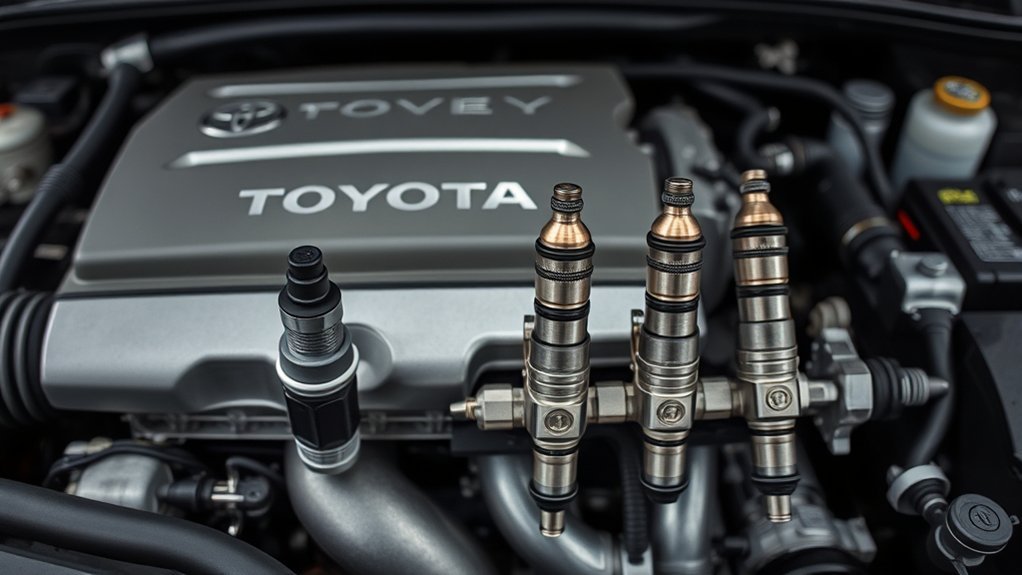
Toyota’s Camry uses both high-pressure direct injection (DI) and port injection (PI) to balance power, economy, and emissions. You’ll get DI at high load for finer atomization, higher effective compression, and peak torque, while PI handles low-to-mid load for cleaner low-RPM combustion, valve washing, and smoother idle. The ECU switches modes to optimize performance and emissions. Expect better fuel economy with proper maintenance; continue for specifics on operation, issues, and service.
What the Camry’s Dual-Injection System Is
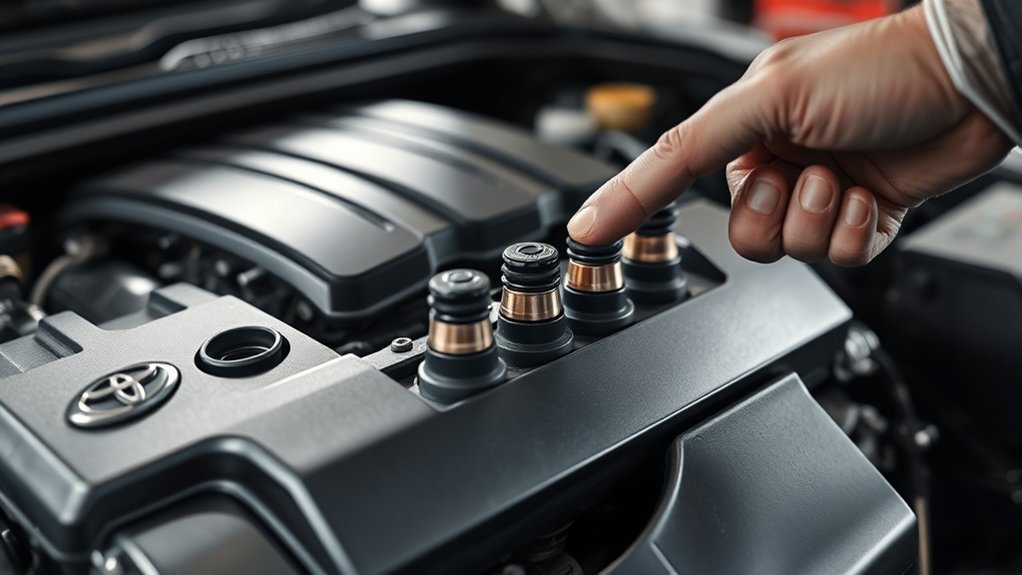
The Camry’s dual-injection system combines high-pressure direct injection (DI) and port injection (PI), and the ECU switches between them in real time to match load and emissions targets. You’ll see DI engage under high load to deliver higher power and torque via 435–725 psi spray, improving combustion energy density. At low-to-medium loads, PI predominates, injecting fuel into the intake port to cool charge, enhance vaporization, and reduce particulates for better emissions control. The ECU monitors load, speed, and temperature and alters injection modes to sustain engine efficiency and fuel efficiency across duty cycles. Port injection also deposits a thin fuel film on intake valves, mitigating DI-induced carbon buildup and preserving airflow over time. You’ll benefit from a system that balances peak performance with long-term combustion stability, while autonomous ECU control maintains the best injection blend for instantaneous response without sacrificing economy or emissions targets.
Why Toyota Uses Both DI and PI on Camry Engines
Because driving conditions shift constantly, Toyota combines direct and port injection on Camry engines to extract the best mix of power, efficiency, and emissions control. You get a system that switches modes: port injection dominates at low to medium loads for stable vaporization and smoother idle, while direct injection engages under high load to improve combustion timing and peak cylinder charge density. This D-4S hybrid approach raises engine performance without sacrificing fuel efficiency, letting you demand power when needed and economy the rest of the time. It also reduces intake-valve carbon buildup inherent to DI-only designs, since PI delivers fuel over the intake valves and helps wash deposits. The result is predictable throttle response, controlled emissions, and extended intake-system cleanliness — tangible freedoms for a driver who expects reliability and control. Toyota’s dual strategy optimizes combustion across RPM and load windows, so you benefit from both enhanced torque delivery and conservative fuel use.
How DI Works in the Camry
While driving demands spike, Camry’s direct injection (DI) system uses a high‑pressure pump to spray fuel directly into the combustion chamber at 435–725 psi, producing fine atomization that improves charge homogeneity and allows higher compression ratios for greater torque under load. You get precise metering and timing because the ECM controls injector pulses and pump output in real time. DI raises thermal efficiency, boosting engine performance and fuel efficiency when you demand power. It also changes combustion phasing to resist knock, letting compression climb without detonation.
Camry’s high‑pressure direct injection (435–725 psi) sharpens combustion, boosting torque, efficiency, and knock resistance under load
- High‑pressure pump delivers 435–725 psi for ideal atomization.
- ECM times injections to tailor AFR and combustion phasing.
- Direct spray enables higher compression ratios for torque gain.
- DI reduces under‑load fuel penalties, improving fuel efficiency.
- Combined control strategy shifts to DI dominance under heavy load.
You’ll notice liberated control: the system prioritizes performance and emissions targets while the ECU blends inputs to maintain stability and reduce intake valve deposits.
How PI Works in the Camry
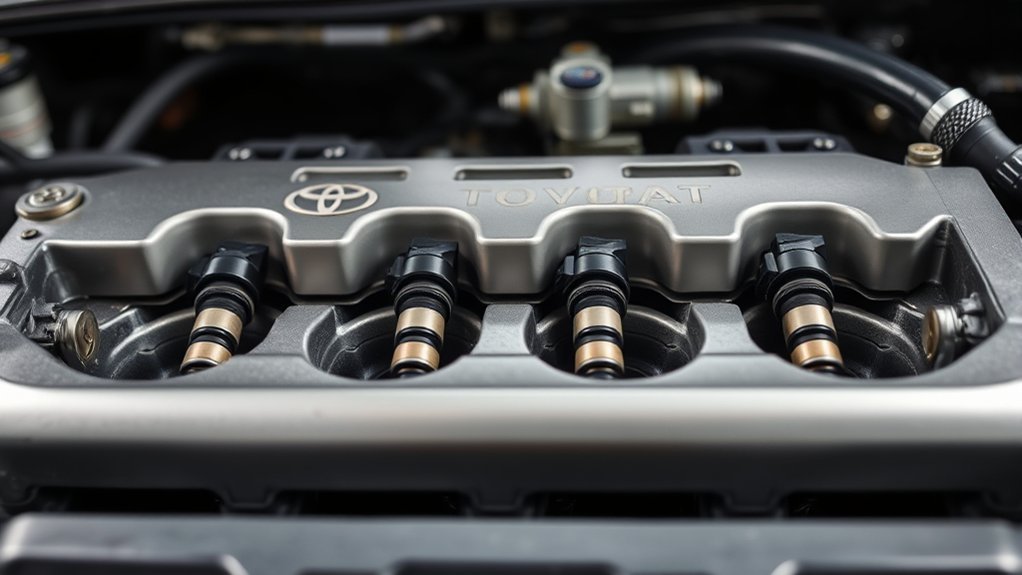
When you’re cruising or under light throttle, Camry’s port injection sprays fuel into the intake ports so it mixes with incoming air and vaporizes fully before the intake stroke, improving low‑RPM torque and throttle response. You’ll notice PI’s role: injectors atomize fuel at the port, creating consistent fuel atomization and stable charge quality. That vapor cools incoming air, raising density and intake efficiency for stronger, more liberated low‑end power. Injectors sit close to valve seats, ensuring full vaporization and helping flush carbon off intake valves, so combustion stays reliable and emissions stay controlled. The system operates during low-to-mid loads to enhance drivability, handing off to other modes as conditions change. You get smoother idle, improved throttle response, and maintenance benefits from reduced valve deposits. The Camry’s PI is deliberate, precise, and focused on tangible gains in performance and longevity.
| Injector Location | Effect on Air | Maintenance Benefit |
|---|---|---|
| Port near valve | Cools & densifies | Clears carbon |
| Multiple ports | Uniform mix | Stable idle |
| Timed pulses | Ideal atomization | Cleaner valves |
When the Camry Switches Between DI and PI : And Why It Matters
Although the Camry’s D‑4S system blends two fuel strategies, the ECU actively switches between port injection and direct injection based on load, RPM, and emissions targets to keep combustion ideal. You’ll notice the system favors port injection at low–medium loads to improve fuel vaporization, lower particulate formation, and reduce emissions, then activates direct injection under high load for denser charge and torque. This dynamic control advances engine efficiency and fuel optimization while limiting intake-valve deposits.
- ECU evaluates load, RPM, and emissions targets hundreds of times per second.
- PI is prioritized for smooth idle, light throttle, and emissions compliance.
- DI engages for heavy throttle, rapid acceleration, and peak power demands.
- Blended operation reduces carbon buildup compared with DI-only designs.
- Seamless shifts preserve drivability while maximizing efficiency and response.
You gain freedom from tradeoffs: the Camry’s switching logic delivers balanced performance, efficiency, and reduced maintenance burden without sacrificing control or responsiveness.
Real-World Performance, Fuel Economy, and Emissions: DI vs PI
Because fuel delivery method directly alters combustion behavior, you’ll notice measurable differences in real-world performance, fuel economy, and emissions between DI and PI systems. In a performance comparison, DI gives you up to 20% more torque and as much as 15% better mileage under high load by optimizing in-cylinder fuel stratification and enabling higher compression and precise timing. You’ll feel stronger acceleration and higher efficiency on highways or during demanding maneuvers.
PI, by contrast, yields smoother low-RPM operation and crisper throttle response in city driving because it better distributes fuel in the intake tract before the valve. That makes urban commutes more controllable and responsive.
Emissions-wise, DI attains more complete combustion, lowering particulate matter and NOx relative to poorly atomized PI at speed, contributing to measurable emission reduction. Modern Camry systems combine DI and PI so you get liberated control: selectable advantages of torque, economy, and cleaner exhaust tailored to driving conditions.
Maintenance, Carbon Buildup, and Long-Term Reliability
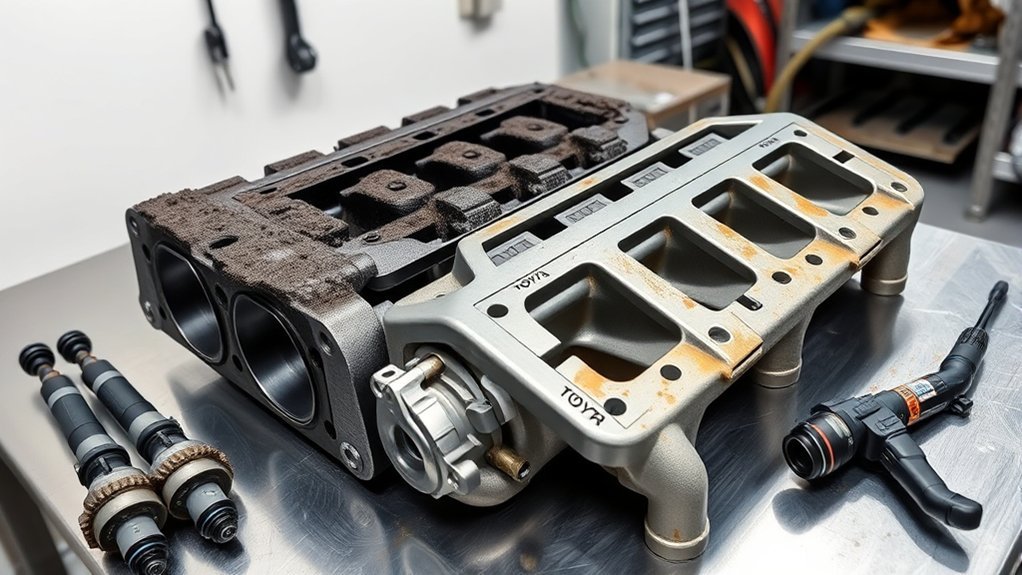
If you drive a Camry with direct injection, expect more frequent intake-valve carbon buildup than on a port-injected model and plan maintenance accordingly. You’ll face added carbon maintenance tasks: intake cleaning, occasional walnut blasting, and monitoring high-pressure fuel system components. DI improves efficiency but shifts service burden to valves and fuel hardware, creating tangible reliability concerns when maintenance is deferred.
- Inspect intake valves periodically for deposits.
- Use catch cans or controlled aggressive driving to reduce buildup.
- Budget for potential high-pressure fuel pump or injector work.
- Prefer scheduled professional cleaning over sporadic fixes.
- Track symptoms: rough idle, reduced throttle response, or misfires.
You want freedom from unexpected failures; consistent, proactive service preserves that. Reliability varies with use and care—owners who follow targeted carbon maintenance reports fewer drivability issues. Be decisive: adopt a maintenance regimen that matches your driving style and liberates you from avoidable long-term costs.
Should You Worry When Buying or Servicing a Camry With Dual Injection?
When you’re buying or servicing a Camry with dual injection, don’t assume it eliminates DI-related valve carbon — the system mixes port injection at light-to-medium load with direct injection at higher load, which reduces but doesn’t fully prevent intake deposits. You should evaluate model year, service history, and driving habits. Regular inspections and targeted cleaning mitigate carbon buildup and preserve engine performance. Aggressive driving patterns can help keep valves cleaner, but they’re not a substitute for scheduled maintenance.
| Checkpoint | Action | Effect |
|---|---|---|
| Model year | Verify design updates | Lower risk |
| Service history | Inspect/clean intake | Limits carbon buildup |
| Driving style | Include periodic higher-load runs | Improves combustion, aids cleaning |
When servicing, ask techs about walnut blasting or chemical cleaning and OEM intervals. Prioritize evidence of preventive care when buying. Do this, and you’ll free yourself from surprise repairs while maintaining liberated ownership and reliable engine performance.
Frequently Asked Questions
What Are the Advantages of Port Injection?
You get improved fuel efficiency, smoother low‑RPM response, reliable combustion, and simpler, cheaper hardware; port injection also promotes engine cleanliness by washing intake valves, reducing carbon buildup, and easing maintenance for freer, more dependable driving.
Conclusion
You’ll appreciate that Toyota’s dual-injection Camry blends direct and port injection to optimize power, economy, and emissions across conditions. About 40–60% of light-load operation often uses port injection to prevent intake-valve carbon buildup, a key reliability benefit of the system. Knowing when the engine switches modes helps you diagnose fuel-related issues and choose maintenance intervals. Stay current with fuel‑system cleaning and recommended service to protect long‑term performance and resale value.