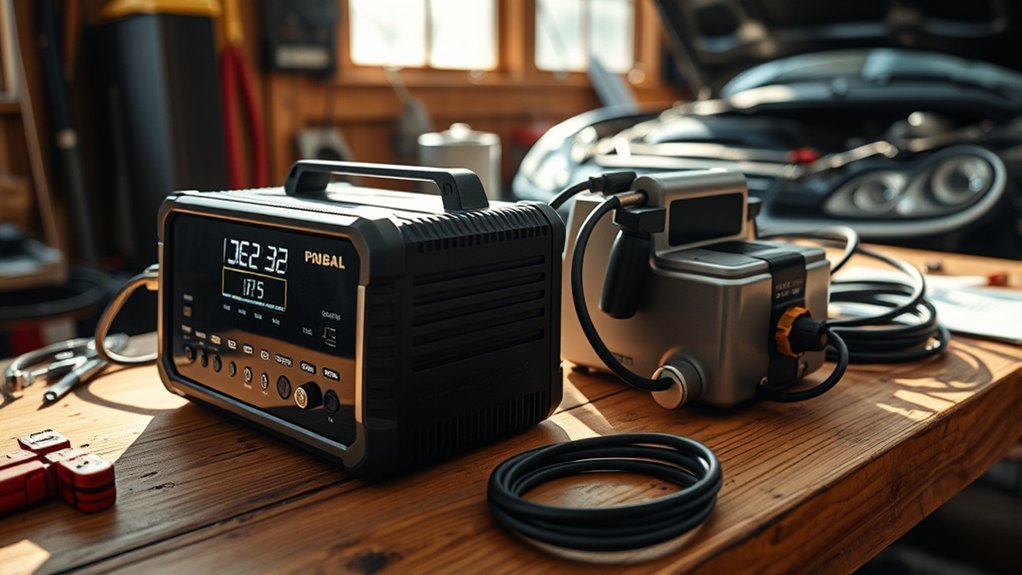
A battery maintainer keeps your battery topped off without overcharging, ideal for infrequent use, while a trickle charger recharge weak or dead batteries but requires monitoring. Maintainers operate at lower amperage and can connect indefinitely, making them safer for long-term battery care. In contrast, trickle chargers can risk damage if left unattended. Understanding these differences guarantees you choose the right device for your needs, leading to better battery performance and longevity—discover more about their features and best practices.
Understanding Trickle Chargers and Battery Maintainers
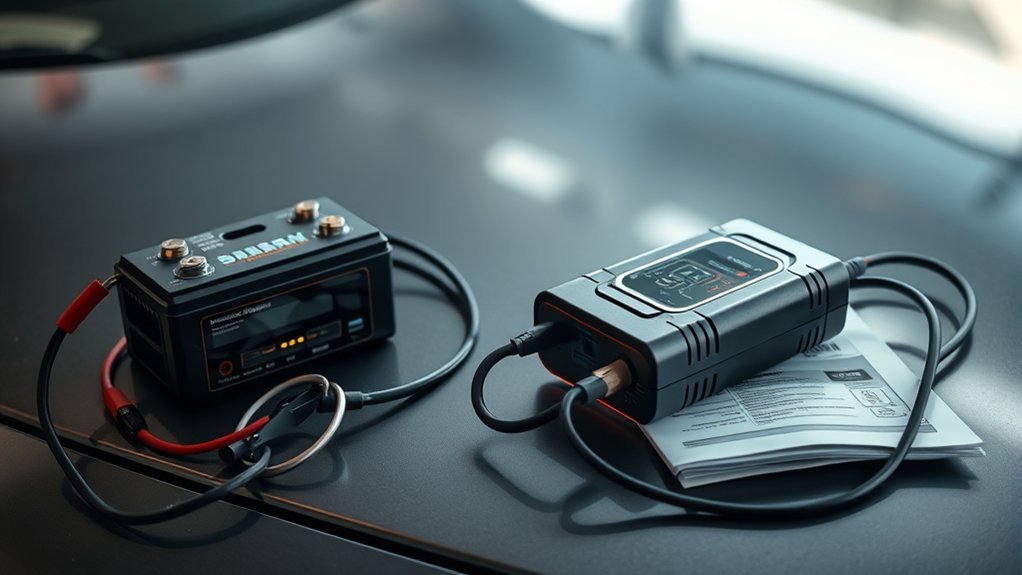
When deciding between a trickle charger and a battery maintainer, it’s essential to understand their distinct functionalities. A trickle charger delivers a low amperage charge, typically between 2 to 10 amps, making it suitable for recharging various battery types, including 12-volt lead-acid and lithium-ion. However, it requires monitoring to prevent overcharging, especially during charging cycles of weak or dead batteries. In contrast, a battery maintainer operates at 1 amp or less and automatically adjusts its power output to maintain a battery’s charge without the risk of overcharging. This makes it ideal for long-term upkeep of batteries in infrequently used vehicles, although it’s generally not compatible with 12-volt lithium-ion batteries. Understanding these differences is vital for selecting the right tool based on battery condition and usage, ensuring you extend battery life effectively and liberate yourself from unexpected failures.
How Does a Trickle Charger Work?
A trickle charger works by delivering a low amperage charge, typically between 2 to 10 amps, to gradually replenish your battery. While this steady charging process is effective, it requires monitoring to prevent overcharging, which can be managed with models featuring an automatic “float” mode. Understanding these aspects is essential for maximizing battery life and performance.
Charging Process Explained
Understanding how a trickle charger works can improve your battery maintenance strategy. A trickle charger delivers a low amperage charge, typically between 2 to 10 amps, to slowly recharge weak or partially drained batteries. This gradual charging process allows your battery to absorb energy efficiently, promoting ideal charging efficiency and extending battery lifespan. To guarantee safety, monitoring is essential, so models with an automatic “float” mode are crucial to prevent overcharging. Trickle chargers are versatile, suitable for various battery types, including 12-volt lead-acid and lithium-ion. They’re especially effective in cold conditions, maintaining charge levels in older batteries that struggle in low temperatures. Embracing this technology can greatly enhance your battery maintenance routine.
Overcharging Risks Identified
While using a trickle charger can greatly benefit your battery maintenance, it’s essential to recognize the risks of overcharging. If left unattended, you might face serious overcharging consequences that can compromise battery longevity. Here are key points to reflect on:
- Trickle chargers operate at low amperage (2 to 10 amps) for steady charging.
- Overcharging can damage batteries or considerably reduce their lifespan.
- Many modern chargers include an automatic “float” mode to prevent overcharging.
- They’re not meant for jump-starting completely dead batteries.
When to Use a Trickle Charger?
Using a trickle charger can be highly beneficial when you need to recharge weak or dead batteries gradually. These chargers provide a low amperage of 2 to 10 amps, making them ideal for vehicles with parasitic draws that drain the battery while not in use. They’re especially effective in cold weather, helping to maintain older batteries and preventing freezing.
Trickle charger benefits extend to seasonal battery care, ensuring batteries are refreshed before use in devices like motorcycles or lawn equipment. However, it’s essential to monitor the charging process to avoid overcharging. Keep in mind that while trickle chargers are excellent for gradual charging, they aren’t suitable for jump-starting completely dead batteries, as they focus on slow recharging rather than providing immediate power. By understanding these applications, you can effectively utilize a trickle charger to extend your battery’s lifespan.
Key Features of Battery Maintainers
Battery maintainers offer several key features that make them essential for preserving battery health over time. These devices are designed to enhance battery longevity without the risk of overcharging, making them perfect for infrequent-use vehicles.
Battery maintainers are crucial for extending battery life, ensuring optimal charging without the risk of overcharging for seldom-used vehicles.
- Automatic Power Adjustment: They adjust output to match battery needs, ensuring ideal charging.
- Overcharge Prevention: Maintainers turn off when the battery is fully charged, safeguarding against damage.
- Long-term Connection: You can leave them connected indefinitely without harming the battery.
- Versatile Compatibility: They’re effective for various battery types, though not for 12-volt lithium-ion batteries.
Advantages of Battery Maintainers Compared to Trickle Chargers
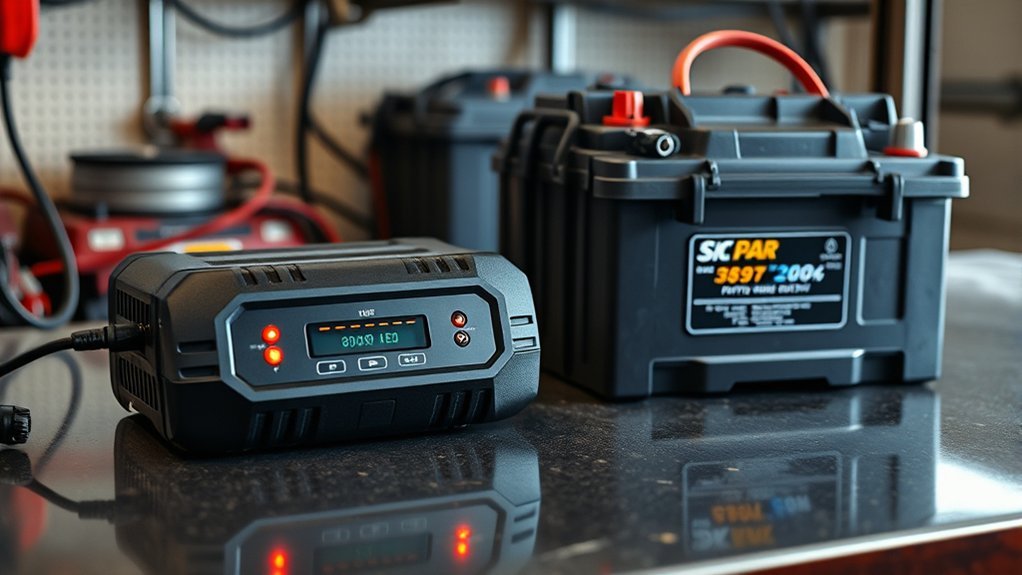
When it comes to maintaining your vehicle’s battery, a battery maintainer offers distinct advantages over a trickle charger. For long-term benefits, maintainers output one amp or less, safely preventing overcharging by adjusting power to the battery’s needs. Unlike trickle chargers, which can overcharge if left unattended, maintainers can stay connected indefinitely without risking battery damage, ensuring seasonal readiness for your vehicle. This is particularly advantageous for infrequently used vehicles, keeping them ready for emergencies while enhancing battery longevity.
Moreover, battery maintainers are versatile, compatible with various battery types, except for 12-volt lithium-ion batteries. They focus on maintenance convenience rather than recharging, making them ideal for preserving battery health over time. By choosing a battery maintainer, you’re investing in the long-term effectiveness of your vehicle’s battery, ensuring it remains in peak condition for whenever you need it.
Key Differences Between Trickle Chargers and Battery Maintainers
When choosing between a trickle charger and a battery maintainer, understanding their key differences is essential. Trickle chargers focus on recharging weak or dead batteries with higher amperage outputs, while battery maintainers keep batteries topped off at lower outputs. This distinction directly impacts their usage duration and safety, particularly concerning overcharging risks.
Charging Purpose Differences
Understanding the charging purpose differences between trickle chargers and battery maintainers is crucial for effective battery management. Each device plays a distinct role in enhancing your battery’s lifespan and charging efficiency.
- Trickle Charger: Designed for recharging weak or dead batteries with higher current output.
- Battery Maintainer: Operates at lower current, keeping batteries topped off without full recharges.
- Overcharging Risk: Trickle chargers require monitoring to prevent overcharging; maintainers adjust power automatically.
- Usage Scenarios: Trickle chargers are ideal for short-term use; maintainers excel in long-term applications.
Choosing the right device based on your battery’s condition guarantees peak performance and longevity. By understanding these differences, you can effectively manage your battery’s health and readiness for emergencies.
Amperage Output Comparison
Battery management relies heavily on amperage output, which distinguishes trickle chargers from battery maintainers. Trickle chargers typically operate at higher amperage levels, ranging from 2 to 10 amps, enabling them to recharge weak or dead batteries effectively. However, this higher output can lead to overcharging if not monitored. In contrast, battery maintainers usually output 1 amp or less, designed for long-term care without recharging depleted batteries. They automatically adjust power output, ensuring safe, indefinite connection. Choosing the right device based on amperage is essential; using a trickle charger on a fully charged battery risks damage, while a battery maintainer enhances charging efficiency for maintained batteries. Understanding these differences empowers you to make informed decisions for ideal battery health.
Best Practices for Safe Use of Charging Devices
To confirm safety and efficiency while using charging devices, it’s crucial to select a battery maintainer or trickle charger equipped with smart features. Here are some best practices:
- Regularly check battery compatibility and health before connecting.
- Verify the charger’s amperage matches the battery requirements to avoid common mistakes.
- Keep charging devices in dry, well-ventilated environments to prevent overheating.
- Disconnect chargers once the battery is fully charged, unless it’s a maintainer designed for indefinite use.
Frequently Asked Questions About Battery Chargers and Maintainers
How do you choose between a battery maintainer and a trickle charger for your needs? Start by evaluating your battery types and their condition. Battery maintainers output one amp or less, making them ideal for keeping batteries topped off during long periods of inactivity without the risk of overcharging. In contrast, trickle chargers operate between 2 to 10 amps and can effectively recharge weak batteries, but they require monitoring to guarantee charging safety and prevent overcharging.
If you’re looking to extend battery life without attention, a maintainer is your best bet. However, if you need to revive a depleted battery quickly, a trickle charger will do the job, but only for short durations. Remember, maintainers aren’t suitable for 12-volt lithium-ion batteries. Choosing the right device based on these factors guarantees efficiency and safety in your battery care routine.
Frequently Asked Questions
What Is the Point of a Battery Maintainer?
A battery maintainer enhances battery health by providing ideal charging efficiency. It keeps your battery topped off without overcharging, ensuring your vehicle or equipment remains ready for use while preventing damage from prolonged inactivity.
Conclusion
In conclusion, choosing between a battery maintainer and a trickle charger depends on your needs. Think of a battery maintainer as a gentle caretaker, consistently nurturing your battery’s health, while a trickle charger can be likened to a quick boost before a big race. Using the right device not only extends battery life but also guarantees reliability, much like a well-tuned engine. Invest wisely in your charging solution, and your battery will thank you with lasting performance.