The Toyota RAV4’s EVAP emissions system captures and stores fuel vapors to prevent them from escaping into the atmosphere, ensuring environmental compliance. Key components include the charcoal canister, purge valve, and pressure sensor. These elements work together to enhance fuel efficiency and detect leaks as small as 0.020 inches. When issues arise, such as a faulty gas cap or stuck purge valve, it’s essential to address them promptly for peak performance. You’ll discover more about maintenance and common problems ahead.
Why the EVAP System Is Essential for Your RAV4’s Emissions Control
The EVAP system in your Toyota RAV4 plays a critical role in emissions control, as it captures and stores fuel vapors that would otherwise escape into the atmosphere. By actively monitoring gasoline vapor emissions, this system not only helps your RAV4 comply with environmental regulations but also considerably reduces harmful emissions, mitigating your vehicle’s environmental impact. Modern technology enables the EVAP system to detect leaks as small as 0.020 inches, enhancing reliability and performance. If the system malfunctions, you may experience increased emissions, potential failure during emission tests, and that dreaded check engine light. This indicates an urgent need for diagnostic attention. Regular maintenance of key components, like the purge valve and charcoal canister, is essential for ideal emissions control and overall vehicle efficiency. By prioritizing this system, you’re not just maintaining your RAV4; you’re also contributing to a cleaner, healthier planet.
Key Components of the RAV4 EVAP System
The key components of the RAV4’s EVAP system are vital for effective emissions control. You’ll find that the charcoal canister captures fuel vapors, while the purge valve guarantees these vapors are routed to the engine for combustion. Understanding these parts and their functions will help you maintain an efficient and compliant emissions system.
[Products Worth Considering]

This genuine Toyota fuel tank cap assembly ensures a perfect fit for your vehicle, delivering reliable sealing and protection against fuel leaks. It meets OEM specifications, offering Toyota‑quality assurance and a manufacturer warranty for peace of mind. Ideal for drivers seeking authentic parts that maintain performance and safety.

Secure your vehicle's fuel tank with this durable ABS locking gas cap that provides a tight, waterproof seal to prevent leaks and theft. The key‑operated lock offers peace of mind while meeting OEM part numbers for a wide range of makes and models. Ideal for harsh weather conditions, it protects the tank from rust and corrosion, ensuring safe and reliable driving.

This high-quality fuel door spring clip, made from durable ABS plastic and metal, ensures reliable operation and long‑term resistance to wear, corrosion and rust. It fits a wide range of Toyota and Lexus vehicles, matching OEM specifications for a perfect fit. Easy to install with a screwdriver, it restores the fuel door's proper opening and closing function, offering a cost‑effective replacement for OEM parts.
Key Components Overview
Understanding the key components of the Toyota RAV4’s EVAP emissions system is essential for maintaining ideal vehicle performance and ensuring compliance with environmental standards. Here’s a quick overview of the vital parts:
- Charcoal Canister: Captures fuel vapors from the tank, enhancing emissions compliance and reducing environmental impact.
- Purge Valve: Regulates vapor flow to the engine, optimizing fuel efficiency and ensuring effective vapor management.
- Pressure Sensor: Detects leaks as tiny as half a millimeter, aiding in diagnostics and maintaining the system’s integrity.
Regular maintenance tips, like checking the gas cap, can prevent issues that hinder the EVAP system’s function. Utilizing advanced diagnostic tools helps you keep track of your RAV4’s emissions system health, ensuring robust performance and compliance.
Purge Valve Functionality
Regulating vapor flow, the purge valve plays a crucial role in the Toyota RAV4’s EVAP emissions system. By allowing fuel vapors from the charcoal canister to reach the engine during combustion, it guarantees efficient vapor management. When the engine runs, this valve opens, facilitating vapor burning that reduces emissions and boosts fuel efficiency.
| Function | Symptoms of Failure | Maintenance Tips |
|---|---|---|
| Regulates vapor | Rough idling | Regular inspection |
| Reduces emissions | Poor fuel economy | Check for leaks |
| Enhances efficiency | Check engine light | Replace if malfunctioning |
Regular purge valve maintenance is essential for peak performance, and timely purge valve replacement can prevent costly repairs and maintain compliance with emission standards.
Charcoal Canister Role
Located within the Toyota RAV4’s EVAP emissions system, the charcoal canister captures and stores harmful fuel vapors from the fuel tank, preventing their escape into the atmosphere. This component is essential for reducing environmental pollution and maintaining emissions compliance. Here’s how it works:
- Adsorption: Activated charcoal within the canister adsorbs fuel vapors, ensuring only clean air is released.
- Purge Operation: When the engine runs, the purge valve opens, allowing stored vapors to be burned as harmless emissions.
- Maintenance: Regular charcoal canister maintenance is critical; leaks or blockages can severely impact charcoal adsorbent efficiency and lead to failed emissions tests.
Keeping your charcoal canister in top shape is important for both performance and environmental responsibility.
How the EVAP System Prevents Fuel Vapor Leaks
The EVAP system in your Toyota RAV4 efficiently captures fuel vapors from the gas tank, routing them to the engine for combustion. It employs advanced leak detection methods to identify even the smallest leaks, ensuring peak functionality. Understanding the vapor capture mechanism and component functionality is key to grasping how this system prevents harmful emissions.
Vapor Capture Mechanism
While fuel vapors can escape into the atmosphere, the Toyota RAV4’s EVAP system effectively captures them to prevent environmental harm. This sophisticated mechanism guarantees vapor storage and minimizes vapor release through several key components:
- Charcoal Canister: Captures and stores fuel vapors until they’re needed for combustion.
- Purge Valve: Regulates the flow of vapors from the canister to the engine, allowing fresh air in to avoid vacuum buildup.
- Pressure Sensor: Detects leaks as small as 0.5 mm, maintaining system integrity.
2. Leak Detection Methods
Effective leak detection methods are essential in the Toyota RAV4’s EVAP system to guarantee peak performance and minimize fuel vapor emissions. The system employs a vacuum to detect leaks, pulling air from the canister while maintaining system pressure to identify breaches as small as 0.020 inches. A pressure sensor continuously monitors the system’s integrity; a healthy system retains vacuum over time, while a rapid return suggests a leak. Common issues, like a faulty gas cap, can hinder this detection process. During diagnostics, the system performs self-tests by isolating the canister, ensuring accurate assessments. Additionally, manually clamping lines aids in pinpointing specific leaks or valve problems, enhancing troubleshooting efficiency and maintaining compliance with emissions standards.
3. Component Functionality Overview
Leak detection methods play an essential role in maintaining the integrity of the EVAP system, which is designed to capture and manage fuel vapors efficiently. Here’s how the components work together for effective vapor recovery:
- Charcoal Canister: Captures fuel vapors from the gas tank, preventing harmful emissions.
- Purge Valve: Regulates the flow of vapors to the engine, where they combust during operation.
- Vacuum Mechanism: Engine creates a vacuum that aids in vapor transfer, emphasizing the need for a proper seal.
Additionally, components like the tank bypass valve and onboard vapor recovery valve prevent vapor losses during refueling, enhancing overall system functionality. By maintaining these elements, the EVAP system effectively reduces emissions and promotes cleaner air.
Common RAV4 EVAP Issues and Their Fixes
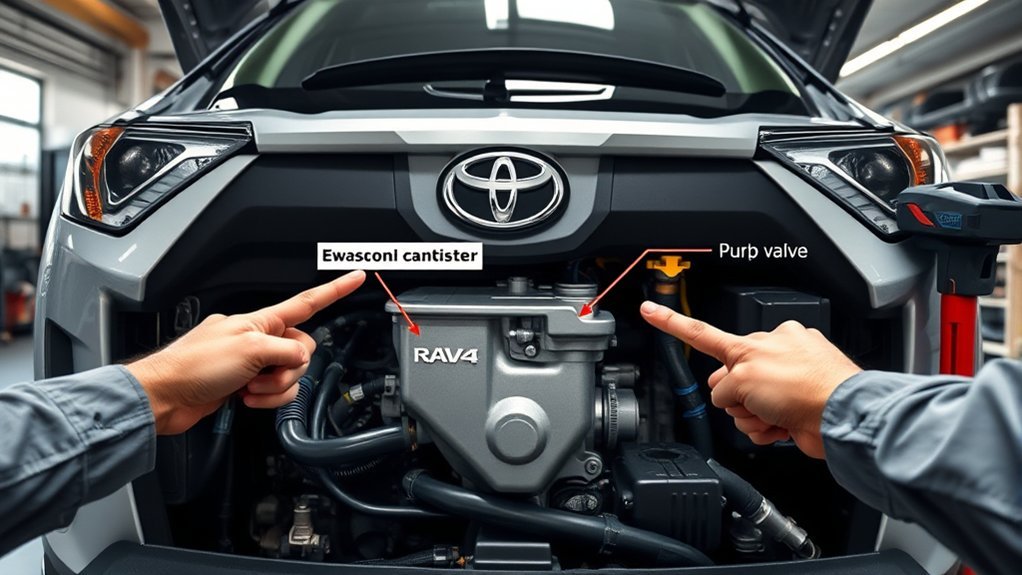
When it comes to the Toyota RAV4, understanding common EVAP issues can save you time and money on repairs. A faulty gas cap often leads to vapor leaks, triggering check engine lights and failing emissions testing. Regularly inspect the gas cap to guarantee it maintains proper vacuum levels.
You might also encounter performance issues related to a stuck purge valve, which hampers fuel vapor flow to the engine. Additionally, a damaged charcoal canister can decrease fuel efficiency and result in test failures.
Don’t overlook the tank bypass valve; a malfunction here can cause fuel spills or unpleasant odors during refueling.
To tackle these issues, utilize diagnostic tools for pressure testing and vacuum leak inspections. Maintenance tips include regular checks and timely repairs. Following these troubleshooting steps can help you maintain your RAV4’s emissions system, guaranteeing compliance and peak performance.
How the Purge Valve Enhances Emissions Control
The purge valve plays an essential role in the Toyota RAV4’s EVAP emissions system, regulating the flow of fuel vapors from the charcoal canister to the engine. This process is critical for achieving effective emissions reduction. Here’s how it enhances emissions control:
- Optimal Vapor Flow: By opening during specific engine conditions, the purge valve guarantees that stored vapors are efficiently burned, minimizing harmful emissions.
- Maintaining Vacuum: Proper purge valve efficiency is important for maintaining the vehicle’s vacuum. A faulty valve can lead to increased emissions and potential failure in emission tests.
- Preventative Maintenance: Regular inspection of the purge valve can prevent common EVAP failures, such as check engine light activation and poor fuel efficiency.
When functioning correctly, the purge valve not only contributes to cleaner air but also supports the RAV4’s overall reliability, empowering you to drive with confidence.
What You Should Know About Advanced Diagnostics
Advanced diagnostics in the Toyota RAV4’s EVAP emissions system greatly enhance your ability to identify and resolve issues efficiently. Utilizing advanced diagnostic tools, you can perform bi-directional control tests that detect leaks as small as 0.020 inches. The OBD2 system conducts self-tests to verify integrity, identifying leaks down to half a millimeter during vacuum checks. With Late Type Intrusive Systems in newer models, you can run essential tests even while the vehicle’s off, improving emissions compliance reliability.
When using troubleshooting techniques, start with common issues like a faulty gas cap, which can cause significant vacuum loss. Understanding the functions of components like the purge valve and charcoal canister is crucial for effective diagnostics. By mastering these advanced diagnostic methods, you’ll not only enhance your troubleshooting efficiency but also guarantee your RAV4 meets stringent emissions standards.
Maintaining Your RAV4’s EVAP System for Optimal Performance
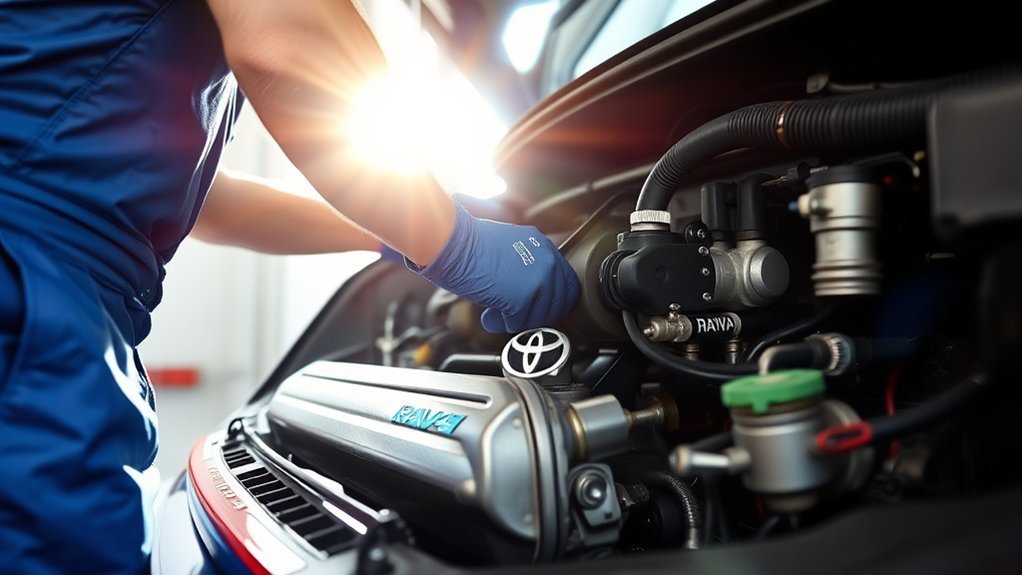
Maintaining your RAV4’s EVAP system is vital for peak performance and compliance with emissions standards. By guaranteeing all components function properly, you can enhance efficiency and reduce environmental impact. Here are key maintenance tips:
Maintaining your RAV4’s EVAP system is essential for optimal performance and emissions compliance. Ensure all components work effectively to boost efficiency and minimize environmental impact.
- Gas Cap Maintenance: Regularly inspect and replace your gas cap. A faulty cap can cause vacuum leaks, negatively affecting the EVAP system’s performance.
- Charcoal Canister Care: Check the charcoal canister for cracks and blockages. This component captures and stores fuel vapors, essential for effective combustion.
- Purge Valve Inspection: Monitor the purge valve for proper operation. A malfunctioning valve can hinder vapor transfer to the engine, leading to decreased performance and potential emissions failures.
Additionally, keep an eye on warning lights on your dashboard and conduct regular OBD2 diagnostics to identify leaks as small as 0.5 mm. This proactive approach guarantees your RAV4 remains compliant and efficient.
Frequently Asked Questions
How Does the Toyota Evap System Work?
The Toyota EVAP system captures fuel vapor in a charcoal canister, routing it through system components like the purge valve. It regulates flow, preventing vacuum buildup, ensuring efficient combustion and minimizing emissions effectively.
Conclusion
In summary, keeping your RAV4’s EVAP system in top shape is like ensuring the orchestra plays in harmony; every component must function seamlessly to minimize emissions. By understanding its intricacies and addressing common issues promptly, you not only enhance your vehicle’s performance but also contribute to a cleaner environment. Remember, neglecting this vital system could lead to costly repairs—so treat your RAV4 with the care it deserves, and it’ll reward you with reliability and efficiency.