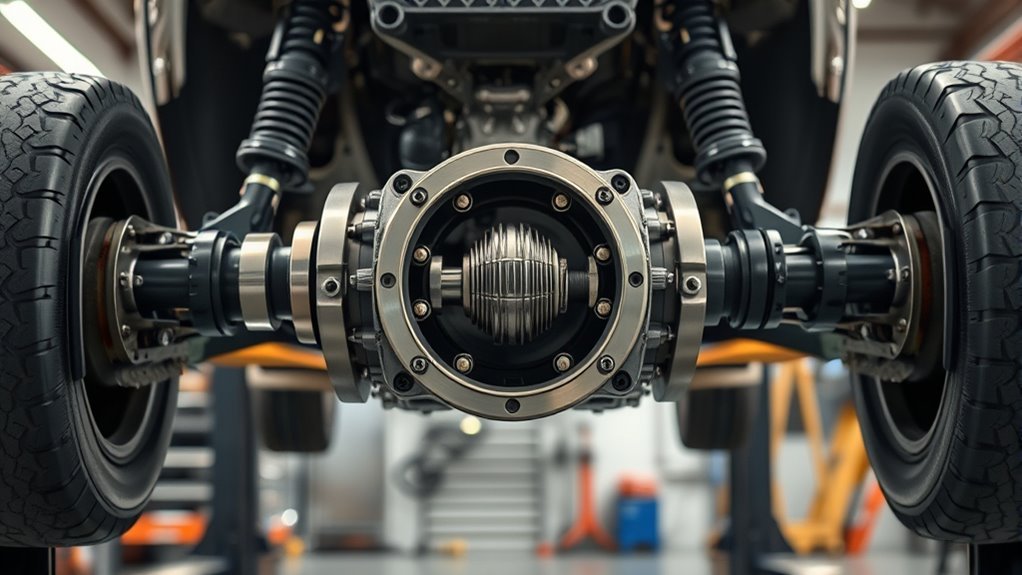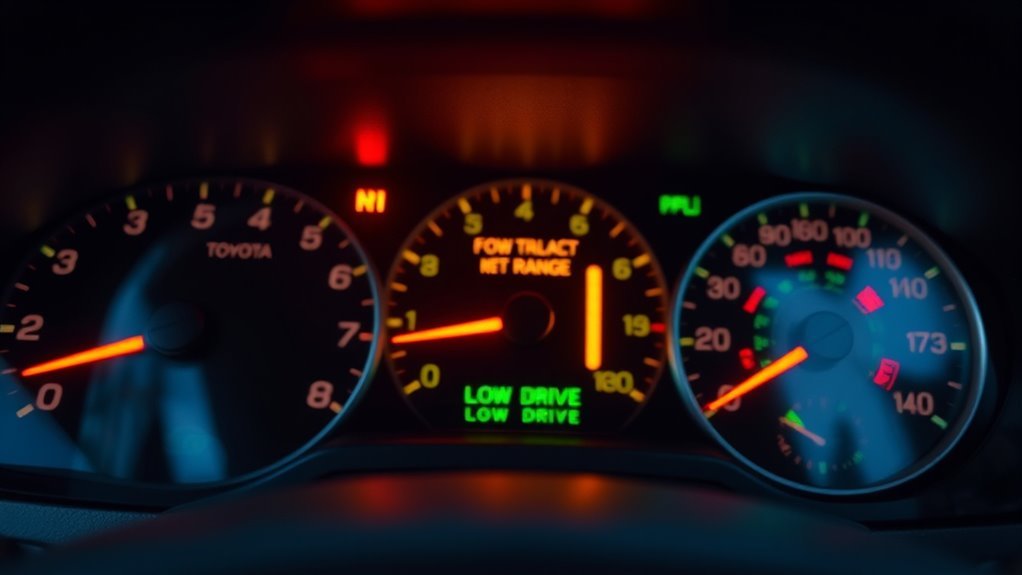
The 4LO indicator tells you the Land Cruiser’s transfer case is in low range; a steady light means low range engaged, a flashing light denotes an engagement failure or system fault, and a light that won’t extinguish after exit signals a fault needing inspection. You should stop if traction is critical, avoid heavy loads, and run basic resets (engine off/on, confirm neutral, warm vehicle). If it persists, check actuator, switches, wiring and OBD codes for targeted diagnostics and repair guidance.
What the 4LO Light Means
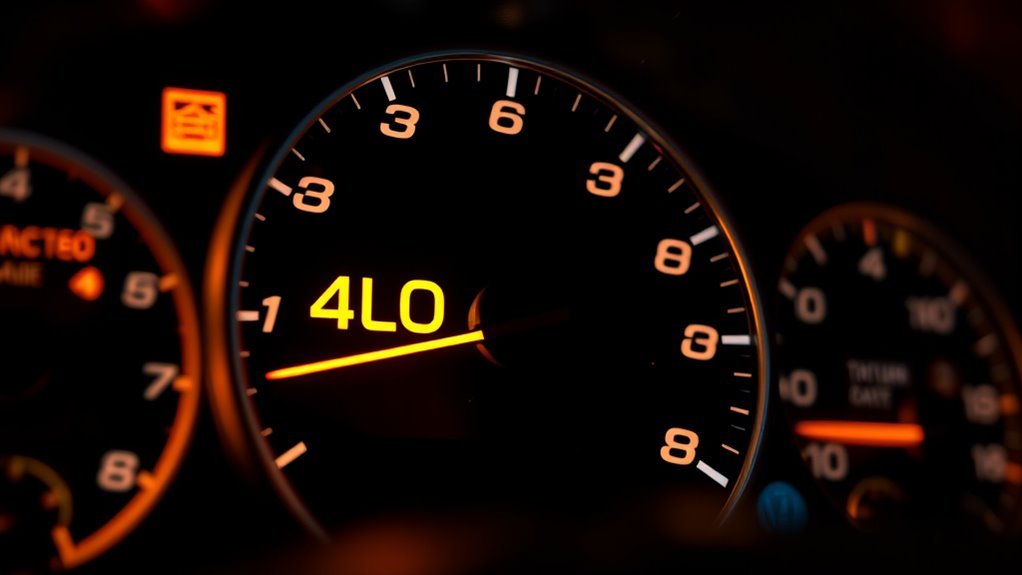
The 4LO indicator light tells you the Land Cruiser’s transfer case is in low range, which directs higher torque to the wheels for improved traction and control in off‑road or low‑speed, high‑load conditions; if the light flashes it likely means the system failed to engage, and if it stays on after you switch out of 4LO you should suspect a faulty position switch or actuator and have the transfer case inspected. You’ll use 4LO functionality to reduce wheel spin and increase pulling power when terrain demands deliberate motion. When steady, the lamp confirms the transfer case engaged and the vehicle’s drive ratios are altered for maximal off road performance. A flashing lamp signals an engagement fault—diagnose electrical connections, the actuator, and the position switch. If the indicator won’t extinguish after disengagement, don’t ignore it: it points to misreporting or a stuck mechanism. Act promptly to retain capability and autonomy in difficult environments.
Is It Safe to Drive? Stop Now or Continue
If the 4LO light is flashing, don’t engage 4LO and stop as soon as it’s safe to assess an active malfunction that could worsen with continued use. If the light is steady or clears after a 5–10 minute warm-up, you can usually continue driving but should avoid off‑road or heavy‑load conditions until you verify the system. Inspect the system promptly or seek service to prevent progressive damage and follow basic precautions—gentle speeds, no sudden torque, and minimal towing.
Immediate Risk Assessment
When the 4LO indicator is flashing, treat it as a 4WD-system fault that warrants immediate attention; you should stop and inspect if you can’t engage 4LO or if traction is critical. The flashing 4LO indicators signal potential transfer case actuator failure or sensor misreadings—run system diagnostics before proceeding. You won’t gain freedom by ignoring faults; continued driving risks disengagement of 4WD and loss of traction in slippery terrain. If diagnostics show actuator error or unresolved sensor faults, don’t push on; stop, secure the vehicle, and call for professional repair. If diagnostics are inconclusive but the vehicle won’t enter 4LO, avoid hazardous routes and arrange service. Prioritize containment of mechanical damage and your safety over keeping to a plan.
When You Can Continue
Because a flashing 4LO light signals a probable low-range or sensor fault, you should assume reduced or unavailable low-range capability and stop to assess before continuing. You can continue only if inspection shows the light went out after a brief restart or drive — that often means temporary issues. If flashing indicators persist, don’t press on; low-range engagement is unreliable and off-road control is compromised. Cold starts can produce transient faults; warm the vehicle and recheck. Engaging 4LO while the lamp flashes won’t work and risks further faulting. If unsure, call support.
| Condition | Action | Risk |
|---|---|---|
| Light stops | Resume with caution | Low |
| Flashes persist | Stop/inspect | High |
| Cold morning | Warm and retest | Moderate |
Safe Driving Precautions
Although a flashing 4LO light can look minor, you should stop driving as soon as it’s safe and diagnose the fault, because continued operation risks transfer‑case damage and may disable cruise control. You’ll limit damage and preserve control by pulling over, shifting to park, and consulting the Owners Manual for model‑specific steps. Avoid engaging 4LO while the indicator flashes; the system won’t accept the command and forcing it can worsen the failure. Treat the warning as a fault condition: call a qualified mechanic or roadside service if the light persists. For safe driving, use preventative measures such as routine drivetrain inspections and addressing warnings immediately. That disciplined response protects freedom of movement and prevents cascading failures.
Quick Checks and Resets to Try First
If the 4LO indicator is flashing, start with simple resets and checks you can do immediately: shut the engine off, wait a few seconds, then restart to see if the light clears, verify the vehicle is fully stopped and in neutral before attempting 4LO, and allow a 5–10 minute warm-up in cold weather to improve actuator response. Use flashing light troubleshooting and system reset procedures first: cycle the ignition once or twice, then attempt 4LO only when stationary and in neutral. Check OBD2 codes to reveal related faults that might block the system; record codes before clearing them. Regularly exercise the CDL and 4LO mechanisms to reduce electro-mechanical wear and corrosion—move them through their range during maintenance to keep actuators responsive. If the indicator persists after these steps, avoid forcing engagement; continued attempts can mask root causes. These quick diagnostics preserve mobility and autonomy while you prepare for deeper troubleshooting or professional repair.
Common Causes: Transfer Case, Actuator, Switches, Wiring
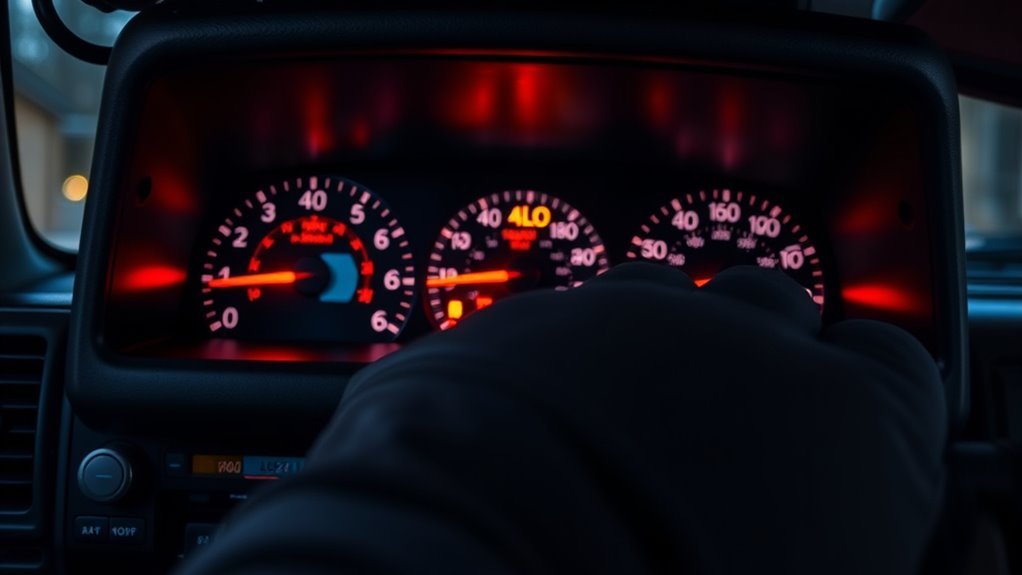
If the 4LO light keeps flashing, check the transfer case for mechanical faults that prevent low-range engagement. Inspect the actuator and its connectors for corrosion, worn components, or dirty contacts that change resistance. Finally, test position switches and wiring for intermittent faults—temperature-related connector issues are a common culprit.
Transfer Case Faults
When the 4LO indicator flashes, start by checking the transfer case actuator, position switch, and wiring harnesses since failures in any of these components commonly prevent low-range engagement. You’ll run transfer case diagnostics to read codes like C1268, confirm actuator issues, and verify position feedback. Inspect fluid level and metal debris in the housing; internal gear or chain wear can trigger faults. Test the actuator motor and switch signals with a multimeter to isolate electrical from mechanical failures. Look for intermittent wiring faults from chafing or corrosion that mimic component failure. Prioritize repairs that restore reliable engagement so you regain off-road autonomy: replace worn internals, repair circuits, or swap the actuator based on measured fault data.
Actuator And Wiring
After checking for internal transfer case faults and reading codes like C1268, focus on the actuator and wiring next, since electrically-driven failures commonly prevent low-range engagement. You should verify actuator operation by commanding it and observing movement; a seized or weak motor often triggers the 4LO light. Perform actuator maintenance: clean motor contacts, remove corrosion, and guarantee secure mounting to restore reliable engagement. Conduct a thorough wiring inspection for chafed insulation, corroded terminals, and poor grounds that interrupt control signals between the transfer case and actuator. Test the position switch continuity and circuit voltage to confirm accurate feedback. Addressing these items restores function and autonomy, reducing false 4LO indications and reclaiming dependable low-range control.
Reading OBD Codes for 4LO Issues
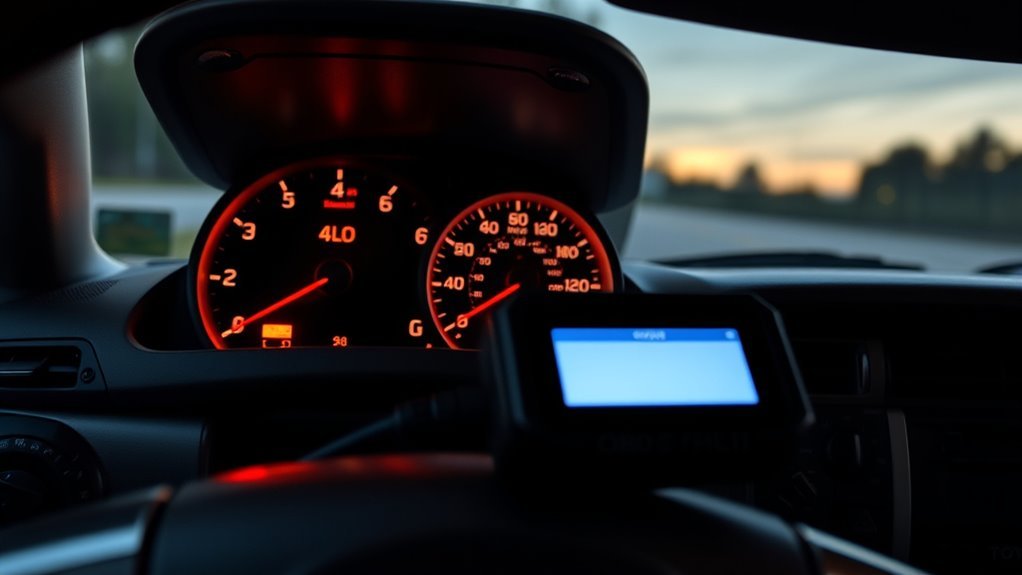
Many OBD codes can point you to the root cause of a 4LO warning, so start by scanning the system for stored and pending faults. Use OBD diagnostics to capture error codes such as C1268, which flags the 4WD switch; that code directs your focus to possible switch malfunctions rather than guessing. Check for intermittent error codes that suggest wiring issues—loose connectors or chafed harnesses produce inconsistent faults and mimic actuator failures. If the 4LO lamp is flashing, prioritize reading freeze-frame data and live sensor values to distinguish sensor misreads from CDL or actuator malfunctions. Don’t rely on clearing codes via battery disconnect; that only masks the symptom and delays liberation from recurring faults. Log codes, sequence diagnostics: inspect switch inputs, verify continuity, and monitor actuator response under command. Use a methodical OBD-driven workflow so you’ll isolate the true fault and regain reliable 4LO operation without unnecessary parts replacement.
Repairs, Maintenance, and When to See a Toyota Dealer
1 clear rule: treat the 4LO lamp as both a mode indicator and a diagnostic flag — if it’s steady, you’re in low-range and should follow recommended maintenance (fluid checks, exercising the mechanism); if it’s flashing or won’t engage, perform targeted diagnostics (inspect transfer case actuator and position switch, check wiring and connectors, read live data with a factory-level scan tool) and avoid repeated clears that mask intermittent faults.
You’ll apply preventive measures and maintenance tips to keep control. Start with systematic checks and escalate to professional help only when needed.
- Verify fluid condition and level; change transfer case fluid per spec to avoid actuator failure.
- Exercise 4LO regularly to prevent binding and detect intermittent faults early.
- Inspect actuator, position switch, wiring, and connectors; use a factory-level scan tool for live data and fault codes.
- If the lamp persists or operations fail after DIY diagnostics, see a Toyota dealer for calibrated testing and repairs.
You want freedom on the trail; disciplined maintenance protects that liberty.
Frequently Asked Questions
What Does 4LO Mean in a Toyota Land Cruiser?
4LO means your Land Cruiser’s transfer case is in low-range four-wheel drive, giving maximum torque and traction. You’ll use 4LO functionality for steep, technical terrain; it grants Off road advantages while you control and liberate movement.
Why Is My 4LO ABS Light Flashing?
It’s likely a 4WD engagement fault: use 4LO troubleshooting tips to check the transfer case actuator, position switch, fuses, fluids and DTCs—flashing light causes include actuator or switch failure, wiring issues, cold-induced intermittent faults.
What Is the Most Serious Toyota Dashboard Light?
The most serious Toyota dashboard light is the Check Engine Light; you should treat any dashboard warning as critical for vehicle safety, so you’ll get a diagnostic scan immediately to prevent damage and retain your freedom to travel safely.
Conclusion
When the 4LO light comes on in your Land Cruiser, don’t ignore it: stop if driving feels odd, check the transfer case lever and switch positions, scan for OBD codes, and inspect the actuator and wiring for obvious faults. Try a reset and a low-speed test, then replace worn parts or recalibrate the actuator if needed. For complex electrical or mechanical failures, get dealer-grade diagnostics, accurate parts, and calibrated repairs to restore proper 4LO operation.