Your RAV4’s tire pressure can change considerably with temperature fluctuations—around 1 PSI drops for every 10°F decrease. Maintaining 36 PSI is vital for ideal performance, fuel efficiency, and safety. Under-inflation leads to uneven wear and can increase the risk of blowouts, while over-inflation reduces traction and can cause premature tire wear. Keeping a close eye on your tire pressure, especially during seasonal changes, is essential. Explore more about effective maintenance practices to keep your vehicle in top shape.
Understanding Tire Pressure Basics for the RAV4
Understanding tire pressure is vital for keeping your RAV4 running smoothly. The recommended tire pressure for your 2020 Toyota RAV4 hybrid is 36 PSI for both front and rear tires. This isn’t just a number; it guarantees peak performance, safety, and fuel efficiency. When your tires are under-inflated, which can happen with temperature changes, your fuel consumption increases markedly. That’s why you should incorporate regular tire pressure checks into your maintenance schedule, especially during seasonal shifts. Checking your tire pressure regularly helps prevent uneven wear and enhances your vehicle’s longevity. The tire specifications are tailored to support your RAV4’s weight and handling, making adherence to these recommendations essential. By staying proactive, you not only liberate yourself from unexpected issues but also guarantee a smoother, more efficient ride. So grab that tire gauge and take charge of your driving experience!
How Temperature Impacts Tire Pressure?
Temperature plays a significant role in your RAV4’s tire pressure. For every 10°F drop, you can lose about 1 PSI, which may lead to under-inflation if you’re not vigilant. Conversely, higher temperatures can inflate your tires beyond the recommended levels, making regular checks essential for safety and performance.
Tire Pressure Variation Factors
As the seasons change, you might notice fluctuations in your RAV4’s tire pressure, which can greatly influence performance. Understanding how temperature affects your tires is essential for maintaining safety and efficiency. Here are some factors to take into account:
- Temperature Drops: Tire pressure decreases by about 1 PSI for every 10°F drop, risking traction and handling.
- Temperature Rises: Conversely, an increase of 1 PSI occurs for every 10°F rise, which can lead to over-inflation.
- Recommended Pressure: Keeping your tires at the recommended 36 PSI is vital for peak performance.
- Regular Checks: Use tire pressure sensors and follow proper tire inflation techniques to avoid wear and potential blowouts.
Stay proactive, and your RAV4 will thank you!
Seasonal Temperature Adjustments
When the seasons shift, you might find your RAV4’s tire pressure fluctuating more than you expect. For every 10°F drop in temperature, tire pressure can decrease by about 1 PSI, impacting performance and safety. Conversely, warmer weather can inflate your tires beyond recommended limits, risking over-inflation and potential damage. That’s why regular tire pressure monitoring is vital during seasonal changes. Maintaining proper pressure not only enhances fuel efficiency but also guarantees peak handling and braking. Always refer to the manufacturer’s recommended tire pressure, usually located on the door frame, to adjust for these temperature shifts. By prioritizing seasonal tire care, you can enjoy a safer, more liberating driving experience in your RAV4.
Why Keeping Your RAV4 Tires at 36 PSI Matters
Maintaining your RAV4 tires at 36 PSI is essential for ensuring peak performance and safety on the road. Keeping your tires properly inflated not only enhances your driving experience but also offers several key benefits:
- Improved Fuel Efficiency: Proper tire pressure reduces rolling resistance, helping you save on gas.
- Even Tire Wear: Maintaining 36 PSI prevents uneven tire wear, extending the lifespan of your tires.
- Enhanced Handling: Well-inflated tires provide better traction and stability, ensuring a smoother ride.
- Safety First: Correct pressure improves braking performance, making your vehicle safer to drive.
With temperature fluctuations affecting tire pressure, regular checks are vital. By sticking to 36 PSI, you protect your tires and vehicle, supporting overall longevity and performance. Enjoy the freedom of the road with confidence knowing you’re taking care of your RAV4!
Consequences of Under-Inflation in Your RAV4 Tires
Driving with under-inflated tires can severely compromise your RAV4’s performance and safety. When your tires dip below the recommended 36 PSI, you’re not just risking uneven wear; you’re shortening the tire lifespan and facing higher replacement costs. This added rolling resistance can also lead to increased fuel consumption, hurting your efficiency.
Moreover, insufficient tire pressure directly impacts handling and braking performance, raising the chances of accidents, especially in adverse weather. Under-inflated tires are at a greater risk of overheating, which can cause blowouts—serious safety hazards that you want to avoid at all costs.
Regularly checking and maintaining your tire pressure is essential for peak safety performance and a smooth driving experience. By staying vigilant, you can keep your RAV4 running efficiently and safely, ensuring that you enjoy the freedom of the road without unnecessary worry.
The Dangers of Over-Inflation and Tire Pressure Risks
Over-inflating your RAV4 tires can seriously compromise your vehicle’s handling and stability. With reduced contact on the road, you risk skidding and uneven tire wear, leading to costly replacements. Plus, the increased pressure makes your tires more vulnerable to blowouts from road hazards, putting you and your passengers at risk.
Over-Inflation Consequences
Although it might seem beneficial to inflate your tires beyond the recommended pressure, doing so can lead to serious consequences. Here are some key risks you should consider:
- Reduced traction: Over-inflation decreases tire contact with the road, increasing the risk of skidding and loss of control.
- Uneven tire wear: Excessive pressure often leads to wear in the center of the tread, resulting in premature tire replacement.
- Increased susceptibility to damage: Over-inflated tires are more vulnerable to road hazards, raising safety concerns.
- Higher costs: Operating at inflated pressures might seem efficient, but it ultimately leads to increased wear and repair expenses.
Tire Blowout Risks
Exceeding the recommended tire pressure can lead to serious safety hazards, including the risk of tire blowouts. When your RAV4’s tires exceed 36 PSI, the chances of a blowout increase dramatically. As temperatures rise, tire pressure can spike by about 1 PSI for every 10°F increase, potentially causing dangerous over-inflation. Regularly checking your tire pressure, especially with changing seasons, is essential for blowout prevention and ensuring tire longevity. Over-inflated tires reduce contact with the road, heightening stress on materials and increasing the risk of bursting. By maintaining ideal tire pressure, you not only enhance your vehicle’s performance and fuel efficiency but also considerably lower the likelihood of blowouts while driving. Stay safe and enjoy the journey!
Handling and Stability Issues
When tire pressure climbs above the recommended level, your RAV4’s handling and stability can suffer considerably. Over-inflation can compromise your vehicle’s safety features and tire performance, leading to dangerous situations. Here’s how:
- Reduced Contact: Tires may lose grip, especially during sharp turns or sudden stops.
- Uneven Wear: Increased pressure leads to premature tire failure and reduced grip.
- Blowout Risks: Over-inflated tires can increase the likelihood of blowouts, particularly over 36 PSI.
- Braking Issues: Proper tire pressure is vital for effective braking; over-inflated tires may not respond well in emergencies.
Monitoring your tire pressure with temperature changes is essential for enhancing your RAV4’s safety and performance on the road.
Tips for Regular Tire Pressure Checks
To keep your RAV4 running smoothly, checking your tire pressure regularly is vital. Aim to do this at least once a month and before long trips. Tire pressure can drop by about 1 PSI for every 10°F decrease in temperature, so seasonal changes are critical times for checks. Always measure your tire pressure when the tires are cold for the most accurate reading; heat from driving can inflate the numbers misleadingly.
Invest in reliable tire pressure tools to make these checks quick and easy. A good tire pressure gauge will help prevent issues related to under or over-inflation. Use the manufacturer-recommended pressure of 36 PSI for both front and rear tires to maintain safety and fuel efficiency. By adopting these simple inflation techniques, you’ll guarantee your RAV4 remains in top shape, enhancing both performance and your driving experience.
Adjusting Your Tire Pressure for Cold Weather
As temperatures drop, your RAV4’s tire pressure can drop too, typically by about 1 PSI for every 10°F decrease. It’s crucial to adjust your tires to the recommended 36 PSI to guarantee safety and performance on icy roads. Regular checks help you catch these changes and maintain peak traction and fuel efficiency during the colder months.
Temperature Impact on Pressure
Cold weather can greatly impact your tire pressure, so it’s important to stay vigilant. As temperatures drop, tire pressure decreases by about 1 PSI for every 10°F decline. For your 2020 Toyota RAV4, maintaining the recommended tire pressure of 36 PSI is vital for safety and performance. Here are some winter driving tips to keep in mind:
- Regularly check tire pressure—cold conditions can lead to under-inflation.
- Inflate tires to the manufacturer-recommended pressure when temperatures drop.
- Under-inflated tires can increase wear and risk blowouts.
- Utilize tire pressure monitoring systems to stay informed.
Recommended Pressure Adjustments
When temperatures plummet, adjusting your tire pressure becomes essential for your RAV4’s performance and safety. Tire pressure typically drops by about 1 PSI for every 10°F decrease, so checking your levels regularly during winter is vital. For the 2020 RAV4 hybrid, aim for a tire pressure of 36 PSI in both front and rear tires. Under-inflated tires can lead to increased fuel consumption and uneven wear, jeopardizing your vehicle’s longevity. Use your tire pressure sensors to monitor changes, and be proactive about adjustments after significant temperature shifts. These winter driving tips not only enhance your RAV4’s handling and braking capabilities but also help prevent potential tire damage, ensuring a smoother, safer ride all season long.
Regular Maintenance Importance
Maintaining proper tire pressure is essential, especially during winter months, because it directly impacts your RAV4’s performance and safety. Cold weather can cause tire pressure to drop, so regular tire pressure monitoring is vital. Here’s why seasonal tire maintenance matters:
- Performance: Keeping tires at the recommended 36 PSI guarantees ideal handling and traction.
- Safety: Under-inflated tires increase the risk of blowouts and accidents.
- Efficiency: Properly inflated tires improve fuel economy, saving you money at the pump.
- Longevity: Regular adjustments prevent uneven wear, extending tire life.
How Quality Tires Impact RAV4 Performance in Temperature Changes
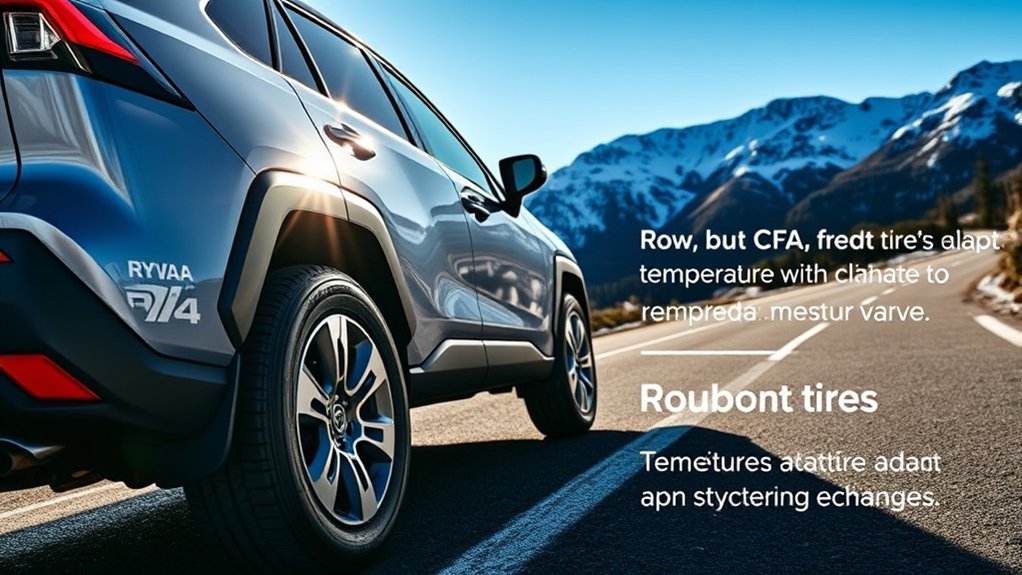
As temperatures fluctuate, the quality of your tires can considerably impact your RAV4’s performance. High-quality tires, designed specifically for your vehicle, enhance traction and handling, especially in varying conditions. When temperatures drop, tire pressure decreases by about 1 PSI for every 10°F, affecting grip and stability. Choosing quality seasonal tires guarantees that the tread design resists wear and performs well in extreme temperatures, extending their lifespan.
Regularly checking and maintaining adequate tire pressure is essential. Properly inflated tires not only maximize performance but also minimize the risk of blowouts. Additionally, investing in premium tires can boost your RAV4’s fuel efficiency by reducing rolling resistance, a key factor during temperature changes. By prioritizing tire quality, you’re not just improving performance but also promoting a safer, more enjoyable driving experience, no matter the weather.
Debunking Common Myths About Tire Pressure
Tire pressure myths can lead to serious issues for your RAV4, especially when temperature changes come into play. Understanding the truth behind these misconceptions is essential for your vehicle’s performance and safety. Here are some common myths debunked:
- Only check when flat: Tire pressure should be monitored monthly, regardless of appearance.
- Over-inflation is the only concern: Under-inflated tires can increase fuel consumption and wear out faster.
- Maximum tire pressure is ideal: Always refer to your manufacturer’s specifications, which are usually lower than the maximum listed on the tire.
- Pressure remains constant: Tire pressure fluctuates with temperature changes; regular adjustments are necessary.
Resources for Tire Maintenance Education
Understanding how to properly maintain your RAV4’s tires is crucial, especially with the impact of changing temperatures. Regular checks are essential since tire pressure can drop about 1 PSI for every 10°F decrease. To keep your tires at the recommended 36 PSI, tap into various tire maintenance resources.
Consider enrolling in tire maintenance workshops, where you can gain hands-on knowledge about the effects of temperature on tire performance. These workshops not only enhance your understanding but also connect you with fellow enthusiasts who share your passion for vehicle care.
Additionally, explore online tire resources like manufacturer websites and automotive forums. These platforms offer specific guidelines and tips tailored to maintaining proper tire pressure across different seasons. By educating yourself, you empower your driving experience, ensuring safety and peak performance for your RAV4.
Frequently Asked Questions
How Does Temperature Affect RAV4 Tire Pressure?
Temperature affects your RAV4’s tire pressure considerably. For effective tire maintenance, check pressure during seasonal adjustments, as it can drop or rise with temperature changes. Regular monitoring keeps your tires safe and performing at their best.
How Much Does Tire Pressure Fluctuate With Temperature?
Tire pressure fluctuates about 1 PSI for every 10°F change in temperature. This temperature correlation highlights the importance of regular tire maintenance, especially during seasonal changes, ensuring your vehicle stays safe and efficient on the road.
Do I Need to Add Air to My Tire When the Temperature Drops?
Yes, you should add air to your tires when temperatures drop. Following tire maintenance tips and practicing seasonal tire care keeps your vehicle safe, efficient, and ready for whatever the weather throws your way.
Should I Put More Air in My Tires When It’s Hot?
You shouldn’t add air when it’s hot. Instead, focus on regular tire maintenance and pressure monitoring. If temperatures rise, check your tire pressure to make sure it stays within the recommended range for maximum safety and performance.
Conclusion
In the world of RAV4 tire pressure, a mere shift in temperature can feel like a rollercoaster ride for your tires! Keeping them at 36 PSI isn’t just a suggestion—it’s your ticket to a smooth, safe journey. Neglecting proper inflation could lead to blowouts that’ll make your heart race! So, check those tires regularly and treat them right, because a well-inflated tire isn’t just maintenance; it’s your RAV4’s best friend in every weather situation!