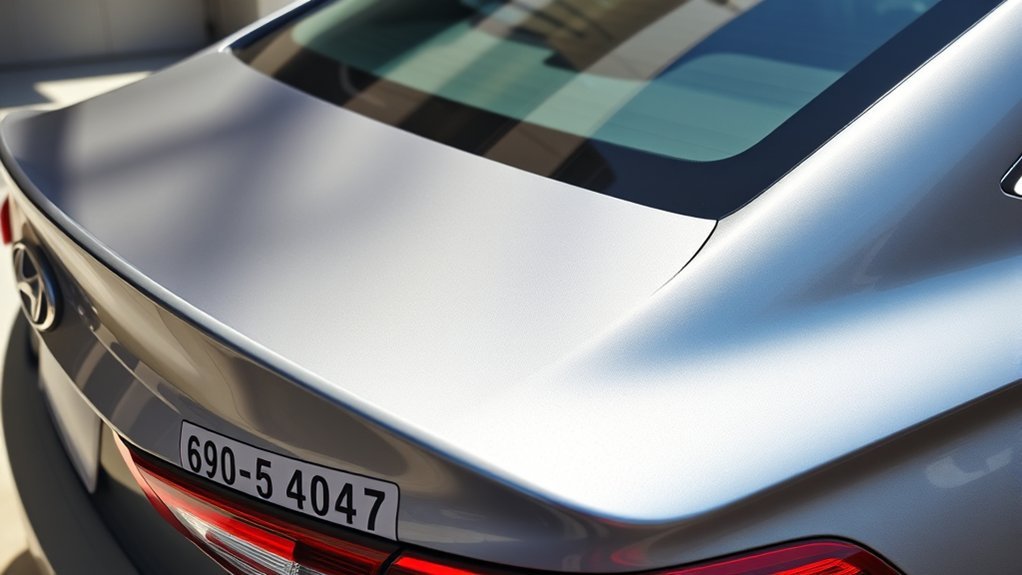
The Hyundai Sonata Hybrid solar roof was one of Hyundai’s most interesting hybrid features, but it is best understood as a feature from earlier Sonata Hybrid Limited models rather than a current 2026 Sonata Hybrid selling point. The system used roof-mounted solar cells to send supplemental electricity to the 12-volt and hybrid batteries, helping reduce battery drain and adding a small amount of driving range in sunny conditions.
Quick Answer
Hyundai’s Sonata Hybrid solar roof used high-efficiency roof panels to generate supplemental electricity for the vehicle’s 12-volt and hybrid batteries. Hyundai reported about 204 W of output, 22.8% solar-cell efficiency, and up to 1,300 km of extra annual driving distance under its sunlight assumptions. However, the solar glass roof was discontinued for the 2024 Sonata Hybrid.
Key Takeaways
- The Sonata Hybrid solar roof was a supplemental charging system, not a plug-in charging replacement.
- Hyundai reported 22.8% solar-cell efficiency, about 204 W panel output, and an estimated 1,300 km, or about 810 miles, of added annual driving under Korean sunlight assumptions.
- The feature helped support both the 12-volt battery and the hybrid drive battery, reducing alternator load and battery-discharge risk.
- The solar glass roof panel was discontinued for the 2024 Sonata Hybrid, so shoppers looking at new 2024–2026 models should not expect this feature.
- Current Toyota Prius Plug-in Hybrid models offer an available solar roof, but the Prius is a plug-in hybrid, so it is not a direct one-to-one comparison with the non-plug-in Sonata Hybrid.
Note: Solar-roof output depends heavily on sunlight, parking location, weather, roof cleanliness, season, and shade. A car parked in a garage or under trees will gain little to no solar benefit.
What Made the Sonata Hybrid’s Solar Roof Unique?
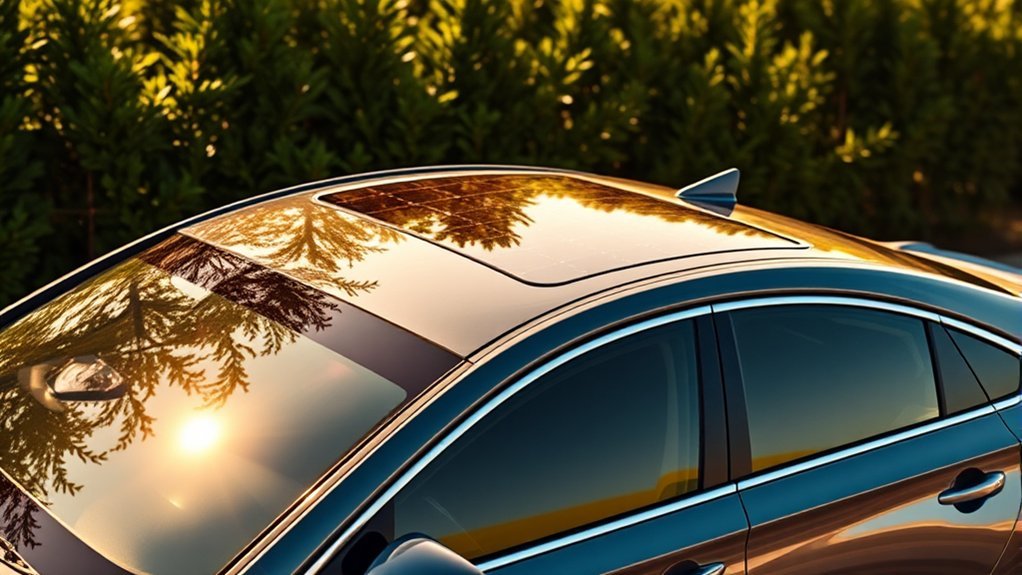
The Sonata Hybrid’s solar roof stood out because it was integrated into a mainstream hybrid sedan rather than a limited-run concept or ultra-expensive specialty vehicle. According to Hyundai Motor Group, the roof used solar cells rated at 22.8% efficiency and a solar-panel capacity of about 204 W.
The practical goal was not to turn the Sonata Hybrid into a solar-powered car. Instead, the roof supplied extra electricity to reduce the engine’s charging workload and help keep the battery system from discharging when the vehicle was parked outdoors. That made the feature most useful for drivers who regularly parked in direct sunlight for several hours a day.
Hyundai estimated that 5.8 hours of daily charging could add about 1,300 km, or roughly 810 miles, of driving distance per year. That number is useful, but it should be treated as an estimate based on specific sunlight assumptions, not a guaranteed result for every driver.
The Sonata Hybrid solar roof was best at adding small daily efficiency gains, not replacing fuel, charging stations, or normal hybrid operation.
Is the Sonata Hybrid Solar Roof Still Available?
No, not on current new Sonata Hybrid models. The solar glass roof panel was discontinued for the 2024 Sonata Hybrid Limited, and newer Sonata Hybrid trims use conventional roof or panoramic/glass-roof equipment instead of the older solar charging roof. If you are shopping for a new 2025 or 2026 Sonata Hybrid, buy it for its hybrid fuel economy, comfort, and technology—not for a solar roof.
If the solar roof is important to you, focus your search on earlier used Sonata Hybrid Limited models that were sold with the feature. Always confirm the exact trim and equipment from the window sticker, VIN-based build sheet, dealer listing, or physical inspection because not every Sonata Hybrid had the solar roof.
Pro Tip: When shopping used, ask for clear roof photos in direct light. Look for cracks, delamination, cloudy glass, water leaks, warning lights, and service history related to the roof, 12-volt battery, or hybrid battery system.
How Does the Solar Roof System Work?
The Sonata Hybrid solar roof converts sunlight into electricity through photovoltaic cells built into the roof panel. That electricity passes through a controller, which regulates the voltage before sending power into the vehicle’s battery system.
The important detail is that Hyundai designed the Sonata system to support both the 12-volt starter/accessory battery and the hybrid drive battery. The 12-volt battery powers electronics and standby loads, while the hybrid battery assists the electric motor. By feeding both systems, the solar roof could reduce how much work the engine-driven charging system had to do.
This differs from older solar-roof setups that used a separate intermediate solar battery before sending power to the drive battery. Fewer conversion steps can reduce energy losses, which is why Hyundai described the Sonata system as a more direct setup.
How Does the Solar Roof Impact Driving Distance?
The solar roof’s range benefit was small but real under the right conditions. Hyundai estimated that a day of charging could add about 3.6 km, or about 2.2 miles, of driving distance. Over a full year, under Hyundai’s 5.8-hour daily sunlight assumption, that equals about 1,300 km, or around 810 miles.
That does not mean every driver will see the same result. A Sonata parked outdoors in Arizona will likely collect more sunlight than one parked in a shaded driveway in a cloudy northern climate. A clean roof also performs better than one covered by snow, leaves, heavy dust, or a roof-mounted accessory.
- Best case: outdoor parking, direct sun, long daytime exposure, clean glass, and mild weather.
- Weak case: garage parking, tree shade, snow cover, short winter days, or heavy cloud cover.
- Realistic expectation: a small efficiency assist, not a dramatic change in how far the car can travel.
How Efficient Is the Sonata Hybrid’s Solar Roof in Charging?
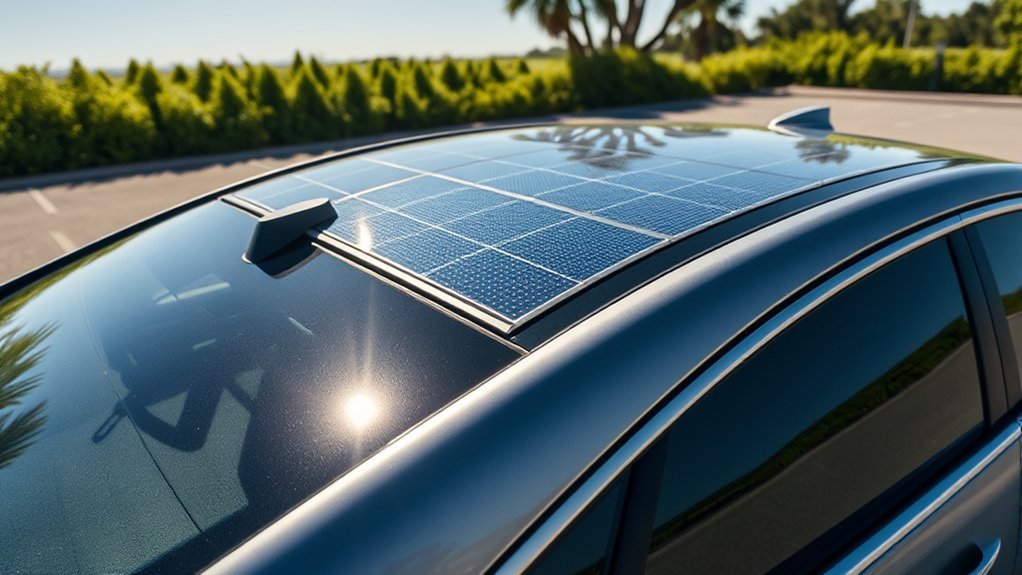
Hyundai reported that the Sonata Hybrid solar roof used solar cells with 22.8% efficiency and a panel output of about 204 W in good sunlight. The company also reported about 81,200 mAh of daily charging under its test assumptions.
That 81,200 mAh figure should not be read as “enough energy to power the whole car.” Current measured in mAh depends on voltage, and Hyundai used the figure to explain how much the system could help with battery support and discharge prevention. The key takeaway is simpler: the roof could provide enough supplemental electricity to meaningfully support accessory and battery-maintenance loads when the vehicle was parked in sunlight.
| Feature | Hyundai Sonata Hybrid Solar Roof | Important Context |
|---|---|---|
| Solar-cell efficiency | 22.8% | Hyundai-reported figure for the solar-roof cells |
| Panel output | About 204 W | Output depends on sunlight and roof condition |
| Estimated daily range gain | About 3.6 km, or 2.2 miles | Based on Hyundai’s stated assumptions |
| Estimated yearly range gain | About 1,300 km, or 810 miles | Assumes roughly 5.8 hours of daily charging |
| Current new-model availability | Discontinued for 2024+ Sonata Hybrid | Check used Limited trims if you want this feature |
How the Solar Roof Alleviates Engine Strain
The solar roof helped the Sonata Hybrid by reducing how often the engine and alternator system needed to replenish battery charge. In a hybrid, every small electrical load eventually matters because power must come from the battery, the engine, regenerative braking, or an outside source such as sunlight.
Solar Power Utilization
When sunlight hits the roof panel, the photovoltaic cells generate electricity. The controller then manages that power and sends it to the vehicle’s batteries. This works quietly in the background while the car is parked outside or exposed to sunlight during driving.
Reduced Alternator Demand
Because the solar roof can help maintain the 12-volt battery, the engine has less charging work to do through the alternator or charging system. That can slightly reduce fuel use, especially over long periods of sunny outdoor parking.
Enhanced Battery Support
The most practical benefit may be battery support. Hyundai highlighted the system’s ability to reduce discharge risk from standby electrical loads, including accessories such as dashboard cameras in markets where those are common. This does not guarantee that the battery will never discharge, but it can reduce the odds when the car receives regular sunlight.
Warning: Do not rely on the solar roof to maintain a weak or failing 12-volt battery. If the car struggles to start, shows battery warnings, or sits unused for long periods, have the battery and charging system tested.
Environmental Benefits of the Solar Roof
The Sonata Hybrid solar roof offered environmental benefits by using sunlight to provide a small amount of vehicle electricity. That can reduce the engine’s charging burden, slightly improve fuel efficiency, and lower fuel-related emissions over time.
Reduced Carbon Emissions
Hyundai stated that the solar roof supported the vehicle’s electric power source, improved fuel efficiency, and reduced CO2 emissions. The benefit is modest, but it is still useful because the roof produces electricity passively whenever conditions are favorable.
Enhanced Fuel Efficiency
Hyundai estimated that the solar roof could improve average fuel efficiency by about 7% under its stated assumptions. That estimate was not the same as the official EPA fuel-economy label, so it should be treated as an added real-world efficiency benefit rather than a guaranteed window-sticker number.
Sustainable Energy Utilization
The best way to view the solar roof is as an efficiency layer. It will not turn the Sonata Hybrid into an electric vehicle, but it can capture otherwise unused sunlight and turn it into a small daily energy gain.
How Does the Sonata Hybrid Compare to the Toyota Prius?
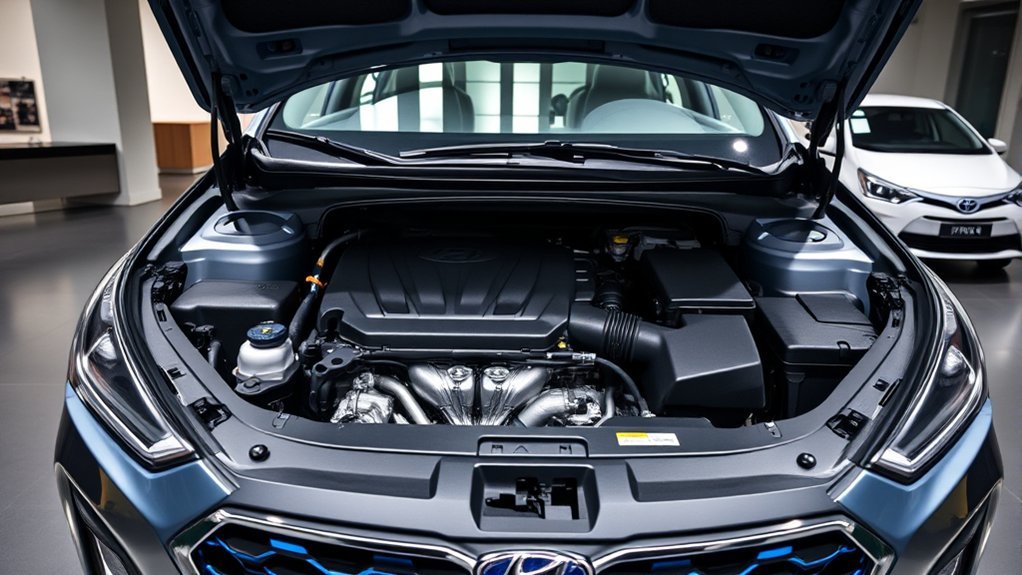
The Sonata Hybrid and Toyota Prius solar-roof comparison needs model-year context. Hyundai’s older comparison emphasized that the Sonata solar roof directly supported both the starter/accessory battery and the hybrid drive battery, while the Prius Prime system of that era used a separate solar battery before transferring energy.
That older comparison is still useful for explaining Hyundai’s engineering approach, but it should not be treated as a simple current-market verdict. The current Toyota Prius Plug-in Hybrid offers an available solar roof that can help charge the battery while parked and support driving functions later. The Prius Plug-in Hybrid is also a plug-in hybrid, while the Sonata Hybrid is a conventional hybrid, so the two vehicles solve different problems.
| Question | Sonata Hybrid Solar Roof | Prius Plug-in Hybrid Solar Roof |
|---|---|---|
| Vehicle type | Conventional hybrid | Plug-in hybrid |
| Current availability | Not offered on new 2024+ Sonata Hybrid models | Available on current Prius Plug-in Hybrid models |
| Best use case | Small efficiency gain and battery support | Supplemental plug-in battery charging and accessory support |
| Shopping advice | Look used and verify the Limited trim equipment | Check current packages and availability by market |
Why Choose the Sonata Hybrid for Eco-Friendly Driving?
The Sonata Hybrid is still a strong eco-friendly sedan choice, even without the current solar roof. For 2026, FuelEconomy.gov lists the regular 2026 Sonata Hybrid at 47 mpg combined, while the 2026 Sonata Hybrid Blue is rated at 51 mpg combined.
If you are shopping used and specifically want the solar roof, the earlier Sonata Hybrid Limited can be appealing because it combines high hybrid fuel economy with passive solar battery support. If you are shopping new, the main reasons to choose the Sonata Hybrid are its fuel economy, roomy sedan layout, standard hybrid operation, and long EPA-estimated range per tank.
- Choose a used solar-roof Sonata Hybrid if you park outdoors often and want the novelty and small efficiency benefit of solar charging.
- Choose a current Sonata Hybrid if your priority is fuel economy, comfort, warranty coverage, and newer technology.
- Choose a Prius Plug-in Hybrid if you want plug-in driving with an available solar-roof option on current models.
Used-Buyer Checklist for Sonata Hybrid Solar Roof Models
Before buying a used Sonata Hybrid with the solar roof, confirm the feature and inspect it carefully. Solar glass and hybrid-system repairs can be expensive, so the lowest price is not always the best deal.
- Confirm the trim: verify that the car is a trim and model year that actually included the solar roof.
- Inspect the roof glass: look for cracks, chips, clouding, seal problems, or signs of water intrusion.
- Check charging behavior: ask the seller or dealer whether the solar-roof display or battery support functions operate normally.
- Review service records: look for 12-volt battery replacements, hybrid battery warnings, roof repairs, or electrical issues.
- Get a pre-purchase inspection: use a shop familiar with Hyundai hybrids, not only a general body inspection.
- Match expectations to parking habits: the solar roof is far less useful if the car usually sits in a garage.
Frequently Asked Questions
How does the Hyundai Sonata Hybrid work?
The Hyundai Sonata Hybrid combines a gasoline engine, electric motor, hybrid battery, regenerative braking, and a 6-speed automatic transmission. The system can use electric assistance at low speeds, recover energy during braking, and use the gas engine for longer-range driving.
Does the 2026 Hyundai Sonata Hybrid have a solar roof?
No. The solar glass roof panel was discontinued for the 2024 Sonata Hybrid, so current 2025 and 2026 Sonata Hybrid shoppers should not expect a solar charging roof. Current models focus on hybrid fuel economy, technology, and comfort features.
Which Hyundai Sonata Hybrid models had the solar roof?
The solar roof was associated with earlier Sonata Hybrid Limited models, especially the generation introduced around the 2020 model year. Availability can vary by market and model year, so verify the exact vehicle by VIN, original window sticker, dealer equipment list, or physical inspection.
Which Hyundai Sonatas should used buyers research carefully?
Rather than avoiding a year blindly, research the exact car. Check recalls, service records, hybrid battery condition, accident history, roof condition, and whether the 12-volt battery or hybrid components have been serviced. A clean inspection matters more than a generic model-year warning.
How far can a Hyundai Sonata Hybrid go on a full tank?
It depends on trim, model year, driving style, and weather. For 2026, FuelEconomy.gov lists the Sonata Hybrid at 620 miles of total range and the Sonata Hybrid Blue at 673 miles of total range. Real-world range can be lower with cold weather, high speeds, short trips, or heavy accessory use.
Can the Sonata Hybrid solar roof replace gasoline?
No. The solar roof only adds supplemental electricity. It can support the batteries, reduce discharge risk, and add a small amount of range in sunny conditions, but the Sonata Hybrid still depends on gasoline and its standard hybrid system for normal driving.
Conclusion
The Hyundai Sonata Hybrid solar roof was a smart piece of efficiency engineering, especially for drivers who parked outdoors in strong sunlight. Its reported 22.8% solar-cell efficiency, 204 W output, and estimated 1,300 km of extra annual driving made it more than a styling gimmick, but its benefit was still supplemental. For current new-car shoppers, the most important update is that the solar glass roof was discontinued for the 2024 Sonata Hybrid. For used buyers, it remains an interesting feature worth considering as long as the roof, battery system, and service history check out.
Sources
- Hyundai Motor Group: Everything About the Sonata Hybrid’s Solar Roof — backs up the 22.8% efficiency, 204 W output, 1,300 km/year estimate, 81,200 mAh daily charging figure, and Sonata/Prius system comparison.
- Hyundai News: Hyundai launches first car with solar roof charging system — backs up launch context, battery-support role, fuel-efficiency benefit, CO2-reduction claim, and 1,300 km/year estimate.
- J.D. Power: 2024 Hyundai Sonata Review Update — backs up the discontinuation of the solar glass roof panel for the 2024 Sonata Hybrid Limited.
- FuelEconomy.gov: 2026 Hyundai Sonata Hybrid — backs up current 2026 Sonata Hybrid fuel economy and total range.
- FuelEconomy.gov: 2026 Hyundai Sonata Hybrid Blue — backs up current 2026 Sonata Hybrid Blue fuel economy and total range.
- Toyota: 2026 Prius Plug-in Hybrid — backs up current Prius Plug-in Hybrid solar-roof availability and function.