
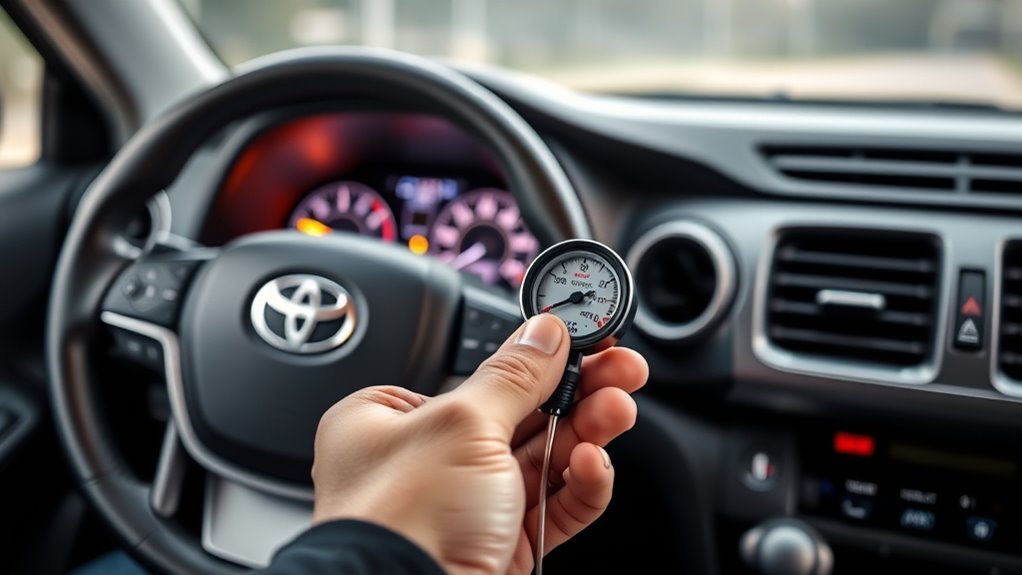
Your RAV4’s TPMS uses sensors in each wheel to wirelessly report tire pressure to a central receiver, so you’ll get per-tire alerts when pressure drops about 5–10 psi or when a sensor wakes with motion. A steady light means low pressure; a flashing light signals a system fault. Check pressures cold with a reliable gauge, inflate to the PSI on the door jamb, then reset if needed; persistent warnings usually need diagnostics, and below you’ll find clear steps and tips.
How to Check, Inflate, and Reset Your RAV4 TPMS
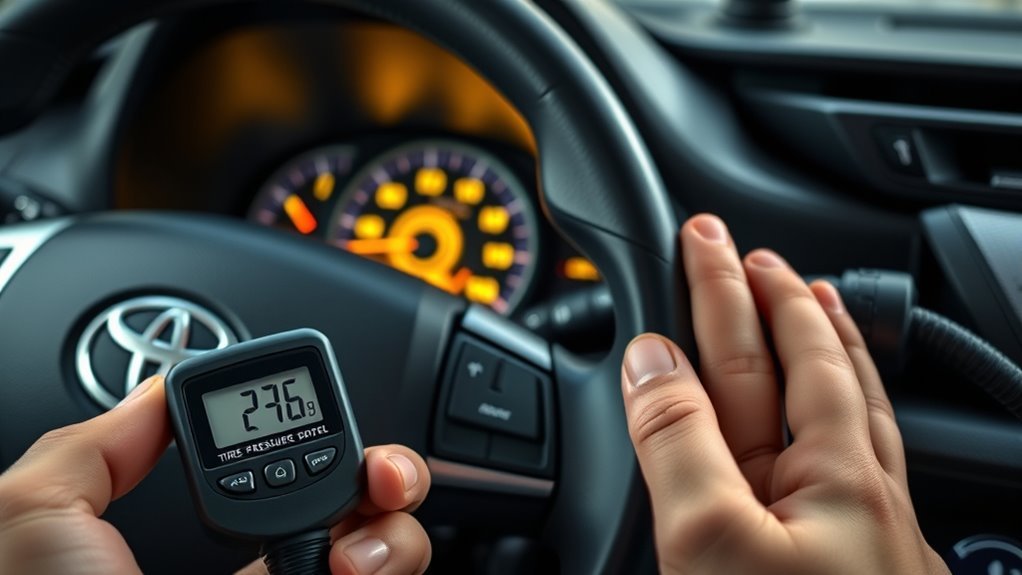
Start by checking each tire with a reliable gauge and inflating them to the PSI listed on your driver’s door jamb; if the TPMS warning light is on, add air to the affected tire(s) until they reach the recommended pressure. You’ll want to prioritize pressure gauge selection: pick a calibrated, easy-to-read gauge so you get consistent readings every time. Use tire maintenance tips like checking pressures when tires are cold and rechecking after temperature shifts; that keeps readings accurate and frees you from surprise warnings.
After inflation, start the engine and locate the TPMS reset button—usually on the instrument panel—and hold it until the light blinks slowly three times. If the warning stays on, try a manual reset or inspect sensors for faults; persistent illumination can signal a sensor issue rather than pressure. Regular checks and the right tools give you control, safety, and the independence to maintain your RAV4 confidently.
Why Your TPMS Light Came On : What Each Symbol Means
Once you’ve checked and topped off your tires, it’s helpful to understand what the TPMS symbols actually mean so you can respond correctly when the light appears. The solid TPMS light is your primary tire pressure indicator: it tells you one or more tires are below the recommended pressure and need immediate attention. A flashing TPMS light signals a system malfunction — don’t ignore it, because sensors or the system may not be reporting reliably.
Remember temperature shifts can drop tire pressure and trigger the TPMS light meanings even when damage isn’t present, so recheck pressures after the vehicle sits in new conditions. After you inflate tires or rotate them, the light may require a manual reset by holding the reset button until it blinks three times. If the TPMS stays on despite correct pressures and a reset, seek a qualified technician to diagnose deeper faults. Knowing these symbols frees you to act quickly and safely.
How RAV4 TPMS Works (Sensors, Receiver, and Data)
Think of the RAV4’s TPMS as a distributed pressure monitor: direct sensors mounted in each wheel measure tire pressure and wirelessly report real-time readings to a central receiver (usually in the C‑pillar). You get precise, per‑tire data because each sensor technology unit samples pressure and transmits it via wireless communication to the receiver. Sensors wake with motion or when pressure shifts sharply, so they’ll detect deflations around 5–10 psi and resume reporting after brief dormancy.
The receiver collects individual tire values, timestamps them, and passes alerts to your dashboard when a tire falls below safe limits. Sensors use long‑life, non‑replaceable batteries designed for 10–15 years, though harsh conditions can shorten that life and require sensor replacement. This architecture gives you transparent, autonomous monitoring: you’ll know which tire needs attention without guesswork, preserving safety and the freedom to move without constant manual checks.
RAV4 TPMS Troubleshooting: Quick Fixes for Common Symptoms
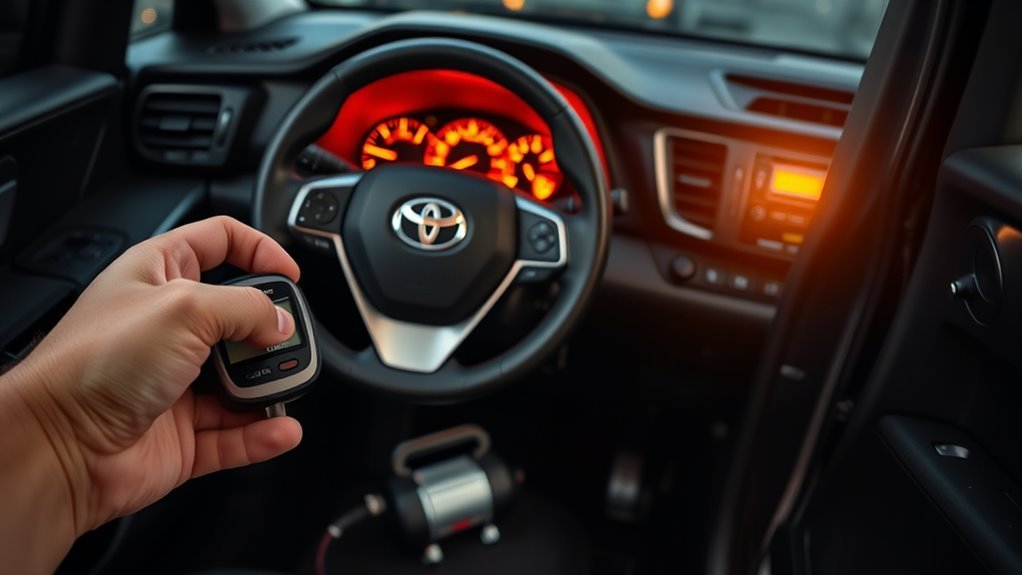
Now that you know how the RAV4’s TPMS gathers and reports tire data, here’s how to quickly handle common warning signs so you can get back on the road. If the TPMS light blinks at startup, that flashing signals a malfunction—don’t ignore it; schedule a Toyota dealership diagnostic since onboard fixes won’t resolve internal faults. For a steady TPMS light, check pressures with a gauge and inflate to spec; the system shouldn’t be your sole source for pressure readings. After adding air, if the light persists, use the reset button until the indicator blinks slowly three times to clear the alert. If tire rotation or replacement triggers the warning, perform a reset because the system may not auto-update wheel positions. For recurring alerts or unsuccessful resets, pursue sensor malfunction solutions through professional diagnostics. These steps keep you empowered, reduce downtime, and prevent needless towing or surprises on the road.
RAV4 TPMS Sensor Replacement & Programming: DIY vs Dealer
Although swapping a RAV4 TPMS sensor can seem straightforward, the real work is in programming: pre-2018 models generally need dealer-level tools, while post-2018 sensors often learn automatically with normal driving or can be programmed with affordable aftermarket tools. You can DIY on newer RAV4s—install the sensor, drive a few miles, and the system usually relearns—but keep the original sensor ID handy when required. Aftermarket sensors lower costs but risk sensor compatibility problems; OEM units avoid repeated failures and give predictable results.
If you own a pre-2018 RAV4, expect dealer intervention unless you buy a capable aftermarket scan tool that supports programming tools and TPMS protocols. That investment frees you from dealership fees but demands technical care. Maintain sensors: inspect valve tips, clean corrosion, and replace aging units proactively. You’ll save money and retain control if you balance cost, reliability, and your comfort with programming tools and procedures.
Frequently Asked Questions
How Does the Toyota TPMS System Work?
TPMS sensors measure each tire’s tire pressure and send real-time data to the vehicle’s receiver; you’ll get a warning light if pressure drops, and you’ll reset sensors after rotations or replacements to keep monitoring accurate.
Does Toyota RAV4 Tell You Which Tire Is Low?
No, it won’t tell you which tire is low; you’ll need to inspect each tire or use a gauge. Use TPMS sensors, follow tire maintenance tips, and stay proactive so you’re free from unexpected flats and unsafe driving.
Why Is My Tire Pressure Light on but My Tires Are Fine on My Toyota RAV4?
Your TPMS light’s on because it may need a TPMS reset after service, a sensor malfunction, environmental factors shifting pressure, or missing tire calibration—check sensors, reset system, and refuse to accept ignored safety warnings.
Conclusion
You’ve now got the essentials to keep your RAV4’s TPMS humming: check pressures, inflate to spec, reset after rotation or sensor work, and spot common sensor faults fast. Don’t ignore the light — it’s not crying wolf, it’s saving you from costly tire damage and dangerous blowouts. Whether you DIY a sensor swap or let the dealer program it, follow the steps carefully, use proper tools, and get professional help if the problem persists.




[…] the inflator gauge after inflation to confirm the pressure. Monitor tire pressure closely, since a 1 PSI deviation can affect performance. Use the air compressor as directed and […]