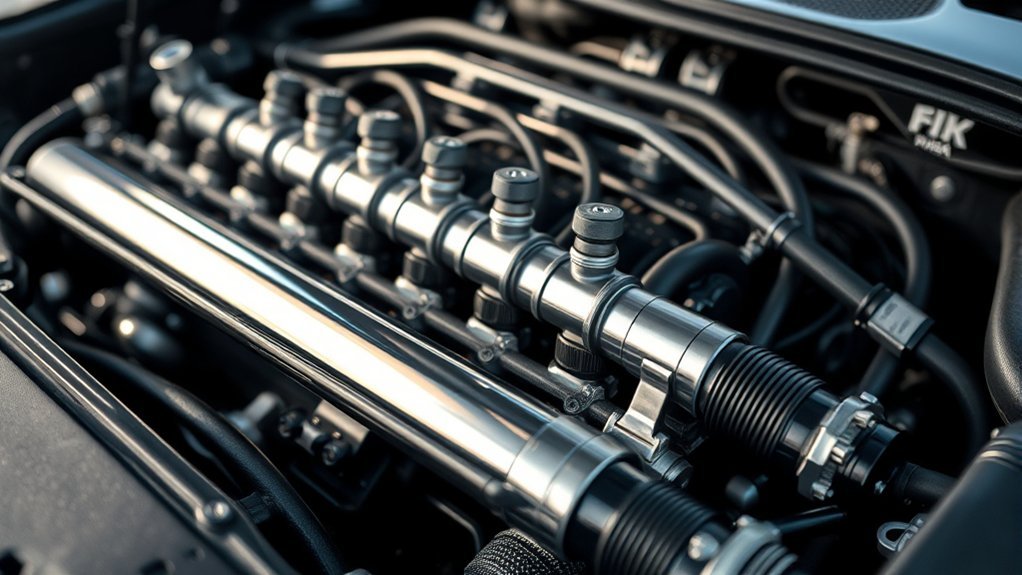
Multi-Port Injection (MPI) in the Hyundai Sonata maximizes fuel delivery by utilizing individual injectors for each cylinder. This setup guarantees precise fuel atomization, enhancing combustion efficiency. Your engine’s ECU continuously analyzes real-time data from various sensors, adjusting the fuel-air mixture for peak performance. This results in improved cold start capability, better acceleration, and reduced emissions. If you want to explore how these components work together, there’s more to uncover about MPI’s advantages.
What Is Multi-Port Injection in the Hyundai Sonata?
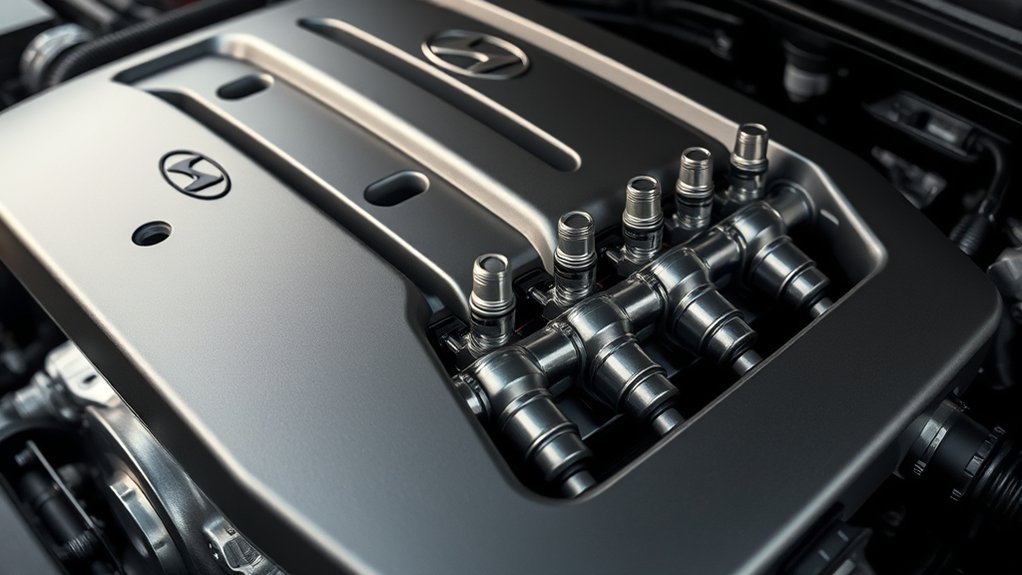
Multi-Port Injection (MPI) in the Hyundai Sonata represents a sophisticated approach to fuel delivery, enhancing engine performance. This system employs individual fuel injectors for each cylinder, guaranteeing precise fuel delivery and improving fuel efficiency. The Electronic Control Unit (ECU) continuously analyzes real-time data from various sensors, calculating the ideal fuel-air mixture. By positioning the injectors near the intake valves, the Sonata’s MPI system improves cold start performance and overall acceleration.
Moreover, the Sonata integrates multiple fuel injector types, combining MPI with Gasoline Direct Injection (GDI) to maximize combustion efficiency and minimize carbon deposits. This dual-port fuel injection setup not only boosts performance but also greatly reduces emissions, aligning with eco-conscious driving. Regular maintenance is essential to prevent injector clogging and maintain peak fuel efficiency, particularly when using high-quality fuel. This attention to detail guarantees your Sonata delivers its best performance, empowering your driving experience.
Essential Components of the Multi-Port Fuel Injection System
The essential components of the Multi-Port Fuel Injection (MPFI) system in the Hyundai Sonata work in concert to guarantee peak engine performance. At the heart of this system are individual fuel injectors for each cylinder, ensuring precise fuel delivery for maximum combustion efficiency. The Electronic Control Unit (ECU) plays an important role by processing data from various sensors, such as the Mass Air Flow (MAF) and Throttle Position Sensor (TPS), to calculate the ideal fuel-air mixture.
Strategically positioned near the intake valves, the fuel injectors allow for accurate timing and distribution during the intake stroke. A fuel rail distributes pressurized fuel to each injector, while the fuel pressure regulator maintains consistent fuel pressure throughout the system. Additional sensors, including Oxygen (O2) and Crankshaft Position (CKP), provide real-time feedback to the ECU, enabling closed-loop control that adjusts the fuel-air mixture and enhances overall engine performance.
Understanding the Multi-Port Injection Process?
Understanding how fuel is delivered through the Multi-Port Injection (MPI) process is key to grasping its impact on engine performance. In the Hyundai Sonata, each cylinder benefits from individual fuel injectors, ensuring precise fuel delivery. The Electronic Control Unit (ECU) calculates the ideal fuel-air mixture by analyzing real-time data from various sensors, enabling dynamic adjustments during operation.
Fuel is injected into the intake manifold or directly near the intake valves, enhancing fuel atomization for improved combustion efficiency. This method allows for a more uniform distribution of fuel across all cylinders, greatly boosting cold start performance while reducing harmful emissions. Additionally, the different injector types used in MPI systems contribute to increased power output and fuel economy compared to older Single-Point Injection systems. Understanding these mechanics reveals how MPI optimizes engine operation, delivering both performance and efficiency in your Sonata.
Why Multi-Port Injection Boosts Engine Performance
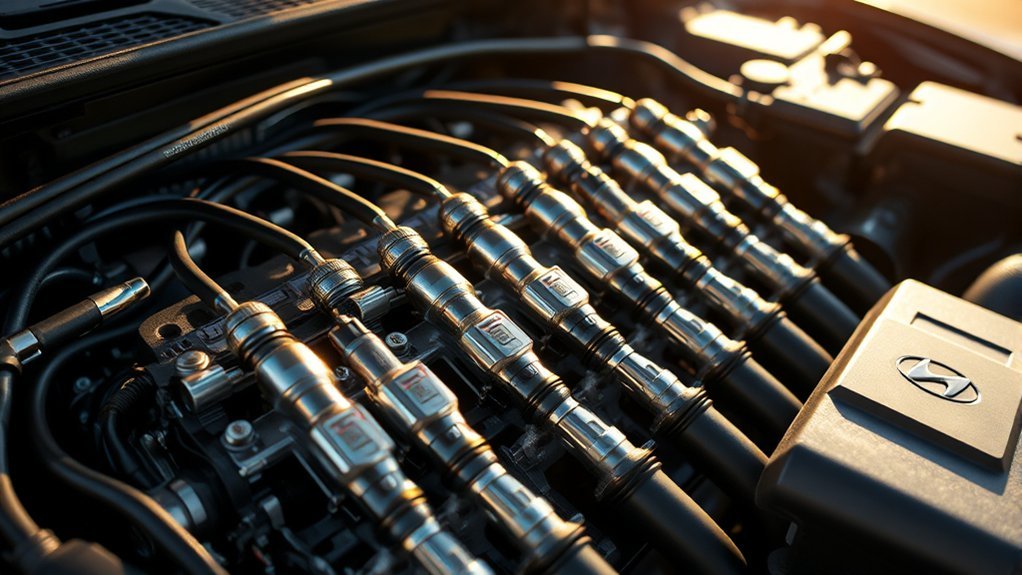
When you consider engine performance, the precision of fuel delivery in the Hyundai Sonata plays an essential role. Multi-Port Injection (MPI) delivers fuel to each cylinder individually, optimizing the fuel-air mixture for enhanced combustion efficiency. This system adjusts fuel delivery based on real-time engine data, considerably improving power output and responsiveness, which translates to better acceleration.
How Multi-Port Injection Stacks Up Against Gasoline Direct Injection?
While both Multi-Port Injection (MPI) and Gasoline Direct Injection (GDI) aim to enhance engine performance, their methodologies and outcomes differ considerably. MPI delivers fuel to each cylinder through individual injectors, creating a precise fuel-air mixture, which often results in better cold start performance and lower emissions. In contrast, GDI injects fuel directly into the combustion chamber at high pressures, potentially offering higher power output and improved fuel efficiency under certain conditions.
However, GDI systems are more susceptible to carbon deposits due to their direct injection method, which can lead to significant carbon build-up on intake valves. MPI, by spraying fuel directly onto the valves, minimizes this issue. Additionally, MPI systems are generally simpler and require less specialized maintenance compared to the more complex GDI systems. Ultimately, while GDI may excel in power, MPI’s advantages in efficiency and lower carbon deposits make it a compelling choice for many drivers.
Frequently Asked Questions
How Does a Multipoint Fuel Injection System Work?
A multi-point fuel injection system maximizes fuel atomization by delivering precise amounts to each cylinder, enhancing engine efficiency. It adjusts fuel delivery based on sensor data, ensuring peak performance and reduced emissions for your vehicle.
What Are the Disadvantages of MPFI?
MPFI systems can feel like a ticking clock; while they offer precision, they also bring disadvantages. You’ll face increased maintenance costs, potential fuel efficiency drops, and risks from low-quality fuel, impacting your engine’s performance.
Is Multi-Point Fuel Injection Good?
Yes, multi-point fuel injection notably improves fuel efficiency and engine performance. By delivering precise fuel amounts, it optimizes combustion, enhances power output, and reduces emissions, making it an excellent choice for modern vehicles.
Conclusion
In conclusion, multi-port injection enhances your Hyundai Sonata’s engine efficiency, improves fuel atomization, and optimizes performance. By delivering precise amounts of fuel directly into the intake manifold, it guarantees smoother acceleration, better throttle response, and reduced emissions. While gasoline direct injection has its advantages, multi-port injection remains a reliable choice for balanced power and efficiency. Ultimately, understanding these systems helps you appreciate the engineering behind your vehicle’s performance and longevity.