Your RAV4’s Blind Spot Monitor (BSM) and Rear Cross Traffic Alert (RCTA) can help you notice traffic you might miss during lane changes or when backing out. These systems use rear side radar sensors, mirror indicators, and audible alerts to support your own checks. They help most when you keep them turned on, keep the sensor areas clean, and still use your mirrors, signals, and shoulder checks every time.
Quick Answer
Quick Answer
The RAV4 Blind Spot Monitor warns you when another vehicle enters a blind spot beside your SUV. Rear Cross Traffic Alert warns you when vehicles approach from the side while you reverse at low speed. Use both systems as support tools, not as replacements for mirrors, turn signals, and shoulder checks.
Key Takeaways
- BSM alerts you with side mirror lights when it detects a vehicle in a nearby blind spot.
- RCTA helps warn you about cross traffic while you back out of a parking space or driveway.
- Both systems need clear rear sensor areas to work as well as possible.
- You should still check mirrors, use turn signals, and look over your shoulder before moving.
- Persistent warning lights or missing startup checks need service diagnostics.
What the RAV4 Blind Spot Monitor (BSM) and RCTA Do
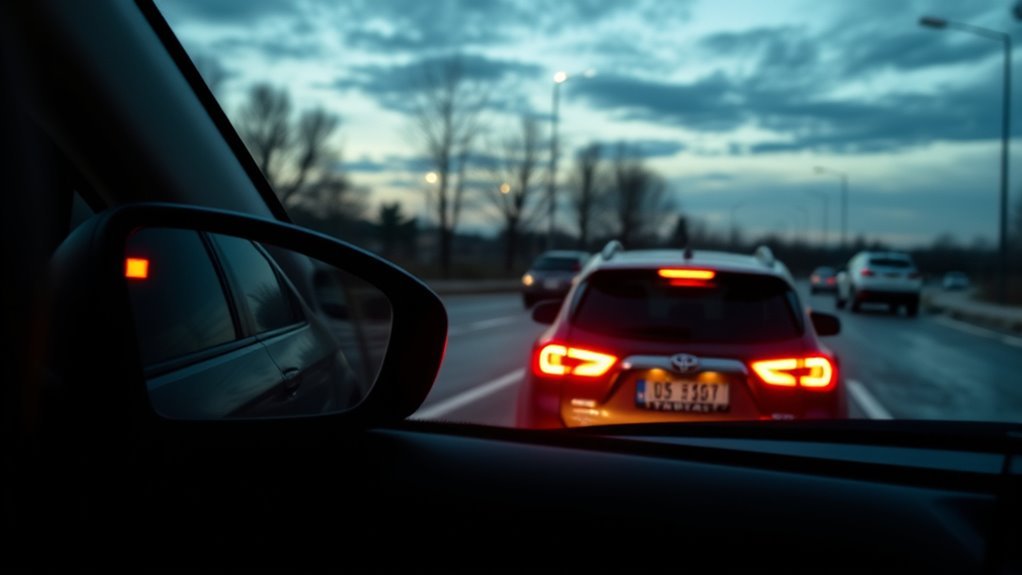
The Blind Spot Monitor helps you make safer lane-change choices by watching areas beside and slightly behind your RAV4. When the system detects a vehicle in one of those zones, it lights the indicator in the matching side mirror.
Rear Cross Traffic Alert helps when you reverse from a parking space or driveway. Toyota says RCTA works when your vehicle moves in reverse at less than about 5 mph and detects vehicles approaching from the side.
These systems can reduce stress, but they can’t see every risk. Weather, dirt, bumper damage, nearby walls, trailers, and unusual traffic angles can limit detection.
Warning: Never rely only on BSM or RCTA because Toyota treats them as driver-assist systems, not collision-avoidance systems.
Turn BSM/RCTA On, Off, and Read the Warning Lights
Use the BSM/RCTA control in your RAV4 to turn the systems on or off. Depending on model year and trim, you may find this control as a dashboard button or in the vehicle settings menu.
When BSM detects a vehicle beside you, the side mirror indicator lights up. If you signal toward that occupied lane, the indicator flashes to draw your attention before you move.
RCTA uses visual and audible warnings when it detects cross traffic while you reverse. Treat that chime as a warning to stop, check both sides, and confirm the path before you keep backing up.
If the dashboard shows a BSM or RCTA warning message, don’t ignore it. Clean the rear bumper sensor areas first, then check your owner’s manual if the message stays on.
How RAV4’s BSM Sensors Detect Vehicles and Signals
The RAV4 uses rear side radar sensors near the back corners of the vehicle. These sensors help the system judge the position and movement of nearby traffic.
The BSM control system checks whether another vehicle sits in the detection zone. When it meets the detection rules, the system turns on the mirror indicator for that side.
If you activate your turn signal while another vehicle remains in the monitored area, the indicator flashes. That extra warning helps you pause before making a risky lane change.
Sensor performance depends on clear radar paths. Dirt, snow, ice, stickers, bumper repairs, trailer hitches, and nearby objects can affect system behavior.
Note: Feature names and menus can vary by RAV4 model year, so confirm details in your exact owner’s manual.
Use BSM Safely: Lane Changes, Turn Signals, and Reversing
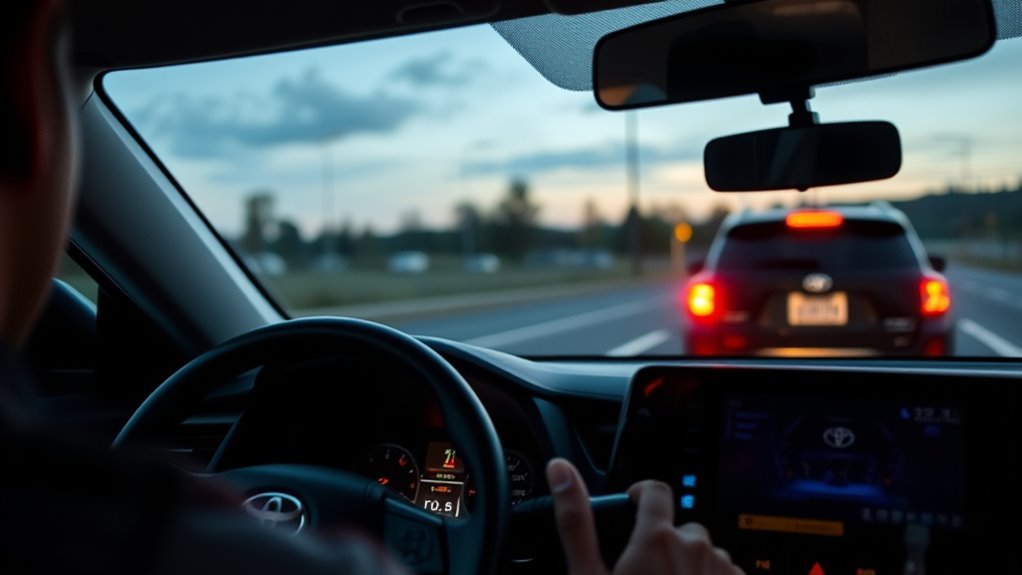
Use BSM as one part of your lane-change routine. Check the mirror indicator, signal your move, check your mirrors, and glance over your shoulder before you steer.
- Check the mirror indicator before you start a lane change.
- Use your turn signal early so the system can warn you if needed.
- Confirm traffic with your mirrors and a shoulder check.
- Stop reversing when RCTA warns you about side traffic.
- Let your own view and judgment decide the final move.
RCTA helps most in parking lots, driveways, and tight spaces with blocked side views. It can warn you about cross traffic, but you still need to reverse slowly and scan both directions.
Common Limitations and Quick Troubleshooting for BSM/RCTA
BSM and RCTA depend on the right conditions, clear sensor areas, and proper system status. If you turn the system off, you should not expect mirror alerts or cross-traffic warnings.
RCTA only works in reverse at low speed. Toyota’s support information states that the system detects approaching automobiles within a set speed range, so it may not warn you about every object or every fast-moving vehicle.
Start troubleshooting with simple checks before you assume a major fault. Use this order:
- Confirm that BSM and RCTA are turned on.
- Clean the rear bumper areas near the radar sensors.
- Check for snow, mud, stickers, cargo, or accessories near the sensors.
- Restart the vehicle and watch for the normal indicator check.
- Test the system only in safe traffic and parking conditions.
- Schedule dealer service if warnings stay on or alerts remain inconsistent.
Do not cover or paint the sensor areas unless a qualified technician confirms the repair method. Poor bumper repairs can affect radar performance and create false alerts or missed alerts.
When to Get Professional Service for BSM/RCTA
Book service if the BSM warning stays on after cleaning the rear bumper. You should also get help after rear-end damage, bumper replacement, sensor replacement, or repeated false warnings.
A dealer or qualified technician can scan for diagnostic trouble codes and check sensor alignment. That matters because radar sensors need correct position and calibration to read nearby traffic well.
Pro tip: After any rear bumper repair, ask the shop whether the BSM radar sensors need inspection or calibration.
Frequently Asked Questions
What Is Toyota’s Blind Spot Monitor?
Toyota’s Blind Spot Monitor is a driver-assist feature that warns you about vehicles in nearby blind spots. It uses side mirror indicators to help you make safer lane-change choices.
How Does the Blind Spot Monitoring System Work?
The system uses rear side radar sensors to monitor nearby lanes. When it detects a vehicle in a blind spot, it lights the matching side mirror indicator.
Does RCTA Work at Normal Driving Speeds?
No. RCTA supports low-speed reversing, such as backing out of a parking space. Toyota states that the feature works when your vehicle reverses at less than about 5 mph.
Why Is My RAV4 BSM Warning Light On?
A BSM warning light can appear when the system detects a fault or when sensor areas need attention. Clean the rear bumper areas first, then schedule service if the warning remains.
Can BSM and RCTA Replace Mirror Checks?
No. BSM and RCTA only support your awareness. You still need to check mirrors, use signals, look over your shoulder, and reverse slowly.
Safety Disclaimer: This article gives general safety information only. Always follow your exact RAV4 owner’s manual, road laws, and qualified service guidance before making driving or repair decisions.
Conclusion
The RAV4’s Blind Spot Monitor and Rear Cross Traffic Alert can help you notice traffic beside or behind you, but they can’t replace safe driving habits. Keep the systems on when you need them, keep the rear sensor areas clean, and respond quickly to warning messages.
Before each lane change or reverse move, use the system alerts as one more check, not the final answer. Your safest move starts with slow, deliberate driving and a clear look around the vehicle.
References
- How does the Blind Spot Monitor with Rear Cross-Traffic Alert work? — Toyota Customer Service
- 2021 RAV4 BSM (Blind Spot Monitor) — Toyota Owners
- 2026 RAV4 Hybrid Product Summary — Toyota Canada, 2026