Toyota Safety Sense on your RAV4 bundles forward-facing camera and radar functions—Pre-Collision System, Lane Departure Alert with steering assist, Adaptive Cruise Control, Road Sign Assist, and Automatic High Beams—to detect hazards, warn you, and apply brakes or subtle steering corrections when needed. You’ll enable and tune each feature in Vehicle Settings or via the steering-wheel TSS button; performance drops in poor weather or with blocked sensors. Keep attentive; continue for detailed setup, limits, and troubleshooting guidance.
Which TSS Features the RAV4 Has (Quick Checklist)
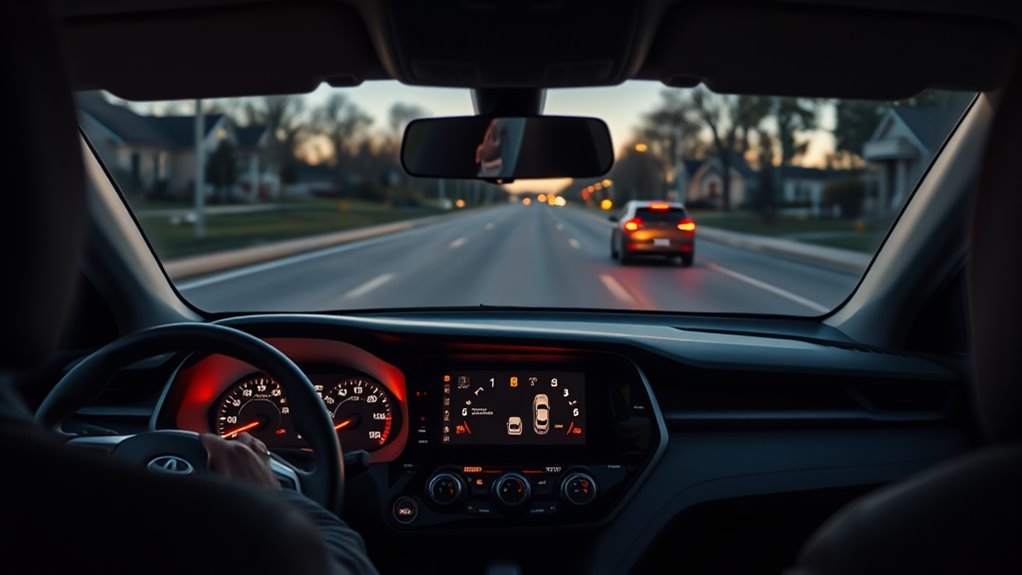
The RAV4’s Toyota Safety Sense package includes six core systems you should know: PCS features detect vehicles and pedestrians, issuing alerts and applying brakes to reduce collision risk. You’ll value PCS for measurable intervention that can reduce impact speed or prevent crashes. LDA benefits keep you centered by warning on unintentional lane departures and providing light steering input to maintain lane position, supporting confident, liberated travel. ACC advantages maintain set speed while automatically matching the flow of traffic ahead, lowering workload and smoothing highway cruising—data shows reduced speed variance and following-distance violations. RSA functionality recognizes and displays critical signs—speed limits, stop signs—on the Multi-Information Display, keeping legal awareness in view. AHB operation automatically switches high and low beams based on surrounding lighting and traffic, improving night detection ranges without manual toggling. Together these systems form a focused, data-driven safety suite that lets you drive with greater control, situational awareness, and personal freedom.
How to Enable and Use TSS on Your RAV4 (Quick Setup)
Press the TSS button on the steering wheel to activate the main TSS switch and facilitate Pre-Collision System, Lane Departure Alert, and related features. Use the vehicle settings menu to customize Pre-Collision sensitivity and confirm Lane Departure Alert behavior (including temporary disable via its steering-wheel button). Keep headlights set to “on” or “auto” to guarantee Adaptive High Beam and Road Sign Assist operate and display signs on the multi-information screen.
Activate TSS Main Switch
Locate the TSS main switch on your RAV4’s dashboard or steering wheel and enable it to activate Pre‑Collision System, Lane Departure Alert, Adaptive Cruise Control, and other safety functions. Press the button each time you start the vehicle so TSS Benefits are active from ignition. This single action initiates Safety Enhancements that reduce collision risk, support lane-keeping, and permit adaptive speed control with measured following distance. Data-driven status indicators on the dash confirm system readiness; if a fault appears, consult the Owner’s Manual and service center. You can later adjust sensitivity settings for features like Pre‑Collision via the settings menu, but initial activation is mandatory to engage core protections. Enable TSS to reclaim control through technology designed to protect you.
Customize Safety Settings
When you start customizing TSS, first open the vehicle settings menu and confirm Pre‑Collision System and Lane Departure Alert are enabled so core protections are active; you’ll then adjust feature sensitivities and behavior to match your driving. Use concise safety preferences to set PCS sensitivity (near/normal/far), enable Road Sign Assist on the multi-information display, and learn Lane Departure Alert cues (flashing yellow line; temporary disable via turn signal). Activate Adaptive Cruise Control from the steering-wheel button and set following distance.
- Set PCS sensitivity to match urban or highway profiles.
- Configure Lane Departure alerts and signal-based temporary suppression.
- Enable Road Sign Assist and confirm display parameters.
These feature adjustments free you to drive with controlled risk, measurable confidence, and clear data feedback.
RAV4 Pre‑Collision System: How It Warns and Brakes
The RAV4’s Pre‑Collision System continuously scans the road ahead with a front camera and radar sensor to detect vehicles, pedestrians, and bicyclists, and it issues visual and audible alerts plus a dashboard warning if a collision looks imminent. You get immediate collision detection data: camera and radar fusion identifies threat type and proximity, then presents a priority alert on the dash and through audible cues. If you don’t react, the system executes braking intervention—automatic partial or full braking—to reduce speed and either mitigate or avoid impact. The system remains active unless you manually disable it, providing uninterrupted protective coverage during driving. You can tailor sensitivity via the vehicle settings menu to match your preferred balance between intervention frequency and autonomy. Rely on the system as an aid, not a substitute for your attention; it augments your freedom to move confidently by reducing risk through precise sensor fusion, timely warnings, and calibrated automatic braking.
How to Use Lane Departure Alert (and Steering Assist)
You’ll rely on a forward-facing camera that tracks lane markings and alerts you with a flashing yellow line if the RAV4 starts to drift without a signal. If you don’t correct steering, the system will apply gentle steering assist to help recenter the vehicle, and it won’t intervene when you’ve signaled a lane change. You can toggle the feature on or off from the steering-wheel button and adjust sensitivity in the settings to match your driving preferences.
How It Works
Although cameras continuously monitor lane markings, Lane Departure Alert warns you with a flashing yellow line if the RAV4 drifts out of its lane and will apply gentle corrective steering if you don’t respond. You control lane detection sensitivity in settings; driver assistance operates only when you want it. The system watches painted lines, alerts you, and nudges steering to recenter the vehicle if you ignore the warning.
- Turn signals disable the alert to permit intentional lane changes.
- A steering-wheel button lets you disable Lane Departure Alert instantly.
- Adjust sensitivity to match your preferred intervention threshold.
This setup gives you measurable control: camera-based detection, configurable thresholds, and reversible corrective input—enhancing safety while preserving your freedom to drive how you choose.
When To Use
When should you rely on Lane Departure Alert and Steering Assist? Use it primarily on marked highways where lane lines are clear; the system monitors road markings and issues a flashing yellow line if you drift without signaling. It provides gentle steering assistance to recenter the vehicle, delivering measurable safety benefits by reducing unintended lane departures. Activate it for long drives, fatigue, or when you want enhanced driver comfort without sacrificing control. Signal before lane changes—turn signals automatically disable alerts and intervention so you can move freely. Adjust sensitivity in the settings menu to match your comfort and driving style, or disable the system via the steering-wheel button when you prefer full manual control. Use it as an empowering, data-driven aid, not a substitute for attentive driving.
RAV4 Adaptive Cruise Control: Keeping a Safe Following Distance
Because traffic speeds vary, the RAV4’s Adaptive Cruise Control holds your preset speed and automatically adjusts to maintain a safe following distance, using three selectable gap settings and five-mph speed increments for precise control. You engage the system with a steering-wheel button, set an adaptive speed, and the vehicle manages throttle and braking to preserve your chosen following distance. It reduces driver workload while keeping you free to focus on the road.
- Activate with one button press on the steering wheel.
- Adjust speed in 5-mph increments to match flow or preference.
- Choose among three gap settings to define following distance.
Data-driven control: the system senses lead vehicles and adapts smoothly, minimizing abrupt changes. It can suggest speed changes based on detected road signs, helping you stay compliant. Use it to increase safety and autonomy on highways and steady-flow roads, but remain ready to take control. This tech enhances freedom by reducing monotony while prioritizing predictable, measurable protective behavior.
Visibility & Awareness: Adaptive High Beams and Road Sign Assist
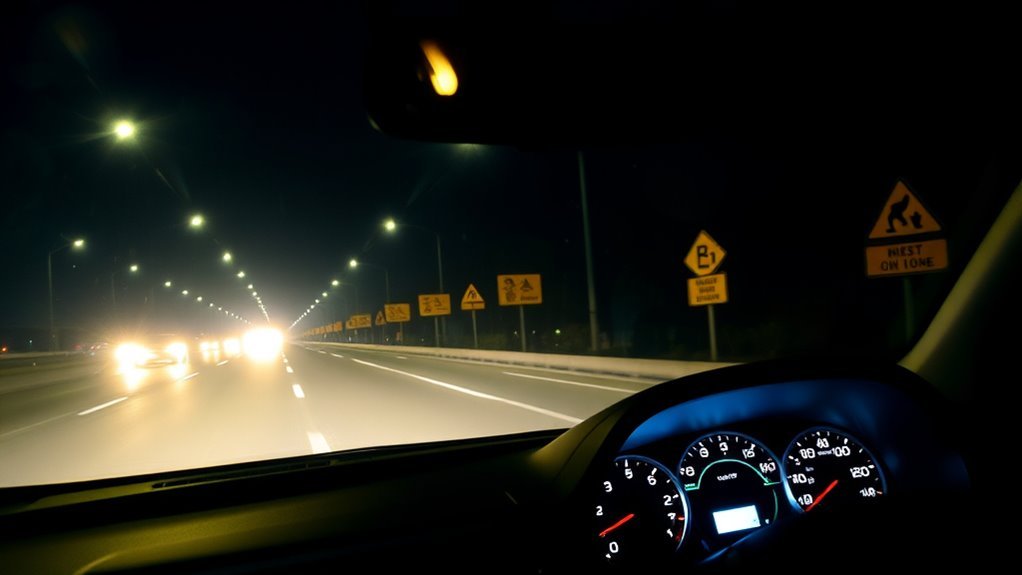
Two key systems—Adaptive High Beams and Road Sign Assist—work together to improve nighttime visibility and on-road awareness by using forward-facing cameras to adjust lighting and display critical traffic signs on the Multi-Information Display. You activate Adaptive High Beam by setting the headlight switch to “on” or “auto” and pressing the button near your right knee; an indicator confirms system engagement. The camera selectively dims high beams to prevent glare for oncoming traffic while maximizing nighttime visibility for you, supporting safer adaptive driving techniques on dark roads. Road Sign Assist reads speed limits and other regulatory signs, presents them on the MID, and flashes warnings for critical sign instructions to increase situational awareness. You can disable Road Sign Assist through vehicle settings if you prefer. Both systems reduce cognitive load and expand your operational freedom by delivering precise, camera-driven cues so you can focus on control inputs, speed management, and confident lane selection during varying night and daylight conditions.
Parking Safety: Cameras, Sensors, and Low‑Speed Automatic Braking
The RAV4 combines a Panoramic View Monitor, front and rear parking sensors, and low‑speed Automatic Braking to reduce collisions during parking and tight maneuvers. You get an overhead camera view for precise spatial context, plus audible alerts from parking technology that warn you of nearby objects. Sensors provide quantitative obstacle detection at low speeds; Automatic Braking intervenes when reverse or slow forward motion risks impact. This system improves confidence and reduces minor damage costs.
- Panoramic View Monitor: real‑time overhead imaging for exact positioning.
- Front and Rear Parking Assist: proximity sensors with graduated audible alerts.
- Low‑speed Automatic Braking: automatic intervention when obstacle detection predicts collision.
You’ll benefit from measured situational awareness that frees you to park assertively while minimizing risk. Rely on sensor fusion rather than guesswork—this data‑driven suite helps you navigate tight spaces and avoid common low‑speed incidents without sacrificing control or autonomy.
Adjusting TSS Settings, Common Limits, and Simple Troubleshooting
You can tailor Toyota Safety Sense settings through the vehicle’s settings menu to adjust sensitivity for systems like Pre‑Collision and Lane Departure Alert, and you should do this to match your driving preferences and local conditions. You’ll select higher sensitivity in urban or riskier environments and lower sensitivity when you need fewer alerts; always confirm changes per the owner’s guide.
Understand TSS performance factors: adverse weather (heavy rain, fog), poor lighting, and blocked sensors reduce detection range and increase false or missed alerts. For simple troubleshooting, check for visible damage and clear obstructions.
Follow concise sensor maintenance tips: keep the front camera and radar sensor clean, remove ice/snow, and avoid stickers or aftermarket parts that block fields of view. If a TSS warning light appears, consult the manual; restart the vehicle and inspect sensors. If the issue persists, schedule dealer service and software updates—regular firmware refreshes often restore or improve system behavior.
Frequently Asked Questions
What All Does the Toyota Safety Sense Offer to Drivers?
You get collision avoidance with automatic braking, lane‑centering steering assist, adaptive cruise maintaining safe gaps, road sign recognition, and adaptive high beams—each system works proactively, data‑driven and safety‑focused, empowering you to drive freer.
What Is the Safety Sense on a Toyota RAV4?
You get a suite of active safety systems: RAV4 features like Pre-Collision, Lane Departure, Adaptive Cruise, Road Sign Assist and Adaptive High Beams. Advanced technology reduces collisions, improves control, and gives you liberated, data-driven confidence.
Conclusion
About 90% of drivers say advanced driver aids make them feel safer—so use your RAV4’s Toyota Safety Sense every trip. Enable PCS, Lane Departure Alert, and Adaptive Cruise in settings, verify adaptive high beams and cameras work, and keep sensors clean. Know limits: TSS won’t detect stationary black vehicles well or replace attentive driving. Regularly review system behavior, adjust sensitivity where available, and troubleshoot sensor obstruction or camera misalignment promptly to maintain safety.