Last updated: July 14, 2026 Reviewed by: [VERIFY: add the real reviewer’s name and automotive credentials]
Toyota Safety Sense on a Toyota RAV4 is a group of driver-assistance features that can warn you about a possible collision, apply braking support, help with lane position, manage following distance, display certain road signs, and control the high beams. The core system mainly uses a forward-facing camera and radar, while blind-spot and parking features may use separate sensors.
For U.S. models, the version depends on the year and powertrain. The 2019–2022 RAV4 uses TSS 2.0, the 2023–2025 gas and hybrid RAV4 uses TSS 2.5, the 2024–2025 RAV4 Prime or Plug-in Hybrid uses TSS 2.5+, and the redesigned 2026 RAV4 uses TSS 4.0. Other markets can use different equipment, so your owner’s manual remains the final authority.
Quick Answer
Toyota Safety Sense on the RAV4 can include Pre-Collision System, Lane Departure Alert with Steering Assist, Lane Tracing Assist, Dynamic Radar Cruise Control, Road Sign Assist, and Automatic High Beams. The 2026 RAV4 also adds Proactive Driving Assist to the standard TSS 4.0 feature list. These systems support an attentive driver. They do not make the RAV4 self-driving.
Key Takeaways
- U.S. 2019–2022 RAV4 models use TSS 2.0, while 2023–2025 gas and hybrid models use TSS 2.5.
- The 2024–2025 RAV4 Prime or Plug-in Hybrid uses TSS 2.5+, and the 2026 RAV4 uses TSS 4.0.
- Blind Spot Monitor, Rear Cross-Traffic Alert, parking sensors, and Panoramic View Monitor are separate from the core TSS feature list.
- Heavy rain, fog, snow, glare, unclear lane markings, sensor blockage, and certain repairs can limit or disable the systems.
- Toyota Safety Sense is a backup layer, not a hands-free or self-driving system.
Identify Your System
| Start With | Your model year, powertrain, and market |
| Main Forward Sensors | A camera near the top of the windshield and radar behind the front grille on many fifth-generation RAV4 models |
| Best Verification Source | The owner’s manual or VIN-linked Toyota owner information |
| Service Trigger | A warning that remains in clear weather with clean sensor areas, or begins after related glass or front-end work |
Which Toyota Safety Sense Version Does Your RAV4 Have?
Your RAV4’s model year and powertrain provide the fastest starting point for identifying its Toyota Safety Sense generation. The table below covers U.S.-market vehicles. Imported vehicles and RAV4 models sold in other regions may use different equipment or feature names.
| U.S. RAV4 | TSS Version | What to Know |
|---|---|---|
| 2019–2022 RAV4 and RAV4 Hybrid | TSS 2.0 | Includes the six familiar systems: PCS, DRCC, LDA with Steering Assist, LTA, RSA, and AHB. |
| 2023–2025 RAV4 and RAV4 Hybrid | TSS 2.5 | Adds enhanced Pre-Collision System capabilities, including support in certain intersection situations. |
| 2024–2025 RAV4 Prime or Plug-in Hybrid | TSS 2.5+ | Uses the plug-in model’s documented TSS 2.5+ package and feature calibration. |
| 2026 RAV4 | TSS 4.0 | Uses updated hardware and detection capabilities and adds Proactive Driving Assist to the standard feature list. |
These model-year ranges are supported by Toyota’s U.S. information for the 2019 RAV4, 2022 RAV4, 2023 RAV4, 2025 RAV4, 2025 RAV4 Plug-in Hybrid, and 2026 RAV4.
[Products Worth Considering]

Upgrade your Toyota RAV4 with bright, road-clarifying LED lighting designed for 9012/HIR2 sockets and compatible with both high and low beam applications. These plug-and-play bulbs deliver cool white illumination, quick installation, and dependable performance in challenging weather, while the built-in cooling system helps support long service life.
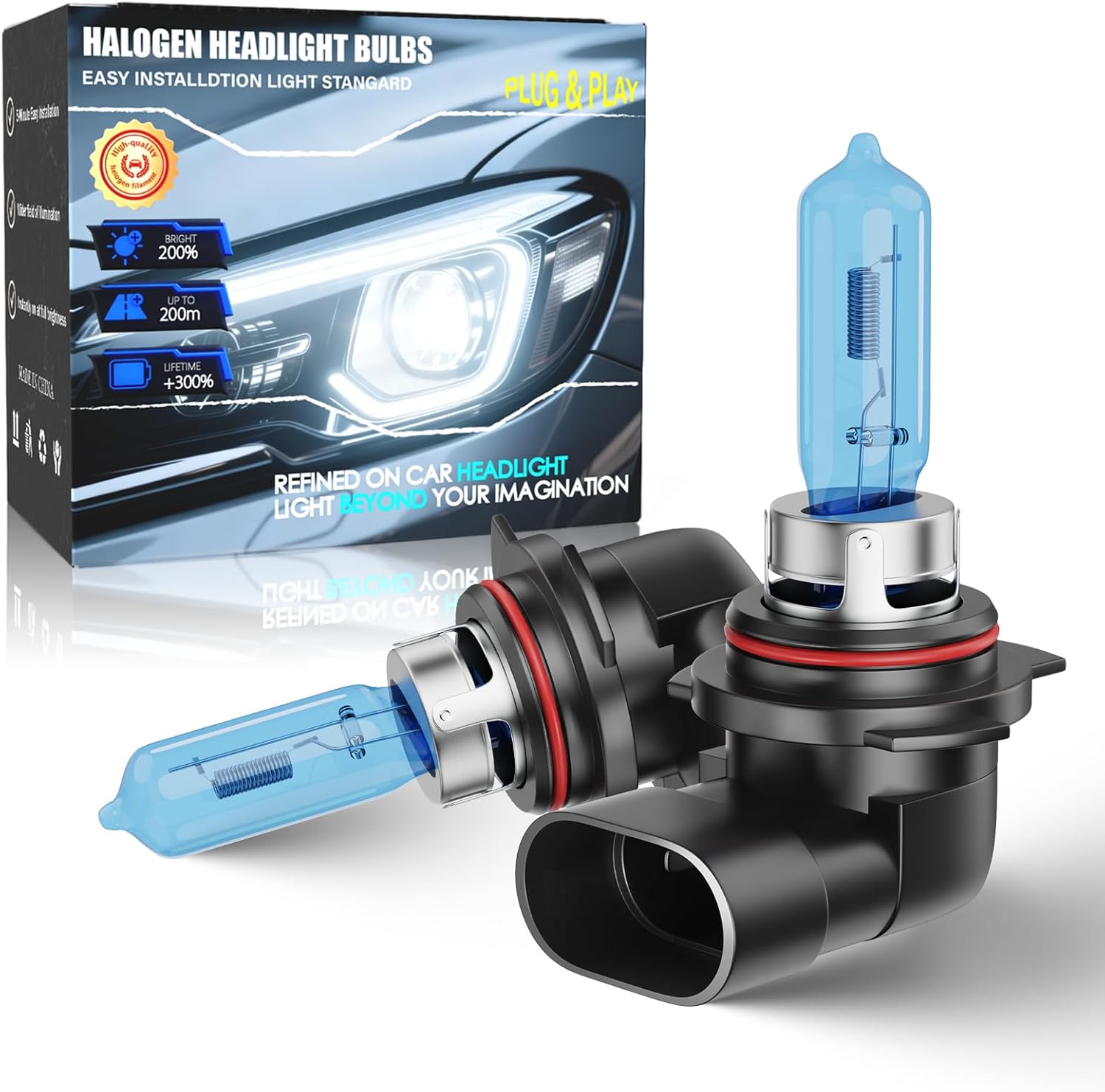
Upgrade your nighttime driving with these halogen headlight bulbs designed for 2016-2019 Toyota RAV4 models. The HIR2/9012 high and low beam combo delivers a brighter white light, a safer beam pattern, and broader road coverage for improved visibility. With plug-and-play installation and durable construction, this two-bulb set is built for a fast, hassle-free replacement.

These SYJIIP halogen headlight bulbs are designed for Toyota RAV4 models from 2013 to 2015, offering a plug-and-play replacement with stock-size fitment for easier installation. They deliver brighter warm white light for improved night visibility while maintaining a safe beam pattern with reduced flicker and fewer CANBUS issues. The four-pack makes it convenient to refresh multiple bulbs or keep spares on hand for reliable driving performance.
How Can You Confirm the Exact TSS Version?
- Check the owner’s manual heading. Toyota normally identifies the TSS generation in the driving-support section.
- Confirm the model year and powertrain. A 2025 gas or hybrid RAV4 and a 2025 RAV4 Plug-in Hybrid do not use the same named version.
- Review the steering-wheel controls and driver-assistance menu. Available icons and menu options can help confirm the installed functions.
- Use VIN-linked owner information when available. This is safer than relying on a dealership listing or a generic online feature list.
- Follow the exact manual when instructions conflict. Operating speeds, settings, alerts, and calibration requirements can change by year and market.
What Features Are Included in Toyota Safety Sense?
The core RAV4 package can include Pre-Collision System with Pedestrian Detection, Dynamic Radar Cruise Control, Lane Departure Alert with Steering Assist, Lane Tracing Assist, Road Sign Assist, and Automatic High Beams. Toyota adds Proactive Driving Assist to the documented TSS 4.0 package on the 2026 RAV4.
| Feature | What It Does | Best Used For |
|---|---|---|
| Pre-Collision System | Warns about certain frontal collision risks and may add braking support or automatic braking if you do not respond. | Extra support around detected vehicles and vulnerable road users, within the limits of your TSS version. |
| Lane Departure Alert | Warns when the vehicle may drift from a detected lane or road edge and can provide gentle steering support. | Clearly marked roads where the camera can reliably read boundaries. |
| Lane Tracing Assist | Helps support lane-centering while Dynamic Radar Cruise Control is operating and the required conditions are met. | Highways and steady traffic with visible lane markers or a detected lead vehicle. |
| Dynamic Radar Cruise Control | Maintains a selected speed and adjusts speed to help preserve a chosen following gap. | Suitable highways and open roads with predictable traffic flow. |
| Road Sign Assist | Uses the front camera to display certain recognized road signs on the Multi-Information Display. | An additional reminder, not a replacement for watching posted signs. |
| Automatic High Beams | Switches between high and low beams when the required lighting and traffic conditions are detected. | Dark roads where the camera can detect oncoming headlights and taillights ahead. |
| Proactive Driving Assist | On the 2026 RAV4, it can provide gentle braking or steering support for certain driving tasks when operating conditions are met. | Supplemental distance and steering support on equipped TSS 4.0 vehicles. |
Note: The table describes feature families, not identical operation across every year. Detection targets, operating speeds, settings, and warnings can differ. Check the manual for your exact RAV4.
How Do You Enable and Use Toyota Safety Sense on a RAV4?
Many Toyota Safety Sense functions are active when the vehicle starts, but individual alerts and assistance settings can usually be reviewed through the Multi-Information Display, steering-wheel controls, or driver-assistance menu. The exact controls change by model year, so complete the review while parked and confirm each step in your manual.
- Start the vehicle and check the instrument cluster. Look for active-system icons, warning messages, or disabled-feature indicators.
- Open the driver-assistance settings. Use the steering-wheel controls to find the safety settings in the Multi-Information Display.
- Confirm Pre-Collision System is enabled. Review the warning-timing option only if your model provides one.
- Review lane-assistance settings. Check Lane Departure Alert, Steering Assist, and Lane Tracing Assist options that appear on your vehicle.
- Review Dynamic Radar Cruise Control controls. Learn the set, cancel, resume, speed, and following-distance buttons before using them in traffic.
- Check Road Sign Assist. Confirm the display option is on if the feature is installed.
- Review Automatic High Beam operation. Confirm the required headlight-switch position and activation control for your model.
Pro Tip: After buying a used RAV4, review every driver-assistance setting while parked. A previous driver may have changed alert timing, lane-assistance behavior, or the cruise following-distance setting.
Where Are the Main Driver-Assistance Controls?
Your RAV4 may have dedicated steering-wheel buttons for cruise control, following distance, lane assistance, and Automatic High Beams. Other functions use the Multi-Information Display. A feature may also stay unavailable until its required speed, road, lighting, lane, or traffic conditions are present.
If a feature does not activate, read the exact dashboard message before changing settings. Temporary unavailability caused by dirt, weather, glare, temperature, or unclear lane markings is different from a stored system fault.
How Should You Customize the Safety Settings?
Start with Toyota’s default settings and change only one option at a time. This makes it easier to understand how alert timing, steering support, or following distance affects the system. Do not reduce a warning simply because it activates often. Repeated warnings can also point to close following, lane drift, blocked sensors, or unsuitable road conditions.
- Review Pre-Collision System warning timing if your RAV4 provides the option.
- Check Lane Departure Alert sensitivity and Steering Assist settings where available.
- Select the Dynamic Radar Cruise Control following-distance setting before entering steady traffic.
- Enable the Road Sign Assist display if the feature is installed.
- Confirm Automatic High Beams are enabled before expecting automatic switching at night.
How Does the RAV4 Pre-Collision System Warn and Brake?
The RAV4 Pre-Collision System uses the forward camera and radar to monitor certain frontal hazards. Depending on the TSS generation, it may detect vehicles, pedestrians, bicyclists, and some motorcyclists under specified conditions. It can issue visual and audible warnings, add brake assist, or apply automatic emergency braking when its criteria are met.
Detection capability is not identical across every RAV4. For example, Toyota documents vehicle, pedestrian, and bicyclist detection for the 2025 RAV4, while the 2026 TSS 4.0 description also identifies motorcyclists. Low sun, poor visibility, sensor blockage, unusual object movement, road geometry, and sudden cut-ins can still limit performance.
For a more focused settings walkthrough, see the RAV4 Pre-Collision System settings guide.
Warning: Never test Pre-Collision System by driving toward a person, vehicle, wall, or object. The system cannot guarantee detection or braking in every situation.
How Do You Use Lane Departure Alert and Steering Assist?
Lane Departure Alert monitors visible lane markings and, on certain versions, road edges. If the RAV4 appears to leave a detected boundary without an intentional signal, the system can provide a dashboard warning, sound, steering-wheel vibration, or gentle steering support. The exact alert depends on the model year.
How Does RAV4 Lane Departure Alert Work?
The front camera reads visible lane lines or other supported boundaries. When it identifies a possible unintended departure, the system warns you. Steering Assist may then add a small corrective input, but you must continue steering and controlling the vehicle.
- Using the turn signal helps the system understand that a lane change is intentional.
- Faded lines, temporary construction markings, glare, snow, fog, and heavy rain can reduce accuracy.
- The feature may remain inactive below its required speed or when the camera cannot identify a valid boundary.
- Settings can differ between TSS generations, trims, and markets.
When Should You Use Lane Departure Alert?
Lane Departure Alert is most useful on clearly marked roads where the camera has a stable view. Treat warnings as support during highway driving and routine commuting. On roads with missing lines, temporary construction markings, narrow edges, or snow-covered pavement, steer normally and do not rely on the system to define the lane.
What Is the Difference Between Lane Tracing Assist and Lane Departure Alert?
Lane Departure Alert mainly warns about possible unintended lane departure and may provide a corrective steering nudge. Lane Tracing Assist provides more continuous steering support while Dynamic Radar Cruise Control is operating and the required lane or lead-vehicle information is available.
| System | Main Job | Driver Role |
|---|---|---|
| Lane Departure Alert | Warns when the RAV4 may unintentionally leave a detected lane or boundary. | Steer normally and respond to the warning. |
| Lane Departure Alert with Steering Assist | Adds gentle corrective steering support after detecting possible lane departure. | Keep both attention and control, then correct the vehicle path. |
| Lane Tracing Assist | Supports lane-centering while Dynamic Radar Cruise Control and required detection conditions are active. | Keep your hands on the wheel, monitor traffic, and take over immediately when needed. |
See the detailed Lane Tracing Assist versus Lane Departure Alert guide for a deeper comparison.
How Does RAV4 Dynamic Radar Cruise Control Manage Following Distance?
Dynamic Radar Cruise Control is Toyota’s adaptive cruise control system. You select a cruising speed and a following-distance setting. When the system detects a slower vehicle ahead, it can reduce speed to help maintain the selected gap. It can then accelerate toward the set speed when conditions permit.
- Use it only where cruise control is suitable and legal.
- Select a longer gap when traffic, visibility, or road conditions require more reaction space.
- Cancel cruise control before roads, curves, ramps, weather, or traffic conditions make automatic speed control unsuitable.
- Keep your foot ready to brake because the system may not detect or respond to every object or traffic change.
If the dashboard reports that radar cruise control is unavailable, use the focused RAV4 adaptive cruise unavailable troubleshooting guide.
Driver-assistance technology can warn or intervene, but you remain responsible for steering, braking, speed, and road awareness.
How Do Automatic High Beams and Road Sign Assist Work?
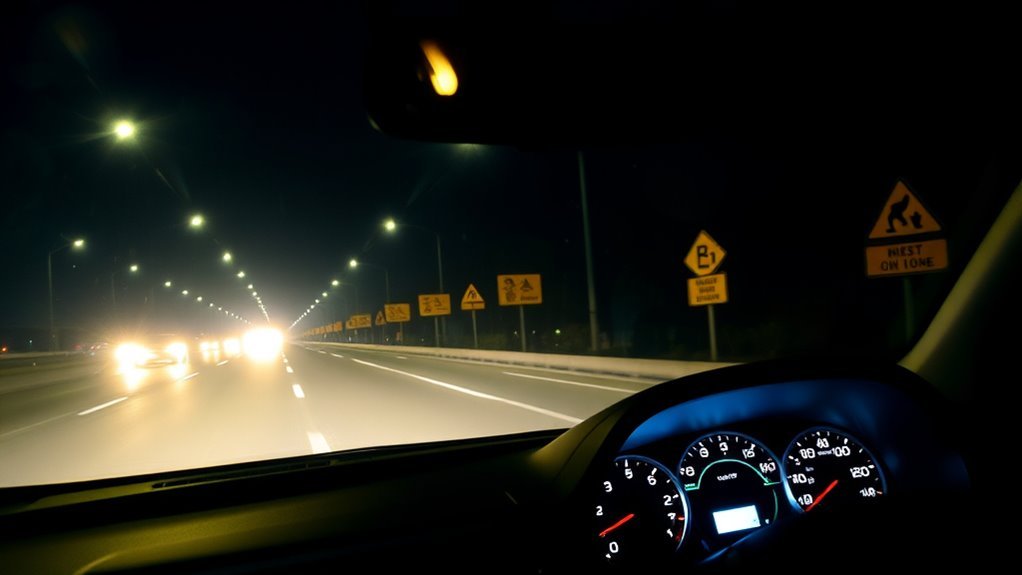
Automatic High Beams can switch between high and low beams when the camera detects qualifying headlights, taillights, and lighting conditions. Road Sign Assist uses the front camera to recognize certain supported signs and display them on the Multi-Information Display.
Automatic High Beams require the correct headlight-switch position and system setting for your RAV4. Road Sign Assist can miss signs that are blocked, dirty, damaged, poorly lit, unusually positioned, or outside the system’s recognized sign types. Always follow the physical road signs and current driving conditions.
Are Blind Spot Monitor and Parking Sensors Part of Toyota Safety Sense?
Blind Spot Monitor, Rear Cross-Traffic Alert, Panoramic View Monitor, parking sensors, and Front and Rear Parking Assist with Automatic Braking are generally listed separately from the core Toyota Safety Sense package. Their availability depends on model year, trim, options, and market.
- Blind Spot Monitor: uses separate side or rear sensing to warn about certain vehicles in adjacent lanes.
- Rear Cross-Traffic Alert: can warn about certain approaching vehicles while you reverse.
- Panoramic View Monitor: combines camera views to help show the area around the RAV4.
- Parking sensors: provide visual or audible proximity warnings around supported parts of the vehicle.
- Parking Assist with Automatic Braking: may reduce power or apply braking in certain low-speed parking situations.
The 2026 RAV4 also offers certain advanced functions on selected trims, including Lane Change Assist, Front Cross-Traffic Alert, and subscription-dependent Traffic Jam Assist. Do not assume these functions are included on every TSS 4.0 RAV4 simply because the standard vehicle has Toyota Safety Sense.
Parking and blind-spot systems do not replace mirrors, shoulder checks, camera checks, or slow controlled driving. Small, low, thin, moving, or unusually shaped objects may not always be detected.
[Products Worth Considering]
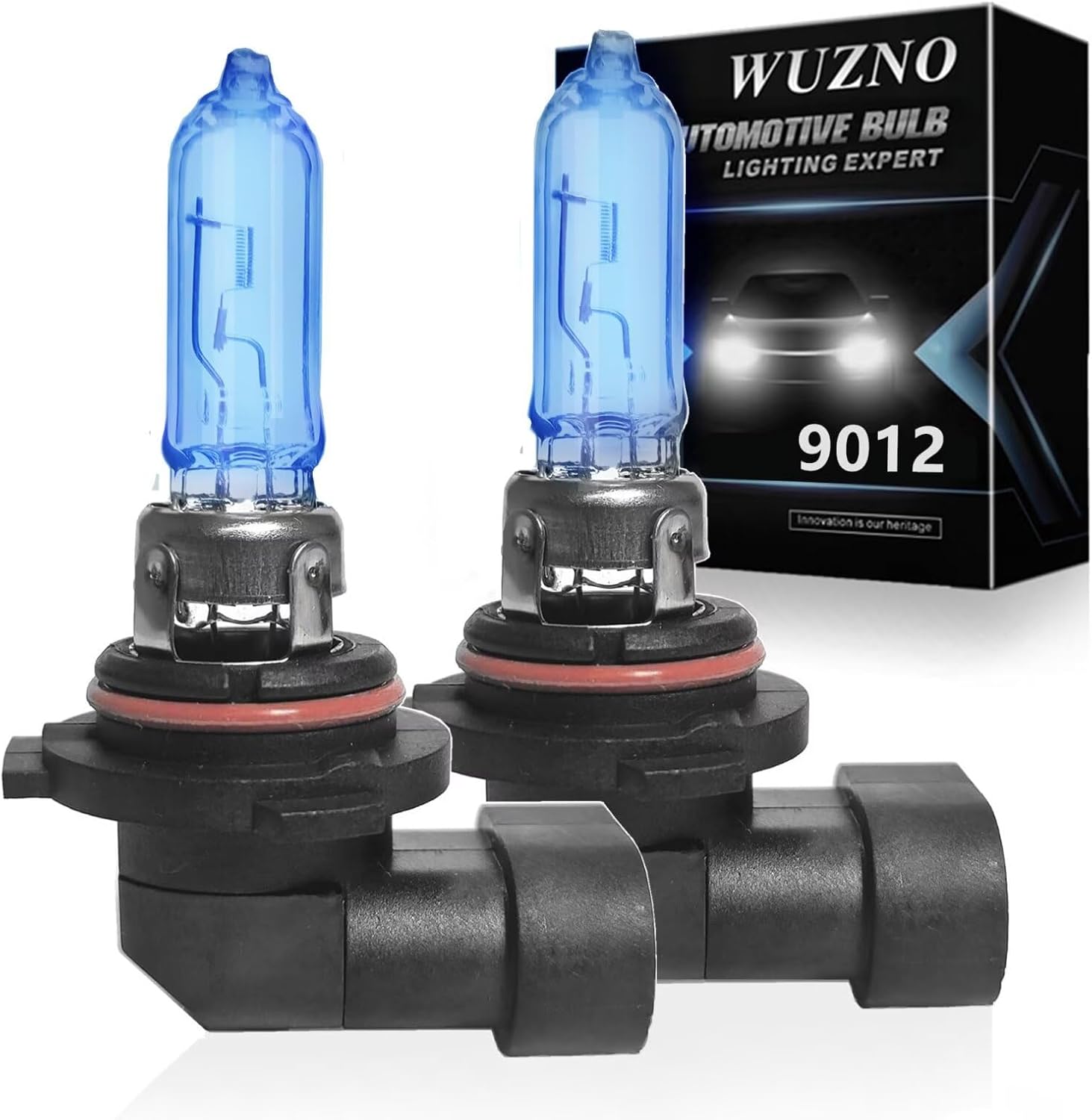
These halogen headlight bulbs are designed as a direct replacement for compatible Toyota models, offering plug-and-play installation with the same base and connector as the original bulbs. They deliver brighter, whiter light for improved visibility and a more modern look while helping reduce eye fatigue during night driving. Built for long life and reliable performance, this two-pack is ideal for restoring or upgrading your vehicle's headlight output.

This 3-piece windshield wiper set is designed for Toyota RAV4 models from 2019 to 2024 and also fits select Mazda 5 vehicles. It includes front and rear blades for a complete replacement, with Teflon-coated rubber for smooth, quiet wiping and reliable all-weather performance. The easy-install design helps match the original wiper arm structure for a simple, secure fit.

When the product is working, the sensor emits ultrasonic waves. When encountering an obstacle, the ultrasonic waves are reflected. The sensor receives the reflected signal and transmits it to the control box. Through calculation, the control box obtains the distance between the vehicle and the obstacle, and reminds the driver to pay attention through the display and sound, etc., to avoid danger. It is a good helper for us to drive the car!
Where Are the RAV4 TSS Sensors, and How Do You Troubleshoot Warnings?
On many fifth-generation RAV4 models, Toyota identifies a forward radar sensor behind the front grille and a front camera behind the windshield. The exact cover, bracket, and position can change by year, especially on the redesigned 2026 RAV4, so use the model-specific manual before cleaning near a sensor or evaluating a repair.
If Toyota Safety Sense behaves unexpectedly, start with the displayed message and basic environmental checks. A temporary visibility problem is different from a warning that returns repeatedly in normal conditions.
[Products Worth Considering]

Compatibility: The sensor protector Fits for Honda CR-V 2023-2025 equipped with front radar sensor. Designed to mount discreetly behind the front cover and above the radar unit for a secure, vehicle-specific fit. Please verify your model year and radar configuration before ordering.

Specially Designed: The Radar Sensor Protector is specially designed to fit the radar distance sensor safely and securely in order to prevent it from being stolen while allowing proper functioning.

[Compatible With]: Compatible with Honda CR-V 2017 2018 2019(Please see the product description for details)
What Conditions Can Limit Toyota Safety Sense?
- Weather: heavy rain, fog, snow, ice, dust, and road spray can reduce camera or radar performance.
- Lighting: glare, low sun, darkness, reflections, and sudden lighting changes can affect camera recognition.
- Road conditions: faded lines, temporary construction markings, complex intersections, sharp curves, hills, and narrow lanes can limit lane support.
- Sensor blockage: mud, bugs, snow, ice, stickers, tint, coatings, or accessories can block the sensor view.
- Repair effects: windshield, grille, radar, bumper, or related structural work can disturb sensor position or calibration.
What Should You Check When a TSS Warning Appears?
| What You Notice | Likely Category | Safe Next Step |
|---|---|---|
| Mud, bugs, snow, ice, or moisture on the grille or windshield | Sensor obstruction | Park safely and clean the exterior sensor-view areas with a soft cloth. |
| Warning during glare, fog, heavy rain, snow, darkness, extreme heat, or extreme cold | Temporary visibility or temperature limit | Restore normal visibility and temperature, then check whether the message clears. |
| Warning begins after windshield replacement | Possible front-camera calibration requirement | Ask whether the model-specific Toyota camera-calibration procedure was completed. |
| Warning begins after grille, radar, or front-bumper work | Possible radar alignment or calibration issue | Request inspection under the exact Toyota repair procedure for your model year. |
| Message returns in clear weather with clean sensor areas | Electrical, communication, mounting, calibration, or sensor fault | Record the exact message and arrange Toyota-capable diagnosis before clearing stored information. |
- Park safely and record the exact dashboard message.
- Clean the exterior windshield area in front of the camera and the grille or radar-cover area.
- Remove snow, ice, mud, insects, stickers, or accessories that block the sensor view.
- Use the wipers, defogger, or climate control when fog, condensation, or temperature is the likely cause.
- Restart the vehicle after normal visibility and temperature return.
- Check the owner’s manual instructions for the exact message.
- Schedule professional diagnosis if the warning remains, returns in normal conditions, or began after related repair work.
Repair note: Toyota’s fifth-generation RAV4 manual states that windshield replacement requires front-camera recalibration. It also identifies radar recalibration requirements after certain radar, grille, or front-bumper work. Use the repair information for your exact year rather than assuming every repair follows the same procedure.
How Should You Drive With Toyota Safety Sense Active?
Treat Toyota Safety Sense as a backup layer. Keep your hands on the wheel, watch the road, and stay ready to brake. Use cruise and lane support only when traffic, weather, road markings, and visibility are suitable. Take control immediately if the system gives repeated warnings, loses lane detection, or behaves differently from the road situation.
- Do not use adaptive cruise control as a substitute for a safe following distance.
- Do not rely on lane support in construction zones or on poorly marked roads.
- Do not assume Road Sign Assist sees every sign or always displays the current legal limit.
- Do not increase speed or reduce attention because a driver-assistance feature is active.
- Review warning messages after windshield, grille, bumper, radar, or camera-related work.
The National Highway Traffic Safety Administration explains that driver-assistance technologies can warn, intervene, or support vehicle control, but the driver must remain engaged and responsible. Review the agency’s driver-assistance technology guidance for a manufacturer-neutral explanation.
Frequently Asked Questions
What does Toyota Safety Sense offer RAV4 drivers?
Toyota Safety Sense can provide forward-collision warnings, automatic emergency braking support, lane-departure warnings, steering assistance, lane-centering support, adaptive cruise control, road-sign display, and automatic high-beam control. The 2026 TSS 4.0 package also includes Proactive Driving Assist. Exact operation depends on the model year, powertrain, market, and installed TSS version.
How do I know which Toyota Safety Sense version my RAV4 has?
Start with the model year and powertrain, then confirm the result in the owner’s manual or VIN-linked Toyota owner information. U.S. 2019–2022 RAV4 models use TSS 2.0, 2023–2025 gas and hybrid models use TSS 2.5, 2024–2025 plug-in models use TSS 2.5+, and 2026 models use TSS 4.0.
Is Toyota Safety Sense the same on every RAV4?
No. Features, detection targets, operating speeds, menu settings, and warning messages can change between TSS generations. Powertrain and market can also matter, as shown by the different TSS names used for the 2025 gas or hybrid RAV4 and the 2025 RAV4 Plug-in Hybrid.
Is Blind Spot Monitor part of Toyota Safety Sense?
Toyota normally lists Blind Spot Monitor and Rear Cross-Traffic Alert separately from the core Toyota Safety Sense package. They may be standard, optional, or unavailable depending on the RAV4 year, trim, and market.
Can Toyota Safety Sense drive the RAV4 for me?
No. Toyota Safety Sense is driver assistance, not self-driving. It can warn, brake, adjust speed, or support steering under certain conditions, but you remain responsible for steering, braking, acceleration, lane changes, and road awareness.
Where are the main Toyota Safety Sense sensors on a RAV4?
Toyota’s fifth-generation RAV4 documentation identifies a forward radar sensor behind the front grille and a front camera behind the windshield. Exact covers, brackets, and positions can differ by model year, so check the manual before inspecting or cleaning near a sensor.
Why did my Toyota Safety Sense warning light come on?
Common temporary causes include dirt, moisture, snow, ice, heavy rain, fog, glare, temperature extremes, poor visibility, or blocked sensor areas. A warning that remains in normal conditions can indicate a sensor, wiring, communication, mounting, or calibration fault that needs diagnosis.
Does a RAV4 windshield replacement require camera calibration?
Toyota’s fifth-generation RAV4 manual states that the front camera must be recalibrated after windshield replacement. Ask the glass or repair facility to document the model-specific calibration procedure instead of assuming the camera will correct itself.
Should I turn off Lane Departure Alert?
Keep it available for normal driving on clearly marked roads unless your manual, road conditions, or a system warning gives you a reason to change the setting. On confusing construction markings, missing lines, or snow-covered roads, steer normally and do not rely on the system to identify the correct lane.
Conclusion
Toyota Safety Sense can add collision warnings, braking support, lane assistance, adaptive cruise control, sign recognition, and automatic high-beam control to a RAV4. The exact capabilities depend on the model year, powertrain, market, and installed TSS generation.
Your next steps are simple: identify the version in your owner’s manual, learn the controls while parked, and keep the windshield-camera and forward-radar areas unobstructed. If a warning remains in clear conditions or begins after relevant glass or front-end work, record the exact message and arrange model-specific diagnosis or calibration.
Sources
- Toyota: 2019 RAV4 and Toyota Safety Sense 2.0: Official U.S. feature list for the fifth-generation RAV4.
- Toyota: 2023 RAV4 and Toyota Safety Sense 2.5: Official U.S. model-year feature and safety information.
- Toyota: 2025 RAV4 and Toyota Safety Sense 2.5: Official gas and hybrid RAV4 safety information.
- Toyota: 2025 RAV4 Plug-in Hybrid and TSS 2.5+: Official plug-in model safety information.
- Toyota: 2026 RAV4 and Toyota Safety Sense 4.0: Official TSS 4.0 feature list and model information.
- Toyota 2023 RAV4 Owner’s Manual Excerpt: Sensor location, operating cautions, warning conditions, and calibration requirements.
- NHTSA Driver Assistance Technologies: Federal explanations of collision warnings, intervention systems, driving-control assistance, and driver responsibility.