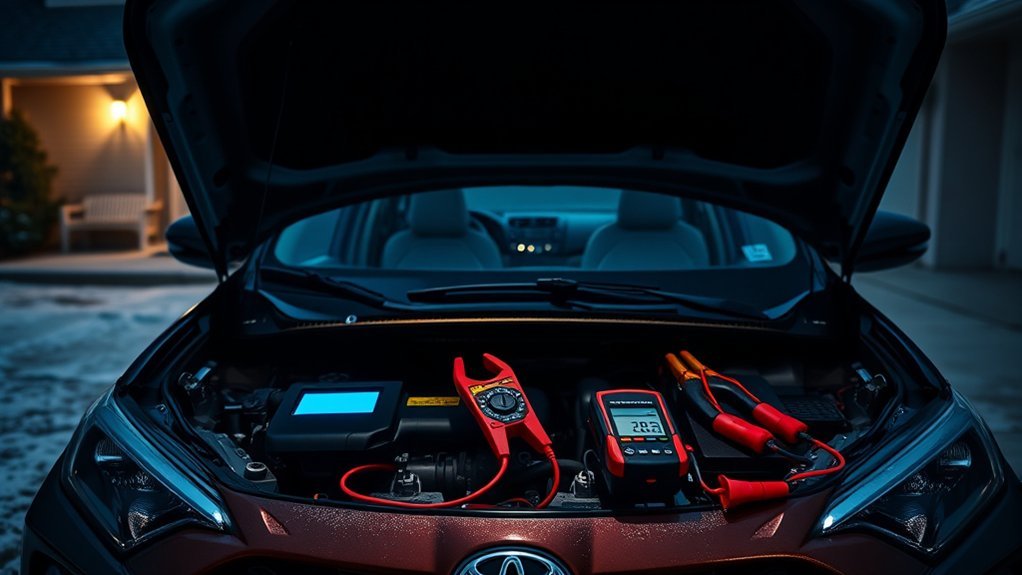
If your RAV4 loses charge overnight, first check for a parasitic draw with a multimeter (over ~50 mA is bad) and isolate circuits by pulling fuses. Inspect and clean battery terminals, tighten connections, and test battery voltage (12.4–12.7 V) and alternator output (13.7–14.7 V). Verify you’ve got the OEM AGM/EFB size (H5/H6) for smart charging. If draws persist, log current traces and consult a dealer or tech for DCM/firmware checks — more troubleshooting steps follow.
Quick Fixes When Your RAV4 Battery Dies Overnight
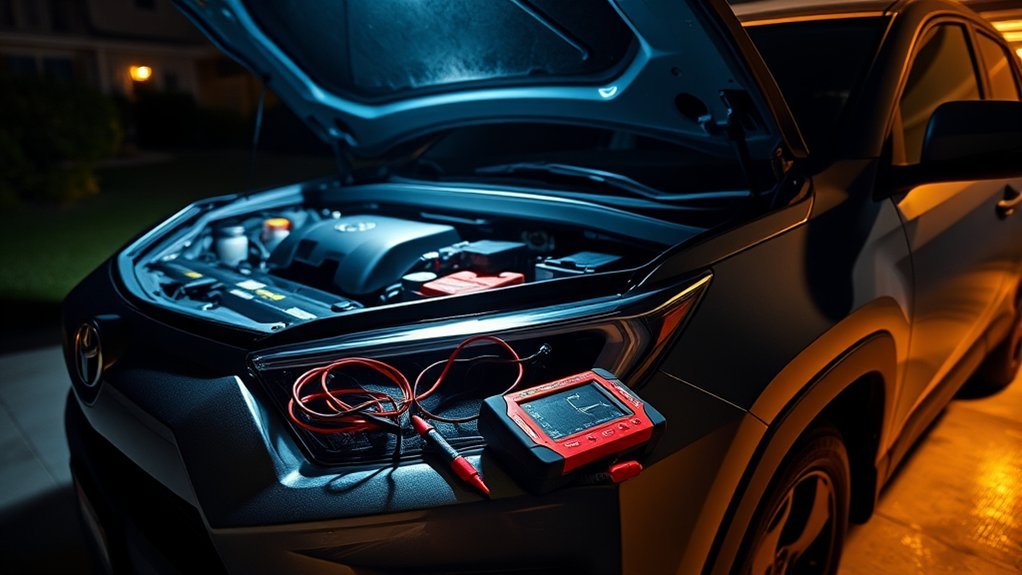
If your RAV4 won’t start after sitting overnight, start by checking for parasitic draw with a multimeter—anything above about 50 mA suggests a component (factory radio, aftermarket alarm, etc.) is pulling current when it shouldn’t. You’ll measure between the negative battery terminal and cable with all modules asleep; isolate circuits by removing fuses to pinpoint the offender. Next, perform basic Battery Maintenance: inspect terminals for corrosion, clean with a brush and baking soda solution, and torque connections to spec so you don’t lose volts to resistance. Consider swapping in an EFB or AGM unit if you’re on a stock replacement cycle—these handle modern load profiles better. Scan interior and exterior accessories; turn off valet functions, trunk modules, and aftermarket devices before you park. Keep monitoring draw after fixes to confirm resolution. If the drain persists, escalate to professional Electrical Troubleshooting so a qualified mechanic can run thorough diagnostics and identify failed modules or wiring faults.
How to Test Battery and Alternator at Home
Want to confirm whether your RAV4’s battery or alternator is causing your overnight no-start? Start with basic battery maintenance: clean and tighten terminals, then perform a voltage measurement with a multimeter across the battery posts. With the engine off, a healthy battery reads 12.4–12.7 V. Next, run a simple load test: apply roughly half the battery’s rated capacity for 15 seconds and watch the voltage; if it falls below 9.6 V, the battery is likely weak or failing. For alternator testing, start the engine and measure voltage at the same terminals—expect 13.7–14.7 V if the alternator charges properly. If readings are borderline, repeat tests after ensuring connections are corrosion-free and tight, since poor contacts skew results. As a diagnostic freedom move, you can disconnect the negative cable overnight and recheck voltage on reconnection; a significant drop suggests an electrical drain issue requiring deeper investigation. These steps keep you independent and informed.
Diagnose Parasitic Drain With a Multimeter and Fuse Pulls
Start by setting your multimeter to the low-amp range and measuring the vehicle’s current draw with everything off and doors closed; normal draw is typically under 50 mA, and anything over about 15 mA warrants investigation. You’ll use disciplined current monitoring and systematic fuse removal to free yourself from mystery drains. If the meter reads high, proceed methodically.
Set your multimeter to low-amp, measure with everything off, then pull fuses one-by-one to find abnormal drains.
- Remove one fuse at a time while watching the multimeter; a significant drop isolates the circuit tied to the drain.
- When you identify a suspect fuse, inspect linked components and wiring for faults, remembering factory loads like radio memory may account for baseline draw.
- If removing fuses doesn’t change the reading, suspect parasitic paths outside the fuse box or intermittent faults; document readings and times.
You’ll act like a technician: log measurements, avoid back-probing live circuits, and call a professional if advanced diagnostics or repairs are needed to regain electrical autonomy.
Common Culprits That Drain RAV4 Batteries (Modules, Relays, Accessories)
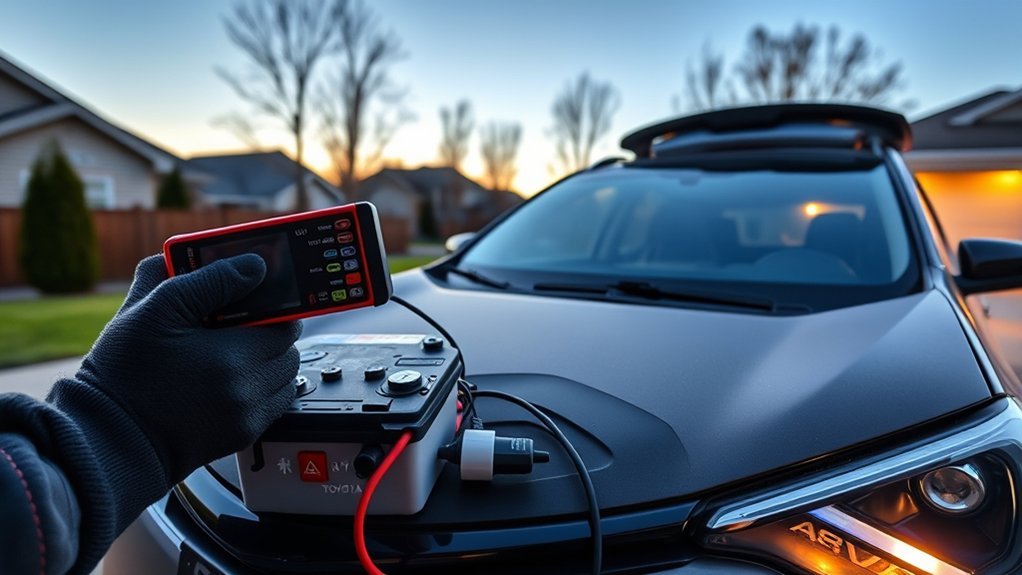
Although multiple systems can sap a parked RAV4’s battery, the usual suspects are loose/corroded terminals, modules that won’t sleep (like the DCM), faulty relays, and aftermarket gear drawing standby current. You’ll first consider connection corrosion and battery age as background factors that lower reserve capacity and make parasitic draws more impactful. Modules malfunction — especially the DCM and convenience modules — can remain awake and pull current; use diagnostic tools to confirm their sleep state. Relay issues, such as stuck A/C or security relays, create continuous circuits that mimic shorts without visible damage. Accessory interference from aftermarket radios, alarms, or hardwiring can introduce hidden drains or electrical shorts into factory wiring. You should methodically isolate circuits with a multimeter, monitor standby current, and log findings. Maintenance tips: replace aged batteries, repair corroded connections, swap suspect relays, and remove or rewire accessories to restore autonomy and prevent overnight failures.
How to Inspect Battery Connections and Short-Term Remedies
Start by inspecting the battery terminals for corrosion, grime, or looseness, since any buildup or a poor clamp can impede current flow and mimic a failing battery. Use a wire brush and anti-corrosion spray to clean terminals and retighten clamps to factory torque. As a quick diagnostic, disconnect the negative terminal overnight—if the battery holds charge, you’ve isolated a parasitic draw that needs further testing.
Check Terminal Cleanliness
When you inspect the RAV4’s battery, focus first on the terminal posts and connector clamps—corrosion, white/green powder, or dirt can impede current flow and cause overnight drains. You’ll practice terminal maintenance to reclaim reliable starts and electrical freedom. Clean terminals with a wire brush or terminal cleaner, then tighten clamps with the correct wrench to eliminate intermittent resistance.
- Remove buildup with a wire brush; rinse and dry to restore metal-to-metal contact.
- Tighten clamps to specified snugness; loose fittings create voltage drops that drain the battery.
- After cleaning, apply anti-corrosion spray or dielectric grease for corrosion prevention and longer-term protection.
Check terminals after extreme weather and make this a routine—small actions free you from repeated drains.
Quick Battery Disconnect
If you suspect a parasitic drain, disconnect the negative battery terminal overnight to quickly determine whether the battery is holding charge; if it does, the issue is likely elsewhere in the electrical system. Inspect terminals for corrosion and tightness before reconnecting. Use a multimeter on current draw (vehicle off): normal below 50mA. Note any lights or accessories that remain active.
| Action | Expected | Next step |
|---|---|---|
| Overnight disconnect | Battery holds | Perform targeted electrical system checks |
| Multimeter test | <50mA | No major drain |
| Visible corrosion | Poor contact | Clean, apply anti-corrosion spray |
These battery maintenance tips empower you to isolate faults fast. If draw exceeds limits, trace fuses and aftermarket circuits to reclaim control.
Why RAV4s Require AGM/EFB: And How to Choose the Right Battery
You need an AGM or EFB because the 5th‑gen RAV4’s smart charging and start/stop systems demand higher charge acceptance and deeper cycling than standard flooded batteries provide. These battery types are engineered for the vehicle’s electrical load and charging algorithms, so using the correct chemistry prevents premature failure and charging faults. When replacing the battery, confirm Toyota’s specs—type and physical size (H5 for hybrids, H6 for non‑hybrids with start/stop)—to guarantee compatibility.
Why AGM/EFB Matter
Because the 5th‑gen RAV4’s electronics and SMART CHARGING demand higher reserve capacity and charge acceptance, you’ll need an AGM or EFB rather than a conventional flooded battery to avoid premature drain and diagnostic faults. You want freedom from wake‑ups, warning lights, and early replacement—AGM/EFB deliver longer battery lifespan and clear performance benefits in harsh use.
- AGM: superior low internal resistance, better cold cranking, excels under deep cycles.
- EFB: cost‑effective, improved cycle tolerance over flooded units, good for mild start/stop duty.
- Fitment: match H5 (hybrid) or H6 (non‑hybrid start/stop) and AGM/EFB spec to prevent faults.
Choose the correct type and size to reclaim control—reliable starts, fewer surprises, and extended service intervals.
Compatibility With Smart Charging
While the RAV4’s smart charging constantly adjusts voltage and current to protect electronics and maximize efficiency, it also demands a battery chemistry that can accept charge quickly and withstand frequent partial discharges—so AGM or EFB is required. You need AGM for robust high-current handling and longevity under the vehicle’s load profile; EFB fits vehicles with start/stop by tolerating frequent cycling. These smart charging benefits rely on battery technology advancements that improve charge acceptance and reduce sulfation. Installing a conventional flooded battery undermines system stability, causing drains and erratic electronics. Diagnose compatibility by matching the chemistry and specifications in the owner’s manual; wrong type equals functional risk. Choose AGM or EFB per system requirements to reclaim control and prevent recurring electrical failures.
Choosing Proper Battery Size
If your RAV4 is to handle modern start/stop systems and accessory loads reliably, pick an AGM or EFB in the correct physical and performance size—H5 or H6 per OEM—rather than a conventional flooded battery. You’ll avoid rapid degradation and electrical faults by matching type and size to the vehicle’s charging strategy. Consider these selection checkpoints:
- Confirm OEM-mandated H5 (hybrid) or H6 (non-hybrid) form factor and terminal layout.
- Specify AGM vs EFB based on expected deep-cycle duty and start/stop frequency.
- Verify cold cranking amps, reserve capacity, and compatibility with smart charging.
Implement battery maintenance tips: correct mounting, secure connections, and periodic voltage checks. Diagnose replacement choices against battery lifespan factors to free yourself from repeat failures and regain control of reliability.
Dealer Software, TSBs, and DCM Issues That Can Drain Batteries
Check the dealer software and TSB history first, since outdated charging-system code and a misbehaving Data Communications Module (DCM) are common causes of overnight drain on RAV4s. You should confirm dealer updates tied to TSB 0105-22; that bulletin targets charging system code fixes essential to stopping parasitic draw. Inspect service records for applied updates and request re-flash if missing.
Diagnose the DCM: measure quiescent current and correlate with module sleep/wake behavior. A DCM that never enters sleep can pull significant current overnight. If you see elevated standby amps and no aftermarket accessory causing it, document current traces and push the dealer to test DCM firmware and hardware. Dealers can perform electrical optimization via software and, when needed, replace faulty modules per TSB guidance. Stay assertive: insist on recorded test data and confirmed dealer actions so your vehicle’s systems are corrected and you reclaim freedom from repeated battery failures.
Preventative Steps for Long-Term Parking and Temporary Fixes
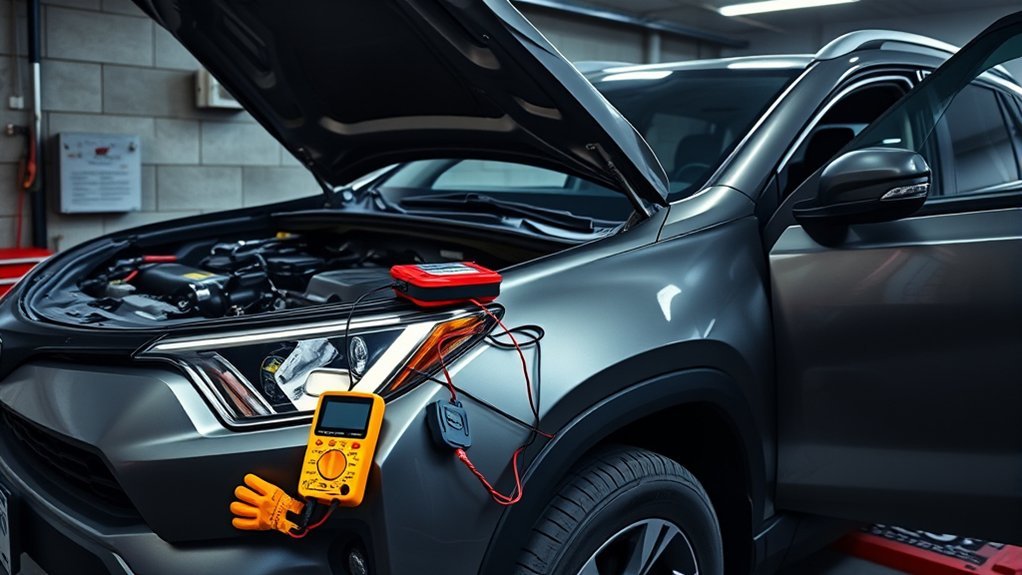
When you’ll be leaving a RAV4 unused for days or weeks, take proactive steps to prevent parasitic drain: disconnect the negative battery cable or install a battery disconnect switch to cut power and eliminate standby draws. Check and clean terminals and connectors; corrosion or loose clamps undermine battery maintenance and reduce charge retention. Use a battery maintainer or trickle charger for long term parking to keep the battery topped without overcharging. Before you depart, verify all lights and accessories are off; interior lights are common culprits.
- Disconnect negative cable or use a disconnect switch to isolate the battery.
- Clean terminals, tighten connectors, and inspect for corrosion as routine battery maintenance.
- Connect a smart maintainer for multi-week storage to sustain ideal charge.
These steps are diagnostic and actionable: isolate sources of drain, maintain connection integrity, and sustain voltage with a controlled charger. They free you from avoidable failures and minimize the chance of a dead battery on return.
When to Call a Pro and What Diagnostic Info to Bring
Because repeated overnight drains after a fresh battery suggest an electrical fault beyond basic maintenance, you should involve a professional when simple fixes don’t stop the loss. Call a technician if you still see battery symptoms like rapid voltage drop, dashboard warnings, slow cranking, or frequent jump starts. Don’t wait until you’re stranded; persistent drains signal parasitic draws or failing charging system components.
Bring concise documentation: dates and times of failures, recent battery replacement dates, voltage readings from tests, and any dashboard codes. Note all electrical modifications and aftermarket accessories—alarms, audio amps, lighting—since they often create hidden loads or poor grounds. Ask the shop for a full diagnostic: parasitic current draw test, alternator and starter checks, relay and fuse inspection, and wiring harness assessment. Share previous repair attempts and replacement intervals. A clear timeline and factual data let the technician isolate the fault faster and restore your vehicle’s independence.
Frequently Asked Questions
How Do I Stop My Battery From Draining Overnight?
Check terminals, test for parasitic draw with a multimeter, and remove aftermarket loads to stop overnight power drain; follow battery maintenance tips, swap to EFB/AGM if needed, and disconnect negative for diagnostic freedom.
What Is the Battery Lawsuit for the RAV4?
Like a cracked circuit leaking trust, the lawsuit alleges Toyota ignored poor battery performance and violated your consumer rights, seeking compensation and technical fixes so you can reclaim reliable RAV4 ownership and freedom from repeated failures.
Is There a Recall on the Toyota RAV4 Battery?
No, there isn’t a widespread recall for RAV4 batteries; you should monitor battery maintenance and address electrical issues promptly. Get diagnostic testing, reference TSBs, and pursue warranty or legal options if problems persist.
Conclusion
You’ve got options: try quick fixes first—charge or jump, clean terminals, and swap on a proven AGM/EFB replacement. If the alternator or parasitic draw’s suspect, test voltage and pull fuses with a multimeter to isolate the leak. Watch known software/DCM quirks and follow TSB guidance. For long storage, use a maintainer. If doubts remain, get a shop diagnosis with battery/alternator readings, parasitic draw value, and any fault codes.