Use 0W‑20 in a stock 4Runner for best fuel economy, cold‑start flow, and to meet Toyota’s specs; it lowers friction and helps mpg. Choose 5W‑30 only if your engine is high‑mileage, running hot, towing frequently, or has increased clearances—its thicker film protects bearings and reduces blow‑by. Expect a small fuel‑economy hit if you go thicker. Follow oil type, synthetic choice, and intervals for protection, and keep an eye on consumption and wear to learn more.
Quick Answer: Which Oil Should My 4Runner Use?
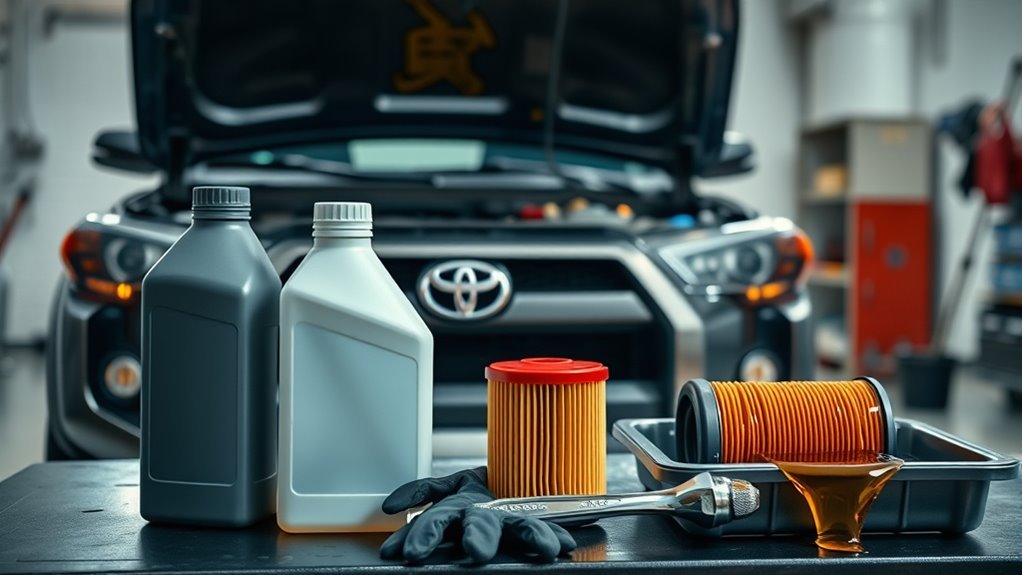
For most Toyota 4Runners you should use 0W-20—it’s the manufacturer-recommended grade to maximize fuel economy and meet design tolerances; you’ll get designed clearances and intended efficiency. If you want stronger protection, 5W-30 can be a deliberate choice—especially for high-mileage or stressed engines—because it holds film at higher temperatures and supports engine longevity. Expect a 2–4% fuel-economy tradeoff when you move to 5W-30. Let climate guide you: 0W-20 wins in cold-start performance, 5W-30 wins in sustained high-heat stability. Don’t ignore oil additives: choose oils whose additive packages match Toyota specs to control deposits and corrosion, not gimmicks that conflict with viscosity needs. Using the wrong grade risks accelerated wear and expensive repairs; follow manufacturer recommendations unless you have a documented reason to deviate. Make a conscious, liberating choice—prioritize proven protection and verified specs over anecdote.
How Viscosity Affects 4Runner Engines (Clearances & Wear)
You need to match oil viscosity to your 4Runner’s bearing clearances so the lubricant maintains a full hydrodynamic film under load and prevents metal-to-metal contact. Viscosity also controls ring seal performance—thicker oil can improve sealing and reduce blow-by in worn or boosted engines, while thinner oil aids cold flow and economy in tight-clearance modern engines. Choose the grade that preserves oil film thickness across operating temperatures to minimize wear and extend engine life.
Bearing Clearance Impact
Although engine bearings rely on precise clearances, the oil viscosity you choose directly controls the lubricating film thickness and wear protection in a 4Runner, so selecting 0W-20 where 5W-30 is appropriate can let metal-to-metal contact increase and accelerate bearing wear. You’ll see that 5W-30 maintains a thicker film under load, preserving clearance and reducing friction in high-tolerance engines. Your oil selection matters: using too-thin 0W-20 in a design calling for 5W-30 raises risk of accelerated wear, higher oil consumption, and valve-train noise. For turbocharged or high-mileage 4Runners, 5W-30 improves bearing seal integrity and can extend engine life substantially. Follow manufacturer viscosity specs to avoid costly repairs and maintain liberated, reliable performance.
Ring Seal Performance
Because ring sealing depends on a consistent lubricant film, choosing the right viscosity directly affects blow-by, oil consumption, and long-term wear in your 4Runner; a thicker oil like 5W-30 maintains a more robust film under load and can compensate for piston-ring and cylinder wear that develops with mileage or turbocharging. You’ll find ring sealing improves with higher viscosity: 5W-30 sustains contact at high temperatures and pressures, reducing blow-by and oil loss versus 0W-20. In engines with increased clearances or turbochargers, the thicker oil’s protective cushion lowers metal-to-metal contact and wear, potentially extending life by ~25–30%. For liberation from frequent top-offs and marginal sealing, prioritize oil performance that matches engine condition and duty cycle rather than defaulting to the thinnest spec.
Oil Film Thickness
Oil film thickness determines whether moving parts in your 4Runner stay separated or start wearing—viscosity controls that film, so a 0W-20 produces a thinner, fuel-saving barrier while 5W-30 gives a stronger cushion under heat and load. You’ll choose between fuel economy and protection by understanding the viscosity relationship: thinner film favors mpg, thicker film preserves clearances and reduces wear, especially under high temperature or turbo boost. Using the wrong grade speeds fatigue and costs freedom from repairs. Match oil to manufacturer specs and operating demands to liberate longevity.
| Scenario | 0W-20 | 5W-30 |
|---|---|---|
| Film thickness | Thin | Thick |
| Best for | Economy | High-load protection |
Respect oil film and viscosity relationship for durable engines.
Cold Starts vs High‑Temp Performance: 0W‑20 vs 5W‑30
When temperatures drop, you’ll want oil that gets into bearings fast—0W‑20 flows reliably down to about −35°F, while 5W‑30 starts to thicken below −25°F. At operating heat, 5W‑30 keeps a thicker film for high-stress protection whereas 0W‑20 lowers friction and improves fuel economy. Balance seasonal tradeoffs by matching oil to your climate and load conditions rather than defaulting to one grade.
Cold-Start Flow
If you regularly start your 4Runner in freezing weather, pick 0W‑20 for superior cold‑start flow down to about −35°F, compared with 5W‑30’s roughly −25°F limit. In cold weather you get faster oil circulation, quicker hydraulic lifter and turbo (if fitted) response, and reduced metal wear during the critical seconds after start. That means you’ll free your engine from unnecessary abrasion and preserve long‑term engine performance while reclaiming fuel efficiency. 0W‑20’s thinner low‑temperature viscosity also contributes to a 2.5–4% fuel economy gain versus 5W‑30 under comparable conditions. If you prioritize dependable cold starts and lower operating losses, 0W‑20 liberates you from the compromises of thicker oils in frigid climates.
High-Temp Film Strength
Although 0W‑20 gives you superior cold‑start flow down to about −35°F, you’ll want to weigh high‑temp film strength for sustained protection. At operating heat, 0W‑20 thins toward water‑like behavior at 212°F, trading film strength for fuel economy. 5W‑30 retains a thicker film, improving temperature resistance and reducing viscosity degradation under stress—important if you push the engine or own a high‑mile 4Runner.
- 0W‑20: exceptional cold flow, lower high‑temp film strength, better fuel economy.
- 5W‑30: stronger film strength at 212°F, higher temperature resistance, better for heavy duty.
- Viscosity degradation: 5W‑30 degrades ~22% less, preserving protective film longer.
- Longevity: thicker film from 5W‑30 can extend engine life by ~25–30% in demanding conditions.
Seasonal Performance Tradeoffs
Because winter starts demand rapid oil flow, you’ll notice 0W‑20 lets the engine build pressure and lubricate critical parts down to about −35°F, cutting start wear and improving cold‑weather drivability; by contrast, 5W‑30 sacrifices some cold‑start liquidity for a thicker high‑temp film that resists viscosity breakdown under sustained heat and heavy loads. You’ll weigh seasonal differences and performance impacts: choose 0W‑20 for lower friction, 2.5–4% better fuel economy and lighter wear during cold starts; choose 5W‑30 for extended protection under stress, extending engine life 25–30% in hot or towing scenarios. Be deliberate—select oil to free your driving priorities: efficiency or protection.
| Metric | 0W‑20 | 5W‑30 |
|---|---|---|
| Cold‑start temp | −35°F | −20°F |
| High‑temp film | thinner | thicker |
Fuel Economy (4Runner): Cost Tradeoffs and Real Savings

Fuel economy is one of the clearest places you’ll see the financial impact of oil choice: using 0W‑20 instead of 5W‑30 typically improves mpg by about 4–6%. You’ll notice fuel efficiency gains immediately, and a straightforward cost analysis shows $150–300 saved per year, or $1,800–3,600 across ownership. Stick to recommended specs—using 5W‑30 where 0W‑20 is advised can cut economy by 2–4%, eroding savings and resale appeal.
- Calculate your annual miles and current mpg to estimate real dollar savings.
- Weigh short‑term fuel savings against potential service needs; commuting drivers often benefit most.
- Factor resale: buyers prize documented fuel efficiency, which can lift trade‑in value.
- Monitor consumption after switches; verify gains with repeated tankfuls.
You’re aiming for financial freedom through informed choices. Use empirical measurement, keep records, and let fuel efficiency guide your oil-selection decisions rather than habit or convenience.
Protection & Wear: What Each Grade Does for Longevity
Improved mpg is only one side of the oil-selection equation; you also need to weigh how different viscosities affect long-term wear and component protection. 0W‑20 cuts friction by roughly 12–18%, which can extend engine life by an estimated 50,000 miles under normal driving by reducing metal‑to‑metal contact, especially at startup and in cold weather. 5W‑30, however, sustains a thicker lubricating film under high temperatures and heavy loads, lowering the risk of bearing and cam wear that can lead to $4,000–6,000 in repairs.
You’ll choose 0W‑20 when you want optimized cold flow and measurable gains in engine longevity; it’s liberating to trade marginal peak protection for more miles and better economy. Pick 5W‑30 if you run hot, tow, or haul—its stability preserves film strength and prevents catastrophic wear. Maintain strict oil compatibility with your engine spec: mismatches increase wear and expose you to repair bills in the $3,000–8,000 range. Match application, climate, and manufacturer guidance to protect components and your freedom to drive.
Toyota Specs, Warranty, and When You Can Deviate
When you follow Toyota’s oil recommendations, you keep warranty coverage and guarantee the engine operates within the tolerances it was designed for, but there are limited, justifiable situations to deviate. You shouldn’t treat specs as suggestions: Toyota’s 0W-20 target for modern 4Runners preserves fuel economy and engine longevity, while older designs may call for 5W-30 for added protection under stress. Using the wrong viscosity risks voiding oil warranty and accelerating wear.
- Stick to Toyota’s published grade for normal driving to protect oil warranty and resale value.
- Consider a thicker grade only if operating outside design limits—extreme heat, sustained towing—document conditions and rationale.
- When you deviate, use OEM-approved or equivalent oils and log service entries to avoid disputes.
- If unsure, consult a dealer or independent shop and get written confirmation before changing grades.
You’re aiming for freedom, not recklessness: deliberate deviations, backed by evidence, preserve reliability and liberation on the road.
Pick by Use Case: Daily Driver, Towing, Off‑Road, High‑Mile
Now that you know when it makes sense to stray from Toyota’s spec, pick the oil grade based on how you actually use the truck. If you drive daily and want maximum economy and smooth cold starts, choose 0W-20 — it delivers a 2.5–4% fuel-efficiency gain and superior cold-flow for colder regions per regional recommendations. If you routinely face heavy towing conditions, opt for 5W-30; its thicker film resists shear and preserves wear protection during sustained highway pulls. For aggressive off-road performance where heat and contamination spike, 5W-30 holds viscosity better and protects under thermal stress. For high-mileage 4Runners, lean toward 5W-30: reduced consumption and thicker protection can yield measurable high mileage benefits and slow wear. In short: daily driver and cold climates favor 0W-20; towing, off-road, hot climates, and high-mileage engines favor 5W-30. Pick with intent to free yourself from one-size-fits-all thinking.
Synthetic vs Conventional and Recommended Drain Intervals
Because synthetics resist breakdown and shear better than conventional oils, they let you extend drain intervals and retain protective viscosity under stress, while conventional 5W‑30 needs more frequent changes to avoid increased wear. You’ll find synthetic 0W‑20 lets you go up to about 10,000 miles between drains thanks to better oil additives and thermal stability, plus a 2.5–4% fuel economy edge versus 5W‑30. Still, many pros recommend 5,000‑mile service for longevity and engine cleanliness, a safe compromise that liberates you from constant maintenance while protecting internals.
- Prioritize manufacturer intervals; they’re optimized for component life and warranty.
- If you demand extreme temps or load, choose synthetic 5W‑30 for high‑temperature stability.
- Use conventional 5W‑30 only if you accept ~3,000‑mile changes to prevent wear.
- Maintain regular oil and filter changes to preserve oil additive function and engine cleanliness.
Make choices that free you from unnecessary risk while keeping your 4Runner durable and efficient.
How to Switch Grades Safely and What to Monitor (Oil Analysis, Symptoms)
After choosing a different viscosity, you should follow a simple checklist to switch grades safely and watch for early signs that the engine’s tolerances are reacting to the change. First, confirm oil compatibility with your 4Runner’s manufacturer specs so you won’t void warranties or stress components. Drain and replace with the chosen grade, then reset service intervals and note the date and mileage.
Monitor for symptoms: increased oil consumption, new valve-train noise, or different idle behavior can signal clearance or lubrication mismatches. Also watch for reduced fuel economy if you move from 0W-20 to 5W-30; that’s a known viscosity effect. Expect possible improved ring seal and reduced blow-by with the higher viscosity under load.
Run periodic oil analysis to track viscosity degradation and fuel dilution; use results to validate the grade’s performance. If analysis or symptoms show problems, revert to the recommended grade or consult a technician to protect engine longevity and your freedom to drive confidently.
Frequently Asked Questions
Is It Safe to Use 0W-20 Instead of 5W-30?
No — you shouldn’t switch unless manufacturer allows it. Using 0W-20 can harm engine performance and risk warranty; it may boost fuel efficiency slightly, but sacrifices protection under stress and increases long‑term failure risk.
When to Use 0W Vs 5W Oil?
Use 0W when cold starts prevail; you’ll gain oil viscosity suited for low temperature range, improved fuel efficiency and smoother engine performance. Use 5W for warmer climates or heavy loads needing thicker protection and durability.
What Happens if I Use 5W30 Instead of 0W30?
You’ll likely feel a tiny rebellion: 5W-30 raises oil viscosity slightly, so engine performance may drop a bit, cold starts struggle more, but protection at high stress improves — trade fuel economy for durability, choose wisely.
Is 5W20 Better Than 0W-20 in Hot Weather?
Yes — in hot weather, you’ll often prefer 5W20 for better oil viscosity comparison and engine performance analysis: it sustains thicker film, reduces thinning and wear, and can slightly boost efficiency under high thermal stress.
Conclusion
You want reliable protection for your 4Runner without guessing — so pick oil based on your climate, duty cycle, and Toyota’s specs. Want better cold starts and a small MPG gain? Use 0W‑20 in mild-to-cold climates and light use. Haul, tow, or run hot? Choose 5W‑30 for thicker high‑temp film and wear resistance. Stick with synthetic, follow drain intervals, and monitor oil analysis and symptoms after any grade change.