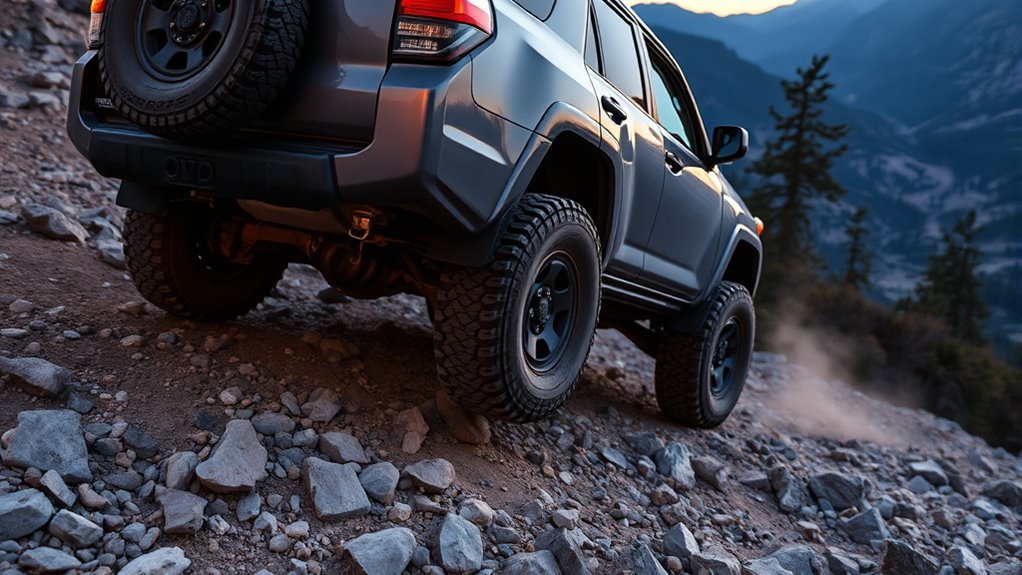
Use Downhill Assist Control when you need controlled, low-speed descents on steep, technical, or slippery terrain—engage it in 4Lo for maximum engine braking and precise modulation or in 4Hi for milder declines. Keep speed under about 15–18 mph, release the pedals, and confirm the DAC icon before relying on it. Let DAC manage steady drops to preserve brakes, but override with throttle or brake for sharp corners or obstacles. Continue for activation steps, limits, and troubleshooting.
What Downhill Assist Control (DAC) Does : A One-Line Quick Answer
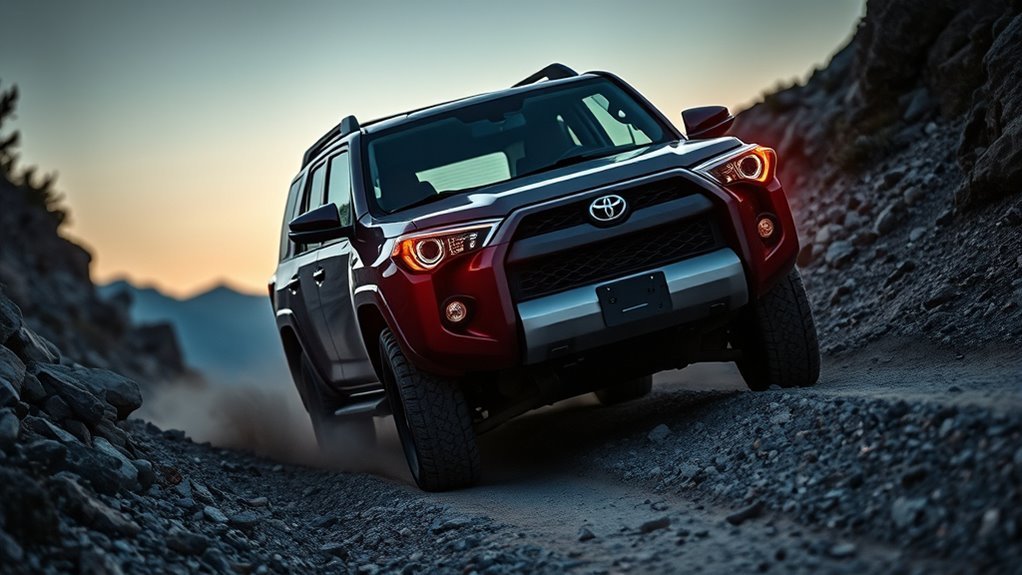
When you descend steep terrain under about 15 mph, Downhill Assist Control (DAC) automatically uses engine braking to hold a controlled speed, works in both 4Lo and 4Hi, and disengages the moment you press the gas or brake (or manually select a gear). You’ll feel the system benefits immediately: consistent low-speed control, reduced brake fade, and simplified focus on steering rather than micro-managing throttle or brake pressure. DAC functions independently in 4Lo and 4Hi, so you can choose traction mode without sacrificing descent control. Tap the brakes and the transmission downshifts to amplify retardation; press the accelerator or select a gear and DAC releases control, returning authority to you. For liberated drivers this means predictable behavior on technical descents and fewer split-second decisions. Integrate DAC into driving techniques as an aid—not a crutch—using it to stabilize speed while you concentrate on line selection, wheel placement, and situational awareness.
Quick-Start Checklist: Activate DAC Safely (Step-By-Step)
Now that you know what DAC does, here’s a compact, step-by-step starting checklist to engage it safely. Confirm low range (4Lo) and slow to under 15 mph. Stop accelerating; release the gas and completely remove your foot from the brake — DAC requires no pedal input to engage. With pedals clear, press the DAC activation control as described in the Owner’s Manual (pages 428–431). Watch the dashboard system indicators to verify the DAC active icon and any status messages appear. If a warning or fault displays, abort and consult the manual before proceeding.
Maintain a liberated mindset: trust the system, but remain ready to intervene. Remember safety precautions — never attempt activation at higher speeds, and expect immediate deactivation if you press the brake or gas. During descent, monitor system indicators continuously; if DAC disengages, resume controlled manual braking and pull to a safe spot to reset following the manual’s steps.
When to Use DAC (4Hi vs 4Lo) and Recommended Speeds
If you’re descending steep or technical terrain, engage DAC in 4Lo for the best low-speed control (up to about 18 mph); 4Hi can be used for moderate slopes but offers less torque modulation and control. Use 4Lo benefits when you need maximum engine braking and precise wheel modulation—it holds speed with minimal input and prevents momentum from dictating line choice. Reserve 4Hi scenarios for gentler declines where mobility and quicker exits matter; DAC will function but with reduced finesse. Keep both pedals released for activation; pressing brake or gas cancels the system. Operate at conservative speeds well below 18 mph on technical sections to preserve traction and steering authority. You can manually select gears to fine-tune descent pace or override DAC when terrain demands a different engine braking profile. Choose the setting that maximizes your control and freedom to navigate lines without fighting the vehicle—use 4Lo for control, 4Hi for situational versatility.
When to Let DAC Run : And When to Override With Brakes/Gears
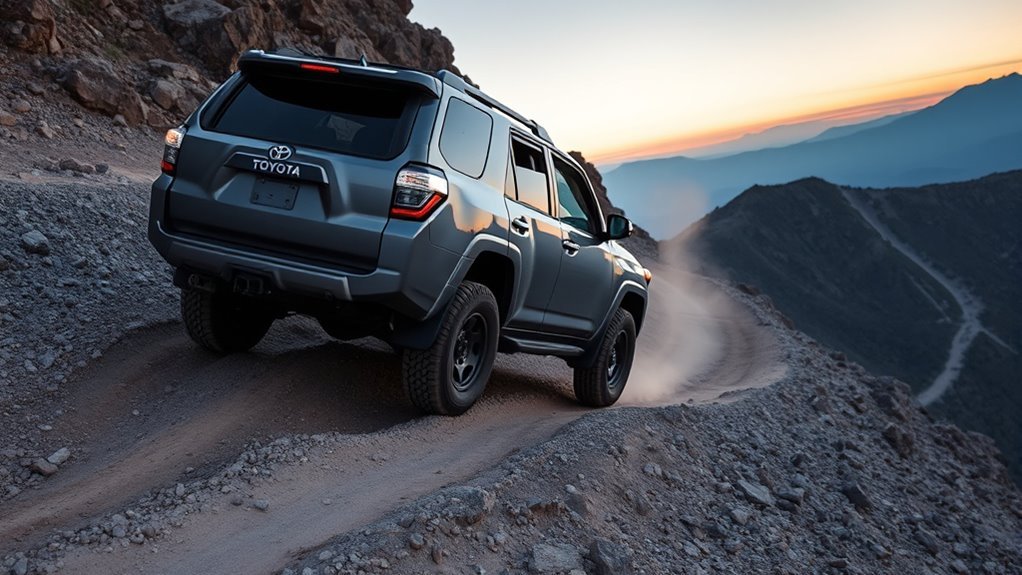
Although DAC will reliably hold a steady, low speed on steep grades under about 15 mph, you should let it run on moderate declines where engine braking alone keeps the truck controlled and your hands free for steering. You gain DAC Benefits: consistent low-speed control, reduced brake fade, and freedom to focus on line choice across varied Terrain Types. Let DAC manage straightforward descents and non-technical off-road slopes; it stabilizes speed without your interference.
Override DAC when you need finer modulation—approaching sharp corners, traversing rutted or rocky sections, or when traction shifts demand rapid torque or brake adjustments. Apply the brake or throttle to immediately deactivate DAC and resume manual control; downshift to increase engine braking or upshift to smooth power delivery. Practice these changes in safe settings to internalize timing and response. Use judgment: allow DAC to liberate you on predictable grades, but reclaim control whenever precision, adaptability, or unexpected obstacles require direct input.
Troubleshooting: Audible Cues, Activation Failures, and Fixes
Once you understand when to let DAC run and when to override it, you’ll want to recognize audible cues and common failure modes so you’re not caught off-guard on a trail. Listen for engine braking hum or ABS pulsing — those are normal audible cues that indicate the system is modulating wheel speed. If you hear grinding or irregular clunks, stop and inspect. Activation issues usually stem from user input or condition mismatches.
Recognize normal DAC cues — engine hum or ABS pulsing — and stop to inspect if you hear grinding or clunks.
You’ll troubleshoot quickly by checking these points:
- vehicle speed above 15 mph preventing engagement, imagine a silent lockout until you slow;
- foot on brake or gas immediately cancels DAC, picture your boot as the switch;
- incorrect range (not in 4Lo/4Hi) or dashboard flags that block activation.
Consult the Owner’s Manual for specific indicators and practice in controlled terrain to build competence. These steps free you to trust DAC without surrendering control.
Frequently Asked Questions
When to Use Downhill Assist Control?
Use DAC when descending steep inclines in off road conditions; it automates braking techniques, preserves vehicle stability, frees you from constant pedal input, and lets you maintain controlled low-speed descent up to about 18 mph.
Should Downhill Brake Control Be on or Off?
Like a steady anchor, you should turn downhill brake control on for steep, slow descents to maximize brake effectiveness; off on mild terrain conditions or towing situations where manual control yields freer, liberated vehicle handling.
Conclusion
Think of DAC as cruise control for gravity—you flip it on, and the 4Runner manages brake pressure to hold a set, safe descent speed so you can focus on steering. In one muddy Colorado pass I stopped using my feet and watched the speed needle hug 3–5 mph, just as recommended for 4Lo. Use DAC when steep, loose, or technical; override with brakes or lower gear if you need quicker control or DAC can’t hold pace.