You’ll use Crawl Control when you want the 4Runner to manage throttle and brakes automatically in 4‑LO for ultra‑slow, technical lines; it offers selectable crawl speeds and continuous modulation so you can focus on steering. Low Range (4‑LO) gives fixed high‑torque gearing and manual throttle control for deep mud, steep climbs, and heavy loads. They overlap but serve different tactics; learn how they interact with lockers, MTS, and stability systems to pick the right tool.
Crawl Control vs Low Range: Quick Comparison
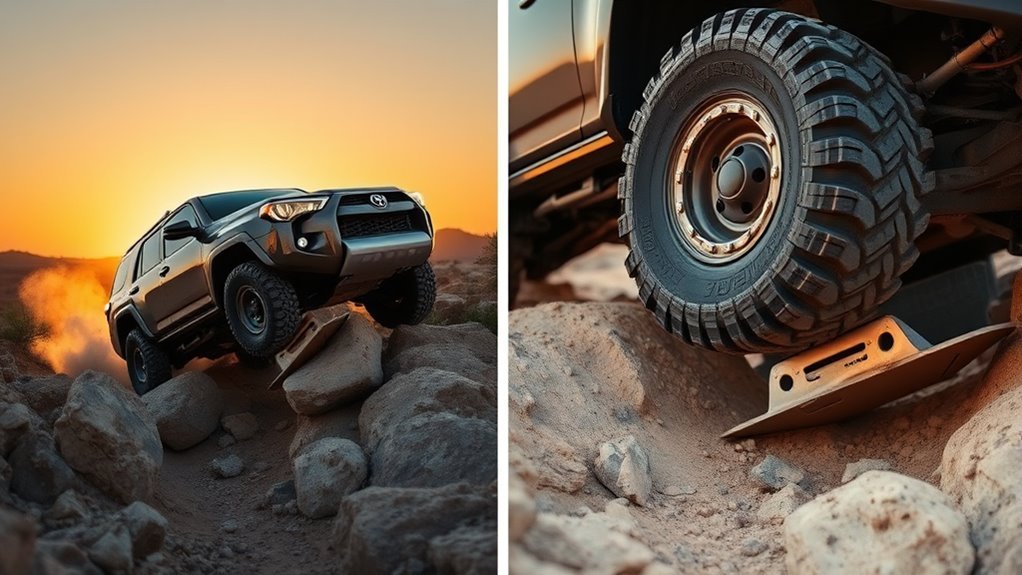
While both boost off-road capability, Crawl Control and Low Range serve different roles: Crawl Control (available only in 4-LO) automates throttle and braking across five speed settings for ultra-slow, technical maneuvers and pairs with Multi-Terrain Select, whereas Low Range simply provides a fixed, high-torque gear ratio that you control manually for general climbing and power-demanding situations. You’ll choose Crawl Control when you need precise, low-speed progress over rocks, ledges, or steep descents; it frees you from throttle and brake modulation so you can steer with intent. You’ll opt for Low Range when you want direct control and sustained torque for broader off-road tasks—climbing loose slopes, towing through rough sections, or when you prefer human input over automation. Crawl Control’s selectable speeds and Multi-Terrain integration tailor slow maneuvers, while Low Range delivers predictable gearing and maximum mechanical advantage. Both liberate you from pavement limits, but they do it through different control philosophies: automated finesse versus manual torque.
How Crawl Control Works (Automatic Throttle & Brakes)
Think of Crawl Control as an onboard low-speed autopilot that you engage in 4-LO to let the system modulate throttle and brakes while you steer. You get an automated driving aid tailored for obstacle navigation: five speed settings let you pick precise crawl rates from under 1 mph to 15 mph, freeing you from constant pedal work. The console-mounted button or dial makes engagement quick so you can reclaim control of the line and momentum.
- Continuous modulation: Crawl Control meters throttle and applies light brake touches, maintaining traction without full brake lockout, so you hold course over steep or uneven surfaces.
- Speed selectability: Choose a setting that matches terrain aggressiveness; the system compensates automatically for wheel slip and load changes.
- Driver focus: With automated driving inputs handling speed, you steer with intent, navigate obstacles confidently, and experience a liberating hands-on/off combination of control and assistance.
What Low Range (4LO) Actually Does (Torque, Gearing, Driver Control)
Crawl Control handles throttle and braking so you can focus on steering; 4LO changes what the drivetrain itself does. When you engage Low Range (4LO) the system reconfigures gear ratios for torque enhancement, letting the engine deliver much higher twisting force to the wheels at low speeds. You must stop and select neutral to engage it, so the transfer case shifts cleanly into its lower gear set and delivers the gearing advantages required for steep climbs, rocks, and obstacle crawling.
4LO also alters vehicle control: it disables traction and stability aids, permitting controlled wheel spin where needed and letting you modulate momentum directly with the clutch and brake. Top speed is limited—operationally up to about 15 mph—so you steer and choose lines, not the electronics. In contrast to Crawl Control’s automated inputs, 4LO frees you to command power and traction, giving you direct, mechanical control when liberation from electronic limits matters.
When to Use Each : Real‑Off‑Road Scenarios and Decision Rules
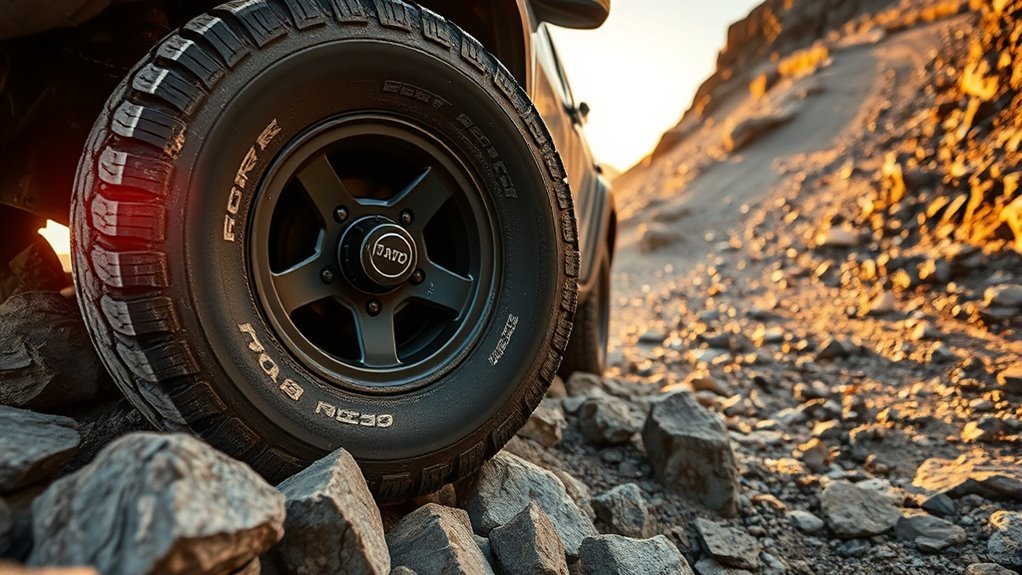
When you’re off-road, choose between Crawl Control and 4-LO based on whether you want automated speed/brake management or raw drivetrain torque and direct driver inputs. You’ll pick Crawl Control in 4-LO for low-speed negotiation of steep hills, rocky sections, loose gravel, or sand where consistent speed and braking free you to focus on line selection. Use plain 4-LO when trail conditions demand maximum torque and precise throttle/brake feel—deep mud, steep climbs, or technical rock crawling where you deliberately modulate power.
- Crawl Control: engage in 4-LO for controlled descents, moderate loose surfaces, or when limited driver experience makes steady speed management safer.
- 4-LO (manual): choose when you must command torque distribution, exploit gearing for climbing, or when experienced drivers need direct modulation.
- Combined: for severe obstacles, run 4-LO and enable Crawl Control so the system handles speed while you exploit torque and steering freedom for liberation on demanding terrain.
Limitations, Interactions (Rear Locker, MTS), and Practical Tips
Although Crawl Control gives you automated low‑speed management only in 4‑Lo, it isn’t a catch‑all and has specific limits and interactions you need to know. You’ll rely on Crawl Control for delicate, controlled progress—five speed settings up to about 15 mph—but it won’t replace driver judgment on line or momentum. MTS offers terrain‑specific throttle mapping, and the rear locker forces equal torque to both rear wheels; both enhance traction optimization but can’t run simultaneously with Crawl Control without system conflicts.
Know that engaging these systems disables normal traction and stability control to prioritize wheelspin and articulation. Practically, pick the single tool matching the obstacle: Crawl Control for measured ascent/descent, MTS (Mud & Sand, Rock) for adaptive throttle in variable surfaces, locker for one‑wheel‑lift or slick rock. Tip: set MTS or locker before entering 4‑Lo, confirm the active mode, and be ready to manually steer and modulate momentum when electronic aids step back.
Frequently Asked Questions
What Does H2, H4, and L4 Mean in 4runner?
H2 means rear-wheel drive for efficient highway cruising; H4 engages all four wheels for traction up to ~55mph; L4 provides low-range torque for slow, technical off-roading. You’ll choose H2 settings among drive modes.
When to Use 4LO 4runner?
Use 4LO when you need max torque and control; 4LO advantages include steady low-speed power and traction. 4LO scenarios: steep inclines/declines, rock crawling, deep mud or snow, engaged stopped in neutral.
Conclusion
You’ll pick Crawl Control when you want automated, steady throttle and brake modulation so you can focus on steering; choose Low Range when you need raw torque, precise driver inputs, and engine braking for steep, technical climbs. Crawl is like a cruise control for rocks, limiting slip automatically; 4LO is a gearbox that multiplies torque and hands you full control. Use Crawl for slow, complex traction chores; use 4LO for high-load, low-speed power and engine braking.