To adapt your Supra for winter driving, focus on smooth steering and gentle acceleration to maintain traction on slippery surfaces. Lower gears can help reduce wheelspin, especially when starting. Switch to high-performance winter tires like Blizzak WS90s for better grip, and consider adding weight in the trunk for rear stability. Regular maintenance, like using thinner oil and keeping your battery in check, is essential. If you want to enhance your winter driving strategy further, there’s more to unpack.
Understanding the Supra’s Winter Limitations
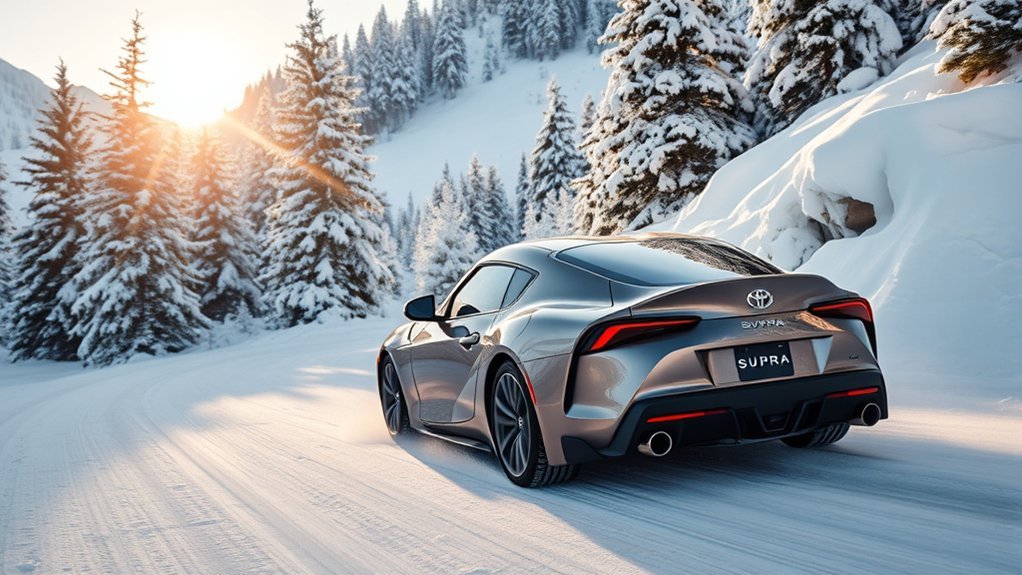
When you take your Toyota Supra out in winter, it’s essential to recognize its limitations. With its low clearance and rear-wheel-drive setup, the Supra struggles in deep snow, making it less suited for harsh winter conditions. Owners often report sliding and loss of control, especially on steep inclines or in parking lots. The stock Pirelli Sottozero tires simply don’t cut it in deep snow; you’ll want high-performance alternatives like Blizzak WS90s for better traction. Additionally, the traction control system tends to kick in during low-speed maneuvers, highlighting the car’s challenges in slippery conditions. Always exercise caution and manage your driving style carefully to maintain control and avoid accidents on icy roads.
Choosing the Right Winter Tires for Your Supra
Selecting the right winter tires for your Supra is essential for maintaining control and safety in icy conditions. Options like Blizzak WS90s excel in snow handling, far surpassing stock tires and alternatives such as Pirelli Sottozero Serie II, which struggle in deeper snow. Given the stock tire sizes on your Supra, ensuring tire compatibility with its width is vital for peak performance. While Continental DWS tires can be used, they won’t match the traction of dedicated snow tires. Consider narrower tires to enhance grip on snow and ice, further improving your winter driving experience. Regularly maintain your winter tires by monitoring tread depth and condition to maximize grip and control when you need it most.
Driving Techniques for Improved Traction
Mastering driving techniques in winter is essential for your Supra’s performance on slippery roads. Here are key strategies to enhance your traction:
- Smooth Inputs: Use gradual steering and acceleration techniques to maintain control and reduce the risk of losing traction.
- Use Lower Gears: Shift to lower gears when starting from a stop to minimize wheelspin and improve grip.
- Manual Mode Advantage: Engage manual mode to control acceleration better, especially on bends and roundabouts, avoiding automatic kickdown.
- Weight Distribution: Consider adding weight, like sandbags in the trunk, to enhance rear grip for better traction.
Essential Maintenance for Winter Performance in Your Supra
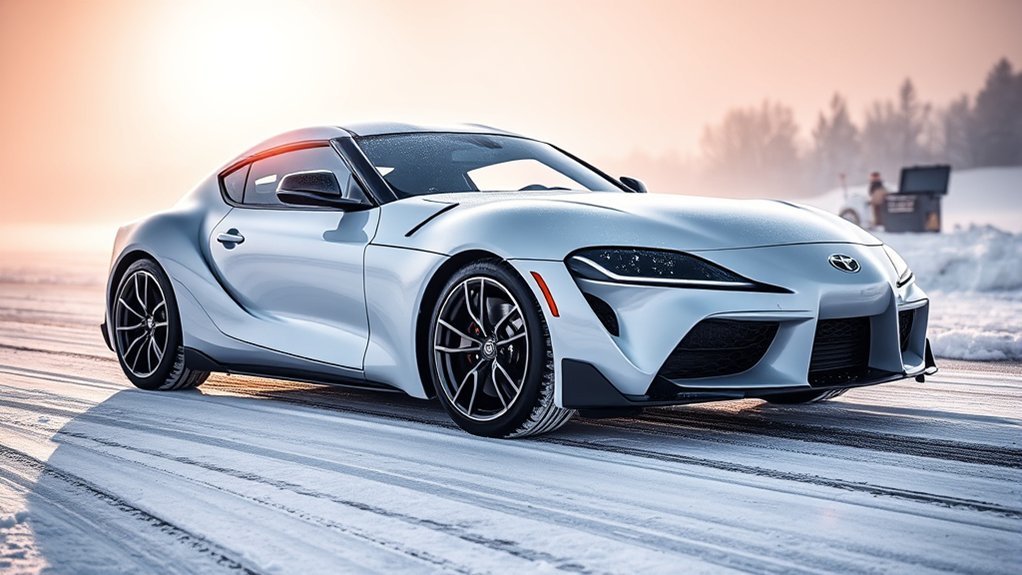
To guarantee your Supra performs at its best during winter, regular maintenance is essential, especially as temperatures drop. Start by switching to a thinner oil, like 5W30 or AMSOIL 0W30 synthetic, for improved cold-start performance and reduced engine noise. Battery maintenance is vital; confirm your battery is in good condition and consider using block heaters in extreme cold to enhance reliability. Don’t forget to wash the underbody regularly to prevent salt damage, which can harm your vehicle’s longevity. Installing high-quality winter tires, such as Blizzak WS90s, will greatly boost traction on snow and ice. Finally, stay alert to your vehicle’s performance and be ready to adjust your driving techniques to navigate winter conditions safely.
When to Store Your Supra for Winter: Pros and Cons
Deciding when to store your Supra for winter can be a tough call, especially for passionate owners. Here are some pros and cons to evaluate:
- Protection from Damage: Storing your Supra shields it from road salt and harsh weather, preserving its condition.
- Resale Value: Keeping it in storage minimizes wear and tear, helping maintain its resale value.
- Emotional Attachment: You might feel torn; driving your Supra year-round keeps that emotional connection alive.
- Storage Options: Garaging the car prevents risks associated with winter driving, especially with low clearance models.
Ultimately, weighing these factors can help you make an informed decision that balances practicality and your love for your Supra.
Community Experiences With Winter Driving
While winter driving in a Supra can be challenging, many owners share valuable insights that can help you navigate snowy conditions more effectively. Smooth, cautious acceleration is key; aggressive starts can lead to loss of control on slippery surfaces. Community members strongly recommend equipping your Supra with winter tires, like Blizzak WS90s, for enhanced traction. Given the car’s low clearance, avoiding deep snow is essential to prevent getting stuck. Adapting your driving style by using lower gears can help reduce wheelspin, allowing for more stable navigation on icy roads. While the Supra isn’t the best winter vehicle, those who embrace the right winter modifications and techniques report varying levels of control and even enjoyment during snow driving.
Frequently Asked Questions
Is a Supra Good for Winter?
A Supra isn’t ideal for winter. With its rear-wheel drive, you’ll need solid tire selection and good traction control. Mastering cold weather driving techniques enhances handling dynamics, but engine performance can struggle in deep snow.
Conclusion
So, as you gear up to tackle winter in your Supra, remember: it’s not just a car, it’s a delicate snowflake on wheels. Embrace the art of drifting—just not into that snowbank. With the right tires, driving finesse, and a healthy dose of maintenance, you can turn your winter driving into a thrilling ballet instead of a disastrous slip-and-slide. After all, nothing says “I love my Supra” quite like a well-timed spin on an icy road!