You should follow model-year intervals: 1984–2003 every 20,000 miles or 2 years; 2004 first Super Long Life flush at 40,000 miles/5 years; 2005–2009 first at 80,000 miles then every 40,000/5 years; 2010+ first at 100,000 miles then every 50,000 miles or 5 years. Use Toyota Super Long Life (HOAT) for 2004+, IAT for older cars, avoid mixing chemistries, watch for discoloration or smells — more specifics and procedures follow.
Quick Answer: 4Runner Coolant Intervals by Model Year
If you’re maintaining a Toyota 4Runner, follow these model-year–specific coolant intervals: You’ll replace coolant per model: 1984–2003 every 20,000 miles (32,000 km) or 2 years; 2004 at 40,000 miles (65,000 km) or 5 years; 2005–2009 first flush at 80,000 miles (128,000 km) then every 40,000 miles (65,000 km) or 5 years; 2010–present initial replacement at 100,000 miles (160,000 km) then every 50,000 miles (80,000 km) or 5 years. Apply maintenance tips: inspect hoses, radiator cap, and concentrate levels at each service, and use manufacturer-approved coolant types to guarantee corrosion protection and thermostat accuracy. If you drive in severe conditions—towing, extreme temperatures, or heavy idling—you’ll shorten intervals and service earlier. You’re taking control of longevity and performance; precise intervals plus the right coolant types and proactive maintenance tips liberate you from unexpected failures and preserve cooling efficiency across generations of 4Runners.
1984–2003: Interval, Notes, and Exceptions
For 1984–2003 4Runners you should replace the coolant every 20,000 miles or every 2 years to maintain proper heat management and corrosion protection. If you operate the vehicle in severe conditions (towing, extreme temperatures, or heavy dust) plan on more frequent flushes. Always check the owner’s manual for model-year specific exceptions and procedure notes.
Recommended Flush Interval
When you own a 1984–2003 Toyota 4Runner, plan on flushing the coolant every 20,000 miles or every 2 years to keep the cooling system operating within design parameters; this interval preserves corrosion inhibitors and prevents scale buildup that can reduce heat transfer. For later model years, adjust intervals: 2004 requires 40,000 miles or 5 years; 2005–2009 call for an initial flush at 80,000 miles then every 40,000 miles or 5 years; 2010+ recommend an initial flush at 100,000 miles then every 50,000 miles or 5 years. Follow these coolant longevity guidelines and maintenance tips to sustain thermal efficiency, prevent galvanic corrosion, and protect seals. Monitor conditions that may demand earlier service and act decisively to maintain control.
Exceptions And Notes
You followed the 20,000‑mile / 2‑year guideline above, but note several exceptions and service notes that can change that schedule for 1984–2003 4Runners. You should treat the interval as a baseline for coolant longevity and engine performance, not an absolute rule. Pre‑2004 IAT chemistry degrades faster; harsh duty increases corrosion risk and shortens service life. Refer to the owner’s manual and inspect system condition regularly.
- Frequent towing or heavy loads: shorten interval to protect cooling capacity.
- Extreme climates (hot or cold): monitor coolant condition more often.
- Visible contamination or rust: flush immediately to preserve engine performance.
- After repairs to cooling components: replace coolant to avoid mixing issues.
- When switching to modern OAT/HOAT: follow new coolant manufacturer interval.
2004: Super Long Life Transition and Guidance
You’ll find Super Long Life (HOAT) coolant gives extended protection—up to 100,000 miles or five years—while reducing harmful additives versus older IAT formulas. You must avoid mixing HOAT with legacy IAT coolants because chemical incompatibility can sharply reduce corrosion protection and inhibitor life. Follow the vehicle manufacturer’s recommended change interval and replacement procedure to preserve engine cooling performance and prevent overheating.
Super Long Life Benefits
Although introduced in 2004, the switch to Super Long Life HOAT coolant represents a clear step forward in longevity and protection, offering service intervals up to 100,000 miles or five years and reducing the need for frequent changes. You gain a measurable coolant lifespan improvement and lower environmental impact by needing fewer disposals. Use controlled flushing to eliminate old IAT residues before converting.
- Extended service interval reduces maintenance burden and resource consumption.
- HOAT chemistry improves corrosion inhibition across alloys in the cooling system.
- Fewer coolant changes mean less hazardous waste and lower environmental footprint.
- Proper flushing preserves system integrity and guarantees performance gains.
- Follow manufacturer service procedures to maximize longevity and maintain freedom from frequent servicing.
Coolant Compatibility Concerns
Because Super Long Life HOAT differs chemically from older IAT formulations, you must avoid mixing the two: their inhibitors can react, form sludge, and degrade corrosion protection, shortening component life. You’ll confront coolant mixing and compatibility issues when converting pre-2004 systems; those chemical reactions reduce inhibitor concentration and raise corrosion risk. To liberate your maintenance schedule without risking damage, perform a full system flush before introducing HOAT, removing residual IAT and contaminants. Follow the owner’s manual for the specified HOAT formula to guarantee material compatibility with hoses, seals, and aluminum components. Monitor coolant condition and system performance; contamination will show as reduced heat transfer and variable temperature control, a clear performance impact signaling immediate corrective action to preserve longevity and reliability.
Recommended Change Interval
For 2004 and later 4Runner models, switch to Super Long Life coolant and plan a first full system flush at 100,000 miles (or 5 years), then maintain subsequent flushes every 50,000 miles or 5 years to preserve inhibitor levels and corrosion protection. You’ll gain extended service life and environmental benefits versus older IAT coolant types, but you must avoid mixing formulations. Follow manufacturer guidance when converting to Super Long Life to prevent compatibility failures.
- Verify original coolant type before switching.
- Perform a complete system flush at the 100k/5yr mark.
- Use only compatible Super Long Life products afterward.
- Monitor coolant condition regularly as a maintenance tip.
- Record interval compliance to protect engine longevity.
Adopt this schedule to free yourself from frequent maintenance constraints.
2005–2009: First Flush Timing and Routine Schedule
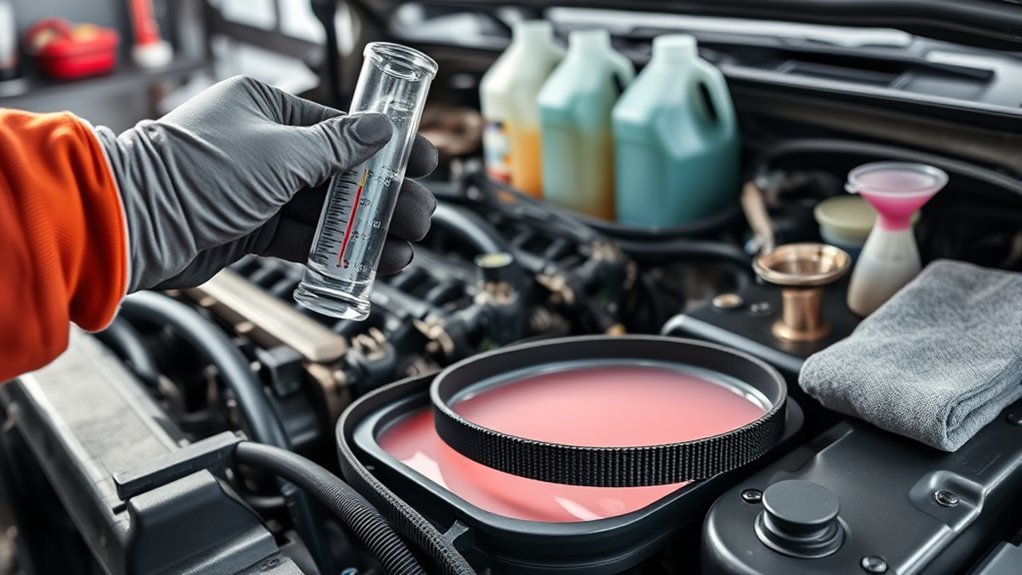
When you own a 2005–2009 Toyota 4Runner, plan the first coolant flush at 80,000 miles (128,000 km) and then schedule additional flushes every 40,000 miles (65,000 km) or every 5 years, whichever comes first. You’ll rely on Super Long Life HOAT coolant, which extends service life, but you shouldn’t treat that as immunity. Use concise coolant maintenance tips: monitor hose condition, coolant color, and freeze/boil protection with a refractometer or tester. Adjust intervals downward in harsh climates, heavy towing, or frequent short trips.
Adopt disciplined flushing techniques: fully drain, flush with distilled water until clear, then refill with specified HOAT mixture and bleed trapped air. Neglecting intervals risks overheating, corrosion, and engine damage. Always cross‑check the owner’s manual for engine‑specific nuances. These steps give you control over longevity and reduce dependency on costly repairs, aligning practical maintenance with the freedom to drive without mechanical constraint.
2010–Present: 100K First Flush and Follow‑Ups
Shifting from the earlier 2005–2009 guidance, 2010-and-newer 4Runners call for a later first coolant service: plan the initial flush at 100,000 miles or 5 years, whichever comes first, then perform replacements every 50,000 miles or every 5 years thereafter. You’ll follow this interval to limit coolant deterioration and reduce the risk of engine overheating, preserving cooling-system integrity and freeing you from avoidable breakdowns.
- Schedule: first flush at 100K miles / 5 years.
- Repeat interval: every 50K miles or 5 years.
- Inspection: check color, smell, and particulate levels to spot deterioration.
- Outcome: reduces corrosion, preserves hoses, radiator, water pump.
- Risk mitigation: prevents cascading failures that lead to engine overheating.
You should perform laboratory-grade inspections or use manufacturer-approved diagnostics when signs of contamination appear. Adhering to this regimen extends component life, maintains thermal control, and gives you confidence to drive without fear of preventable failures.
Which Coolant to Use: Types, Compatibility, and Mixing Rules
Although several coolant formulations exist, you should stick to the type specified for your 4Runner to preserve corrosion inhibitors and sealing properties. 2004-and-later Toyota models require Super Long Life (HOAT) coolant—Toyota’s own formula is preferred for its extended service life and chemistry tailored to aluminum engines—whereas pre‑2004 vehicles use IAT. You’ll choose based on coolant types: IAT for older cast-iron systems, HOAT (Super Long Life) for modern aluminum heads.
Follow strict mixing rules: don’t blend different inhibitor chemistries. Mixing causes compatibility issues, neutralizes additives, and shortens protector life. If you consider alternatives (Valvoline/Zerex), verify OEM compatibility with Asian manufacturers first. Always select non-silicate, non-amine, non-nitrite, non-borate formulations to prevent rust and galvanic corrosion.
Beyond performance, pick coolants with lower environmental impact—extended-life formulations reduce disposal frequency and contamination risk. By matching specification, observing mixing rules, and choosing compatible, eco-aware products, you’ll protect seals, radiators, and your freedom to drive without avoidable failures.
Signs and Tests That Mean You Need a Flush Now
Having matched the correct coolant chemistry to your 4Runner, you also need to watch for clear signs that the cooling system demands immediate service. You should act when tests and observations indicate degradation or failure risk. Rely on visual inspection, basic tests, and dashboard telemetry to decide.
- Sweet smell from under the hood: indicates coolant overheating or leak—flush now to prevent corrosion.
- Gurgling at startup: suggests air pockets or low level; diagnose and address before damage.
- Coolant discoloration signs: brown, cloudy, or oily fluid means contamination and imminent system failure.
- Engine temperature monitoring: repeated excursions into the red zone or frequent overheating require immediate intervention.
- Routine visual and level checks: detect early contamination or depletion so you can liberate yourself from costly repairs.
Use precise observations and simple tests; don’t wait for catastrophic failure. Regular checks preserve reliability and keep you independent on the road.
How to Flush and Refill Your 4Runner (Step‑by‑Step)
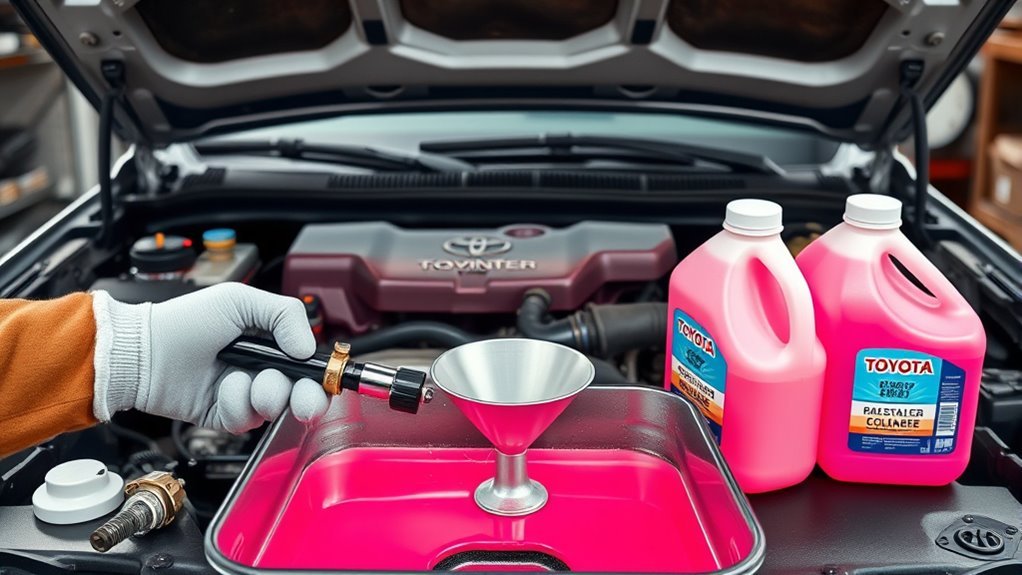
Start by safely draining the old coolant: park on level ground, let the engine cool completely, open the radiator petcock and collect fluid into a proper container, and—if you want a more thorough flush—remove the block drain plugs to pull additional coolant from the engine. Next, flush the system with distilled water to dislodge residues; circulate and drain until the runoff is clear. Choose coolant types carefully: prefer Toyota Super Long Life Coolant or a specified compatible alternative, and don’t mix brands to avoid chemical incompatibility. Refill using roughly 11.1 quarts but verify your model’s exact volume to resolve the 2‑ vs 3‑gallon confusion. Employ a vacuum fill tool during refill to evacuate air and guarantee full coolant circulation. After filling, run the engine to operating temperature, watch for leaks, and reconfirm fill level once cooled. Document the service date and coolant type so future decisions reflect liberated, evidence‑based maintenance choices.
Practical Tips: Capacity, Tools, Costs, and Dealer vs DIY
Now that you’ve flushed and refilled the system, focus on practical details that make the job efficient and cost‑effective. You’ll need about 11.1 quarts (roughly 2–3 gallons) to fully replace the 4Runner’s coolant; confirm capacity against your model year and owner’s manual. Use Toyota Super Long Life Coolant to avoid compatibility problems—mixing coolant types risks corrosion and reduced protection.
- Carry a drain pan, funnel, and gloves to control spills and contamination.
- Consider a vacuum fill tool to eliminate air pockets and speed bleeding.
- Buy concentrated coolant and flush material; DIY costs ≈ $28 versus ~$90 at a dealer.
- Schedule flush intervals per your model year: older ≈20k miles, newer up to 100k miles.
- Keep records of maintenance tips and fluid type to preserve warranty and resale value.
You’re choosing freedom and control by doing this work correctly; precise tools, correct coolant types, and disciplined intervals keep your 4Runner reliable.
Frequently Asked Questions
What Is the Major Maintenance Schedule for a 4runner?
You follow scheduled coolant flushes by model: older intervals at 20k/2yr or 40k/5yr; newer at 80k/40k/5yr or 100k/50k/5yr, and you’ll prioritize fluid checks to sustain engine performance and autonomy.
Conclusion
Think of your 4Runner’s cooling system like a well-tuned orchestra: if you listen for off‑notes and follow the service score, the performance stays flawless. You’ll check intervals by year, pick compatible coolant, and act on pressure, temperature, or test failures. Flush and refill with the right tools and measurements, and you’ll avoid costly breakdowns. Stay precise, follow the steps, and your engine will keep playing reliably mile after mile.