When driving your Supra, use stability control in wet or slippery conditions to maintain grip and safety. On dry roads, switch to a lenient mode for better handling. For track driving, start with higher ESC settings and gradually lower them as you gain confidence. Disengaging stability control can enhance performance, but it’s best for experienced drivers. Monitoring tire pressure and adjusting your settings can further improve your driving experience. There’s much more to explore about optimizing your Supra’s performance.
Understanding Stability Control in a Supra
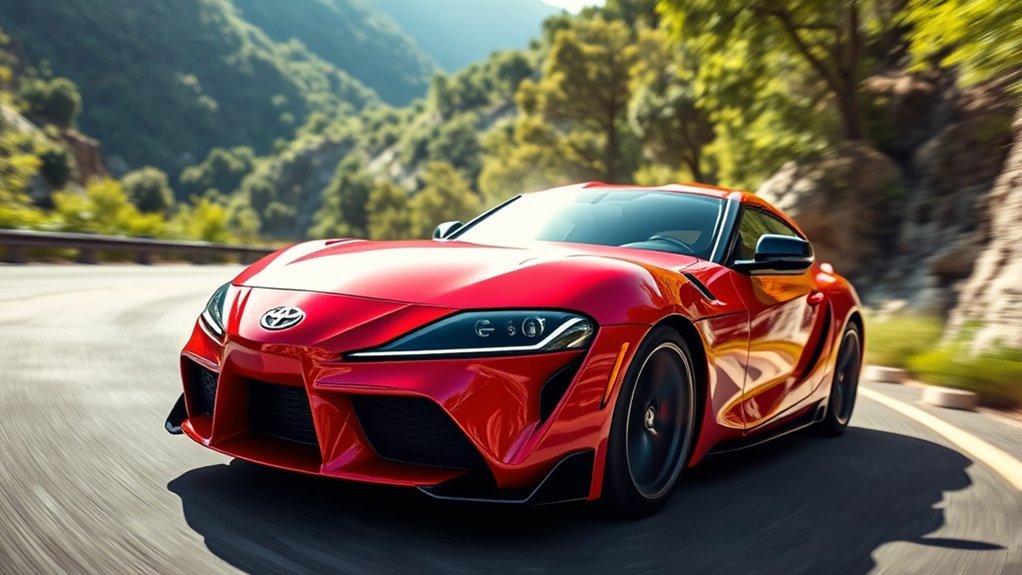
When you get behind the wheel of a Supra, understanding its stability control system is essential for maximizing both your performance and safety. The stability control mechanics work by automatically adjusting engine power and applying brakes to individual wheels, helping you maintain control during extreme driving conditions. For less experienced drivers, this feature reduces the risk of skidding or spinning out, enhancing your driver experience. In track settings, consider gradually dialing back the stability control to embrace more aggressive driving without sacrificing safety. Remember, tire grip markedly influences the system’s effectiveness; higher grip allows for lenient settings, while lower grip demands more intervention. Upgrading to systems like Racelogic Traction Control can offer customizable settings tailored to your specific road conditions.
How to Use Stability Control Effectively for Daily Driving
Maximizing the benefits of your Supra’s stability control during daily driving can greatly enhance your safety and driving experience. For wet or slippery weather conditions, keep your traction control activated to prevent wheel spin and maintain control. On dry roads, consider switching to a more lenient mode to allow slight wheel slip for improved handling. Always check your tire pressure, aiming for around 34 psi, to optimize traction control effectiveness. Familiarize yourself with your vehicle’s stability features, as they can help counteract oversteer and understeer, boosting your confidence behind the wheel. In inclement weather, it’s essential to keep both traction and stability control systems engaged to guarantee maximum grip and minimize accident risks. Drive smart and enjoy the freedom!
How to Adjust Stability Settings for Track Driving
Adjusting your Supra’s stability settings for track driving is essential for optimizing performance and enhancing your experience on the circuit. Start with the traction stability mode; it’s lenient and great for less experienced drivers, allowing you to push limits safely. As you gain confidence, gradually reduce the ESC settings—full stability control can hinder your lap times during high-performance maneuvers. Tailor your settings to track conditions; for instance, on a two-mile Grand Prix course, balance traction and stability to maintain speed. Monitor tire pressure closely, aiming for 32 psi hot on semi-slicks to maximize grip. If you’re feeling bold and have the driver experience, consider turning off traction and stability control entirely to fully exploit your vehicle’s capabilities.
Understanding the Impact of Disengaging Stability Control
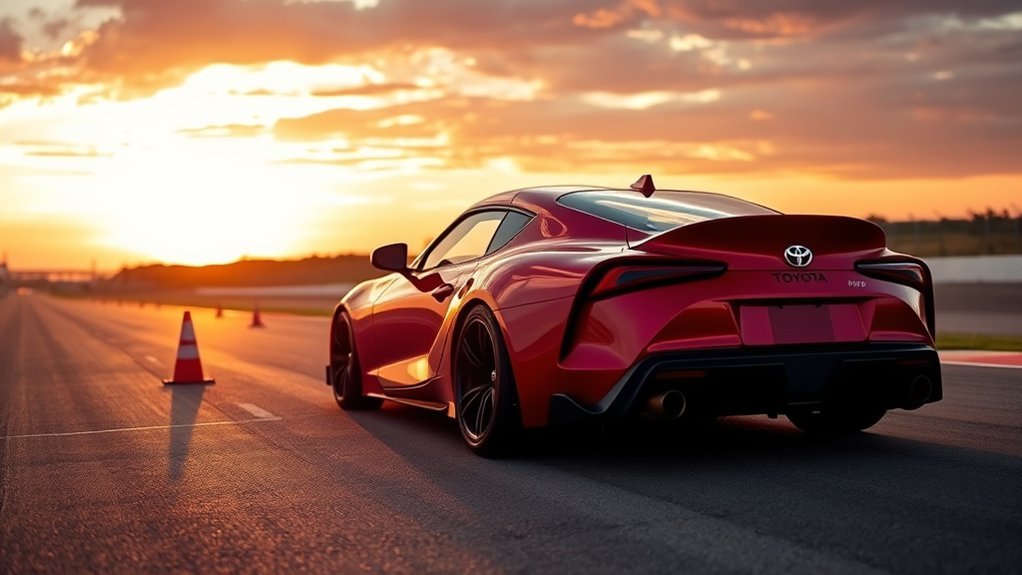
Disengaging stability control can markedly alter your driving experience on the track, enhancing your ability to push limits and achieve faster lap times. By allowing greater throttle input and reducing unwanted intervention, you can feel the full potential of your Supra. This freedom fosters driver confidence, especially for those skilled in performance tuning. However, if you’re less experienced, keep ESC engaged to maintain control during sudden maneuvers or challenging conditions. Remember, the effectiveness of stability control varies with skill level; seasoned drivers often benefit from turning it off to explore the vehicle’s dynamics. Testing at different tracks with ESC settings can help refine your technique, leading to a more liberated and exhilarating driving experience.
Top Tips for Effective Stability Control Use
While you may be enthusiastic to push your Supra to its limits, using stability control effectively can greatly enhance your driving experience. Start by engaging electronic stability control (ESC) during your initial track sessions or in wet conditions to boost safety and build driving confidence. As you gain skill, gradually reduce the ESC settings for a more aggressive driving style and quicker lap times. Keep an eye on your car’s responsiveness; if ESC feels too intrusive, lower its sensitivity for ideal performance on dry tracks. Don’t forget to adjust traction control to manage wheel spin, especially in powerful rear-wheel-drive models. Finally, verify your wheel alignment and tire pressure are spot-on before disengaging any stability settings for peak performance tuning.
Frequently Asked Questions
Should Stability Control Be on or Off?
Stability control should be off for performance driving when conditions allow, enhancing your lap times. However, keep it on during challenging driving conditions to maintain control and prevent accidents, especially if you’re less experienced.
Is VSA the Same as ESC?
VSA isn’t exactly the same as ESC, though they share benefits. VSA’s tailored for Honda, while ESC’s broader. Understanding these differences can liberate your driving experience, ensuring you harness superior control when it counts!
Is It Okay to Always Drive With Traction Control On?
It’s generally okay to drive with traction control on in challenging driving conditions, but for performance driving, you’ll want to adjust settings as your skill grows. Balance safety and control for ideal driving experiences.
Conclusion
In a world where every twist and turn can feel like a rollercoaster ride, mastering your Supra’s stability control settings is your golden ticket to driving nirvana. Whether you’re cruising through city streets or tearing up the track, knowing when to engage or disengage can make you feel like a superhero behind the wheel. So, embrace these tips, and take your driving experience from average to absolutely legendary. Your Supra deserves it, and so do you!