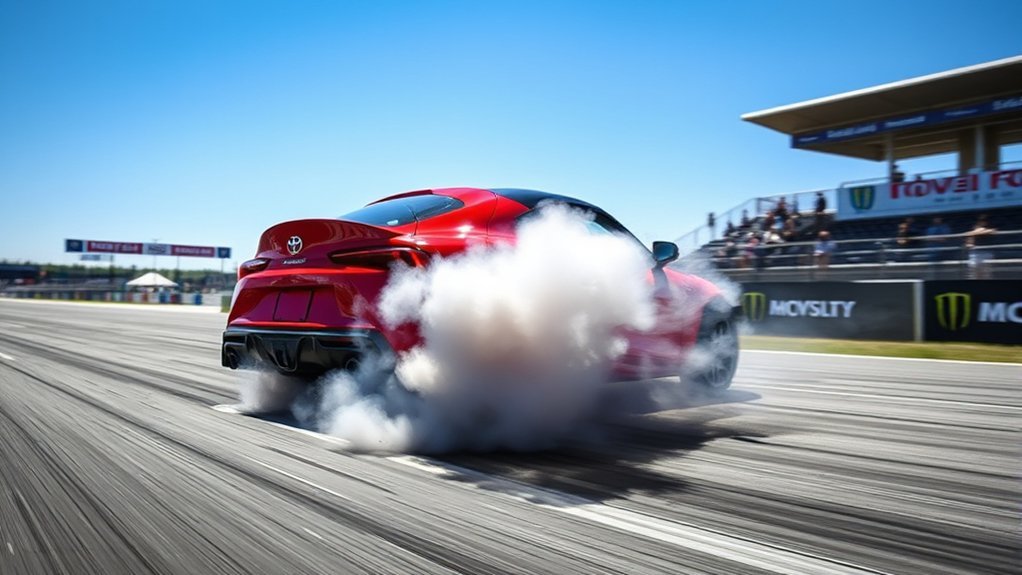
If you’re experiencing tire overheating in your Toyota Supra on track, it’s essential to understand the causes. Excess heat can greatly reduce grip and affect handling. Factors like aggressive driving, tire pressure, and ambient temperatures play a role. High speeds and hard cornering create friction, raising tire temps. Monitoring tire pressures and using warmers can help maintain ideal performance. Want to know more about effective techniques and best practices for managing tire heat? There’s plenty more to explore!
Why Tire Overheating Can Ruin Your Track Day Experience
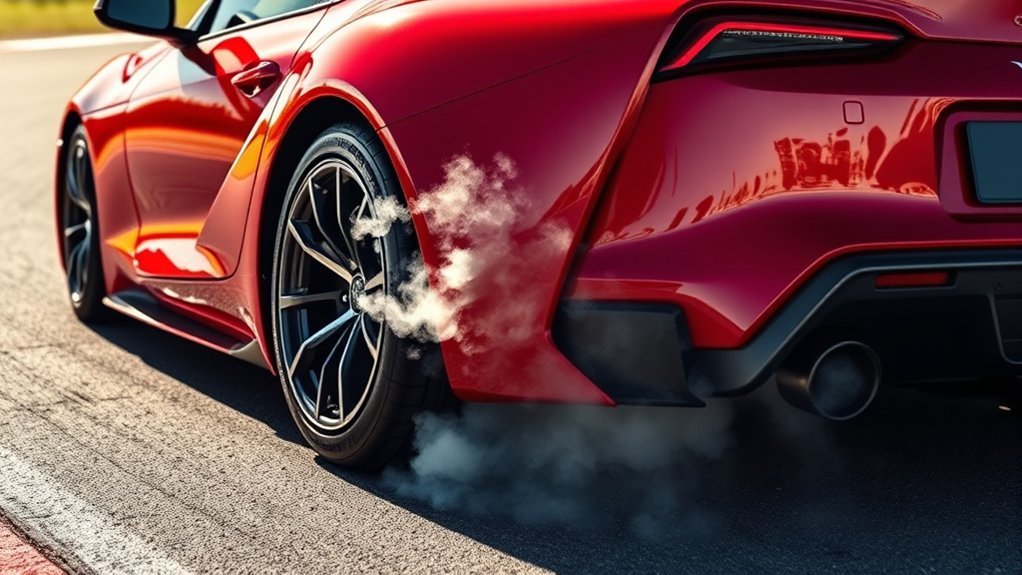
When you hit the track, you want every lap to be exhilarating, but tire overheating can quickly derail your experience. Excessive heat can cause the rubber to shed, drastically reducing grip and performance. Each tire has an ideal temperature range, and exceeding it can lead to a significant drop in handling. A mere 75-degree increase can raise tire pressure by about 6 psi, affecting your contact patch and stability during high-speed maneuvers. Prolonged braking generates more heat than slaloming, making your braking technique vital. To avoid overheating, effective tire maintenance is essential. Monitoring temperatures with a pyrometer allows you to make necessary adjustments to tire pressure and driving style, ensuring optimal heat dissipation and a thrilling track day.
What Causes Tires to Overheat in Your A90 GR Supra?
Tires on your A90 GR Supra can overheat due to a combination of driving style, tire pressure management, and ambient temperature effects. When you push the car hard in corners or during braking, excessive friction generates heat that can exceed ideal levels. Keeping an eye on tire pressure and adjusting your driving techniques accordingly can help you maintain performance and prevent overheating.
Tire Pressure Management
Proper tire pressure management is essential for preventing overheating in your A90 GR Supra. Monitoring and adjusting tire pressure can greatly impact grip and handling. As tread temperature rises, so does pressure—typically by 6 psi with a 75-degree increase. To maintain peak performance, consider the following:
| Tread Temperature | Pressure Increase | Recommended Action |
|---|---|---|
| 100°F | Baseline | Regular checks |
| 120°F | +3 psi | Adjust pressure |
| 140°F | +6 psi | Reassess tire condition |
| 160°F | +9 psi | Limit hard braking |
| Race Conditions | Monitor closely | Use tire warmers wisely |
Incorporate these tire maintenance practices and pressure adjustments to avoid overheating and maximize your Supra’s track performance.
Driving Style Impact
Monitoring tire pressure is just one aspect of maintaining peak performance in your A90 GR Supra. Your driving habits play a vital role in tire wear and overheating. Aggressive acceleration and hard braking generate significant heat through tire-road friction, pushing tires beyond their ideal temperature range. Prolonged sessions without cooldown laps exacerbate this issue, leading to reduced grip. Remember, a mere 6 psi gain from a 75-degree temperature increase can drastically affect handling. Different tire compounds have unique limits; exceeding them accelerates rubber degradation. While tire warmers can enhance initial grip, overuse can lead to premature overheating. Adapting your driving style and incorporating cooldowns can keep your tires in their sweet spot, ensuring consistent performance on the track.
Ambient Temperature Effects
As temperatures rise, so does the likelihood of your A90 GR Supra’s tires overheating. Understanding the impact of ambient conditions is vital for effective temperature management. Here are three key factors to reflect on:
- High Temperatures: A 75-degree rise in tread temperature can increase tire pressure by up to 6 psi, affecting grip and handling.
- Tire Type: Race tires thrive in higher temperatures, while street tires excel in cooler conditions, so monitor your setup accordingly.
- Braking Style: Prolonged hard braking generates excess heat, making it essential to balance your driving to avoid overheating.
How Speed and Cornering Affect Tire Temperature
When you’re pushing your Toyota Supra to its limits, understanding how speed and cornering influence tire temperature becomes vital. Increased speed heightens friction between your tires and the track, rapidly raising temperatures beyond ideal levels during aggressive driving. Meanwhile, cornering introduces lateral forces, enhancing tire flexibility and generating additional heat. Abrupt maneuvers can exacerbate these temperature spikes, making smooth steering inputs important. Prolonged high-speed cornering can lead to significant temperature gains, with tread temperatures rising about 6 psi for every 75-degree increase. While tire warmers can help achieve grip quickly, excessive heat cycling risks longevity. Balancing thermal dynamics with your driving style is key to preventing overheating and ensuring peak performance on track.
The Role of Tire Pressure in Managing Heat

To effectively manage heat during high-performance driving, understanding tire pressure is essential. Proper tire pressure plays a critical role in heat management, ensuring ideal grip and performance. Here are three key points to take into account:
- Pressure Increase: Tire pressure can rise by about 6 psi with a 75-degree increase in tread temperature, greatly impacting handling.
- Ideal Range: Maintaining pressure within the recommended range is crucial; even a 3 psi increase can signal overheating.
- Regular Monitoring: Check tire pressure before and after sessions to account for ambient temperature changes.
Mastering Heat Cycles for Optimal Tire Performance
Mastering heat cycles is essential for revealing the full potential of your tires, especially in high-performance driving scenarios. Proper heat cycle strategies enhance grip and performance by exciting rubber molecules, making them more pliable. Understanding tire compound variations is vital; race tires thrive at higher temperatures, while street tires perform better in cooler conditions.
Monitoring tire temperatures can prevent issues—an increase of 6 psi can result from just a 75-degree rise in tread temperature.
Here’s a quick reference to help you optimize your heat cycles:
| Action | Effect on Tire Temp | Ideal Application |
|---|---|---|
| Hard Braking | Increases quickly | During practice laps |
| Tire-Road Friction | Generates heat | Throughout the race |
| Tire Warmers | Preheats tires | Before track sessions |
| Adjusting Pressure | Maintains grip | Post-heat cycle check |
| Monitoring Temps | Prevents overheating | Regularly during runs |
Do Tire Warmers Improve Grip and Performance?
Using tire warmers before hitting the track can considerably boost your grip and performance. By preheating your tires, you guarantee they hit ideal temperatures quickly, enhancing traction and cornering ability. This not only impacts your lap times but also helps maintain uniform tire wear, making your setup more effective over the race.
Benefits of Tire Warmers
While many drivers underestimate the impact of tire temperature, incorporating tire warmers into your racing routine can significantly elevate grip and performance. Here’s how they enhance your track experience:
- Optimal Grip: Tire warmers preheat rubber compounds, making them pliable and ready for action.
- Performance Consistency: By reducing the time needed to reach ideal temperatures, you maintain consistent performance, minimizing drops due to overheating.
- Improved Handling: Even heating across tire surfaces prevents inconsistent handling and boosts traction during high-speed turns.
Though tire warmer effectiveness may slightly reduce tire lifespan by limiting heat cycles, the performance benefits in vital sessions often outweigh this drawback. Embracing tire warmers can liberate your driving, allowing you to push harder and race smarter.
Optimal Temperature Ranges
Tire warmers play an essential role in achieving optimal temperature ranges for your tires, directly influencing grip and performance on the track. Ideal temperatures vary by tire types; race tires thrive above ambient temperatures, while street tires perform well at lower ranges. Preheating with warmers guarantees quicker access to these optimal conditions, enhancing grip but potentially shortening tire life due to fewer heat cycles.
| Tire Type | Ideal Temp Range (°F) | Pressure Increase (psi) |
|---|---|---|
| Race Tires | 180-220 | 6 |
| Street Tires | 140-180 | 4 |
| Slick Tires | 200-250 | 7 |
| All-Season | 120-160 | 5 |
| Wet Tires | 130-170 | 4 |
Monitoring these factors is vital for maximizing performance.
Impact on Lap Times
When you step onto the track, the right tire temperature can make all the difference in your lap times. Tire warmers are essential for maximizing grip and performance. Here’s how they impact your driving:
- Enhanced Grip: Preheating tires to ideal temperatures improves pliability, boosting adhesion and reducing tire degradation.
- Lap Consistency: Keeping tires consistently above 180°F leads to predictable handling, allowing you to push your limits confidently.
- Reduced Overheating: Proper tire management minimizes grip loss, ensuring you maintain speed and control throughout your session.
Driving Techniques to Combat Tire Overheating

Managing tire temperatures effectively is essential for maximizing performance on the track. To combat tire overheating, start with proper warming up and cooling down laps. This gradual adjustment prevents sudden extremes that can lead to issues. Be cautious with prolonged or hard braking; while it generates heat and improves grip initially, it can also raise tire temperatures considerably. Adjust tire pressures based on temperature readings; a 6 psi gain can occur with a 75-degree increase in tread temperature, ensuring ideal contact. Consider using tire warmers to preheat tires, although this might reduce their lifespan. Finally, monitor temperatures with a pyrometer during sessions to guide adjustments, helping you maintain consistent performance and effective tire maintenance throughout your drive.
Best Practices for Monitoring Tire Temperatures
Effective tire management doesn’t stop at employing the right driving techniques; it’s also about closely monitoring tire temperatures to guarantee peak performance. Here are best practices for effective tire temperature monitoring:
- Use a pyrometer: Opt for contact pyrometers for accurate readings, as they outperform infrared options in consistency.
- Track tire pressures: Keep an eye on pressures, knowing a 6 psi increase can happen with a 75-degree rise in tread temperature, impacting grip.
- Document your findings: Maintain records of temperature readings to establish baselines for various track conditions, aiding future adjustments.
Choosing High-Performance Tires to Prevent Overheating
When you’re choosing high-performance tires for your Toyota Supra, focus on the material composition and ideal tire pressure. Tires made with advanced compounds can handle higher temperatures and provide better grip, while maintaining the right pressure is vital to prevent overheating. By understanding these factors, you can enhance your driving experience and keep your tires in top shape during intense track sessions.
Tire Material Composition
High-performance tires are essential for releasing the full potential of your Toyota Supra, but choosing the right composition can make all the difference in preventing overheating. Here are three key tire durability factors to take into account:
- Rubber Compound Variations: Softer compounds offer better grip but generate more heat. Aim for a balance that provides both performance and heat resistance.
- Tread Patterns: Performance tires typically have less void space, maximizing surface contact. Confirm your tread design complements your driving style and track conditions.
- Heat Resistance Ratings: Select tires with higher ratings to withstand elevated temperatures, enabling sustained performance during long track sessions.
Optimal Tire Pressure
Choosing the right tire composition is only part of the equation for enhancing your Toyota Supra’s performance; maintaining the correct tire pressure plays a vital role in preventing overheating. Ideal pressure for high-performance tires generally ranges from 30 to 35 psi when cold. As you track, tire temperatures rise, potentially increasing pressure by 6 psi with every 75-degree rise in tread temperature. This makes tire pressure monitoring essential to avoid excessive wear and maintain grip.
| Temperature Increase | Pressure Increase |
|---|---|
| 0°F (Cold) | 30-35 psi |
| 75°F | +6 psi |
| 100°F | +12 psi |
Using a pyrometer to check tire temps helps you make necessary tire pressure adjustments for consistent performance.
What the Community Says: Tips for Successful Track Days
While you gear up for an exciting day on the track, keeping an eye on tire temperatures is essential for peak performance. Here are some effective track day strategies and tire management tips from the community:
- Monitor temperatures: Use an infrared heat gun to check tire temperatures regularly, ensuring they stay within ideal ranges.
- Adjust tire pressure: Be aware that a 6 psi increase can occur with a 75-degree rise in tread temperature—check your pressures often.
- Warm up effectively: Prolonged or hard braking generates more heat than slaloming, so use this to your advantage during initial laps.
Engaging with fellow enthusiasts can also provide valuable insights, helping you enhance your track experience and performance.
Frequently Asked Questions
What Are the Common Problems With Supras?
Common problems with Supras include sluggish performance, overheating, and brake issues. To enhance your driving experience, focus on performance upgrades, and follow maintenance tips to keep your vehicle running efficiently during track sessions.
What Causes a Toyota to Overheat?
Your Toyota can overheat due to coolant issues like a failing water pump or insufficient airflow, which leads to engine overheating. Regular maintenance and upgrades can help keep your vehicle running cool during high-performance driving.
Is a Supra Faster Than a Mustang?
Yes, the Supra can be faster than the Mustang, especially on the track. Its superior handling and lightweight design enhance performance comparisons, while speed factors like aerodynamics further contribute to its agility and lap times.
Why Aren’t There Any Toyotas in NFS Heat?
You won’t find Toyotas in NFS Heat mainly due to licensing issues. Toyota prefers to manage its brand image, limiting the inclusion of its performance cars, unlike other racing games that feature them.
Conclusion
In the high-stakes dance of track days, keeping your tires cool is like maintaining harmony in a symphony. By understanding the causes of overheating and adopting smart driving techniques, you can avoid the discord that ruins your experience. Embrace the rhythm of tire pressure and heat cycles, and choose the right tires to guarantee your A90 GR Supra sings on the asphalt. With these strategies, you’ll transform potential pitfalls into the thrill of a flawless performance.