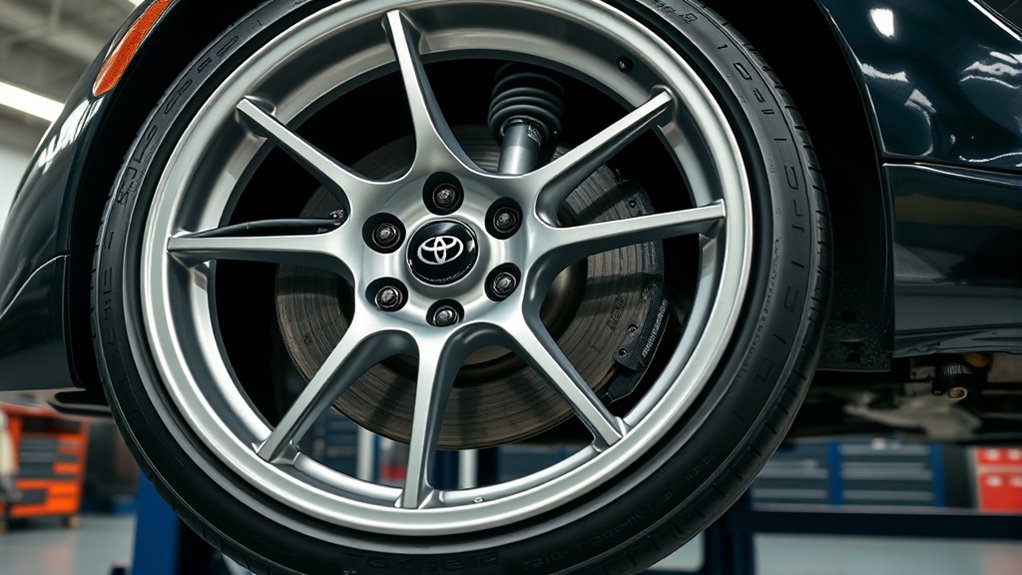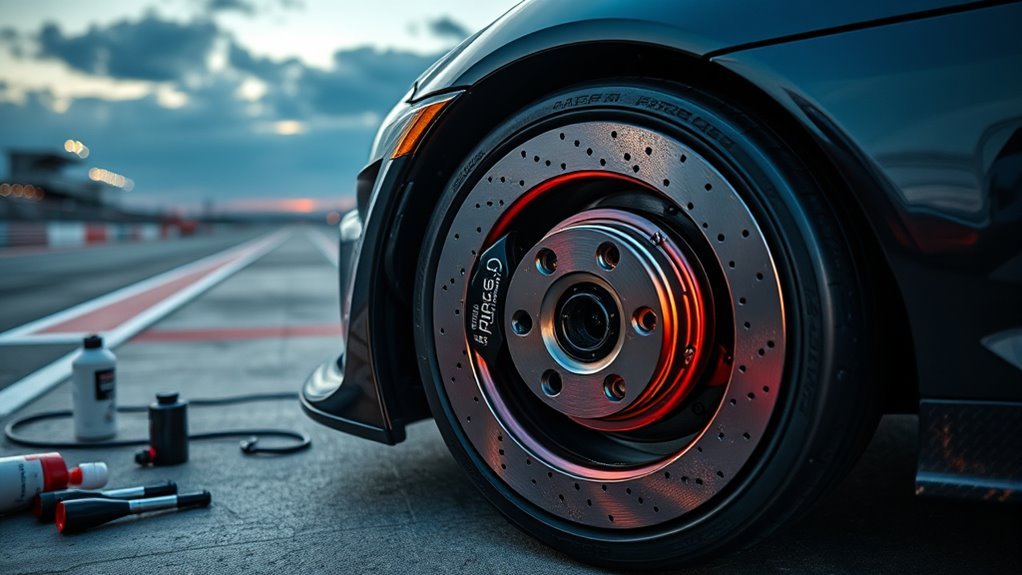
Brake fade on your Toyota Supra is a heat-management failure where pads, rotors, or fluid lose effectiveness under sustained temperatures; you’ll notice a soft or spongy pedal, reduced decel, longer stops, and sometimes smoke or a burning smell. Distinguish pad fade (loss of bite) from fluid boil (vaporized fluid, mushy pedal). Check pad wear/glazing, rotors for heat spots, hoses for swelling, and fluid age. Use high-temp fluid, performance pads, SS lines, and proper bedding to prevent it — more specifics follow.
Quick Answer: How to Stop Brake Fade on a Toyota Supra
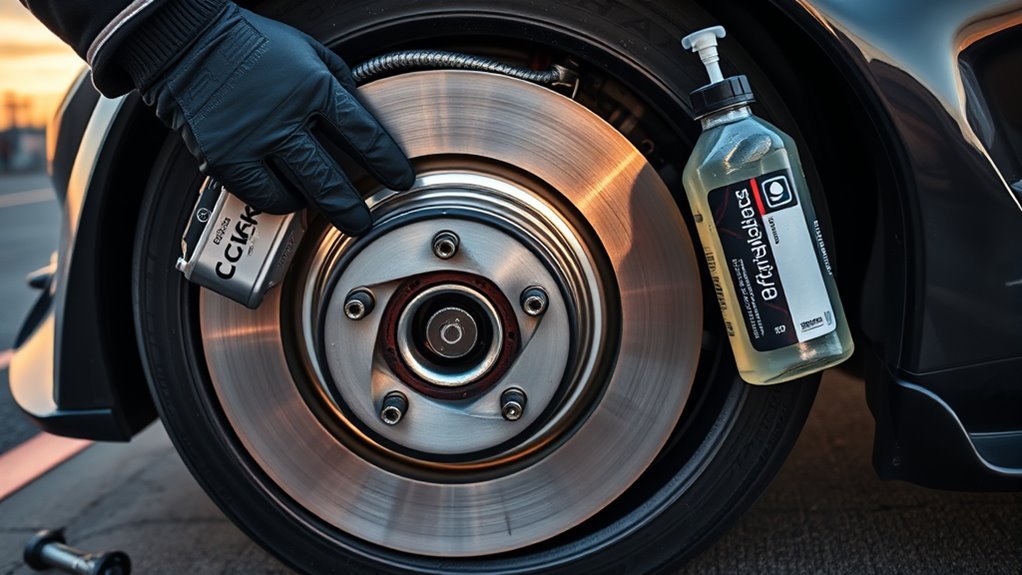
Reduce brake fade on a Toyota Supra by addressing pads, fluid, bedding, and lines: fit high-performance pads (e.g., Hawk HP+) to resist pad fade, flush and refill with a high-temp brake fluid like Motul RBF 600 to prevent boiling and fluid fade, perform a proper bedding-in sequence for new pads to eliminate green fade, and install stainless-steel braided lines to improve pedal feel and reduce expansion under load; also inspect for overheating signs (smoke, burning odor) and maintain rotors, calipers, and hardware to guarantee consistent braking under aggressive use. You should prioritize systematic brake maintenance and targeted performance upgrades to free yourself from unpredictable stopping. Replace consumables on schedule, document bedding cycles, and choose components rated for your driving style so braking stays consistent and controllable.
What Brake Fade Means for a Supra
You’ve already seen the practical steps to limit fade; now understand what the term means for a Supra. Brake fade is a thermally driven loss of stopping authority: repeated deceleration elevates pad, rotor, and fluid temperatures, degrading friction and producing a spongy pedal and reduced deceleration. For your Supra, inadequate heat management — stock cooling, lower-grade pads like some Stillen Matrix compounds, or moisture-laden fluid — converts usable kinetic control into risk. That compromises brake performance during spirited driving and undermines the freedom to push limits safely. Mitigation isn’t philosophical: it’s mechanical — high-temp fluid, performance rotors, properly bedded pads, and routine fluid changes restore consistent friction and reclaim predictable stopping power so you stay liberated on the road.
How Brake Fade Shows Up : 6 Warning Signs to Watch
You’ll first notice a soft or spongy pedal that requires more travel to generate braking force, a primary indicator the system is overheating and losing hydraulic responsiveness. You may also detect visible smoke or a distinct burning smell from the brakes, which confirms excessive thermal buildup in pads, rotors, or calipers. Finally, longer stopping distances will quantify the loss of braking performance and should prompt immediate inspection.
Soft Or Spongy Pedal
A soft or spongy brake pedal usually signals a loss of hydraulic firmness. You should treat that sensation as a measurable symptom, not a nuisance. Moisture-contaminated brake fluid lowers boiling point, producing vapor under heavy braking and causing fluid fade; regular brake maintenance and timely fluid replacement prevent this. Extended pedal travel often correlates with overheating of components or trapped vapor, degrading stopping force and requiring pedal adjustment diagnostics. If the car pulls to one side under braking, inspect for uneven wear or localized fluid issues that contribute to sponginess. Don’t ignore associated wheel heat indicators; they often accompany the condition. Act decisively: verify fluid condition, purge the system, check calipers and hoses, and restore firm, predictable pedal response.
Visible Smoke Or Smell
After checking pedal feel and fluid condition, look—and smell—for signs of overheating at the wheels. Visible smoke or a sharp, acrid odor are direct overheating indicators; they tell you brake components are reaching temperatures that compromise friction materials and fluid. You’ll want to act decisively to maintain control and autonomy over the vehicle’s safety.
- Visible smoke from rotors or pads after repeated heavy braking.
- Burning, acrid smell indicating overheated pads or boiling fluid.
- Localized pull or persistent squeal suggesting uneven overheating.
Treat these as urgent cues within your brake maintenance routine. Inspect pads, rotors, hoses, and fluid immediately. Replace contaminated fluid and worn friction material, and resolve caliper or imbalance issues. These steps restore performance and free you from compounded risk.
Longer Stopping Distances
When brake fade sets in, you’ll notice the stopping distance grow even with the same pedal input, because reduced friction and overheated fluid cut braking force. You’ll feel longer pedal travel and reduced brake performance; that’s a clear decline in stopping efficiency. Burning odors, visible smoke, squeal, or pull-to-one-side all correlate with overheating or uneven wear that magnify distance loss. Act to reclaim control.
| Symptom | Cause | Impact |
|---|---|---|
| Longer pedal travel | Vapor lock / fluid boil | Reduced force |
| Burning odor | Overheated pads/rotors | Impaired friction |
| Visible smoke | Component overheating | Progressive fade |
| Squeal | Worn pads/heat glazing | Lower bite |
| Pulling | Uneven wear/caliper | Asymmetric stopping |
Diagnose, replace compromised parts, and purge fluid to restore stopping efficiency and freedom.
Pad Fade vs. Fluid Boil : How to Tell the Difference
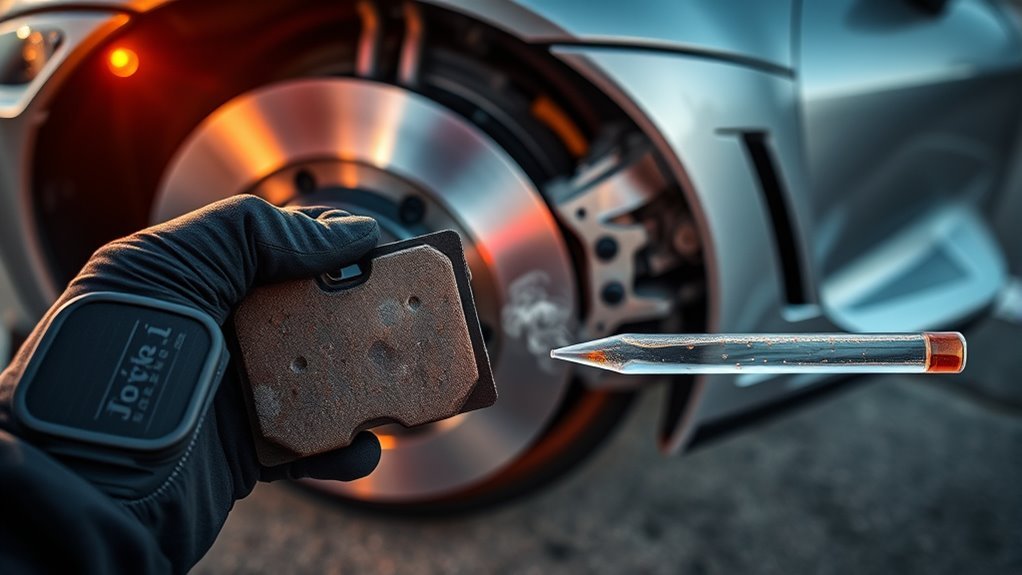
If you’ve noticed fading braking performance under repeated heavy stops, determine whether pads or fluid are at fault by focusing on symptoms: You’ll distinguish pad fade from fluid boil by testing for power loss pattern and pedal feel. Pad performance degrades after repeated high-temp stops; you’ll feel diminished bite and may hear squeal as friction capacity drops. Fluid boil presents as a soft, spongy pedal and possible burning odor due to vapor bubbles. Apply this checklist to liberate yourself from uncertainty:
If repeated hard stops fade braking, check for pad fade (loss of bite) or fluid boil (spongy pedal, burning smell)
- Pad fade: rapid loss of braking power after successive stops, high pad temperatures, audible squeal.
- Fluid boil: mushy pedal, longer stopping distances, burning smell; typically linked to aged, moisture-laden fluid.
- Prevent both via disciplined brake maintenance: monitor pad temps and replace fluid periodically.
Rapid Diagnostic Checklist: Pads, Rotors, Lines, Fluid
Start by visually and tactilely checking pad condition: confirm Stillen Matrix pads have adequate thickness and aren’t glazed or transferring material to rotors. Next inspect brake fluid and lines—look for discolored or boiling-prone fluid, leaks, and flexible hoses that bulge; consider Motul 600 and stainless steel lines if you see degradation or spongy pedal feel. Finish with a quick rotor assessment for heat spots or warping that would mimic pad or fluid failure.
Pad Condition Check
A quick visual and tactile pad check tells you if the friction material can handle heat and load: measure remaining pad thickness (replace at ~3 mm), look for glazing, uneven wear, or contamination, and press the caliper piston back to verify movement and absence of binding that would accelerate overheating. You’ll act decisively when you find issues—don’t defer. Focus on measurable, reparable defects that undermine stopping power and promote fade.
- Inspect pad thickness at multiple points; uneven readings signal caliper or slide problems.
- Look for glazed, hard surfaces or embedded debris that reduce friction material effectiveness.
- Probe for piston free travel; any binding raises local temperatures and accelerates wear.
Replace pads or service hardware promptly to reclaim control and resist systemic failure.
Fluid & Line Inspection
Because fluid and lines directly transfer braking force and heat, you should inspect them with the same rigor as pads and rotors to prevent sudden loss of performance. Visually verify every brake line for cracks, chafe, corrosion and routing stress; upgrading to stainless steel braided lines tightens pedal feel and delays fade. Drain and replace fluid on a schedule, selecting high-boiling formulas like Motul RBF 600 to preserve fluid quality and resist vapor lock. During inspection, note any smoke, burning odor, or discolored rotor surfaces that signal excessive thermal load and possible contaminated fluid. If fluid darkens or feels gritty, bleed the system and retest boiling point. These targeted actions keep hydraulic integrity demonstrable, reduce unexpected failures, and free you from avoidable risk.
Everyday and Track Prevention Steps That Work
When you combine regular maintenance with targeted upgrades, you’ll drastically reduce brake fade on both daily drives and track sessions. Use brake maintenance tips: replace fluid with high-boiling options (Motul RBF 600), and inspect lines and hoses for degradation. Fit pads rated for sustained heat and follow a strict 30-30-30 bed-in to avoid green fade.
- Replace fluid regularly; purge air and contaminants.
- Install high-temp pads and monitor rotor temperatures.
- Employ engine braking; avoid prolonged pedal application.
You’ll also adopt performance upgrades selectively, prioritizing pad compound and fluid over cosmetic changes. Monitor pedal feel, smoke, and pad wear after each session. These procedural controls and targeted component choices free you from unpredictable fade, keeping stops consistent and your driving autonomy intact.
Best Supra Brake Upgrades for Street vs. Track Use
How should you prioritize brake upgrades for a Supra that sees both street and track use? Start with street brake upgrades that preserve daily drivability: high-quality pads like Hawk HP+ give clear bite and modulation without noise or dust trade-offs. Add stainless steel braided brake lines to reduce flex and sharpen pedal feel under spirited driving.
For track brake upgrades, escalate to high-temp components: Brembo rotors paired with Motul RBF 600 fluid resist fade and maintain boiling point under repeated heavy stops. Balance mass and cooling when selecting rotors to avoid added unsprung weight.
Prioritize interventions that serve both demands first—lines and pads—then fit track-specific hardware. Maintain fluids on a 1–2 year cycle and bed new pads properly to sustain performance and freedom to push limits.
Bedding, Bleeding, and Maintenance to Reduce Fade
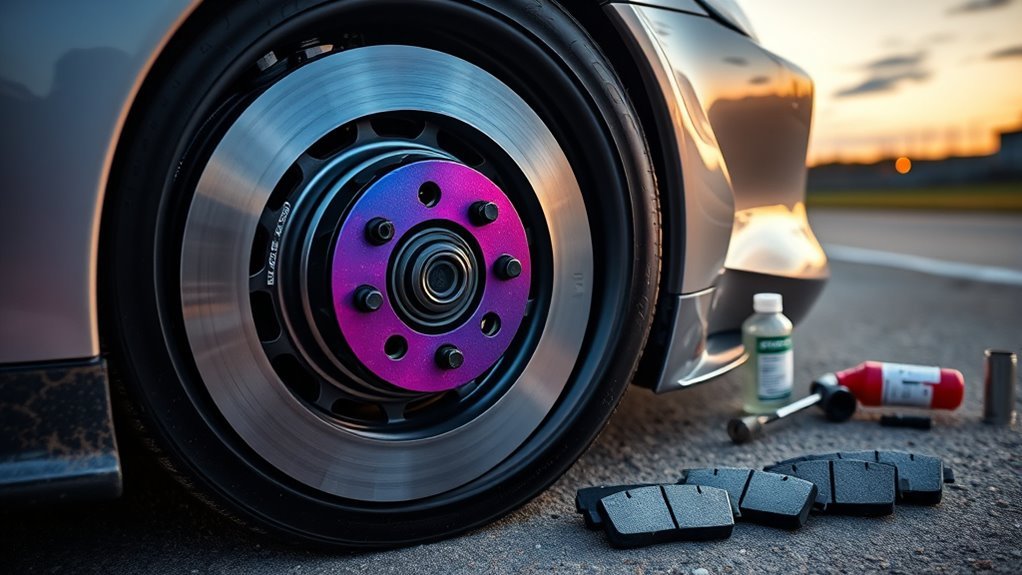
Although often treated as a routine step, proper bedding of pads and rotors directly determines how your Supra resists fade during repeated heavy stops; you must execute controlled, progressive decelerations to establish uniform transfer layers. Apply bedding techniques, then validate system integrity with fluid maintenance and component inspection. Key actions:
- Perform staged bedding cycles to optimize pad-rotor transfer and reduce thermal shock.
- Bleed until clear fluid exits calipers, replace with high-temp fluid (e.g., Motul RBF 600) and fit stainless braided lines to limit expansion.
- Inspect pad wear, rotor glazing/cracks, and torque hardware; replace degraded parts promptly.
You’ll free yourself from unpredictable pedal behavior by combining precise bedding techniques, disciplined fluid maintenance, and proactive component upkeep for consistent, liberated braking performance.
What to Do Right Now If Your Brakes Start Fading
You’ve prepped pads, bled the system, and inspected components, but if brake fade appears while driving you must act immediately to preserve stopping ability and prevent damage. Reduce speed progressively and avoid continuous braking to allow brake cooling; feather the pedal rather than riding it. Downshift and use engine braking to transfer load from the hydraulic system, especially on long descents. Scan wheels for burning smells or smoke—pull over safely if present and let components cool; continued driving risks warped rotors or fire. If fluid is over two years old or you suspect moisture, plan a bleed as soon as possible to eliminate fluid fade. Afterward, reassess pad/rotor spec and consider high-performance components and performance tires to restore predictable braking.
Frequently Asked Questions
What Causes Brake Fade and How to Prevent It?
Brake fade happens when overheating issues or degraded fluid/pads reduce friction or vaporize fluid; you’ll prevent it via rigorous brake maintenance, proper pad bedding, high-temp pads/rotors, and frequent fluid changes to reclaim control.
How Long Do Supra Brakes Last?
30,000–70,000 miles, but shorter with aggressive use; longer with diligent brake maintenance tips and performance upgrades. You’ll monitor wear, swap pads, flush fluid, and choose robust components to sustain stopping power and driving freedom.
How to Fix Brake Fade?
Fix brake fade by performing disciplined brake maintenance tips: flush high‑temp fluid, bleed system, bed new pads, and install performance upgrades like rotors and pads; you’ll reclaim control, reducing fade and freeing your driving confidence.
What Factors Can Cause Brakes to Fade?
You face brake overheating, worn pads, poor fluid quality, heavy loads, aggressive driving, and prolonged descents; imagine glowing rotors and vapor pockets forming as heat builds, so you’ll prioritize quality fluid, pads, cooling, and disciplined driving.
Conclusion
You’ll want to treat brake fade like a fault you can’t ignore and a problem you can prevent. Don’t accept mushy pedal feel as normal; diagnose pads, rotors, lines and fluid immediately. Pair diligent maintenance—proper bedding, fresh fluid, correct pad compound—with targeted upgrades for your use: street comfort versus track endurance. Small, regular steps prevent catastrophic loss of stopping power, turning a risky compromise into predictable, repeatable braking performance.