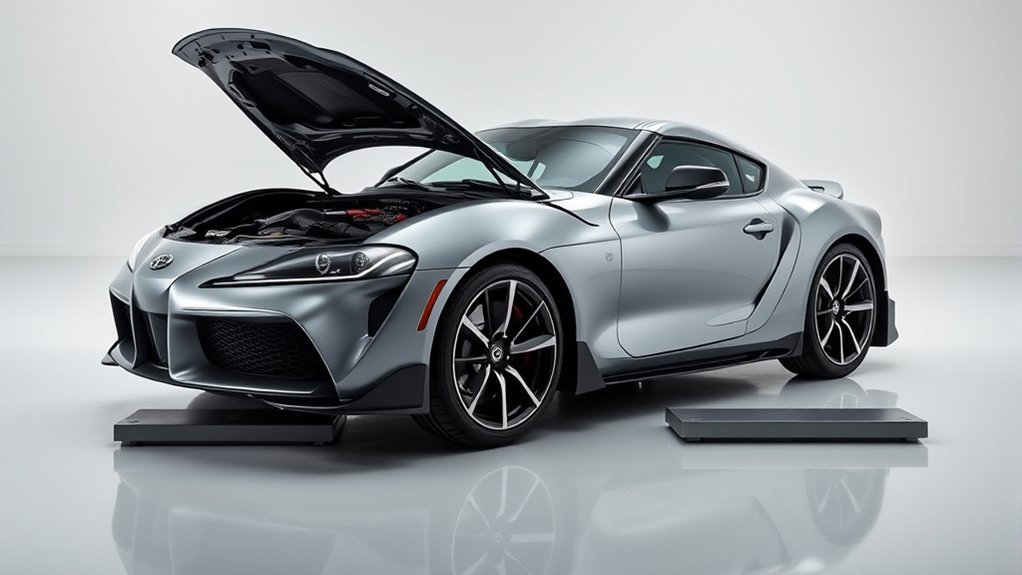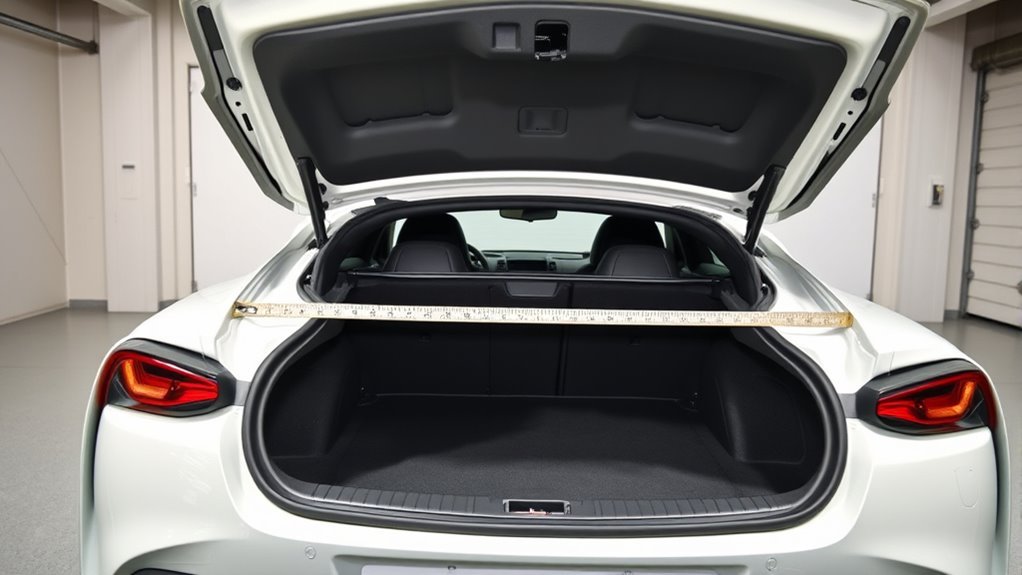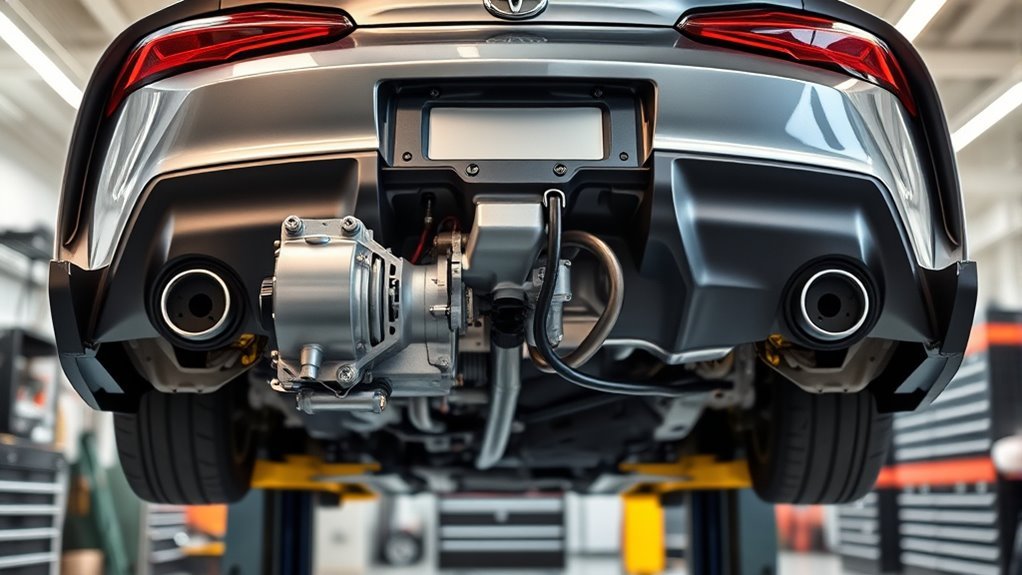
You get the Supra’s ZF 8‑speed because it delivers rapid, lap‑ready clutch‑to‑clutch shifts, high torque capacity, and consistent launches while retaining street smoothness and durability. It uses four gearsets, five shift elements, and a compact, lightweight layout to cover a wide ratio spread and sustain high torque loads. You’ll notice sub‑200 ms shifts, better acceleration, and modest fuel gains, plus clear paths for torque‑converter and ECU/TCM tuning if you want to go further.
Quick Answer: ZF 8HP or Manual for the Supra?
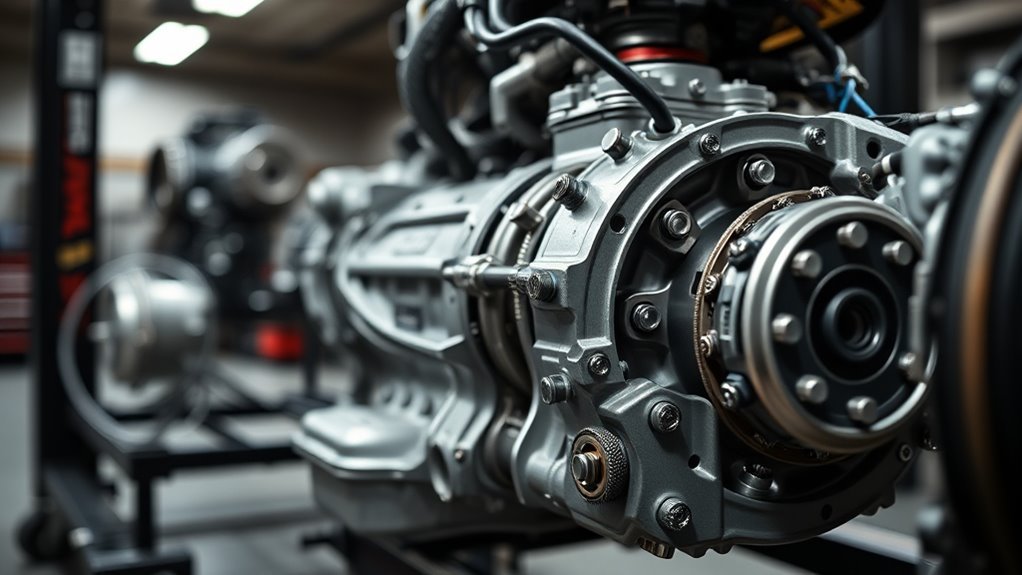
Which is better for a Supra: the ZF 8HP or a manual? You choose speed and control: the ZF 8HP advantages are clear for performance use. It shifts faster than a manual, uses five shift elements for clutch-to-clutch exchanges, and keeps engine torque available during gear changes so acceleration stays uninterrupted. On track, that translates to measurably quicker elapsed times and consistent lap-to-lap performance. You still get versatility: adaptive modes suit daily commuting or aggressive launches, and the unit tolerates high-power builds. If you crave engagement, manual nostalgia delivers tactile feedback and liberation through direct input, but it concedes measurable performance margins. For liberation focused on lap times and efficiency, the ZF 8HP is the pragmatic choice.
Why Toyota Fit the Supra With the ZF 8‑Speed
If you prioritize lap times and consistency over nostalgic feel, here’s why Toyota chose the ZF 8‑speed for the Supra: the 8HP delivers faster, more repeatable shifts than a manual, holding engine speed squarely in the peak torque band to preserve acceleration and throttle response. You get transmission advantages in raw, measurable gains—quicker shift times, consistent launch behavior, and ECU-managed shift maps that adapt to driving modes. The 8HP’s proven reliability (15M+ units) and efficiency match Toyota’s quality standards while freeing you to push harder without gearbox-induced variability. Its modular architecture supports electrification, so performance upgrades and hybrid integration are straightforward next steps. In short, the ZF aligns track-focused performance with long-term development flexibility and driver liberation.
ZF 8HP Basics: Architecture, Clutch‑to‑Clutch Shifts, Gear Ratios
You’ll notice the ZF 8HP packs four gearsets into a compact layout with two brakes and three clutches to deliver eight forward gears without excess mass. Its clutch‑to‑clutch operation swaps engagement directly, cutting shift times and reducing parasitic losses compared with multi-component designs. That compact architecture and fast, precise clutch control are what give the Supra crisp shifts and broad ratio coverage for both acceleration and efficiency.
Compact Gearset Layout
The ZF 8HP uses a compact four-gearset layout with two brakes and three clutches that lets the transmission deliver wide ratio coverage in a lightweight package. You’ll appreciate the gearset advantages: four interlinked sets give broad 0.667–3.297 ratios and an 8.59 total span, so you get aggressive acceleration and relaxed highway cruising without excess mass. Design efficiency shows in the 2.5% fuel improvement of the third generation and the packaging that suits rear-wheel-drive performance cars like the Supra. The compact arrangement handles up to 1,000 N⋅m in high‑torque variants while minimizing rotational inertia and space. This lets you extract power cleanly, maintain responsiveness, and feel liberated from compromise between strength, weight, and economy.
Clutch‑To‑Clutch Operation
One of the defining features of the ZF 8HP is its clutch‑to‑clutch shift strategy, where one clutch is brought online as another releases to maintain torque flow and cut shift time. You get seamless clutch engagement, reduced power interruption, and aggressive shift responsiveness that frees the driver to exploit performance without compromise. The compact architecture — four gearsets, two brakes, three clutches, five clutch packs — yields eight forward ratios (0.667–3.297) for tuned acceleration and efficiency. This design minimizes mass and packaging while maximizing torque capacity and quick shifts. You’ll feel liberation through precise control: crisp upshifts, controlled downshifts, and immediate response under load, making the Supra’s drivetrain both assertive and refined.
| Feature | Value | Benefit |
|---|---|---|
| Clutch packs | 5 | Smooth shifts |
| Gearsets | 4 | Compact layout |
| Ratios | 0.667–3.297 | Tunable accel |
How the ZF 8HP Affects Supra Performance (Accel, Shifts, Economy)
You’ll notice the ZF 8HP enables faster launches and stronger acceleration by delivering sub-200 ms shifts that keep the engine in its peak torque band during rapid gear changes. Its 8.59 total ratio span and adaptive ECU strategies let you extract power efficiently while maintaining smooth, crisp shift behavior across driving modes. The result is measurable fuel-economy gains (around 2.5%) and higher drivetrain torque capacity, so performance improves without sacrificing efficiency.
Faster Launches And Acceleration
Because it keeps the engine in its peak torque band and swaps cogs in milliseconds, the ZF 8HP turns the Supra into a far quicker-launching car than older automatics or most manuals. You get liberated control: the transmission’s wide 7.81 ratio span and multi-clutch design mean you can exploit launch techniques and acceleration dynamics without sacrificing drivetrain stability. Adaptive shift logic maps power delivery to intent — aggressive starts or efficient cruising — so your 0–60 runs tighten and fuel penalty stays small.
- Consistent power transfer via multi-clutch layout reduces wheel spin and torque interruption.
- Broad ratio spread maximizes usable torque across gears.
- Millisecond shifts shorten acceleration phases.
- Adaptive strategy balances peak acceleration and up to ~3% fuel improvement.
Crisp, Quick Shift Behavior
Having nailed faster launches, the Supra’s on-road character keeps sharpening with the ZF 8HP’s crisp, quick-shift behavior: its clutch-to-clutch architecture and five shift elements swap gears in milliseconds, holding the engine in its peak torque band across an 8.59 ratio span to shorten acceleration phases and minimize power interruption. You feel immediate shift responsiveness; the gearbox buries lag, delivering uninterrupted thrust so you can exploit each rev and choose your line without compromise. Electronic controls adapt shift maps to mode and load, preserving momentum during aggressive inputs and trimming changeover time under load. On track, reduced shift times cut lap seconds; on public roads, the driving experience becomes more direct and liberating, putting control firmly in your hands.
Improved Fuel Economy And Efficiency
While the ZF 8HP pares weight and slip with a 7.81 ratio spread and a measured efficiency of 0.9467–1.0000, it also lets the Supra keep the engine in its peak torque band longer to cut fuel use and boost real-world acceleration; quicker clutch-to-clutch swaps reduce shift losses compared with slower automatics or imprecise manuals, and the multi‑clutch layout evens load distribution to limit parasitic drag under varying loads. You’ll feel stronger midrange punch and better mileage because transmission technology maintains torque where it’s most effective while staying light at 87 kg. Shift speed lowers transient fuel spikes; balanced clutch architecture reduces drag under cruising. This liberates you to push performance without compromising fuel efficiency.
- Maintain peak torque for efficiency
- Reduce shift losses via clutch-to-clutch swaps
- Even load distribution to cut parasitic drag
- Lightweight design for agile, efficient performance
Which 8HP Variants Supras Use and Their Torque Limits
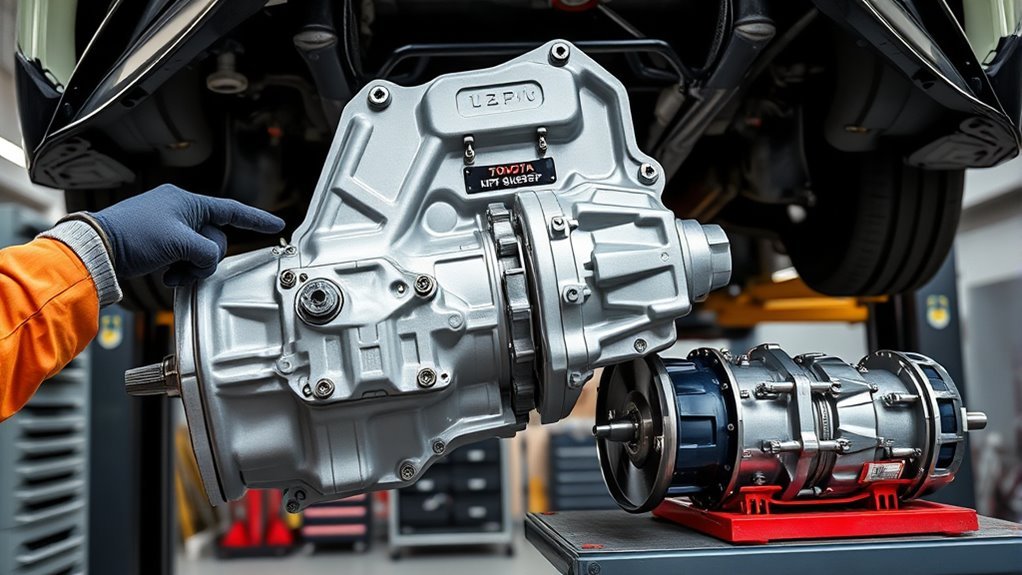
The Supra uses ZF’s 8HP76 eight‑speed automatic, a stout unit rated to handle up to 760 N·m (561 lb·ft) of torque and engineered for quick, smooth shifts in high‑power applications. You get the 8HP76 — one of the ZF 8HP variants — selected for its 7.81 ratio spread, rapid shift logic, and durability under sustained load. Know the published torque limits: 760 N·m is the ceiling for stock hardware and controls. That spec lets you push acceleration and track duty without compromising reliability when systems are maintained and cooled properly. Its modular architecture also positions the Supra for hybrid integration, so you’re not boxed in. In short: this variant balances raw capacity, street finesse, and upgrade-friendly design.
Common Supra ZF 8HP Mods, Tuning Options, and Swap Checklist
1 clear upgrade path for the Supra’s ZF 8HP focuses on control, cooling, and mechanical strength to match higher power levels and aggressive driving. You’ll pursue transmission upgrades and performance tuning that sharpen shift logic, raise torque capacity, and stabilize temps under load. Fit a stronger torque converter, recalibrate shift maps, and install an upgraded cooler with thermostat to avoid heat soak. Swaps demand planning: adapter plates, matching bellhousing and converter bolt patterns, and programming tools.
- torque converter upgrade for durability and torque handling
- ECU/TCM performance tuning for shifted behavior and drive modes
- heavy-duty cooler and thermostat to maintain operating temps
- swap checklist: adapters, bellhousing fitment, bolt patterns, programming
Execute precisely; freedom on track needs reliable hardware.
Maintenance, Fluid Tips, and Reliability Notes for Supra Owners
After upgrading converters, valve bodies, and coolers, you’ll need a strict maintenance routine to protect those investments and keep shift quality sharp. You’ll prioritize fluid maintenance: ZF Lifeguard Fluid 8 every 60,000 miles, correct level checks, and watching for foaming or slippage. Inspect solenoids regularly; replace any with leaks or slow activation to avoid mechatronic failures. For high-power builds, pair reliability upgrades—high-pressure valve body and upgraded torque converter—with vigilant servicing and cooler capacity checks. Stay proactive: fluid condition, level, and solenoid response determine longevity and freedom from surprise failures.
| Task | Interval |
|---|---|
| Fluid change (ZF Lifeguard 8) | 60,000 miles |
| Solenoid inspection | With each fluid service |
Choosing: When to Buy or Tune a Supra With ZF 8HP vs a Manual
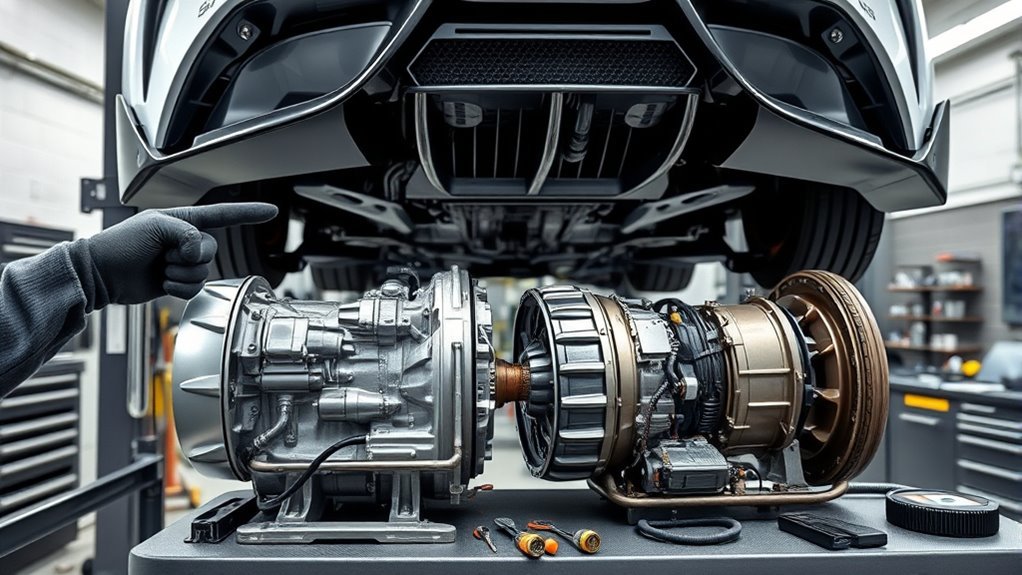
Why choose a ZF 8HP or a manual for your Supra depends on your priorities: if you want fastest acceleration, consistency on track, and lower shift times, pick the 8HP; if you prioritize direct driver engagement and mechanical simplicity, stick with the manual. You’ll favor ZF advantages when you want repeatable 100–200 km/h runs, modular hybrid tuning paths, and lower fatigue in traffic. Choose manual engagement if tactile control and mechanical purity free you to extract feel and focus.
- Track-focused: 8HP for rapid, consistent shifts and tuneable shift maps.
- Street daily: 8HP for smoothness, modes, reduced effort.
- Tuning versatility: 8HP supports hybrid-assisted powertrains.
- Purist build: manual for direct connection and simplified servicing.
Frequently Asked Questions
How Does the ZF 8-Speed Work?
You control power flow: the transmission technology uses four gearsets, two brakes and three clutches to swap ratios fast, keeping torque in range for performance enhancement, letting you exploit adaptive ECU strategies for responsive, liberated driving.
What ZF Transmission Does the Supra Have?
You’ve got the ZF 8HP70; imagine a track driver shaving tenths using adaptive shift strategies. Transmission features include eight gears, multi‑clutch design and lock‑up clutch; performance benefits are faster shifts, improved efficiency and responsiveness for liberation.
How Does the ZF 8 Shift so Fast?
You get rapid shift responsiveness because the ZF 8 uses multi-clutch, five shift elements and precise ECU control to preselect gears, optimize hydraulic pressure, and coordinate simultaneous gear engagement for seamless, liberated performance during aggressive driving.
What Is the Problem With the zf8hp Transmission?
The ZF8HP’s problem is inconsistent transmission reliability: you’ll face valve body leaks, solenoid failures, torque converter and E‑clutch wear. You’ll need strict maintenance tips, upgraded components, and regular fluid service to reclaim performance and freedom.
Conclusion
You’ve got a clear choice: the ZF 8‑speed gives blistering, automated shifts and broad ratios for everyday usability, while the manual delivers raw driver engagement and easier high‑power builds. Treat the 8HP like a precision instrument—maintain fluid service, respect torque limits, and plan for reinforced clutches or a trans swap if you chase big power. If you want fast, consistent launches and daily comfort, pick the ZF; if you crave pure involvement, choose the manual—like choosing between scalpel and sword.