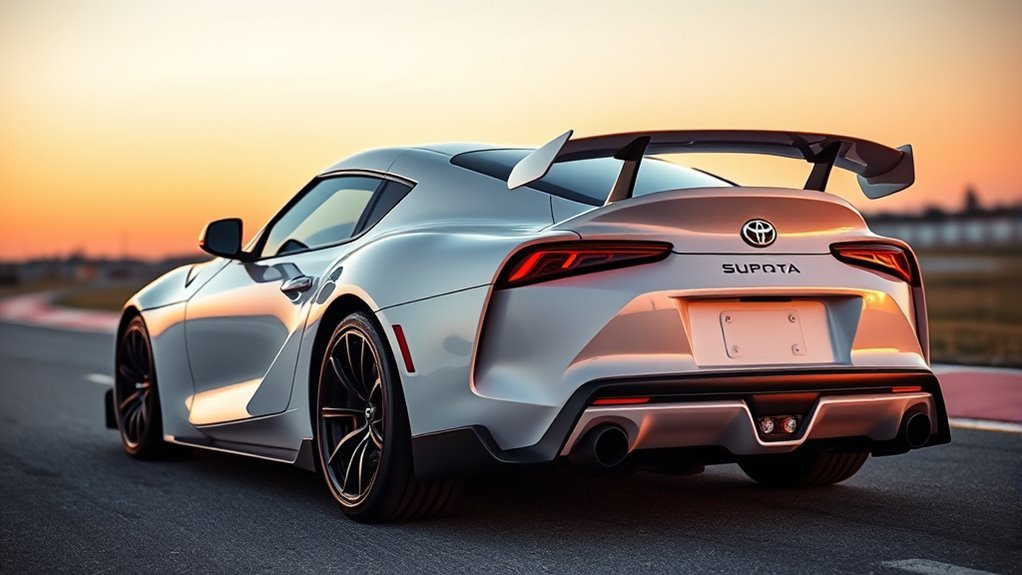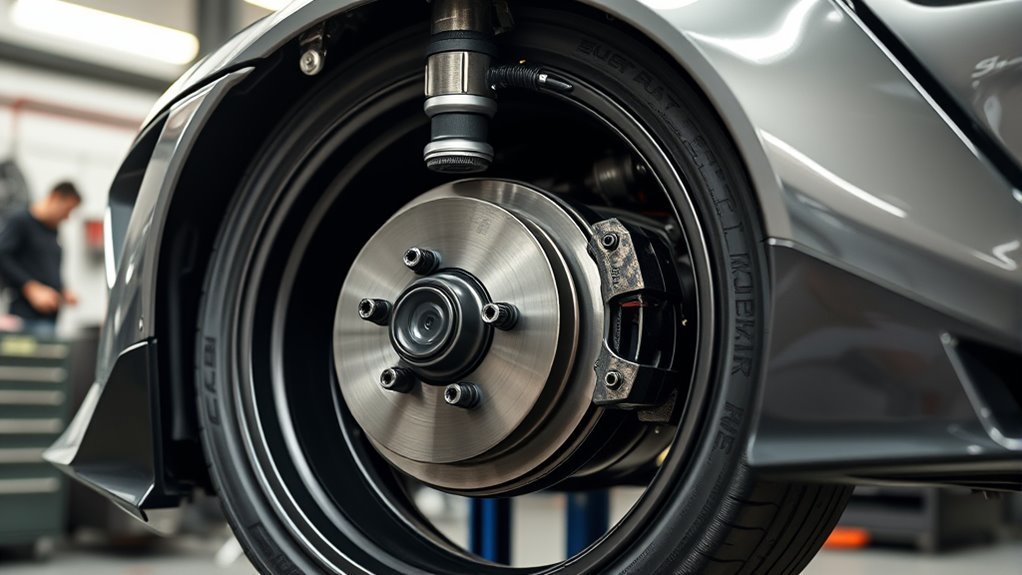
The Mk5 Toyota GR Supra can handle spirited driving, but repeated hard braking creates heat faster than the stock system can always shed it. A good brake-cooling setup captures high-pressure air near the front bumper or fender liner, routes it through heat-resistant hose, and feeds it toward the rotor hat and internal vanes so the rotor, pads, and caliper stay in a safer temperature range.
Quick Answer
Mk5 Supra brake cooling works by directing fresh air into the center of the front rotors, where the rotor vanes pump heat away as the wheels turn. It is most useful for HPDE, track days, mountain descents, high-power builds, or any driving that causes fade, pad glazing, or spongy pedal feel.
Key Takeaways
- Brake ducts cool the rotors, pads, and calipers; oil coolers manage engine oil and coolant heat. They solve different heat problems.
- For earlier U.S. model years, the Supra 3.0 uses larger front brakes than the 2.0; the current 2026 U.S. lineup is 3.0-based, with the MkV Final Edition adding larger front brake hardware.
- A duct kit is worth it when you see brake fade, rapid pad wear, glazed pads, blue/purple rotor marks, or rising caliper temperatures during repeated hard stops.
- Cooling alone is not a substitute for proper pads, fresh high-temperature brake fluid, correct bedding, torque checks, and post-session inspection.
At a Glance
| Time Required | 2–4 hours for front brake ducts, depending on tools and experience |
| Difficulty | Intermediate DIY; safety-critical brake-area work |
| Tools Needed | Jack, jack stands, wheel tools, socket set, torque wrench, trim tool, hose clamps, zip ties, temp paint or temperature stickers |
| Cost | Several hundred dollars for basic ducting; more for carbon/engineered kits, track pads, fluid, or oil-cooling upgrades |
How Mk5 Supra Brake Cooling Works
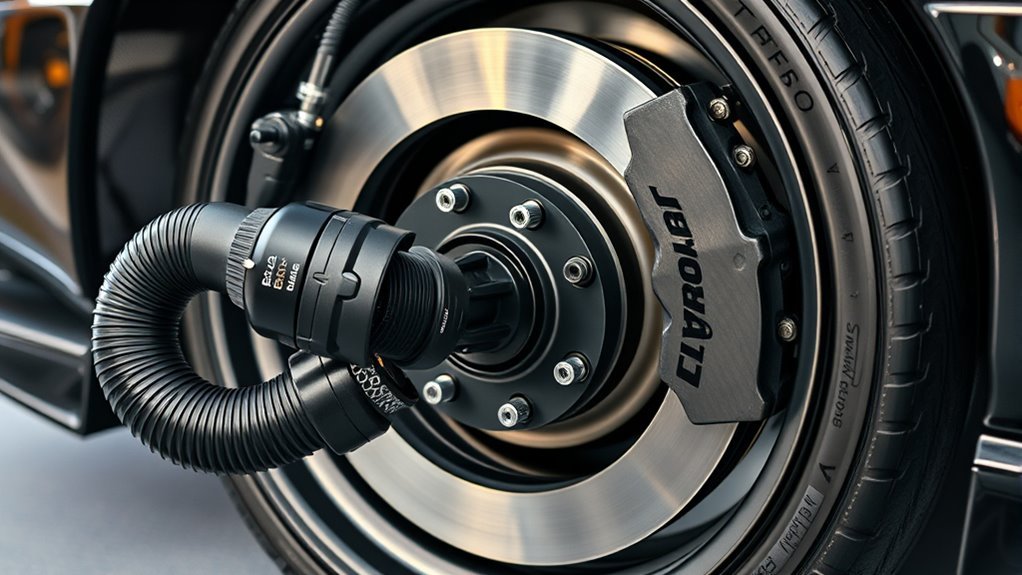
A brake duct system starts at a high-pressure inlet area, usually near the front bumper, undertray, or fender liner. From there, a hose carries air to a backing plate or outlet aimed at the rotor center. The goal is not just to blow air at the outside face of the rotor; the best setup feeds the rotor hat and internal vanes so the spinning rotor can pull air through itself and reject heat more evenly.
This matters because the brake system converts vehicle speed into heat. Under street use, the factory system has enough airflow for normal stops. Under repeated high-speed braking, heat builds in the rotor, then moves into the pads, caliper pistons, seals, and brake fluid. Once the pads or fluid exceed their useful temperature range, you can get fade, a longer pedal, pad glazing, accelerated rotor wear, or fluid boil.
Research on brake duct and dust-cover shape shows that duct direction, location, size, and shape affect brake-disc heat transfer and can help reduce fade, distortion, and judder when the system is designed correctly. SAE International specifically notes that cooling-air duct optimization is tied to brake-disc temperature control.
Where the Cooling Air Should Go
The best target is the rotor center, not the outer pad sweep area. Feeding the center helps the rotor vanes move air outward through the disc. That gives you better use of the rotor’s built-in ventilation and avoids creating one small cold spot on the outer face.
Brake Cooling vs. Oil Cooling
Brake ducts and oil coolers are often discussed together because both are track heat-management upgrades, but they solve different problems. Brake ducts help the rotors, pads, calipers, and brake fluid. Oil coolers help engine oil and, on some setups, coolant temperatures. The GR Supra uses an engine oil heat exchanger, and aftermarket air-to-oil kits are aimed at sustained engine-oil heat, not direct brake temperature.
Note: If your pedal stays firm but the car will not slow as hard, you may be dealing with pad fade. If the pedal gets long or spongy, suspect brake fluid heat or air in the system. The fix is different, so diagnose before buying parts.
Why Brake Cooling Matters for Life and Performance
On track, the Supra’s brakes can go through repeated heat cycles in a short time. Excessive heat can change pad friction, discolor rotors, cook dust boots, shorten caliper seal life, and lower brake-fluid safety margin. Toyota also warns that high-performance driving creates risk of personal injury or death and may cause vehicle damage that is not covered by insurance or warranty, so brake preparation should be treated as a safety item, not a cosmetic upgrade.
Good brake cooling does not make the car “fade-proof.” It gives the pads, rotors, calipers, and fluid more thermal margin so each braking zone feels more repeatable.
Effective cooling helps in three main ways:
- More consistent friction: Keeping pads closer to their intended temperature window reduces the chance of fade.
- Longer component life: Lower peak temperatures can slow pad wear, reduce rotor hot spotting, and protect caliper seals.
- Better driver confidence: A stable pedal and repeatable bite make it easier to brake at the same marker lap after lap.
Warning: Brake work is safety-critical. Support the car on proper jack stands, never let the caliper hang from the brake hose, torque all fasteners to the correct service specification, and inspect the system before driving at speed.
Stock vs. Aftermarket Mk5 Supra Cooling: Parts, Costs, and When to Upgrade
The stock Mk5 Supra brake package depends on model year and trim. In Toyota’s 2024 GR Supra specifications, the 2.0 used 330 mm x 24 mm ventilated front rotors with 1-piston aluminum floating front calipers, while the 3.0 used 348 mm x 36 mm ventilated front rotors with Brembo 4-piston fixed front calipers. Rear brake sizing also varied by trim. Toyota’s 2024 GR Supra brochure is the cleanest official reference for that older 2.0-vs-3.0 comparison.
For freshness, the current 2026 U.S. GR Supra page lists 3.0, 3.0 Premium, and MkV Final Edition trims. Toyota says the MkV Final Edition adds larger front brake calipers and rotors, along with suspension and handling updates. Toyota’s current GR Supra page is the best source for the latest lineup.
| Setup | Best For | Limitations |
|---|---|---|
| Stock brakes and airflow | Daily driving, short spirited runs, light autocross | Can run out of thermal margin during repeated high-speed braking |
| Track pads + high-temp fluid | First HPDE upgrades before adding ducts | May be noisy, dusty, or harsh on the street |
| Brake duct kit | Track days, pad glazing, rotor discoloration, caliper heat | Requires careful hose routing and clearance checks |
| Air-to-oil cooler | Sustained engine-oil or coolant heat on track | Does not directly cool the brakes |
Upgrade when the car tells you it needs help: fade after several laps, a soft pedal, pad taper, blue or purple rotor marks, crumbling pad edges, or temperature stickers showing excessive caliper or rotor heat. If you only drive on the street, fresh DOT-rated fluid and good pads may be enough. If you run HPDE sessions, start with pads and fluid, then add ducts when heat remains the limiting factor.
Mk5 Supra Brake-Duct Upgrades & Installation (Parts, Fitment, Step-by-Step)
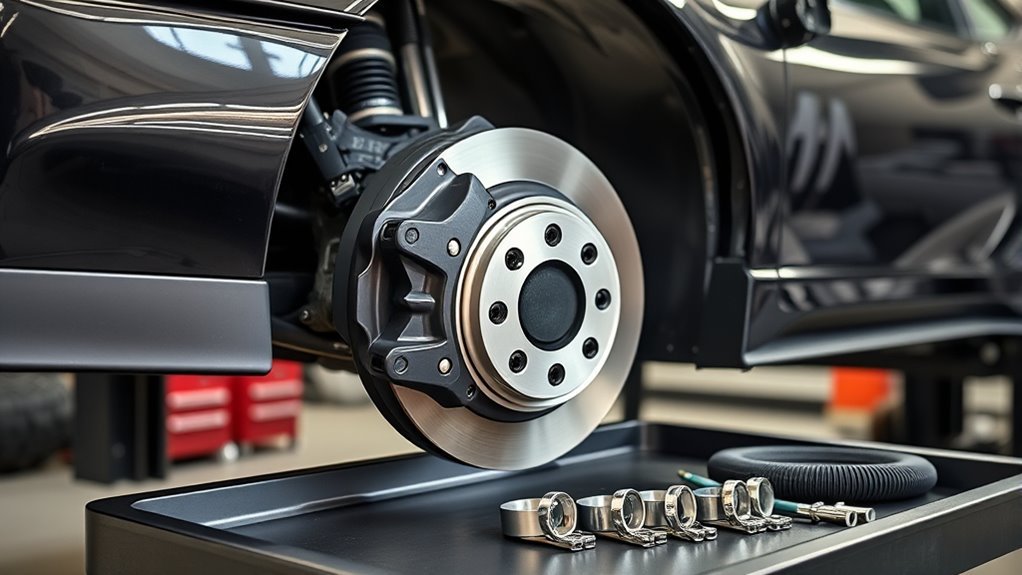
A typical Mk5 Supra brake-duct kit includes fender transition ducts, backing plates with duct outlets, 2.5-inch high-temperature silicone hose, hose clamps, zip ties, and sometimes steering rack limiters. Verus Engineering’s Mk5 Supra brake cooling kit, for example, uses carbon fender transition ducts, 316L stainless backing plates, pre-cut high-temp silicone hose, and hardware designed to direct air into the center of the rotor. Verus Engineering states that its kit uses factory high-pressure brake inlet airflow and routes it through the ducting toward the rotor center.
Parts Checklist
- Left and right fender inlet or transition ducts
- Left and right backing plates or rotor-center outlets
- High-temperature silicone brake duct hose
- Hose clamps, zip ties, and supplied hardware
- Steering rack limiters if the kit requires them
- High-temperature brake fluid that meets the correct DOT specification
- Track-capable pads matched to your tire, pace, and driving style
- Temperature paint, temperature stickers, or a pyrometer for testing
Step-by-Step Install Overview
- Prepare the car: Park on level ground, loosen the front wheel bolts, raise the front of the car, and support it securely on jack stands.
- Remove the front wheels: Keep hardware organized by side so everything returns to the correct location.
- Remove the caliper safely: Unbolt the caliper and support it on a stand or suspension arm. Do not let it hang by the brake hose.
- Remove the rotor and stock backing plate: This gives access for the new backing plate and duct outlet.
- Install the fender transition duct: Some kits require trimming a small lip or section of liner so the duct sits flush.
- Attach the silicone hose: Fit the hose to the fender duct with a clamp, then route it behind the knuckle without kinks.
- Install the ducted backing plate: Use the supplied or OEM hardware as instructed by the kit manufacturer.
- Connect the hose to the backing plate: Clamp the hose securely and keep it away from the tire, wheel, brake line, ABS wire, and suspension arms.
- Check lock-to-lock clearance: Turn the steering from full left to full right and compress the suspension if possible. The hose must not pull, rub, crush, or touch the wheel/tire.
- Reinstall rotor, caliper, and wheel: Torque all hardware to the correct service specification, then recheck after the first drive and first track session.
Pro Tip: Before your first track session, mark the hose with a paint pen near every clamp and zip tie. If the marks move, you will see the slip before the hose becomes a rubbing or melting problem.
Do Ducts Replace Pads and Fluid?
No. Ducts add airflow, but they do not fix the wrong pad compound or old fluid. Federal Motor Vehicle Safety Standard No. 116 sets minimum boiling-point requirements for DOT brake fluids; DOT 4 must meet at least 230°C / 446°F dry ERBP and 155°C / 311°F wet ERBP. FMVSS 116 is a minimum standard, not a track-performance recommendation. Many HPDE drivers use higher-boiling DOT 4 racing fluid and flush more often, especially after a soft-pedal event.
Track Setup & Troubleshooting: Temp Monitoring, Testing, and Common Fixes
After installation, test the system instead of assuming it works. Verus Engineering’s Mk5 Supra brake-cooling test used OEM rotors and calipers, high-temp fluid, track pads, stainless lines, temperature stickers, and a laser temperature gun during controlled track sessions at Putnam Park Road Course. Their test write-up concluded that the duct kit dissipated more heat than the OEM setup, but your exact results will depend on track layout, tire grip, pad compound, ambient temperature, driver pace, and airflow.
Simple Temperature Testing Process
- Baseline the car: Run your current pads, fluid, and no duct changes first if possible.
- Use repeatable sessions: Compare similar lap counts, similar cool-down behavior, and similar braking intensity.
- Measure the same spots: Check caliper body, rotor outer face, rotor hat, and pad condition after each session.
- Record conditions: Note ambient temperature, tire, pad compound, fluid, session length, and driver notes.
- Inspect after cooling: Look for hose rubbing, pad taper, rotor cracks, uneven deposits, and caliper dust-boot damage.
| Symptom | Likely Cause | Fix |
|---|---|---|
| Firm pedal, less stopping power | Pad fade or pad outside its temperature range | Use a proper track pad, bed it correctly, add ducting if temps remain high |
| Long or spongy pedal | Boiled fluid, air in system, or overheated calipers | Bleed/flush fluid, inspect for leaks, use higher-temp DOT-compatible fluid |
| Blue/purple rotor marks | Excessive rotor heat | Check duct aim, pad compound, braking technique, and rotor condition |
| Glazed pads | Pad overheated or not bedded correctly | Re-bed if salvageable, replace if damaged, improve cooling and compound choice |
| Hose wear or rubbing | Poor routing or insufficient steering clearance | Re-route, secure with proper slack, check full lock and suspension movement |
| One side much hotter | Blocked duct, bent backing plate, pad drag, or caliper issue | Inspect airflow path, seals, hose kinks, caliper slide/piston behavior, and pad wear |
When an Oil Cooler Makes Sense Too
If your brake pedal feels fine but engine oil or coolant temperatures climb during long sessions, the problem is not brake cooling. That is where engine-oil and heat-exchanger upgrades come in. The factory system uses a heat exchanger to move oil heat into the coolant loop. Aftermarket air-to-oil systems move more of that heat directly to outside air, which can help heavily tracked or higher-power Supras maintain oil viscosity and reduce coolant-system strain.
Do not buy an oil cooler to solve pad fade. Buy it when logs show oil or coolant heat is the limiting factor. For a balanced track setup, handle the brake system first with pads, fluid, and ducts; then address engine-oil and coolant heat if data shows they need help.
Frequently Asked Questions
How does brake cooling work?
Brake cooling captures outside air and routes it through ducts toward the rotor center. On a vented rotor, the internal vanes move air outward as the rotor spins, helping remove heat from the rotor, pads, and nearby caliper area.
Are Mk5 Supra brake cooling ducts worth it?
Yes, if you track the car, run repeated high-speed braking zones, or see fade, glazed pads, high caliper temperatures, or fast pad wear. For normal street driving, ducts are usually less important than good pads, fresh fluid, and proper maintenance.
What is the difference between Supra 2.0 and 3.0 brakes?
For 2024 U.S. models, the Supra 2.0 used 330 mm x 24 mm front rotors with 1-piston floating calipers, while the 3.0 used larger 348 mm x 36 mm front rotors with Brembo 4-piston fixed calipers. The current 2026 U.S. lineup is 3.0-based, and the MkV Final Edition adds larger front brake hardware.
Do brake ducts fix a spongy pedal?
Not by themselves. A spongy pedal usually points to brake fluid heat, air in the hydraulic system, or a mechanical issue. Flush and bleed the system, use an appropriate high-temperature DOT fluid, and inspect the brakes before relying on ducts alone.
Should the duct aim at the rotor face or the rotor center?
Aim the outlet toward the rotor center and vanes. Feeding the center lets the vented rotor pump air through itself, which is usually more effective than blowing air only at the outer friction surface.
How does the brake system work step by step?
When you press the pedal, the master cylinder pressurizes brake fluid. That pressure pushes the caliper pistons, which clamp the pads against the rotors. Friction slows the car and turns speed into heat. Brake cooling removes some of that heat so the pads, rotors, calipers, and fluid stay more consistent.
Conclusion
Mk5 Supra brake cooling is about controlled airflow, not just adding parts. The best duct setups capture high-pressure air, route it cleanly, and feed the rotor center so the vanes can move heat away from the brakes. For street use, fresh fluid and the right pads may be enough. For HPDE and track work, ducts become worthwhile when data or symptoms show that heat is limiting your braking consistency.
Start with a healthy brake system, choose pads and fluid for your use, install ducts with careful clearance checks, and measure temperatures after each change. If oil or coolant heat becomes the next limit, address that separately with engine-cooling upgrades. A well-tested setup keeps the Supra predictable, repeatable, and safer under hard braking.
Sources
- Toyota 2024 GR Supra e-brochure — official brake specifications, trim differences, and HPDE safety/warranty warnings.
- Toyota 2026 GR Supra official page — current U.S. lineup and MkV Final Edition brake updates.
- Verus Engineering Mk5 Supra Brake Cooling Kit — kit components, duct routing concept, and rotor-center airflow design.
- Verus Engineering Mk5 Supra Brake Cooling Kit Testing — on-track test method using temperature stickers and laser temperature readings.
- 49 CFR 571.116 / FMVSS 116 — DOT brake-fluid boiling-point and performance requirements.
- SAE Technical Paper 2014-01-2519 — brake cooling-air duct shape, location, direction, and size as brake-disc cooling factors.