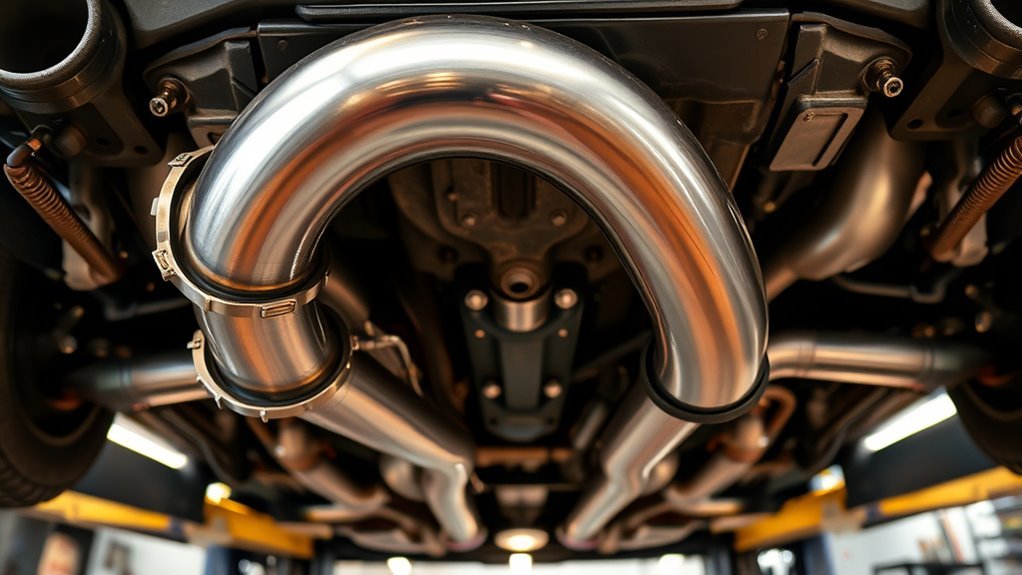
A Supra downpipe sits directly after the turbocharger and carries hot exhaust gas into the rest of the exhaust system. Upgrading it can reduce restriction, help the turbo respond sooner, and support more power when the hardware, tune, fuel, and emissions setup all match. The right choice depends on whether your Supra is a street car, track car, daily driver, or inspection-sensitive build.
Quick Answer
A Supra downpipe improves turbo performance by reducing exhaust restriction after the turbo. That can mean quicker spool, stronger mid-range torque, and more wheel horsepower with the correct ECU tune. A catted downpipe is usually the safer street choice; a catless downpipe is mainly for off-road or track use because it removes emissions control.
Key Takeaways
- A higher-flow downpipe reduces backpressure after the turbo, helping exhaust gas leave faster and supporting quicker boost response.
- Common gains are often in the 10–25 wheel-horsepower range, but results depend on the Supra generation, engine, downpipe design, tune, fuel, dyno, and supporting mods.
- Catted downpipes keep a catalytic converter in place, reduce odor, lower check-engine-light risk, and are the better choice for most street-driven Supras.
- Catless downpipes flow more freely but can be illegal for public-road use, smell stronger, sound louder, and trigger emissions-related faults.
- Do not install or tune a downpipe casually. Use fresh gaskets, protect the O2 sensors, support the turbo area, and verify the tune with logs before driving hard.
At a Glance
| Time Required | About 2–4 hours for an experienced installer; longer if bolts are seized or access is tight |
| Difficulty | Intermediate to advanced DIY; professional installation is recommended for most owners |
| Tools Needed | Jack stands or lift, socket set, extensions, oxygen-sensor socket, torque wrench, penetrating oil, gloves, eye protection, and new gaskets/hardware |
| Cost | Varies widely by brand and catalyst type; budget for the downpipe, gaskets, labor, and ECU calibration |
How a Downpipe Improves Supra Turbo Flow
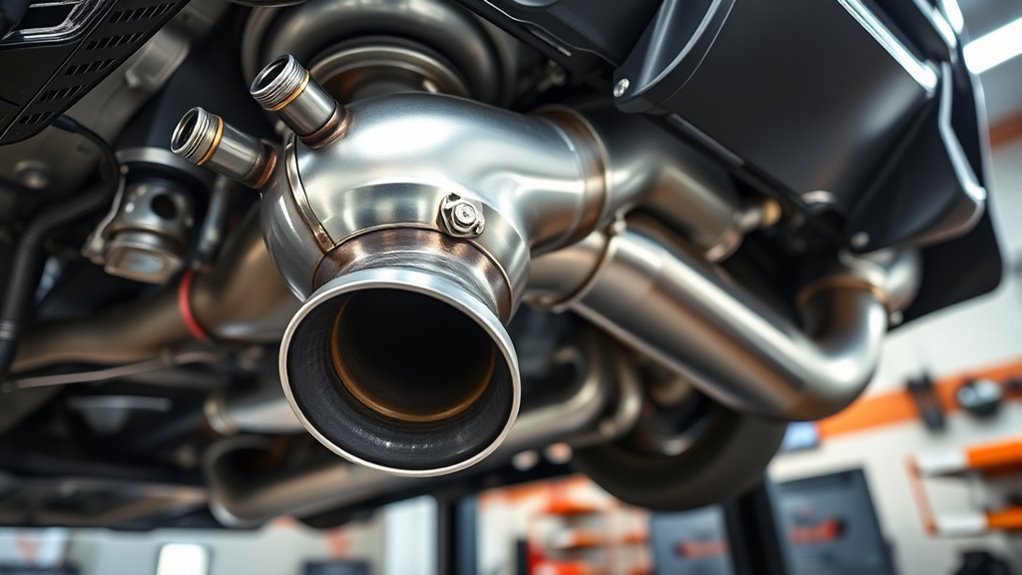
On a turbocharged Supra, the downpipe connects the turbo outlet to the mid-pipe or front section of the exhaust. The factory pipe is designed to balance cost, noise, emissions, heat management, warranty needs, and drivability. An aftermarket downpipe usually increases pipe diameter, smooths the path after the turbine, and may use a higher-flow catalytic converter.
That matters because a turbocharger depends on pressure difference. Exhaust energy spins the turbine, and the gas then needs to leave the turbine housing with as little unnecessary restriction as practical. When the post-turbo path is less restrictive, the turbo can respond more quickly, boost can recover faster between shifts, and the engine can breathe better at higher load.
The current GR Supra 3.0 uses a turbocharged inline-six engine, and Toyota lists the 2026 GR Supra with a 3.0L turbocharged inline 6-cylinder. Older turbo Supras, including 2JZ-GTE cars, follow the same basic principle: the downpipe is one of the most important exhaust restrictions after the turbo.
The downpipe does not create power by itself; it removes a restriction so the turbo, tune, and fuel system can make better use of the engine’s airflow.
A quality downpipe can also improve sound. Expect a deeper exhaust note, more turbo character, and sharper throttle feel. The change is usually more obvious on tuned cars than on stock-calibration cars because the ECU can request and control boost, fuel, ignition timing, and torque targets more effectively.
Catted vs. Catless Downpipes: Pros and Cons
After choosing a higher-flow downpipe, the biggest decision is whether to keep a catalytic converter. A catted downpipe uses a catalytic converter to help reduce tailpipe emissions. A catless downpipe removes that catalyst from the downpipe section, which can increase flow but also increases legal, odor, sound, inspection, and check-engine-light risk.
| Downpipe Type | Best For | Main Trade-Offs |
|---|---|---|
| Factory downpipe | Stock reliability, emissions compliance, quiet operation | Most restrictive option for tuned power |
| High-flow catted downpipe | Street-focused builds, daily drivers, lower odor and noise | Less peak flow than catless, still may need a tune or emissions approval |
| Catless downpipe | Off-road or track builds where rules allow it | Higher emissions, stronger smell, louder sound, CEL risk, and public-road legal issues |
Warning: Removing or defeating emissions equipment can be illegal on public roads. The EPA explains that tampering with a vehicle’s emissions control system is illegal under the Clean Air Act, and CARB requires approved Executive Order coverage for many California emissions-related aftermarket parts.
For most Supra owners, a catted downpipe is the balanced choice. You still get better flow, stronger sound, and tuning headroom, but you avoid many of the worst downsides of a catless setup. Look for a high-quality catalytic converter, clean welds, correct sensor-bung placement, and brand documentation that clearly states whether the part is for street use, track use, or off-road use only.
A catless downpipe may show the highest peak gain on a tuned setup, but the extra power is not free. You may deal with fuel smell at idle, more rasp, emissions readiness problems, inspection failure, and possible enforcement exposure. Do not assume “off-road use only” labeling makes the part street legal.
Power Gains, Turbo Response, and Fuel Needs
A Supra downpipe upgrade commonly supports about 10–25 wheel horsepower when paired with the right tune, but that number is not guaranteed. The final result depends on the engine, turbo, downpipe diameter, catalyst quality, exhaust system, ambient temperature, dyno type, fuel quality, boost target, and tuner strategy.
The biggest seat-of-the-pants improvement is often not peak horsepower. It is the way the car responds in the mid-range. With less post-turbo restriction, the turbo can build boost sooner, recover faster after gear changes, and hold power more confidently at higher rpm.
Fuel matters because a downpipe often leads to a more aggressive tune. Use the fuel grade required by your calibration and your owner’s manual. Toyota’s 2026 GR Supra materials identify the car as a turbocharged performance model, and turbo engines are sensitive to knock under load. If your tuner requires 93 AKI, ethanol blend, or race fuel for a specific map, do not run that map on lower-grade fuel.
Note: A downpipe can make the car feel stronger even before peak horsepower changes are dramatic. Quicker spool, sharper torque delivery, and less lag are often the improvements drivers notice first.
Tuning is also where safety comes in. A good calibration adjusts boost targets, torque limits, fuel delivery, ignition timing, wastegate control, and diagnostic behavior. A poor tune can create overboost, knock, excessive exhaust temperature, drivability problems, or limp mode. After any downpipe install, datalog the car and review boost, timing correction, fuel trims, air-fuel ratio, wastegate duty, and catalyst/O2 sensor behavior before repeated hard pulls.
Before You Buy: Fitment, Emissions, and Quality Checks
Do not buy a Supra downpipe based on horsepower claims alone. First confirm the exact generation, engine, transmission, market, and model year. A downpipe for a Mk5 GR Supra 3.0 will not automatically fit a 2.0, and older 2JZ turbo Supras use different hardware, flange locations, and exhaust layouts.
- Fitment: Match the downpipe to your Supra’s engine, chassis, turbo, transmission, and left- or right-hand-drive layout where relevant.
- Catalyst quality: A premium high-flow catalytic converter usually costs more but can reduce smell, rasp, and emissions-readiness problems.
- Material: Stainless steel is the common choice because it resists corrosion and heat cycling better than mild steel.
- O2 sensor placement: Sensor bungs should place the oxygen sensors correctly and keep wiring away from heat and moving parts.
- Heat management: Check clearance near wiring, coolant lines, steering components, underbody panels, and the transmission tunnel.
- Emissions documentation: For street use, verify whether the part is approved for your state or country before installing it.
- Tune compatibility: Confirm your tuner supports the exact downpipe type before you buy.
California owners need to be especially careful. CARB states that aftermarket catalytic converters must be exempted from California anti-tampering laws to be legally sold and installed in the state. Even outside California, emissions rules can still apply at the federal, state, provincial, or inspection-station level.
Pro Tip: Before ordering, ask the seller for the part number, catalyst type, emissions status, install hardware list, and tuning requirements in writing. That prevents surprises when the car is already apart.
Installing and Tuning a Supra Downpipe
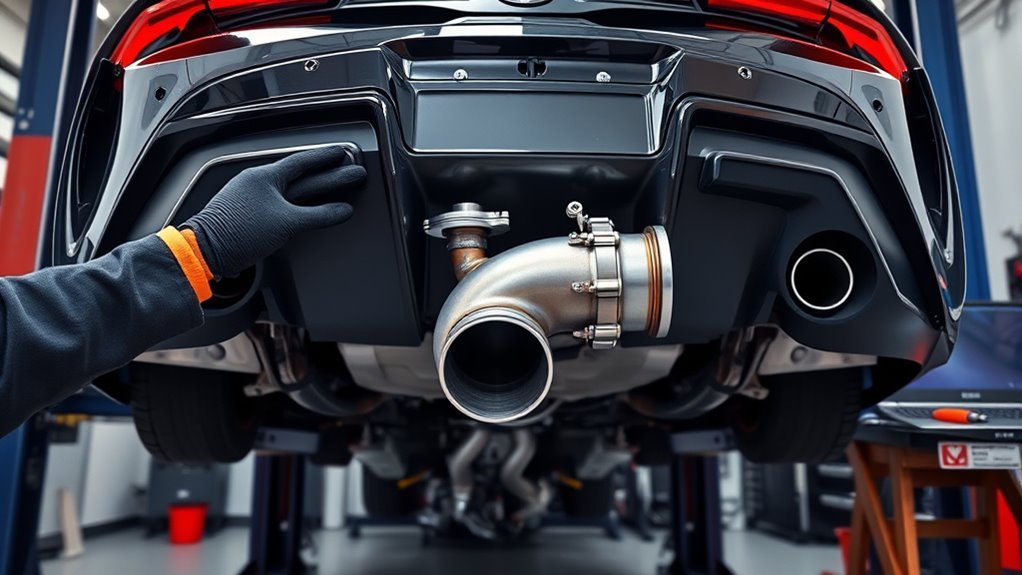
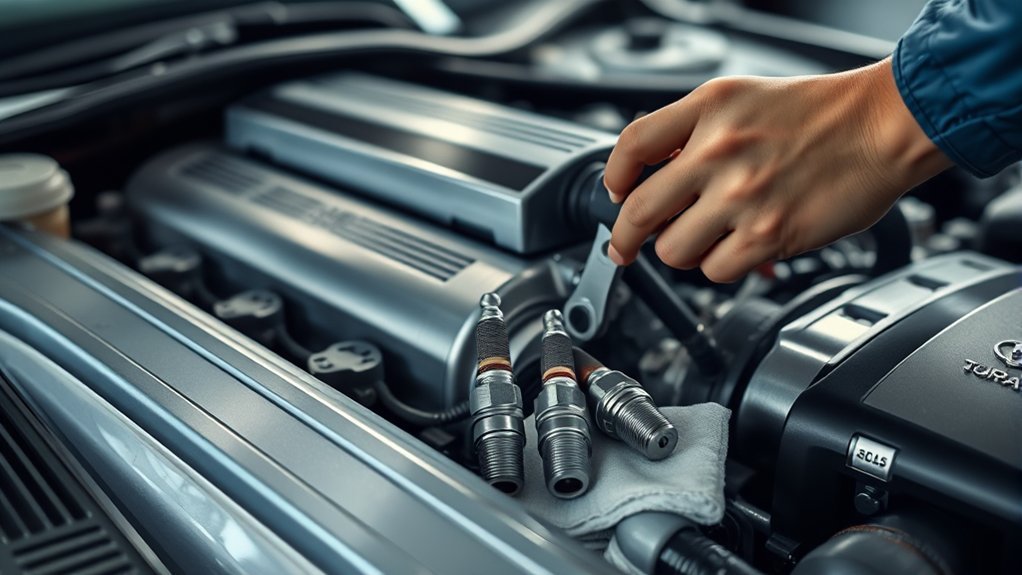
If you install an aftermarket downpipe, work on a fully cooled car and support it safely. Hot turbo hardware can cause severe burns, and the downpipe sits in a tight, heat-soaked area. Use a lift if possible. If you use jack stands, place them on solid ground and follow safe lifting points.
- Disconnect the battery if required. This helps protect electronics while you work around oxygen-sensor wiring.
- Remove shields and braces as needed. Keep track of bolts and underbody fasteners so everything goes back in the right place.
- Unplug and remove O2 sensors carefully. Use an oxygen-sensor socket and avoid twisting or stretching the wiring.
- Loosen the factory downpipe hardware. Penetrating oil helps if the fasteners are heat-cycled or corroded.
- Support the turbo and exhaust path. Do not let the exhaust hang from the turbo flange or nearby piping.
- Install fresh gaskets and hardware. Reusing crushed gaskets is a common cause of exhaust leaks.
- Test-fit before final tightening. Check clearance around heat shields, wiring, the firewall, the transmission, and underbody panels.
- Torque fasteners to the manufacturer’s spec. Guessing on flange hardware can cause leaks, broken studs, or warped flanges.
- Load the correct tune. Use a calibration designed for your downpipe type, fuel, and supporting modifications.
- Datalog and inspect. After the first heat cycle, check for leaks, rattles, odors, loose clamps, and abnormal trims or boost behavior.
Some owners try to solve check-engine lights with O2 spacers. That may reduce a catalyst-efficiency fault on some setups, but it does not make an illegal emissions setup legal, and it does not replace proper calibration. If the car is used on public roads, choose parts and tuning that comply with your local laws.
Common Problems After a Downpipe Install
Most downpipe problems come from leaks, sensor issues, poor fitment, or a tune that does not match the hardware. Here is what to check first.
| Problem | Likely Cause | What to Check |
|---|---|---|
| Check engine light | Catalyst-efficiency code, O2 sensor fault, tune mismatch | Scan codes, sensor wiring, tune file, emissions readiness monitors |
| Ticking or hissing sound | Exhaust leak at flange or gasket | Gaskets, V-band clamp alignment, flange torque, soot marks |
| Rattle under load | Pipe contacting heat shield or brace | Clearance around shields, tunnel, bracketry, and underbody panels |
| Strong fuel smell | Catless setup or leak | Catalyst type, flange sealing, cabin intrusion, rear hatch/trunk seals |
| Overboost or limp mode | Incorrect calibration or boost-control issue | Boost target, wastegate duty, tuner logs, vacuum/pressure connections |
After the first few drives, inspect the downpipe again. Heat cycles can settle gaskets and clamps. Retorque only if the downpipe manufacturer recommends it, and always follow the specified procedure.
Choosing the Right Downpipe for Your Supra
The right Supra downpipe depends on how you actually use the car. A daily-driven street Supra should usually get a well-built catted downpipe, a conservative tune, and emissions documentation that fits your location. A track-only build can prioritize maximum flow, but it still needs safe tuning, heat control, and rulebook compliance for the events you run.
Choose a catted downpipe if you want better sound and response while keeping the car more livable. It is the better fit for owners who care about reduced odor, lower CEL risk, less rasp, and fewer inspection headaches. It also keeps the build closer to the original emissions layout.
Choose a catless downpipe only if the car is not used on public roads and your track or event rules allow it. It can support the most flow, but it brings the most compromise. For many owners, the small difference in peak power is not worth the smell, sound, legal risk, and diagnostic hassle.
Also think about warranty and repair coverage. Using an aftermarket part does not automatically void every warranty claim, but a modified emissions or turbo system can complicate coverage if a related failure occurs. The eCFR notes that a valid emissions-performance warranty claim may not be denied simply because a properly installed certified aftermarket part was used, but that is different from installing a noncompliant part or a tune that contributes to a failure.
Frequently Asked Questions
What is the purpose of a downpipe on a Supra?
The downpipe routes exhaust gas from the turbocharger into the rest of the exhaust system. A higher-flow downpipe reduces restriction after the turbo, which can improve spool, throttle response, mid-range torque, sound, and tuned horsepower.
How much horsepower will a downpipe add to a Supra?
A typical Supra downpipe setup may support about 10–25 wheel horsepower with the correct tune, but results vary. A catted downpipe often lands on the lower-to-middle end of that range, while a catless track setup may show more peak flow. Dyno type, fuel, tune, engine condition, and supporting mods all matter.
Is it better to have a catted or catless downpipe?
For most street-driven Supras, a catted downpipe is better because it keeps a catalytic converter in place, reduces odor, lowers emissions-related fault risk, and is easier to live with. A catless downpipe is mainly for off-road or track-only use where emissions rules allow it.
Can I install a Supra downpipe without a tune?
You can physically install some downpipes without tuning, but it is not the best way to get reliable gains. A tune helps the ECU manage boost, fuel, torque limits, ignition timing, and emissions-related diagnostics. A catless or very high-flow setup is much more likely to need calibration.
Will a downpipe make my Supra fail emissions?
It can. A catless downpipe is likely to fail visual or readiness-based inspections because it removes a catalytic converter. A catted downpipe may still fail if it lacks required approval, causes readiness monitors to stay incomplete, or triggers catalyst-efficiency codes. Always check local rules before installing.
What does a downpipe do without a turbo?
On a non-turbo car, the same type of turbo downpipe does not exist because there is no turbo outlet to connect to. Exhaust upgrades on naturally aspirated cars can change sound and reduce restriction, but they usually do not deliver the same spool or torque gains because there is no turbocharger to help.
Conclusion
A Supra downpipe changes one of the most important parts of the turbo exhaust path. By reducing restriction after the turbo, it can improve spool, sharpen response, and support meaningful power gains when paired with the right tune and fuel. The best setup is not always the most aggressive one, though. For most owners, a high-quality catted downpipe is the smartest blend of performance, drivability, sound, and emissions responsibility.
If your Supra is a street car, start with fitment, catalyst quality, emissions approval, and tuner support before chasing the highest advertised horsepower number. If it is a track-only build, confirm the rules, manage heat carefully, and log the car after tuning. Either way, the downpipe should be treated as part of a complete system—not a standalone shortcut to power.
Sources
- Toyota GR Supra official specs — confirms current GR Supra engine and performance details.
- Toyota 2026 GR Supra brochure — supports factory powertrain and turbocharged inline-six information.
- U.S. EPA: Tampering and Aftermarket Defeat Devices — explains federal emissions-tampering concerns and Clean Air Act enforcement.
- California Air Resources Board: Aftermarket Catalytic Converters — explains California approval requirements for aftermarket catalytic converters.
- eCFR 40 CFR § 85.2105: Aftermarket Parts — provides federal emissions-warranty language related to properly installed certified aftermarket parts.