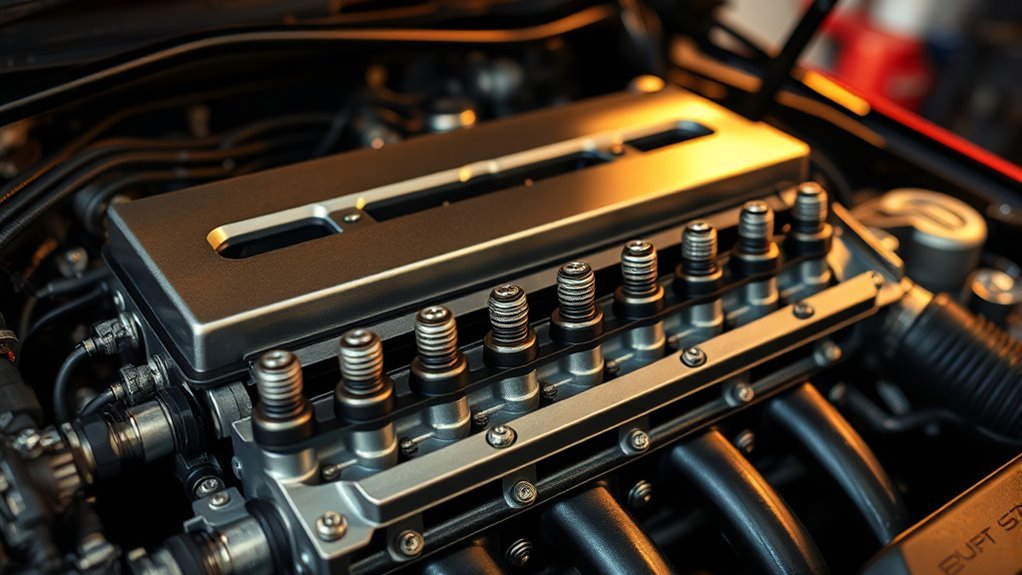
The modern Toyota GR Supra’s direct injection system is one of the reasons the MkV feels sharp, efficient, and responsive for a turbocharged sports car. It sprays fuel directly into the combustion chamber at very high pressure, which improves atomization, charge cooling, knock control, and tuning headroom. But it also brings real maintenance and modification limits that owners should understand before chasing more power.
Quick Answer
The MkV Supra uses high-pressure gasoline direct injection, not Toyota’s D-4S dual-injection system. Direct injection helps the turbo engine make strong power with better knock resistance and precise fuel control, but it can also create intake-valve carbon buildup and fuel-system limits on high-power builds.
Key Takeaways
- Modern MkV GR Supras use a turbocharged BMW-derived engine family with high-pressure direct injection.
- BMW B58TU technical material lists a 350-bar injection system, which is about 5,100 psi, though exact operating pressure varies by load and calibration.
- Direct injection helps power, throttle response, and knock control, but it does not wash the intake valves with fuel.
- Toyota D-4S is a separate Toyota dual-injection system used on other Toyota models, not the current U.S. GR Supra.
- For big-turbo, ethanol, or high-boost builds, rail pressure logs and fuel-system planning matter as much as turbo size.
How Supra’s Direct Injection (DI) Works: Quick Overview
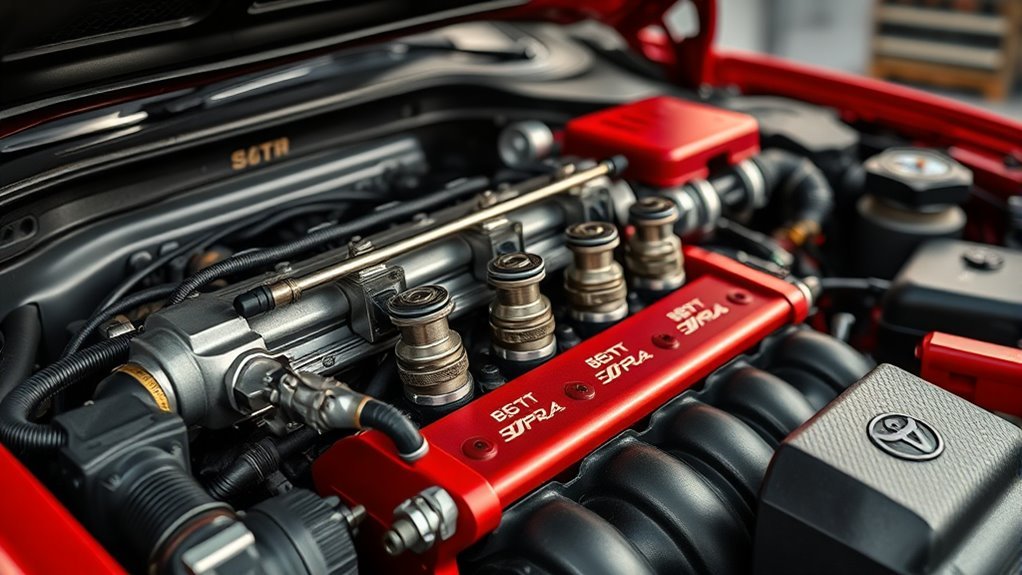
In a direct-injection gasoline engine, the injector sprays fuel straight into the cylinder instead of spraying it into the intake port. That lets the engine control fuel timing, spray pattern, and mixture formation very precisely.
On the modern GR Supra, that precision supports the car’s turbocharged power delivery. Toyota’s current GR Supra page lists the 2026 model with a 3.0-liter turbocharged inline-six, and BMW B58TU technical information describes the engine family’s direct-injection fuel preparation with up to 350 bar of fuel-injection pressure. That is roughly 5,100 psi, far higher than a traditional port-injection fuel system.
High pressure is the point: smaller droplets, better charge preparation, more knock resistance, and tighter fuel control under boost.
Direct injection helps the Supra in four main ways:
- Finer atomization: High pressure breaks fuel into small droplets so it mixes faster with air.
- Charge cooling: Fuel vaporizing inside the cylinder absorbs heat, which helps reduce knock risk.
- Precise timing: The ECU can adjust injection timing based on load, boost, rpm, temperature, and emissions needs.
- Cleaner power control: The system can support strong torque without relying on overly rich fueling in normal operation.
Note: This article focuses on the modern MkV GR Supra. Older A70/A80 Supras used older port-injected engine families, so their fuel-system behavior, tuning limits, and carbon-buildup risks are different.
Supra DI: HPFP, Rail, and Injector Design
The Supra’s direct-injection system has three core high-pressure parts: the high-pressure fuel pump, the direct rail, and the injectors. The low-pressure pump moves fuel from the tank toward the engine. The high-pressure fuel pump then raises that fuel to the pressure needed for direct injection.
| Component | What It Does | Why It Matters |
|---|---|---|
| High-pressure fuel pump | Raises fuel pressure for direct injection | Becomes a common limit with more boost, ethanol, or a larger turbo |
| Direct rail | Stores and distributes high-pressure fuel | Helps stabilize pressure during fast changes in load |
| Direct injectors | Spray fuel directly into the combustion chamber | Control fuel quantity, spray shape, atomization, and combustion quality |
| ECU calibration | Controls injection timing, pulse width, pressure targets, and safety strategy | Keeps the engine safe when hardware or fuel changes |
HPFP Capacity Limits
The high-pressure fuel pump is often the first fuel-system part tuners watch on a modified Supra. At stock power, it is designed to support the factory calibration. As boost, torque demand, rpm, or ethanol content rises, the pump may struggle to maintain the requested rail pressure.
When the HPFP cannot keep up, the ECU and tuner may see rail-pressure drop, leaner-than-commanded fueling, timing corrections, torque closure, or misfires. That is why serious Supra builds usually log fuel rail pressure, lambda, injector pulse width, and knock behavior before pushing harder.
Warning: Do not loosen direct-injection fuel lines or remove high-pressure fuel parts without the factory service procedure. DI systems can hold dangerous pressure, and spilled fuel near a hot turbo engine is a fire risk.
Injector Spray Patterns
Injector design is not only about how much fuel can flow. It is also about where the fuel goes. Direct injectors must place the spray inside a fast-moving combustion chamber without causing wall wetting, poor mixture formation, or soot.
Good spray control helps the Supra’s engine maintain stable combustion during cold starts, light-load cruising, hard acceleration, and transient throttle changes. The injector’s hole pattern, cone angle, opening speed, and pulse timing all influence how the air-fuel mixture forms before ignition.
- Spray angle affects how fuel avoids the piston crown and cylinder wall.
- Droplet size affects evaporation speed and mixture quality.
- Rail-pressure stability keeps injector behavior repeatable.
- Calibration balances power, emissions, cold-start quality, and knock resistance.
Why Supra’s DI Improves Fuel Economy and Performance
Direct injection improves the Supra’s performance by giving the ECU more control over combustion. Instead of fueling earlier in the intake port, the engine can inject fuel directly into the cylinder at carefully chosen times.
Cooler Combustion Temperatures
When fuel vaporizes inside the combustion chamber, it absorbs heat. This cooling effect reduces the chance of knock, which is especially valuable on a turbocharged engine. Less knock risk means the calibration can run stronger boost and ignition timing targets while still protecting the engine.
That does not mean direct injection makes the engine immune to knock. Fuel quality, intake-air temperature, spark plugs, carbon deposits, oil condition, tune quality, and boost pressure still matter. The Supra owner’s manual should always be the final guide for fuel grade, and U.S. manuals commonly specify premium gasoline for the turbo engine.
Precise Fuel Metering
Direct injection allows accurate fuel delivery for each cylinder event. The ECU can adjust injector timing and duration based on operating conditions. This helps the engine stay smooth at idle, efficient during cruise, and responsive when the turbo builds boost.
Be careful with broad claims like “20% better fuel economy.” Direct injection can improve efficiency compared with older fuel systems, but the exact gain depends on engine design, emissions rules, gearing, tires, vehicle weight, and driving style. Toyota lists the 2026 GR Supra 3.0 at an estimated 22 mpg city and 29 mpg highway, which is strong for a 382-hp rear-drive sports coupe but not proof of a universal DI-only percentage gain.
Higher Effective Compression
The Supra’s turbo engine uses direct injection, variable valve control, turbocharging, charge cooling, and ECU strategy together. The benefit is not simply “more compression.” The real advantage is that the engine can manage cylinder pressure and temperature more precisely.
Direct injection helps the engine tolerate higher load before knock becomes a problem. Under boost, that gives the calibration more room to make torque. Under cruise, it helps the engine run efficiently without wasting fuel. The result is the Supra’s mix of quick throttle response, strong midrange torque, and daily-drivable fuel economy.
DI vs. Port Injection and Toyota D-4S on the Supra
This is where many Supra articles get the facts wrong: Toyota D-4S is not the same thing as the modern GR Supra’s fuel system.
Toyota’s D-4S system uses both direct injection and port injection. Toyota describes D-4S on the GR86 as a twin-injector system that controls direct injection into the combustion chamber and port injection into the intake port depending on driving conditions. That is useful technology, but it should not be casually applied to the MkV GR Supra unless a specific market, engine, and model-year source confirms it.
Note: The current U.S. GR Supra is generally discussed as a BMW-derived direct-injection turbo platform. Toyota D-4S is a Toyota dual-injection system used on other Toyota engines, including models such as the GR86, but it is not the key fuel-system label for the MkV Supra.
| System | Fuel Delivery | Main Strength | Main Tradeoff |
|---|---|---|---|
| Port injection | Fuel sprays into the intake port | Helps wash intake valves and is simpler to service | Less charge-cooling and cylinder-level timing control |
| Direct injection | Fuel sprays into the combustion chamber | Strong knock resistance, atomization, and fuel control | Can build intake-valve deposits because fuel does not wash the valves |
| Toyota D-4S | Uses both direct and port injectors | Blends DI performance with PI valve-washing benefits | More parts and more complex control strategy |
| Aftermarket supplemental port injection | Adds extra fuel through the intake side | Supports high-power or ethanol-heavy builds | Requires careful tuning and may not be emissions legal for street use |
[Products Worth Considering]

The wiring harness of this connector adopts high-quality copper core, the current transmission is stable, not easy to short-circuit, and the signal transmission is accurate,not easy to loosen, has excellent conductivity, and can stably transmit electrical signals

🚗[High Quality Material]: This product is made of high quality material for long life. The wire is made of high quality silicone resin with high toughness and better resistance to high and low temperatures. The alligator clips have a wide opening range and strong biting force. The adapter is made of high hardness corrosion-resistant plastic with polygonal convex groove design to enhance friction and anti-slip.
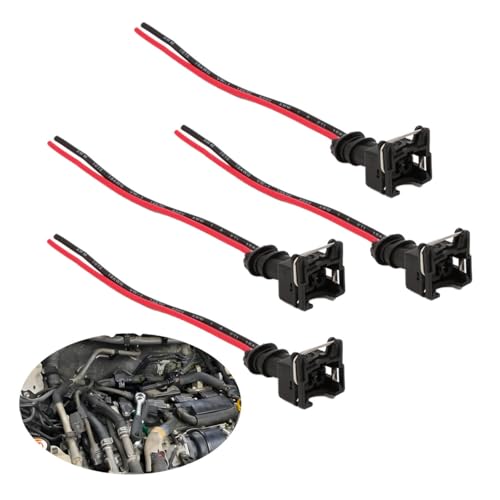
The wiring harness of this connector adopts high-quality copper core, the current transmission is stable, not easy to short-circuit, and the signal transmission is accurate,not easy to loosen, has excellent conductivity, and can stably transmit electrical signals
Carbon Buildup and Other DI-Specific Problems: Symptoms and Prevention
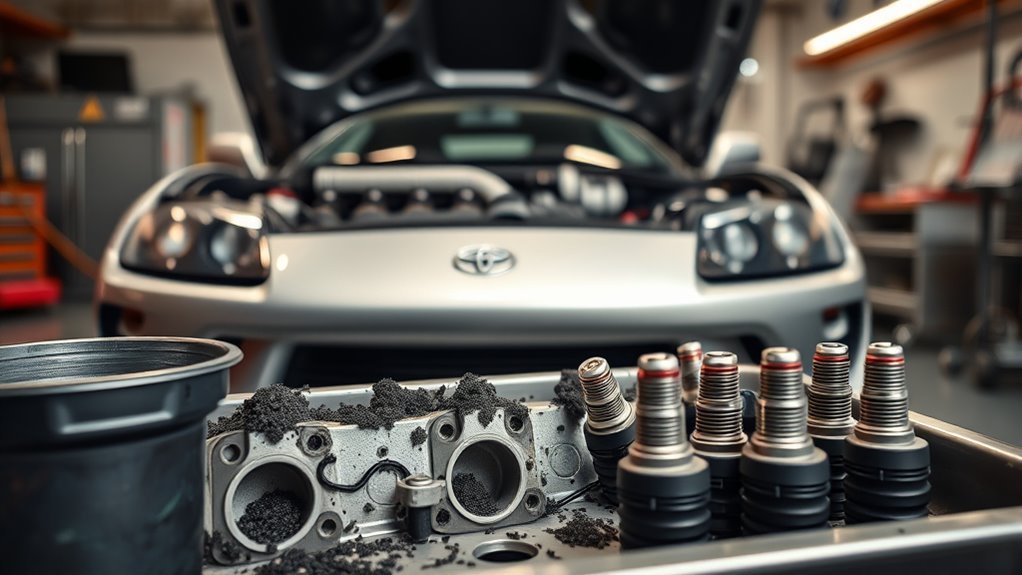
Carbon buildup is one of the best-known downsides of direct injection. Because fuel is sprayed directly into the cylinder, it does not constantly wash the back of the intake valves. Oil vapor from the PCV system, exhaust residue, short-trip driving, and heat cycles can leave deposits over time.
There is no universal mileage where every Supra needs intake cleaning. Some cars show symptoms early; others stay clean for a long time. Driving pattern, oil quality, maintenance habits, tune, catch-can setup, and engine condition all affect deposit formation.
Common Carbon Buildup Symptoms
- Rough idle: The engine may feel uneven when warm or after cold start.
- Hesitation: Throttle response may feel dull or inconsistent.
- Misfires: Deposits can disturb airflow enough to trigger misfire codes.
- Reduced power: The car may feel flat at higher load.
- Poor fuel economy: The ECU may need more correction to maintain smooth operation.
- Hard cold starts: Heavy deposits can make cold operation less stable.
What Actually Helps Prevent Carbon Buildup
Fuel-system cleaners can help keep injectors clean, but they do not magically wash the intake valves on a DI-only engine. That is because the fuel never flows over the back of the valves in normal operation.
- Use quality fuel: Use the octane required by the owner’s manual and choose reputable fuel brands.
- Keep oil fresh: Old oil can increase vapor and deposit problems.
- Fix PCV issues early: Excess oil vapor can accelerate valve deposits.
- Avoid endless short trips: Fully warming the engine helps reduce moisture and residue buildup.
- Inspect when symptoms appear: A borescope inspection can confirm whether deposits are the real problem.
- Use professional cleaning when needed: Walnut blasting or approved intake cleaning is more effective than guessing with additives.
Pro Tip: Before paying for intake-valve cleaning, scan for codes and log misfires, fuel trims, boost, and rail pressure. A bad plug, coil, injector, boost leak, or tune issue can mimic carbon symptoms.
Tuning and High-Power Builds: DI Limits and Upgrade Strategies
The Supra’s direct-injection system is strong for factory power and moderate upgrades, but it is not unlimited. Once you add more boost, ethanol blends, larger turbochargers, or aggressive torque targets, fuel demand rises quickly.
The common tuning challenge is not just peak horsepower. It is maintaining safe fuel pressure and mixture control during the hardest parts of a pull: high torque, high boost, rising rpm, and transient throttle changes. If rail pressure falls, the tune may no longer deliver the commanded fuel mass.
[Products Worth Considering]

[Replaces part number]: E8240, SP1217, P72247, FE0410, 100-350, E8237, FP7901-034, 152-0913, 1520913, 151008G, SP9006H, 7702002181, 88972523, 94856915, 94858837, 23221-50060, 23221-32020, 2322000020, 232200C010, 2322146060, 2322162010, 2322166040, 2322103040, 232210A030, 2322116490, 2322128280, 2322174110

OE-comparable harness (no pigtail connector) and mounting provisions for hassle-free drop-in installation.

✔ Supports up to 600 BHP in N/A, Turbocharged, and Supercharged applications
Signs the Fuel System Is Running Out of Room
- Fuel rail pressure drops below target during wide-open throttle.
- Lambda or air-fuel ratio trends leaner than commanded.
- Injector pulse width or duty approaches the tuner’s safe limit.
- The ECU closes throttle or reduces torque to protect the engine.
- Misfires appear under high load.
- Timing corrections increase when fuel quality or mixture control gets worse.
Upgrade Paths for Modified Supras
There is no single “best” fuel upgrade for every Supra. The right choice depends on power goal, fuel type, emissions requirements, turbo setup, and whether the car is a daily driver, street car, or track build.
| Build Goal | Fuel-System Focus | Important Caution |
|---|---|---|
| Stock or mild tune | Healthy stock HPFP, good fuel, correct plugs, safe calibration | Do not assume all off-the-shelf maps fit every fuel quality or climate |
| Pump-gas bolt-ons | Rail-pressure logging, injector margin, knock control | Heat and poor fuel can reduce safety margin |
| Ethanol blend | Higher fuel-volume demand and accurate ethanol-content control | Ethanol needs more fuel volume than gasoline for the same energy output |
| Big turbo | Upgraded HPFP, injectors, supplemental port injection, or staged fueling | Fueling, cooling, transmission, and engine limits must be planned together |
| Track use | Fuel pressure stability, heat management, oil control, conservative mapping | A dyno-safe tune may still need track-specific safety margin |
Warning: Supplemental port injection, catalyst changes, and some fuel-system upgrades may violate emissions laws on public roads. Confirm local rules before modifying a street-driven Supra.
Maintenance Checklist and Aftermarket Upgrade Options for Supra DI
A direct-injection Supra rewards careful maintenance. You do not need to over-service the car, but you should avoid treating the fuel system like a simple old port-injected setup.
Maintenance at a Glance
| Best First Step | Follow the Toyota owner’s manual and maintenance schedule for your exact model year. |
| Owner Difficulty | Basic checks are easy; high-pressure fuel work should be left to trained technicians. |
| Tools Needed | OBD scanner, data-logging app, basic inspection tools, and professional diagnostic tools for deeper issues. |
| Cost Range | Low for routine checks; moderate to high for injector diagnosis, walnut blasting, HPFP upgrades, or custom tuning. |
[Products Worth Considering]

Fitment Vehicles: The fuel injection pressure regulator is a replacement for Lexus SC300 1998-2000 SC400 1998-2000 for Toyota Supra 1998.

Direct OEM Replacement: This idle air control valve directly replaces OEM #90380/10526/90325864, engineered specifically for King Kong models to match factory specs. Its precise fit enables seamless integration with existing fuel injection systems—restoring proper idle regulation with no modifications.

Direct-fit OE replacement design restores factory coolant temperature switch function
Routine DI Maintenance Checklist
- Use the correct fuel: Use the octane listed in your Supra’s owner’s manual. Turbo DI engines are sensitive to poor fuel quality.
- Change oil on time: Fresh oil helps reduce sludge, vapor, and deposit formation.
- Inspect spark plugs: Worn plugs can cause misfires that look like fuel-system problems.
- Watch fuel trims: Large trim changes can point to leaks, injector issues, or sensor problems.
- Log rail pressure under load: Especially after a tune, ethanol blend, or hardware change.
- Check for carbon symptoms: Rough idle, misfires, or reduced response may justify intake inspection.
- Keep software matched to hardware: Never install fuel upgrades without calibration support.
Aftermarket Upgrade Options
For modified Supras, common fuel-related upgrades may include an upgraded HPFP, revised injectors, ethanol-content monitoring, supplemental port injection, upgraded low-pressure fuel supply, and custom ECU tuning. The right path depends on the power target and fuel type.
Before buying parts, ask your tuner which data proves the upgrade is needed. A good plan starts with logs, not guesses. Rail pressure, lambda, injector pulse width, boost, knock correction, and fuel quality tell you what the system is actually doing.
Real-World Effects: MPG, Emissions, and Daily Driveability

In daily driving, direct injection helps the Supra feel crisp and modern. Cold starts are controlled, throttle response is sharp, and the engine can make strong torque without feeling lazy off boost. Toyota lists the current GR Supra with a 3.0-liter turbocharged inline-six, a 0–60 mph time of 3.9 seconds, and an estimated 22/29 mpg city/highway rating on its U.S. model page.
Emissions are more nuanced. Direct injection can improve fuel economy, thermal efficiency, and power output, but GDI engines can also create particulate emissions. An EPA HERO-listed review of gasoline direct injection notes that GDI is widely used because it can improve economy and output, while particulate emissions remain an environmental and regulatory concern.
For owners, the practical takeaway is simple: direct injection is not something to avoid, but it is something to maintain properly. A stock or lightly tuned Supra can be very livable. A heavily modified Supra needs a fuel-system plan, professional tuning, and honest maintenance habits.
Frequently Asked Questions
Should I avoid GDI engines?
No. You should not automatically avoid gasoline direct-injection engines. GDI can improve power, efficiency, and knock control, which is why many modern turbo engines use it. Just understand the tradeoffs: intake-valve carbon buildup, higher fuel-system pressure, more expensive components, and tighter tuning requirements.
Does the modern Toyota Supra use Toyota D-4S?
The modern MkV GR Supra should not be described as a Toyota D-4S car in general U.S. coverage. D-4S is Toyota’s dual direct-and-port injection system used on other Toyota engines, while the MkV Supra is built around a BMW-derived turbo direct-injection engine family.
How does Toyota’s D-4S dual-injection system work?
Toyota D-4S uses two types of injectors: direct injectors that spray into the combustion chamber and port injectors that spray into the intake port. Toyota describes the GR86’s D-4S system as controlling both injection types according to driving conditions to improve response, efficiency, and combustion quality.
What are the downsides of direct injection?
The main downsides are intake-valve carbon buildup, expensive high-pressure fuel parts, particulate-emissions concerns, and reduced tuning margin when fuel demand rises. These downsides are manageable with correct maintenance, good fuel, proper diagnosis, and a safe tune.
How does direct injection work?
Direct injection sprays high-pressure fuel directly into the combustion chamber. The ECU controls when and how much fuel is injected. This improves atomization, helps cool the cylinder charge, supports stronger knock resistance, and gives the engine more precise control over combustion.
Do fuel additives clean Supra intake valves?
Fuel additives can help clean injectors and parts of the fuel system, but they do not directly wash the intake valves on a DI-only engine. If the intake valves are heavily carboned, professional intake cleaning, often walnut blasting or an approved cleaning method, is usually more effective.
Conclusion
The Supra’s direct injection system is a major part of what makes the modern MkV so responsive and tunable. High-pressure fuel delivery helps atomization, cylinder cooling, knock resistance, and efficient power. At the same time, DI brings responsibilities: monitor carbon buildup, use the right fuel, keep up with maintenance, and never push fuel-system parts beyond their logged capacity.
The biggest correction is this: do not confuse the MkV Supra’s direct injection with Toyota D-4S. D-4S is Toyota’s dual-injection technology used on other Toyota engines. The current GR Supra’s fuel system should be understood as a high-pressure direct-injection turbo platform with its own strengths, limits, and maintenance needs.
Sources
- Toyota GR Supra official model page — current engine, performance, trim, and estimated MPG information.
- Toyota USA Newsroom: 2026 GR Supra — model-year context and MkV Final Edition information.
- Toyota Owners: GR Supra manuals and warranties — official owner manual and maintenance-reference access.
- BMW B58TU technical reference — B58TU fuel-system layout and 350-bar direct-injection specification.
- Toyota Global Newsroom: GR86 D-4S description — official explanation of Toyota D-4S direct and port injection.
- EPA HERO: particulate emissions from gasoline direct-injection engines — GDI efficiency benefits and particulate-emissions context.