You’ll find Supra rotor sizes vary by generation and trim, so confirm before buying: A60/A70 fronts are commonly 280 mm (some MA70 accept 300 mm), MK3 fronts 280 mm/rears 300 mm, MK4 (A80) fronts 323 mm×30 mm (min 28) with 3‑piston calipers and rears 324 mm×16 mm (min 15), and GR Supra (2019+) fronts 345 mm×22.4 mm with 330 mm×18 mm rears; aftermarket TAROX/DBA options exist for performance, and further details on fitment and measurement follow.
Toyota Supra Rotor Sizes at a Glance (By Generation)
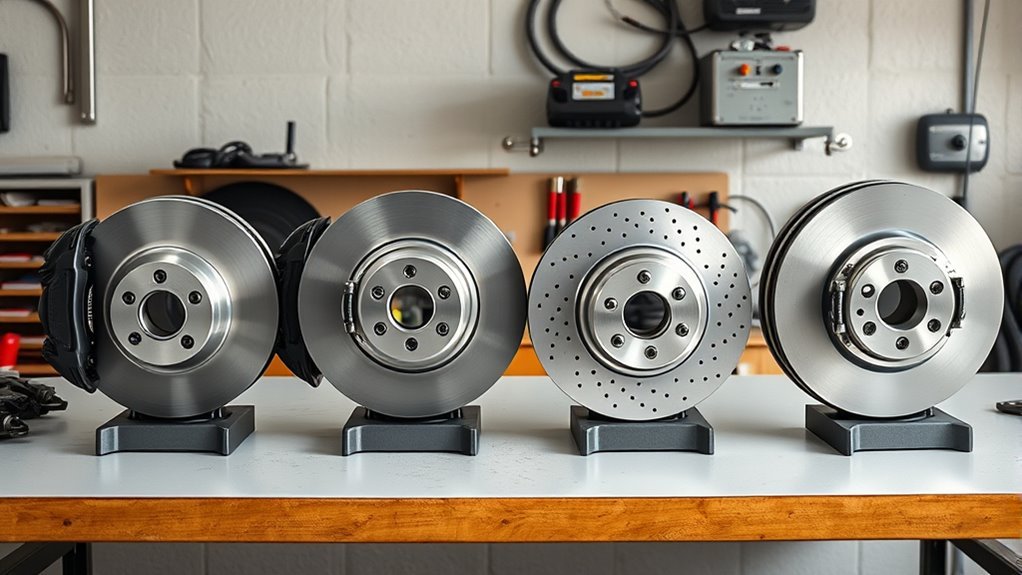
Across four decades of Supra development, rotor sizes evolved to match increasing performance: you’ll note clear, generation-specific dimensions that affect brake performance and service planning. The MK3 (1987–1992) uses 280 mm front and 300 mm rear rotors with 3‑piston calipers. The MK4 (1993–1998) steps up to 323 mm front and 324 mm rear; front thickness is 30 mm (min 28 mm), rear 16 mm (min 15 mm). The A90/GR (2020–2022) increases front diameter to 345 mm with a 330 mm rear; aftermarket TAROX options for the 3.0 T match 345 mm diameter at 22.4 mm thickness for enhanced performance. Use these figures to guide pad selection, cooling strategies, and maintenance tips focused on consistent, liberated driving.
A60/A70 Rotor Specs (1986–1992) and Fitment Tips
For A60/A70 Supras (1986–1992) you’ll most commonly find 280 mm front rotors, though some builds—especially MA70s with upgraded brackets—accept 300 mm discs; always verify the specific caliper and bracket setup before ordering. You should confirm rotor compatibility by measuring diameter, thickness, hat height, and bolt pattern, since previous owners may have swapped calipers or hubs. GA70 fronts often accept Z20 Soarer rotors, providing a direct source for replacements. If you pursue caliper upgrades, plan bracket and wheel clearance checks to avoid interference and guarantee proper pad contact. Use community threads and parts diagrams to cross-reference OEM numbers and aftermarket options. Measure existing parts and document specs before purchasing to secure fitment and braking performance.
A80 Rotor Specs & Common Aftermarket Upgrades (1993–1998)
The A80 Supra (1993–1998) uses 323 mm front rotors and 324 mm rears, with stock thicknesses of 30 mm front (min. 28 mm) and 16 mm rear (min. 15 mm), so when you’re sourcing replacements or upgrades you should match diameter, hat height, bolt pattern and minimum spec to maintain clearance and thermal capacity. You’ll preserve stop feel and brake performance by respecting these dimensions. Common upgrade options include DBA 4000 T3 slotted rotors—tri-symmetrical slots and thermal profiling for consistent fade resistance—and TAROX G88 rotors with 40 straight slots to accelerate heat dissipation. Aftermarket parts often carry warranties (DBA offers 12 months), giving confidence for spirited driving or club track use. Choose upgrades that balance pad compatibility, thermal mass, and mounting geometry to liberate performance without compromise.
GR Supra Rotor Dimensions, Variants, and Trim Differences (2019–Present)
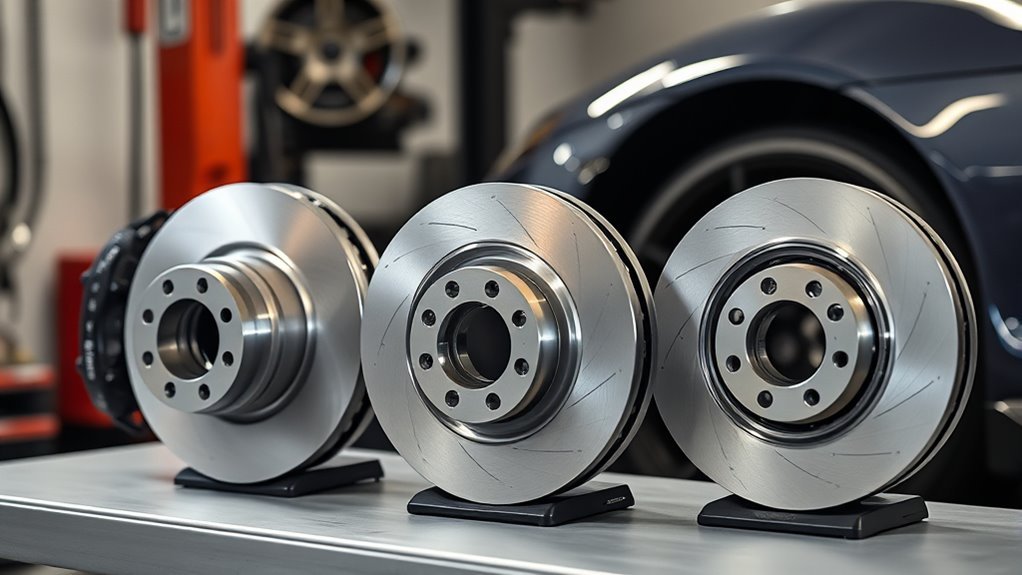
You’ll find the GR Supra (2019–present) uses larger 345 mm front rotors and 320 mm rears, with front thickness 22.4 mm and rear 18 mm, so diameter and thickness are important when sourcing replacements. Trim compatibility is straightforward between the 3.0 and 3.0 Premium—factory rotors are the same—but optional TAROX F2000 and G88 variants offer improved heat management and lower noise for higher-load use. Because the Supra’s vented rotor design and part numbers differ from earlier models, verify part numbers to confirm fitment.
Rotor Diameter Differences
Although closely related in appearance and chassis, the GR Supra‘s rotors differ markedly across trims and from earlier Supra models, so you should verify dimensions before ordering replacements or upgrades. You’ll note the GR Supra 3.0 uses 345 mm front rotors and 320 mm rears, versus base-model rears at 330 mm, so fitment isn’t interchangeable without checking hub and caliper clearance. Rotor materials and construction—OEM vented designs versus aftermarket TAROX F2000 or G88 variants—affect heat rejection and sustained brake performance. Typical thickness is 22.4 mm with defined minimum wear limits; you must maintain spec thickness to preserve stopping power and avoid warping. Confirm diameter, thickness, and bolt pattern to protect safety and retain braking authority.
Trim-Specific Rotor Options
When selecting replacements or upgrades, confirm trim-specific rotor dimensions since the GR Supra 3.0 uses 345 mm front and 320 mm rear rotors while the 2.0 employs 330 mm fronts and 320 mm rears; both trims use vented rotors and front thicknesses around 22.4 mm with rear thickness near 16 mm. You’ll want to account for trim variations because rotor diameter and thickness affect caliper fitment, hat offset, and pad contact patch. Choose parts matched to your model year and trim to avoid interference or degraded braking feel. Upgrading rotors alters thermal capacity and mass, so consider the performance impact on unladen weight and brake bias. Confirm manufacturer specs and cross-reference part numbers to maintain safe, liberated performance without guesswork.
How to Measure Supra Rotors: Diameter, Thickness, Offset
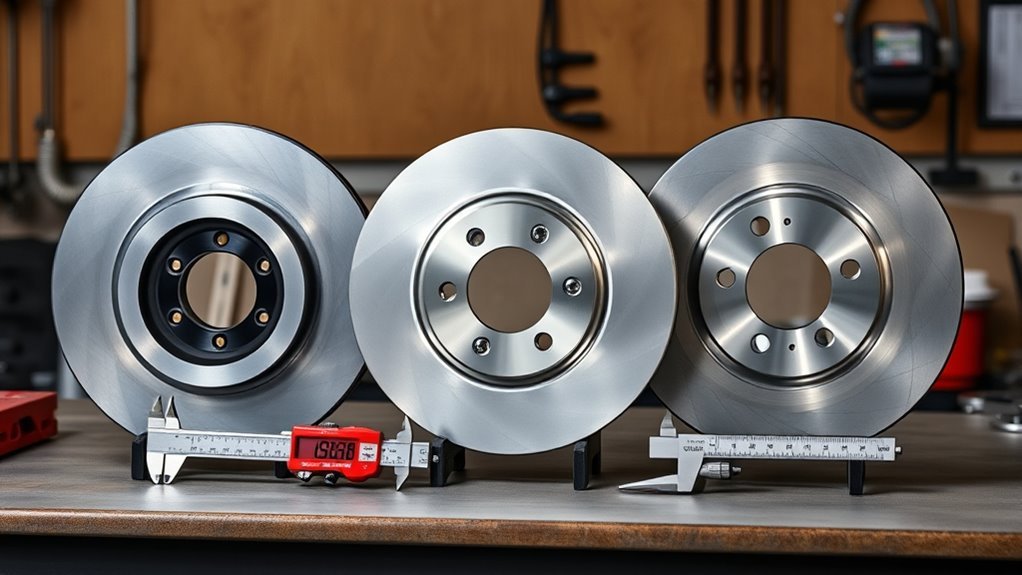
Start by gathering a set of digital calipers and a straightedge: you’ll use the calipers for diameter and thickness and the straightedge to verify rotor runout and face flatness. Use precise caliper techniques: measure rotor diameter across the circular edge, noting model-year differences (e.g., 323mm for 1994–1998 fronts). Measure thickness at multiple points on the friction surface; 1994–1998 front rotors are 30mm nominal, 28mm minimum. For offset, measure from the hub mounting surface to the rotor face—345mm rotors often register about 64.2mm. Compare these readings to the rotor on the car and published specs to confirm rotor compatibility. Check for JDM versus US spec differences and record all values before ordering replacements to avoid fitment errors.
Buying Guide: Matching Rotors, Pads, Track Use, Part-Number Checklist
Before you buy, match rotor diameter and thickness to the caliper and pad profile so pad contact and piston travel remain correct. If you plan track use, pick rotors and compound pads rated for higher temperatures and inspect for warping or heat cracks after sessions. Always confirm part numbers for your model year (noting JDM vs USA differences), measure your existing rotors, and replace pads with the rotors.
Matching Rotor And Pad Sizes
Although matching rotors and pads might seem straightforward, you’ll need to verify exact rotor diameters, thickness, and pad contact area to guarantee proper fitment and braking performance—especially across model years. You’ll pair rotor maintenance with correct pad selection: 1987–1992 Supras use 280mm rotors, 1993–1998 fronts are 323mm and rears 324mm, and 2021 3.0 Premium fronts are 345mm (parts 34116860911/912). Confirm factory specs versus JDM/USA variants before buying. For performance upgrades choose slotted designs only if thickness meets minimum spec and pad geometry matches the slot pattern to avoid uneven wear. Always check part numbers, mounting bolt patterns, and hat offsets. That way you free yourself from guesswork and preserve braking consistency and longevity.
Track Use And Wear
Push your Supra hard on track days and you’ll need to inspect rotor wear far more often than with street use, since spirited driving can accelerate wear and sometimes force replacement well before 20,000 miles. You should monitor thickness, runout and heat scoring each session as part of track maintenance. Match rotors and pads precisely—model-year and trim differences matter: older 1988 specs differ from later cars, and the 3.0 Premium uses 345mm front/330mm rear. Verify part numbers and measure existing rotors, especially after modifications, to avoid mismatches. Replace rotors with pads simultaneously so bedding is correct and you regain braking consistency. Regular inspection minimizes unexpected failure and optimizes performance impact, preserving your control, safety and the liberated driving experience you seek.
Frequently Asked Questions
What Size Rotors Are on a Supra?
You’ve got varying rotor sizes: older Supras use ~280mm fronts, later models 323mm fronts and 324mm rears; you’ll check specifics, because rotor upgrades improve brake performance and free you from factory limits.
Conclusion
You’ve seen rotor specs across Supra generations laid out like a service manual spread on a workbench. Now picture yourself under the car, caliper in hand, matching diameter, thickness, and offset with calm precision. Trust the numbers, choose pads and rotors rated for your driving — street, spirited, or track — and keep clearances and hub fitment top of mind. Do the measurements, follow part numbers, and you’ll stop on command every time.