You’ll get better comfort, control, and visibility in your Toyota Supra by setting seat height so your hips are level with knees, tilting the cushion for thigh support, and sliding the seat fore‑aft so your right knee stays slightly bent at full brake travel. Keep the backrest around 90°–100° with lumbar support, set wheel reach for relaxed wrists, and align mirrors to minimize blind spots. Follow these basics and you’ll find adjustments that further refine feel and sightlines.
What a Good Supra Seating Position Delivers: Comfort, Control, Visibility
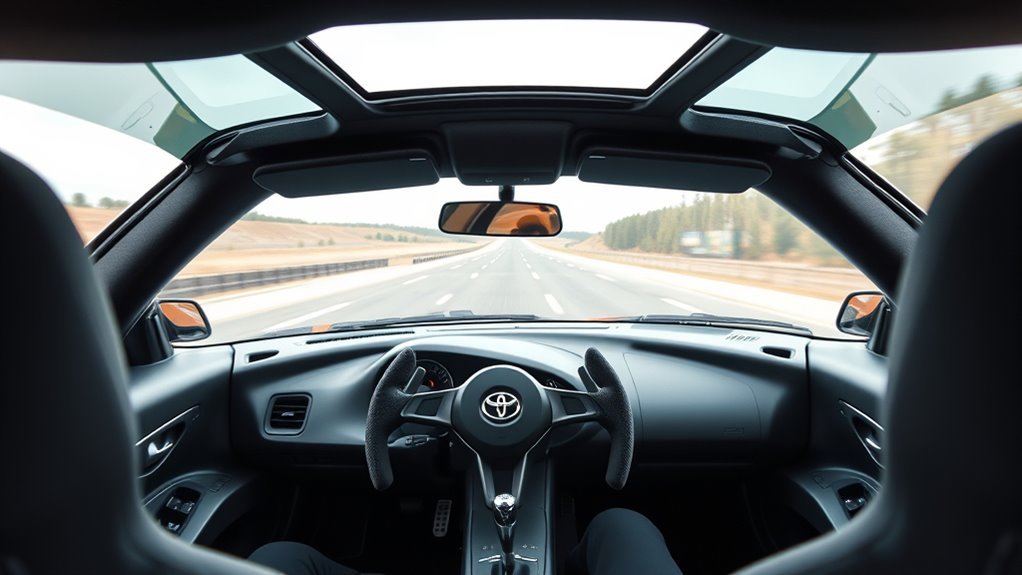
When you set the Supra’s seat correctly, you’ll get three immediate gains: sustained comfort from slightly bent knees that reduce pedal strain, sharper control because your elbows and wrists sit naturally for steering inputs, and improved visibility from a height that lets you see over the hood—each adjustment also supports better thigh contact for leverage during acceleration and braking. You maintain Posture Benefits that prevent slouching by tilting the seatback to keep your wrist resting comfortably on top of the wheel. Sitting close enough keeps elbows bent for precise inputs and quicker responses. Proper height and thigh support combine to deliver Long Drive Comfort without sacrificing control. This setup frees you to drive decisively, reduces fatigue, and sharpens situational awareness.
5‑Minute Setup: Seat, Wheel, Mirrors
You’ve already set the basics for comfort and control; now fine-tune three quick elements that lock that setup in place: seat height and position, steering wheel angle and reach, and mirror alignment. Make ergonomic adjustments that free your body and sharpen awareness. Set seat height so hips sit level with or slightly above knees; move the seat close enough that elbows stay slightly bent at 3 and 9. Tilt the backrest to support your lower back while keeping wrists rested atop the wheel without slouching. Adjust wheel tilt and reach for a relaxed grip and unobstructed dash view. Finally, implement visibility enhancements with side mirrors that show vehicle edges and maximize rear sight, minimizing blind spots.
- Seat position
- Backrest support
- Wheel angle/reach
- Mirror alignment
Set Supra Seat Height and Tilt for Clear Sightlines
Raise or lower the seat so your line of sight sits just above the steering wheel for unobstructed view of the road and instruments. Tilt the cushion forward slightly to keep your thighs supported without lifting your hips, which stabilizes your eye position and reduces glare. Recheck pedal reach and headrest alignment after adjustments so visibility and comfort stay consistent.
Seat Height For Visibility
Although compact, the Supra’s cockpit needs a seat height that lets you see over the hood and maintain an unobstructed view of the road, so set the seat high enough for clear sightlines while keeping a slight knee bend for pedal control. You’ll use seat height and visibility adjustments to claim control and reduce strain. Raise the seat if short, lower if the windshield feels cramped, and confirm the steering wheel aligns with your chest for comfortable reach. Check sightlines to the hood edge and mirrors; adjust in small increments. Change seat height during long drives to fight fatigue and preserve alertness.
- Raise for better sightlines
- Lower if windshield blocks view
- Keep slight knee bend
- Re-adjust on long trips
Cushion Tilt For Sightlines
When you tilt the Supra’s seat cushion slightly forward, your line of sight settles more naturally over the hood and your knees stay soft at the pedals, improving both visibility and control. You’ll use cushion adjustment for precise sightline enhancement: raise seat height if needed, tilt forward to align eyes with road, and avoid knee lock for pedal control. Shorter drivers benefit most from a small elevation plus forward tilt. Re-check during long drives and reset to prevent fatigue. This is about freeing yourself to see and act without restraint—practical, repeatable changes that empower confident driving.
| Action | Effect | When to Use |
|---|---|---|
| Tilt forward | Aligns sightline | Short trips, city driving |
| Raise height | Clears hood view | Shorter drivers |
| Re-adjust | Reduces fatigue | Long drives |
Find the Ideal Fore‑Aft Position for Pedal Control
If you want precise pedal control and long‑drive comfort, slide the seat fore‑and‑aft so your right knee stays slightly bent at full brake and clutch travel while your feet can pivot easily between throttle and brake. You’ll gain better pedal sensitivity and sharper driver feedback, and reduce fatigue by resting your feet flat when idle. Sit close enough to hold steering at 3 and 9 without stretching your legs.
Slide forward until your right knee stays slightly bent at full travel—easy pivoting, better pedal feel, less fatigue.
- Set fore‑aft so knee is slightly bent at full pedal travel.
- Verify smooth pivot from throttle to brake without ankle strain.
- Confirm feet can rest flat when not operating pedals.
- Reassess during long drives if leg fatigue or numbness appears.
Positioning this way frees you to control inputs precisely and stay connected to the road.
Adjust Backrest and Lumbar for Comfort and Control
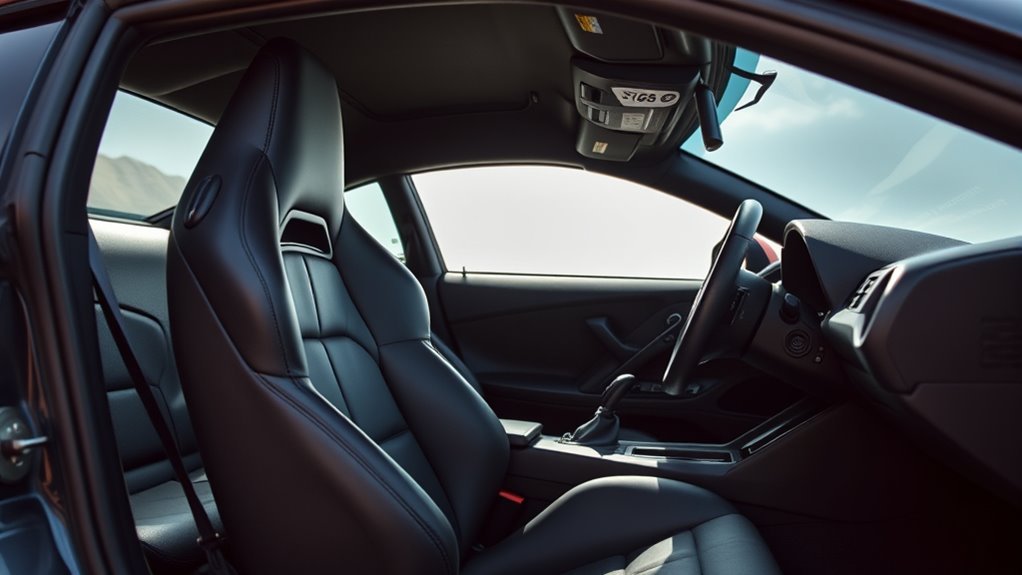
Now adjust the backrest so it’s slightly reclined—enough to relax your shoulders but upright enough to keep visibility and control. Fine‑tune the lumbar support to press into the small of your back and preserve the spine’s natural curve. Regularly check settings to prevent lower‑back slouch and reduce fatigue on longer drives.
Adjust Recline Angle
Set your Supra’s backrest between about 90° and 100° and fine-tune the lumbar so it follows the natural curve of your lower back; this upright posture keeps you engaged with the controls, reduces fatigue on long drives, and preserves clear sight over the hood while keeping the wheel and pedals within comfortable reach. You’ll want to probe recline effects deliberately: small adjustments change pedal clearance, steering geometry, and sightlines. Reassess during longer trips to maintain freedom from discomfort and keep control authority.
- Start at 95° for a baseline.
- Shift ±2–3° to test pedal reach.
- Check visibility impact at each position.
- Re-evaluate every 60–90 minutes on long drives.
Make choices that free you to drive confidently.
Fine-Tune Lumbar Support
One quick adjustment you should make is to position the lumbar so it fills the hollow of your lower back without pushing you forward—this keeps your spine aligned, prevents slouching, and lets you maintain precise control of the wheel and pedals. Use lumbar adjustment techniques deliberately: inflate or move the pad until the curve matches your spine’s natural arc. Set the ideal support height by sliding the lumbar to the point that supports the base of your ribcage and the top of your pelvis. Keep the backrest upright enough to sustain posture while allowing freedom of movement. Reassess after long drives and tweak settings; a well-tuned lumbar reduces fatigue, sharpens focus, and frees you to drive confidently.
Prevent Lower-Back Slouch
A properly adjusted backrest, combined with tuned lumbar support, keeps your lower spine from collapsing and preserves steering and pedal control. You need an upright posture: set backrest adjustment so your shoulders stay against the seat and your mid-back is supported. Use lumbar support to maintain the spine’s natural curve; that reduces strain and sharpens focus over long drives. Check and tweak while driving if fatigue or slouching appears.
- Set backrest upright enough to prevent lower-back slouch.
- Engage lumbar support to fill the lumbar curve.
- Position backrest height for mid-back contact.
- Re-adjust periodically to counter fatigue.
These steps free you from discomfort and restore confident, controlled motoring.
Position the Steering Wheel: Reach, Height, and Hand Placement
Because proper steering wheel placement directly affects control and comfort, position it so your elbows stay slightly bent when you grip at 3 and 9 o’clock, with your wrists resting comfortably on top of the rim; this gives you immediate leverage without overreaching. Set wheel alignment and ergonomic adjustments deliberately: telescope and tilt the column until the wheel aligns with your knees and clears your legs, preserving freedom of motion. Keep the wheel height low enough for clear forward sightlines yet high enough to avoid knee interference. Use spacers or reach features if your arms need extension. This configuration reduces fatigue, improves steering precision, and enhances visibility. You’ll feel more liberated on the road when control, posture, and sightlines work together.
Supra Pedal Technique and Right‑Leg Comfort Tips
Position your right foot so the ball of the foot rests comfortably on the accelerator, keeping your knee slightly bent for better control and reduced strain. Check seat and pedal alignment—raise or tilt the seat and adjust pedal angle to guarantee your leg isn’t overextended or turned inward. Change foot placement periodically and stop to stretch at traffic breaks to prevent fatigue and maintain responsiveness.
Right-Foot Positioning
Set your right foot so the ball rests comfortably on the throttle with a slight outward angle to reduce pressure during extended drives, and adjust seat height and tilt to preserve a natural knee bend without locking. You’ll control pedal pressure deliberately, reducing tension and sustaining freedom in your posture. Watch floor-mat thickness; excess bulk alters foot placement and raises strain. Move your seat closer if needed to shorten reach and limit right-leg fatigue. Take breaks to stretch and reset alignment.
- Check ball-of-foot contact for consistent pedal feedback.
- Maintain slight outward toe angle to disperse pressure.
- Inspect mats; remove or trim if they impede motion.
- Pause periodically to flex and reposition the right foot.
These steps free you to drive with confidence and endurance.
Seat And Pedal Alignment
When you align the Supra’s seat and pedals correctly, you’ll keep your right leg slightly bent for both comfort and precise control; adjust seat height and back tilt so you can see over the hood without locking your knees, and experiment with foot angle and pedal reach to minimize fatigue. Position the seat so you apply pedal pressure smoothly without overstretching; a slightly reclined back improves knee alignment and reduces strain. Test foot placement by angling your foot outward to share load across heel and ball, lowering tension during long drives. Recalibrate height if visibility or knee tension changes. Periodically shift your position to counter fatigue and maintain liberated control—small adjustments sustain ergonomic integrity and let you drive the Supra confidently and without compromise.
Check Visibility: Hood, Mirrors, Blind Spots, Sightlines
Start by raising or lowering your seat so you can see the road over the hood without straining, then fine-tune mirrors and sightlines to eliminate blind spots and visual obstructions. You’ll gain control and freedom when visibility’s optimized. Prioritize blind spot awareness and mirror adjustments, then verify sightlines to signals and pedestrians. Reassess periodically as posture or conditions change.
Raise or lower your seat, fine-tune mirrors, and keep sightlines clear to drive confidently and safely.
- Set seat height to see hood edge and horizon clearly.
- Align side and rearview mirrors to minimize lateral blind spots.
- Confirm steering column or pillars don’t block critical sightlines.
- Use natural sightlines to judge closing speeds and distances.
Act decisively: clear sightlines let you navigate decisively and liberate your driving choices without compromise.
Small Ergonomic Mods and Accessories That Reduce Fatigue

With visibility dialed in, small ergonomic tweaks can shave hours off driver fatigue and keep you sharper on long runs. You’ll gain liberation through control: install a footrest or pedal extender to lock in ergonomics and realize clear footrest benefits that reduce right-leg strain. Add a gel cushion for targeted lumbar relief and pressure-point reduction. Slightly re-angling the seatback enforces upright posture, cutting cumulative tension. A steering wheel spacer refines hand placement, lowering wrist load during spirited shifts. Heavy-duty floor mats with padding smooth contact with the pedal box and limit vibration transfer. These mods are reversible, low-cost, and focused on sustained comfort and control—so you drive longer, stay alert, and maintain command of your Supra.
| Mod | Effect |
|---|---|
| Footrest/Pedal Extender | Reduces leg strain |
| Gel Cushion | Improves lumbar support |
Quick Stretches and Micro‑Adjustments to Prevent Leg Fatigue
Although long drives can stiffen your legs, brief stretches and micro-adjustments keep circulation flowing and prevent cumulative fatigue. You’ll use targeted leg stretches and ankle mobility drills at stops and during brief pauses to reset tension and maintain control. Adjust seat height and tilt to optimize knee alignment; small changes change muscle load and reduce strain. Experiment with foot angle on pedals to find a neutral, relaxed posture.
Brief stretches, ankle drills, and small seat or pedal tweaks keep circulation flowing and driving comfortable.
- Draw the alphabet with your toes at stops to boost ankle mobility.
- Shift seat forward/back by small increments to rebalance pressure.
- Angle feet slightly outward on throttle/brake to relieve discomfort.
- Take short walking breaks to restore circulation and focus.
Adopt these habits to reclaim comfort and driving freedom.
Frequently Asked Questions
What Is the Weakness of the Toyota Supra?
Its weakness is compromised practicality: engine performance is strong, but interior comfort and visibility suffer, leaving you to trade everyday usability for sportiness, so you’ll accept cramped space, blind spots, and less long‑drive comfort.
Conclusion
Think of the Supra like a precision instrument: when you tune seat, wheel, and mirrors, you turn noise into signal. You’re not chasing comfort or looks alone—you’re aligning body and machine so inputs feed clean, predictable responses. Small ergonomic shifts and mindful pedal technique keep you sharp; visibility adjustments become your proactive safety net. Practice quick stretches and micro‑edits, and the cockpit will reward you with control, confidence, and endurance on every drive.