By: [VERIFY: add the real author name and relevant automotive alignment or chassis credentials] · Last updated: July 31, 2026
How this guide was checked: This guide synthesizes Toyota product information, Toyota wheel-alignment guidance, Monroe Ride Solutions technology information, and a component-level inspection by an experienced automotive engineer. It does not claim hands-on testing of every GR Supra model year, trim, tire, ride height, or suspension combination.
On the MK5/A90-A91 GR Supra, Toyota Supra suspension geometry controls how the tires meet the road as the car steers, brakes, rolls, and accelerates. Camber and toe are static alignment settings measured on an alignment rack. The suspension links, pivots, bushings, and steering axis control how those angles change under load. Adaptive Variable Suspension changes damping force, not the basic alignment angles.
Toyota confirms that the MK5 uses a double joint-type MacPherson front suspension and multi-link independent rear suspension. AVS availability depends on model year and trim. Toyota listed it on 3.0-grade-and-higher models for 2024 and on all U.S. grades for 2026. For a street car, begin with the VIN-specific factory specifications and even side-to-side readings. For track or drag use, change one variable at a time and validate the result with alignment printouts, tire condition, temperatures, and repeatable handling observations.
Quick Answer
Toyota Supra suspension geometry affects handling through camber, caster, toe, scrub radius, suspension-link placement, compliance, and load transfer. Front toe has a strong effect on turn-in and straight-line stability. Rear toe affects stability under power. Camber supports the tire during cornering but can increase shoulder wear when the setting does not match the use case. AVS controls how quickly the suspension moves; it does not correct camber or toe.
Key Takeaways
- The MK5 GR Supra uses a double joint-type MacPherson front suspension and multi-link independent rear suspension.
- Static alignment describes the wheel angles measured while the car is positioned on a rack; dynamic geometry describes how those angles change in bump, roll, dive, squat, and steering.
- Front and rear toe strongly affect stability, tire scrub, and steering response. Camber changes cornering support and tire-wear distribution.
- AVS changes damping force. It cannot repair a poor alignment, bent component, worn bushing, or incorrect ride height.
- Lowering, coilovers, sway bars, braces, bushings, and adjustable arms should be tuned as one system and followed by a measured alignment.
Setup Decision Guide
| Use case | Protect first | Tune second |
|---|---|---|
| Street | Straight tracking, even side-to-side readings, wet-road stability, and tire life | Small response changes only after confirming factory-range alignment |
| Weekend track | Healthy tires, brakes, bearings, bushings, travel, and repeatable rear stability | Camber and toe changes supported by repeated temperatures, wear, and handling data |
| Drag / roll racing | Straight thrust line, stable rear toe, and a useful rear-tire contact patch | Launch or high-speed changes tested on a controlled course |
| Lowered car | Adequate bump travel, clearance, centered steering, and post-installation inspection | Adjustable hardware only when the measured target cannot be reached safely |
How Does Toyota Supra Suspension Geometry Shape Handling?
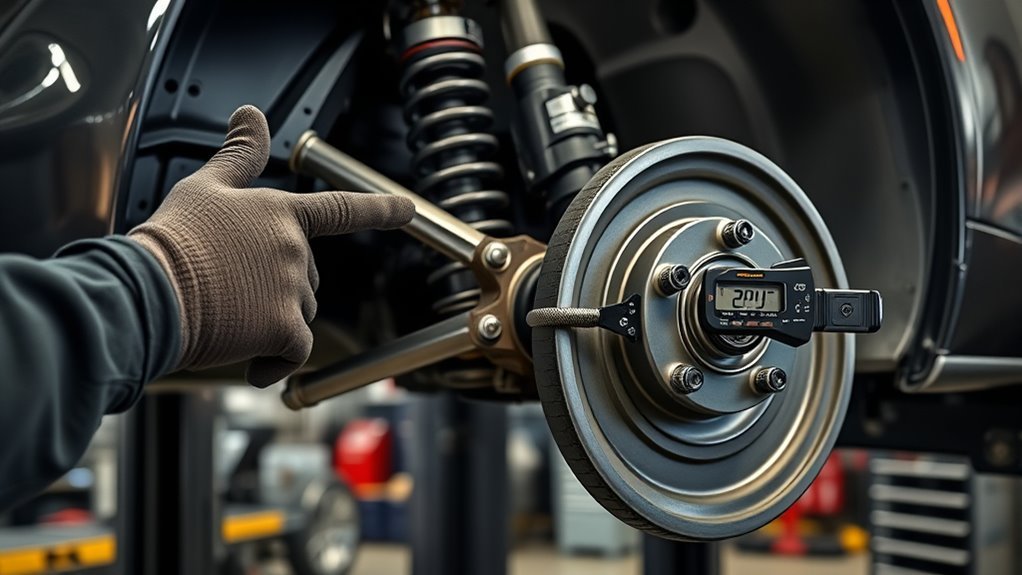
Toyota Supra suspension geometry determines the wheel’s angle and path as the body rolls, dives under braking, squats under acceleration, or crosses a bump. It includes static alignment settings such as camber and toe, plus built-in relationships created by the control-arm pivots, steering axis, bushings, springs, dampers, and stabilizer bars.
The key concepts are camber, caster, toe, scrub radius, roll-center behavior, bump steer, compliance steer, and motion ratio. These do not all adjust in the same way. Some are alignment-rack settings, some are fixed by component geometry, and others change only when ride height or hardware changes.
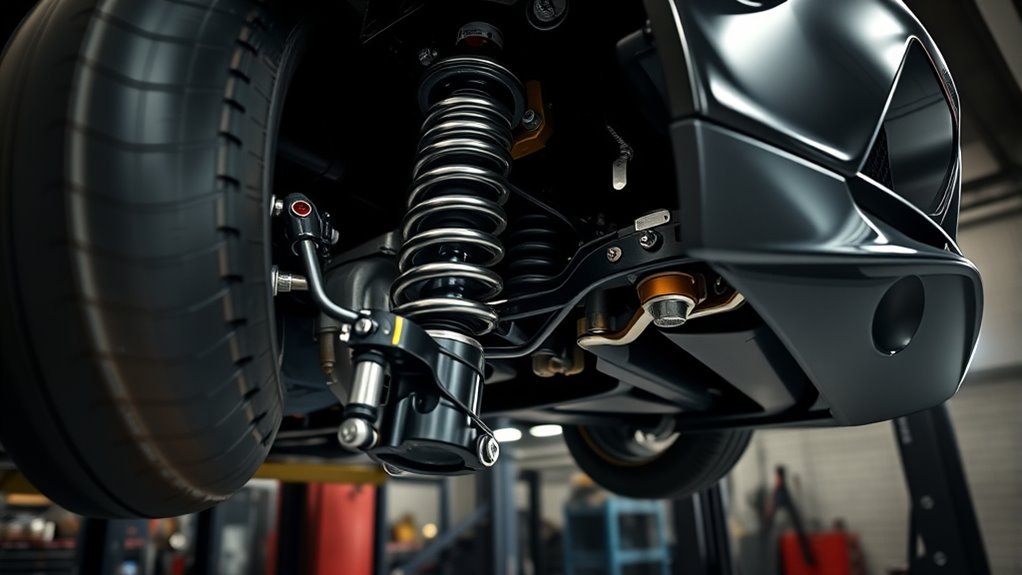
On the MK5 GR Supra, Toyota uses a double joint-type MacPherson front suspension and multi-link independent rear suspension. The front layout separates the lower wheel location across two links. The rear uses multiple links to control wheel position and divide lateral, longitudinal, camber, and toe duties.
A useful Supra setup is not the one with the most negative camber or the stiffest parts. It is the one that keeps the tires working consistently for the car’s actual tires, ride height, roads, speed, and driver.
Static Alignment vs. Dynamic Geometry
Static alignment is the set of wheel angles measured with the vehicle positioned and prepared according to the alignment procedure. The printout normally reports camber and toe at each wheel, plus related values such as total toe and thrust angle.
Dynamic geometry is how the wheel angles and steering relationship change while the suspension moves. Body roll, bump travel, braking dive, acceleration squat, bushing deflection, tire force, and steering input can all change the effective tire angle. A static alignment can be within specification while worn or damaged components still allow unwanted movement under load.
Toyota’s general wheel-alignment guidance identifies camber, caster, and toe as the principal alignment angles affecting stability, tire wear, and grip. The Supra’s multi-link and double-joint layouts add the dynamic relationships that determine how those starting angles behave on the road.
What Front Suspension Does the MK5 Supra Use?
The MK5 Supra uses a double joint-type MacPherson front suspension. Toyota’s 2020 product information describes it as a double-joint MacPherson strut, and later U.S. model information retains the same basic front architecture.
Unlike a basic strut layout with one lower ball joint and one wishbone, the Supra uses two lower links that create a virtual lower steering pivot. In a component-level inspection, automotive engineer Dan Edmunds explained that this arrangement moves the effective pivot outward, reducing scrub radius and supporting natural self-centering and straight tracking.
What Are the Benefits and Limits of the Strut Layout?
The strut-type design packages the spring, damper, and upper wheel location into a compact assembly. The separate lower links divide lateral and fore-aft wheel-location duties, while extensive aluminum construction reduces front-end mass compared with an equivalent steel structure.
A strut suspension normally offers less freedom to shape camber gain than a purpose-built double-wishbone system. When a track-driven Supra needs a different static front-camber target, the required method depends on its exact ride height and installed hardware. Meaningful changes may require camber plates, alternate lower links, or other adjustable components rather than a routine factory eccentric.
How Do the Dual-Pivot Steering Links Affect Steering?
The two lower links create a virtual pivot rather than placing the entire lower steering axis at one ball joint. Moving that effective axis closer to the tire’s contact-patch center can reduce the lever arm through which braking, bumps, and drive forces act on the steering.
This does not make wheel offset, tire construction, pressure, or alignment unimportant. A large wheel-offset change can alter scrub radius at the tire, while excessive toe or tire damage can still make the car wander or tramline. Review the separate Supra wheel offset and backspacing guide before combining geometry changes with wider wheels or spacers.
Does Adaptive Variable Suspension Change Alignment?
No. Adaptive Variable Suspension changes the damping force of the shock absorbers. It does not directly set camber, caster, or toe. Toyota says AVS uses sensors to detect driving inputs and road-surface changes while solenoid valves control shock-absorber damping force.
Availability varies by year and trim. Toyota listed AVS on the 3.0 grade and higher for 2024. Toyota’s 2026 U.S. material says all grades include AVS. Owners should therefore check the equipment list for their exact model year rather than assuming every A90/A91 has the same damper system.
You may also see the underlying damper technology described as CVSAe. Monroe Ride Solutions lists the Toyota Supra as a CVSAe application. Toyota’s customer-facing name for the vehicle feature is Adaptive Variable Suspension.
Key distinction: Dampers control the rate of suspension movement. Alignment controls the tire’s starting direction and tilt. Link geometry controls how those angles change through travel.
How Does Rear Multi-Link Geometry Control Toe, Camber, and Traction?
The Supra’s rear suspension uses a five-link independent layout. Separate links allow engineers to divide wheel-location duties and tune static camber, static toe, dynamic angle change, anti-squat behavior, and bushing compliance more independently than a simple trailing-arm or strut layout.
In an inspection of the 2020 architecture, the large lower link carried the rear spring and damper and included an eccentric for rear-camber adjustment. A separate, higher toe link included an eccentric for static rear toe. The inspected link relationship was also interpreted as producing dynamic toe-in at the loaded outside rear wheel during roll.
Static rear camber establishes the tire’s starting angle. The suspension pivot locations determine how camber changes through wheel travel and body roll. More negative static camber can support a loaded tire during cornering, but too much for the actual use case can reduce the useful straight-line contact area and accelerate inner-edge tire wear.
Warning: Do not treat rear toe-out as a general street, track-day, or drag baseline. Rear toe-out can reduce stability under power. Begin with the VIN-specific factory range or a qualified race engineer’s documented setup for the exact car, tires, surface, and speed.
What Do Camber, Caster, Toe, and Scrub Radius Change?
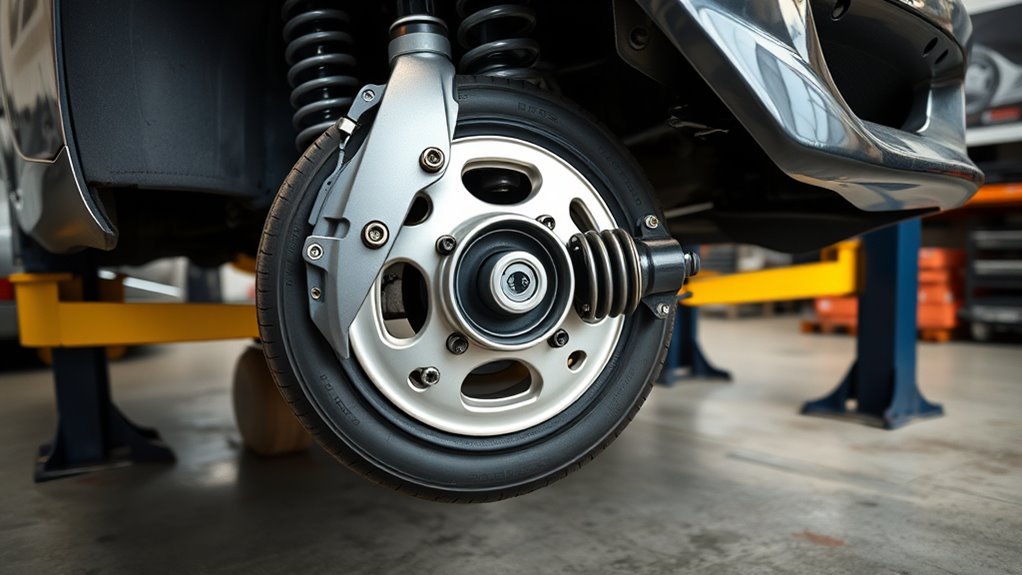
Camber is the inward or outward tilt of a tire when viewed from the front or rear. Caster is the fore-aft tilt of the steering axis when viewed from the side. Toe describes whether paired tires point slightly inward or outward when viewed from above. Scrub radius is the lateral distance at the road between the steering-axis intersection and the effective center of the tire contact patch.
| Setting | Main effect | Excessive or mismatched setting |
|---|---|---|
| Negative camber | Supports the tire as it loads during cornering | Can increase inner-edge wear and reduce the useful straight-line contact area |
| Positive caster | Supports self-centering, tracking, and camber change while steering | Can increase steering effort or create side-to-side pull when unequal |
| Toe-in | Usually supports straight-line stability | Can dull initial response and scrub tires when excessive |
| Toe-out | Can sharpen initial response, especially at the front | Can cause wandering, instability, and rapid wear |
| Scrub radius | Affects steering feedback from braking, bumps, offset, and tire forces | A large change can increase kickback, tramlining, or sensitivity |
Is More Negative Camber Always Better?
No. Negative camber can help the outside tire remain supported during hard cornering, but the best setting depends on tire construction, wheel width, ride height, pressure, surface, speed, and how much of the tire’s capacity is used in corners versus braking and acceleration.
A street-driven Supra normally needs a compromise among cornering grip, straight-line behavior, wet-road predictability, and tire life. A track car may need more front support, especially when repeated wear shows that the outer shoulder is overloaded. The final setting should come from repeated data rather than copying another car’s alignment numbers.
Track-data tip: Record hot pressures and inner, middle, and outer tread temperatures immediately after comparable sessions. Compare several sessions with tire wear, lap direction, pace, and handling notes. Do not treat one temperature spread as a universal camber formula; use the tire maker’s guidance or a qualified track engineer when available.
How Does Caster Affect Self-Centering?
Positive caster helps the steering return toward center and supports high-speed tracking. It also changes camber as the front wheels steer, which can help the loaded outside tire during a turn.
Caster is not usually the first routine tuning variable on a mostly stock MK5 Supra. Significant changes may require specific adjustable components. A large side-to-side caster difference can also contribute to pull, so the alignment should be evaluated as a complete left-right system rather than as isolated numbers.
How Do Motion Ratios Affect Supra Springs and Dampers?
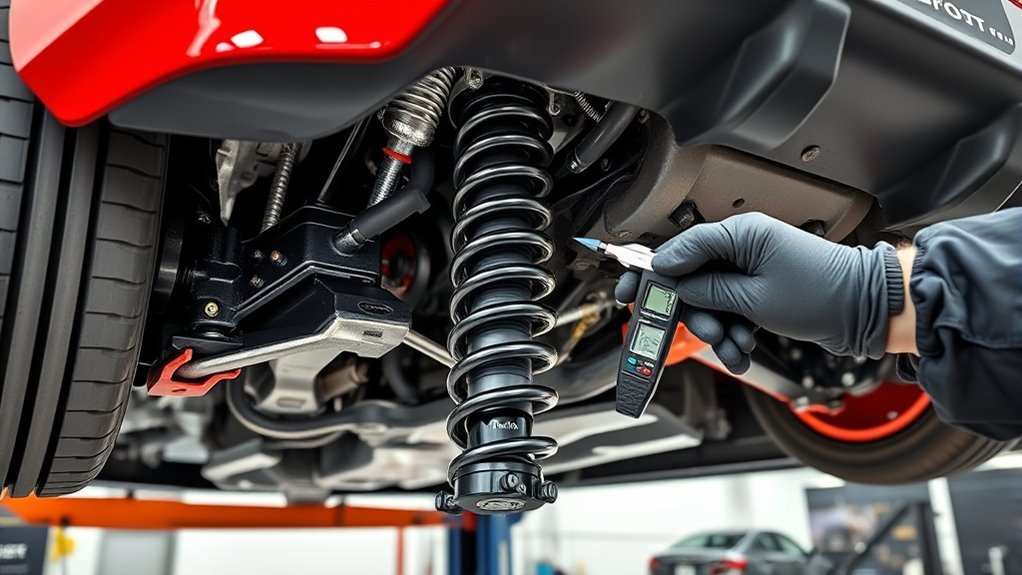
A motion ratio compares spring or damper movement with wheel movement. When a spring is mounted inboard on a control arm, it travels less than the wheel. Its listed spring rate therefore cannot be compared directly with an otherwise similar spring acting closer to the wheel.
In a visual inspection of a 2020 Supra, an Autoblog suspension deep dive estimated approximately 0.55:1 for the rear spring and 0.8:1 for the rear damper. Those are expert estimates for the inspected architecture, not Toyota-published service specifications.
When comparing coilovers or separate spring-and-damper packages, consider wheel rate, damper leverage, available bump travel, ride height, tire grip, stabilizer-bar rate, and intended surface. A high spring-rate number by itself does not prove that one package will control the car better.
What Changed on the 2026 GR Supra MkV Final Edition?
Toyota says the 2026 GR Supra MkV Final Edition receives revised front and rear camber angles, revised electronically controlled shock absorbers, a stronger front stabilizer, strengthened front control-arm bushings, strengthened rear subframe mounts, and a stronger underbody brace.
Toyota also describes revised differential control and exclusive control maps intended to improve tire-to-road traction and reduce understeer. These changes show that chassis behavior comes from the combined alignment, damping, roll stiffness, compliance, differential tuning, structure, tires, steering, and aerodynamics rather than from one alignment number.
The Final Edition retains the same broad double joint-type MacPherson front and multi-link rear architecture, but it should not automatically receive an earlier model’s setup. Begin with the correct model-year and trim-specific service information.
Do Adjustable Rear Toe Arms Help an MK5 Supra?
Adjustable rear toe arms can help when the factory adjustment cannot reach the intended target, when lowering has changed the available adjustment relationship, or when a competition car needs more repeatability than the original eccentric and compliant bushings provide.
The main benefit is controlled adjustment range, not automatic grip. A toe arm should allow the rear wheels to be set evenly without forcing an unwanted camber compromise. Its joints, lock nuts, mounting hardware, clearances, torque procedure, and inspection interval must also suit the vehicle’s use.
For straight-line use, rear stability and an even thrust direction take priority. For road-course use, the goal is enough rear stability to apply power consistently while retaining the intended rotation. Keep before-and-after printouts and alter one variable at a time.
[Products Worth Considering]

This wheel alignment tool makes it easy to check and adjust toe-in and toe-out at home for better handling, stability, and more even tire wear. Designed for one-person use, it includes tape-measure slots for simple setup and accurate measurements without extra help. Its stainless steel construction and broad vehicle compatibility make it a practical addition to any DIY garage.

This 2-piece suspension tool set combines a compact strut spreader with a high-leverage lower control arm prying tool to help speed up safe suspension service. Designed for many FWD, import, and domestic vehicles, it supports strut, hub, ball joint, and control arm work while helping reduce the risk of damage to surrounding components. Heavy-duty steel construction makes it a dependable choice for mechanics and serious DIY suspension repair.
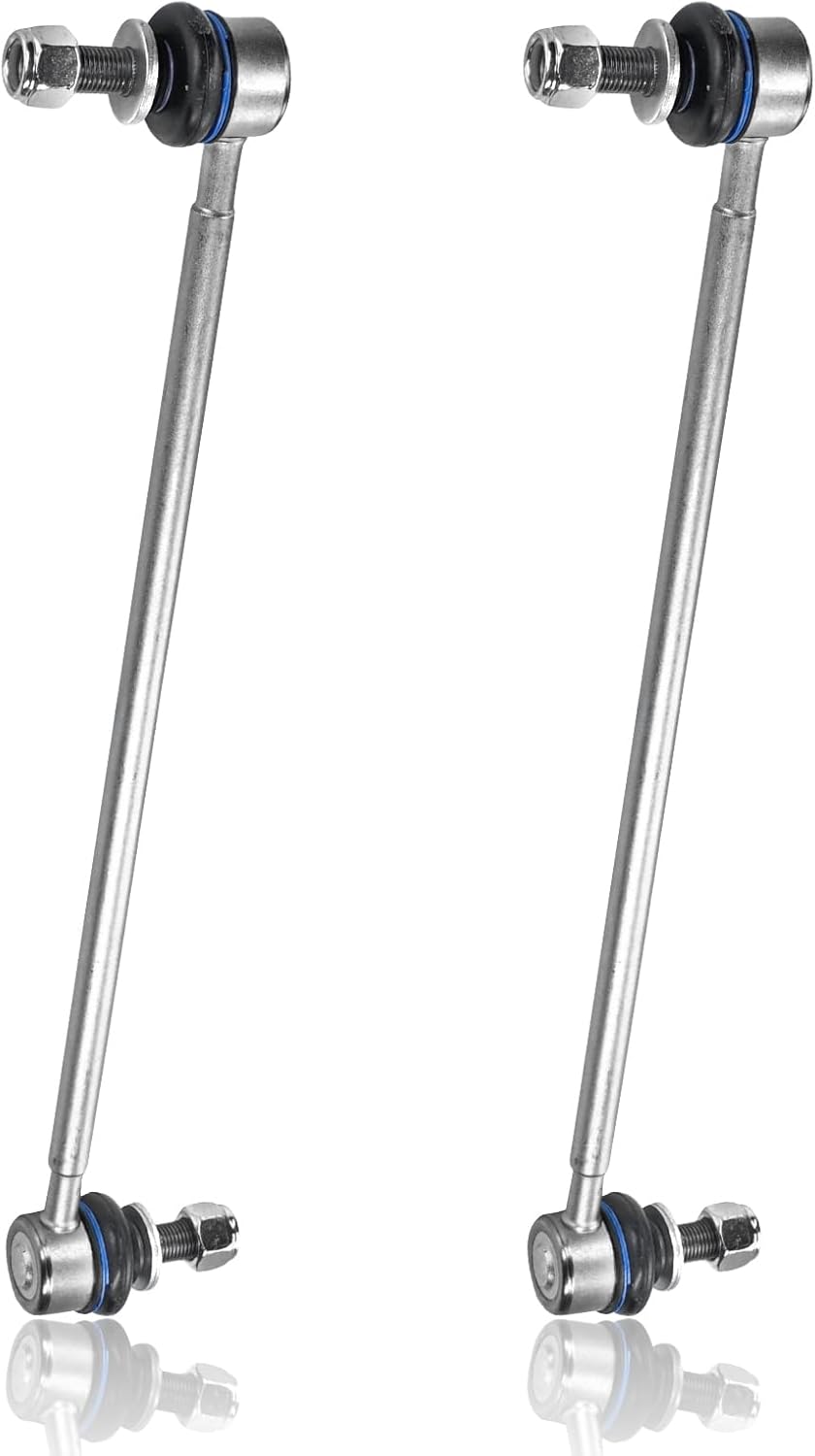
These front stabilizer sway bar end links are designed to restore smooth, stable handling and reduce noise and vibration during turns and over bumps. Compatible with select Toyota, Prius, and Scion models, they offer a reliable replacement built to meet manufacturing standards with corrosion-resistant coating and a strong, durable body.
What Changes When You Lower an MK5 Supra?
Lowering changes the suspension’s starting position within its travel. That can alter static camber and toe, available bump travel, control-arm angles, roll-center relationships, bump-steer behavior, and tire-to-body clearance. The amount depends on the drop, spring or coilover design, installed arms, tire size, wheel offset, and the car’s starting condition.
After changing ride height, let the components settle according to the suspension maker’s instructions, inspect all clearances, and obtain a full alignment. A road test alone cannot confirm whether camber, individual toe, total toe, thrust angle, or side-to-side differences are acceptable.
Safety warning: Do not adjust tie rods, eccentric bolts, control-arm lengths, or suspension fasteners without the correct equipment, torque procedure, and a final alignment. Do not align around a bent wheel, damaged tire, loose joint, worn bearing, or damaged suspension component.
Street, Track, or Drag: What Alignment Approach Fits?
There is no universal set of MK5 Supra alignment numbers for every model year, tire, ride height, track, and power level. Use the vehicle’s VIN-specific Toyota service range as the reference, then make measured changes only when the car’s use and data justify them.
| Use case | Camber approach | Toe approach | Validation |
|---|---|---|---|
| Street | Prioritize even side-to-side readings, predictable wet behavior, and usable tire life | Use the factory range as the baseline; avoid aggressive rear toe-out | Steering center, tracking, braking, wear, and highway stability |
| Weekend track | Add support only when repeated shoulder wear, temperatures, and balance show a need | Use front response changes cautiously and preserve rear stability | Repeated sessions, hot pressure, tread temperatures, wear, and driver notes |
| Drag / roll racing | Avoid unnecessary rear negative camber that reduces the useful straight-line footprint | Prioritize an even thrust line and stable rear direction | Controlled-course launches, high-speed stability, and repeatable tire behavior |
Toe measured in millimeters depends on the measurement method and wheel or tire reference diameter. Degrees are easier to compare between printouts, but the alignment shop should use the unit and procedure specified for its equipment and the vehicle. Record the exact cold Supra tire pressures, tire model, ride height, wheel and tire sizes, and installed suspension parts with every setup.
[Products Worth Considering]

This front stabilizer sway bar link set is designed to restore smooth, controlled handling and reduce clunking noises caused by worn suspension components. Built with a zinc-nickel alloy coating, carbon steel, and reinforced ball studs, it offers strong corrosion resistance and durable performance for a wide range of Toyota, Lexus, and Scion models. It is engineered for straightforward installation and reliable OE-style fitment.

This color coded tire tread depth gauge helps you quickly check tire wear and monitor when replacement is needed. Calibrated in easy-to-read 32nds with clear red, yellow, and green ranges, it offers fast visual results for cars, trucks, motorcycles, and other passenger vehicles. The pocket clip makes it simple to keep on hand for routine maintenance and safety checks.

This DIY toe alignment tool kit helps home mechanics quickly check and adjust front-end toe after suspension, steering, or tire service. Stainless steel toe plates and dual tape measures provide a simple, reliable reference for reducing uneven tire wear and improving straight-line tracking without needing a full alignment machine.
How Do Coilovers, Sway Bars, Braces, and Bushings Affect Geometry?
Suspension upgrades should solve a measured problem. If the car rolls but uses its tires evenly and remains controlled, a stabilizer-bar change may be more relevant than a large spring-rate increase. If it bottoms, floats, or oscillates, spring travel and damping need attention. If the target alignment cannot be reached after lowering, adjustable geometry parts may be justified.
Coilovers change ride height, spring rate, damping, and available travel. Lowering can also change static alignment and the suspension’s dynamic starting position. Realign the vehicle whenever ride height changes.
Sway bars change how roll load is distributed between the left and right tires and between the front and rear axles. A stiffer front bar may increase understeer when the front tires are already overloaded. A stiffer rear bar may increase rotation but can also make breakaway more abrupt.
Braces, mounts, and bushings alter structural and compliance behavior. Less deflection can make steering and rear-wheel control feel more direct, but rigid joints may transmit more noise, vibration, impact load, and maintenance demand. Toyota’s 2026 Final Edition changes combine bushings, stabilizer stiffness, subframe mounts, bracing, dampers, camber, steering, differential control, and aerodynamics as one chassis package.
[Products Worth Considering]

This all-in-one front end service kit is designed to help remove stubborn ball joints, tie rod ends, and pitman arms on a wide range of vehicles. Built from hardened alloy and organized in a portable ABS case, it offers reliable performance for both professional mechanics and DIY repairs.

This LUMITECO tire tread depth gauge set makes it easy to monitor tire wear and maintain safer driving performance. The color-coded scale provides quick, easy-to-read measurements, while the compact pocket-size design and included clip make it convenient to keep in your vehicle or toolbox. Suitable for cars, trucks, motorcycles, and more, it offers a simple reusable way to check tread depth whenever needed.

This universal wheel alignment tool helps you perform precise toe alignment at home with professional-grade accuracy and easy DIY operation. Its no-caliper-removal design simplifies setup, while the heavy-duty stainless steel construction and compact detachable form make it durable, stable, and easy to store. It is suitable for a wide range of vehicles, including cars, trucks, SUVs, ATVs, and UTVs.
What Is Adjustable on a Stock MK5 Supra?
On the component layout inspected in a 2020 Supra, front toe adjusts through the steering linkage, while the rear suspension uses eccentrics for camber and toe. Toyota’s public consumer pages do not publish one universal adjustment range for every MK5 year, trim, ride height, and suspension version.
| Angle | Routine stock adjustment | When hardware may be needed |
|---|---|---|
| Front toe | Adjusted through the steering linkage | Bent, worn, damaged, or unsuitable parts must be repaired rather than aligned around |
| Front camber / caster | Meaningful routine range is limited and depends on the exact vehicle and service procedure | Camber plates, alternative lower links, or other components may be required for a non-factory target |
| Rear camber | Factory eccentric is present on the inspected architecture | Additional range may be needed after substantial lowering or for a competition target |
| Rear toe | Factory eccentric is present on the inspected architecture | An adjustable arm may help when the target cannot be reached consistently or evenly |
Get a baseline alignment before buying parts. If the shop can reach the correct target evenly and the settings remain stable, additional arms or plates may add cost and maintenance without solving a real problem. Ask the shop to use service information for the exact VIN and installed suspension.
How Should You Read a Supra Alignment Printout?
A useful alignment printout shows more than green or red boxes. Preserve the actual numbers so you can compare changes after tire replacement, ride-height adjustment, track use, curb impact, or suspension work.
- Individual camber: Record the left and right front values and the left and right rear values.
- Individual toe: Record toe at every wheel, not only total toe.
- Total toe: Check the combined front and rear values.
- Thrust angle: This indicates whether the rear-wheel direction points along the vehicle centerline.
- Side-to-side difference: Compare cross-camber, caster where reported, ride height, and toe balance.
- Before and after: Keep both sets of readings to confirm what the shop changed.
- Test conditions: Record tire pressures, fuel or load condition, ride height, tire model, wheel size, and installed parts.
Green boxes only mean the readings fall inside the machine’s loaded specification range. They do not prove that the values are centered, even from side to side, appropriate for a modified vehicle, or stable under load.
What Is the Best Alignment Workflow for an MK5 Supra?
- Define the symptom or goal: Separate tire wear, steering pull, an off-center wheel, instability, track shoulder wear, and modification setup into different problems.
- Inspect first: Check tires, wheels, wheel bearings, control arms, bushings, ball joints, steering links, fasteners, and evidence of impact damage.
- Set and record cold tire pressures: Use the correct starting pressure for the exact tires and vehicle.
- Measure ride height: Uneven ride height can change the readings and may point to installation or component problems.
- Obtain the VIN-specific specification: Do not use a forum number simply because another car is also an A90 or A91.
- Save the baseline printout: Record individual angles, total toe, thrust angle, and side-to-side differences.
- Correct safety and balance first: Repair damaged parts and establish stable, even geometry before chasing sharper response.
- Make one setup change: Alter one main variable at a time so its effect can be identified.
- Road test safely: Check steering-wheel center, tracking, braking, tramlining, and stability.
- Validate over time: Compare tire wear, repeatable handling, and track data before making another change.
Frequently Asked Questions
What kind of suspension does the Toyota Supra have?
The MK5 Toyota GR Supra uses a double joint-type MacPherson front suspension and a multi-link independent rear suspension. Toyota describes the rear as a five-arm construction in its 2020 product information.
How does suspension geometry work?
Suspension geometry controls the wheel’s starting angle and how its position changes through steering and suspension travel. Camber, caster, and toe describe alignment angles, while link placement, steering-axis location, bushings, and ride height affect dynamic behavior.
Does Adaptive Variable Suspension change camber or toe?
No. Adaptive Variable Suspension changes shock-absorber damping force in response to driving and road conditions. It does not directly set or correct camber, caster, or toe.
What alignment angles are adjustable on a stock MK5 Supra?
The inspected MK5 architecture provides routine front-toe adjustment and rear camber and toe eccentrics. Front camber and caster have limited routine adjustment, so a non-factory target may require other hardware. The exact procedure and permitted range must be checked for the vehicle’s VIN and suspension equipment.
Does a lowered MK5 Supra need an alignment?
Yes. Changing ride height can alter camber, toe, travel, control-arm angles, and clearance. After the suspension is installed and settled according to the component maker’s instructions, inspect the hardware and obtain a full alignment.
Is more negative camber always better on a Supra?
No. More negative camber may support cornering grip, but too much for the tires and use case can increase inner-edge wear and reduce the useful straight-line contact area. Use repeated wear, temperature, pressure, and handling data rather than copying one universal number.
Do I need adjustable rear toe arms?
You may need adjustable rear toe arms if lowering or a competition camber target prevents the factory adjustment from reaching the intended rear toe, or if a competition setup needs greater repeatability. A stock-height street car that reaches and holds the correct target may not need them.
Should a Supra use rear toe-out for drag racing?
Rear toe-out is not a safe general baseline for a rear-wheel-drive Supra. Straight-line setups normally prioritize an even thrust direction and stable rear-wheel alignment. Any nonstandard setting should be developed on a controlled course by a qualified specialist using data from the exact car.
Conclusion
Toyota Supra suspension geometry combines static alignment, built-in link relationships, bushing compliance, steering-axis placement, damping, springs, stabilizer bars, tires, and ride height. The MK5’s double joint-type MacPherson front suspension and five-link rear layout provide a strong foundation, but the final behavior depends on the condition and setup of the individual car.
For street driving, begin with healthy components, correct tire pressure, balanced side-to-side readings, a centered thrust direction, and VIN-specific factory information. For track use, make measured changes and validate them across repeated sessions. For drag or roll-racing use, protect rear stability and the useful straight-line tire footprint. Buy adjustable parts only when the alignment data shows that the original hardware cannot reach or hold the required target.
Sources
- Toyota USA Newsroom — 2026 GR Supra MkV Final Edition — factory suspension architecture, AVS operation, and 2026 chassis updates
- Toyota USA Newsroom — 2024 Toyota GR Supra — suspension architecture and 2024 AVS trim availability
- Toyota USA Newsroom — 2020 Supra Product Information — double-joint front suspension and five-arm rear construction
- Toyota — Wheel Alignment and Why It Matters — camber, caster, toe, stability, and tire-wear fundamentals
- Monroe Ride Solutions — CVSAe — electronic damping technology and Toyota Supra application listing
- Autoblog — 2020 Toyota GR Supra Suspension Deep Dive — component inspection, adjustment-point observations, virtual pivot explanation, and estimated rear motion ratios
- Tire Rack — Alignment Settings Guide — general camber, caster, toe, handling, and tire-wear context