A Tacoma can have a small key-off draw for normal memory functions, but a battery that goes dead overnight or after a few days needs a proper parasitic draw test. The goal is to measure the truck’s resting current after the computers go to sleep, then isolate the circuit by checking fuses, relays, lights, and aftermarket accessories without waking the vehicle back up.
Quick Answer
To find a parasitic battery drain on a Tacoma, fully charge and test the battery first, let the truck sit locked with all modules asleep, then measure key-off current with a DC amp meter in series on the battery cable. If the resting draw stays high, pull fuses one at a time until the draw drops and inspect that circuit.
Key Takeaways
- A healthy 12-volt battery should be tested first; low charge or a weak battery can look like a parasitic drain.
- Many vehicles settle around 20–50 mA after sleep mode, but the correct limit depends on the Tacoma year, trim, and installed equipment.
- Do not open doors, press the key fob, or start the truck during the test because this wakes modules and can skew the reading.
- Common Tacoma drain sources include interior lights, stuck relays, aftermarket stereos, dash cams, alarms, trailer wiring, and modules that do not go to sleep.
At a Glance
| Time Required | 30–90 minutes, depending on sleep time and how many circuits need checking |
| Difficulty | Moderate DIY electrical diagnosis |
| Tools Needed | Digital multimeter with fused DC amp input, fuse puller, wrench, battery charger or maintainer, safety glasses, and your Tacoma fuse diagram |
| Cost | Usually $0–$50 if you already own a meter; more if a battery, relay, module, or professional diagnosis is needed |
Identify Symptoms of Parasitic Battery Drain
Start with the symptoms. A parasitic battery drain is a power draw that continues after the ignition is off and the truck should be asleep. It is different from a weak battery, a loose terminal, or an alternator that is not charging correctly.
Watch for these signs:
- Dead battery after sitting: The Tacoma starts normally after charging but is dead again after one night or several parked days.
- Frequent jump-starts: You need a jump even when no lights were left on.
- Dim lights with the engine off: Interior lights or headlights look weak before startup.
- Clicking or no crank: The starter clicks rapidly or the dash goes dark when you turn the key or press Start.
- Battery tests good but keeps discharging: A shop says the battery is healthy, but it still loses charge while parked.
- Aftermarket equipment was recently added: Stereos, amplifiers, remote starts, dash cams, GPS trackers, bed lighting, alarms, and trailer brake wiring can keep drawing power.
Note: A battery warning light while driving usually points more toward a charging-system problem than a parked parasitic draw. Test battery voltage and alternator output before chasing hidden drains.
Check the Battery and Charging System First
Before measuring parasitic draw, confirm the battery and charging system are healthy. A discharged or aging battery can mimic a drain, and testing draw on a weak battery can send you down the wrong path.
- Fully charge the battery. Use a proper 12-volt charger or maintainer before testing.
- Check resting voltage. After the truck has been off for several hours, a healthy fully charged 12-volt battery is commonly around 12.6 volts or higher, while many battery guides list 12.8–13.0 volts as full charge depending on battery type and surface charge.
- Check charging voltage. With the engine running, many healthy alternator systems charge around 13–14.5 volts. A reading outside the expected range may mean the alternator, belt, wiring, or battery connections need attention.
- Inspect the terminals. Clean corrosion, tighten loose clamps, and check ground cables before testing anything else.
Warning: Wear eye protection, remove metal jewelry, and never place a meter set to amps directly across the battery terminals. That can blow the meter fuse, damage the meter, or create a short circuit.
Essential Tools for Measuring Parasitic Draw
To measure parasitic draw in your Tacoma, use tools that can read low DC current safely and accurately. You do not need a specific brand, but the meter must be rated for automotive current testing.
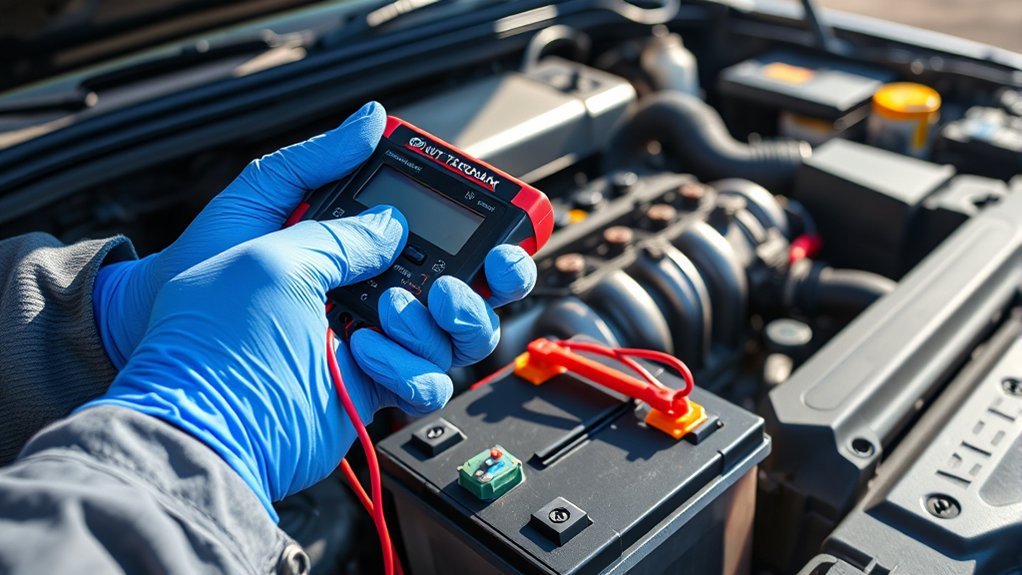
- Digital multimeter with a fused 10A DC amp port: This is the standard tool for in-series testing. Confirm the leads are plugged into the correct jacks before connecting it.
- DC clamp meter that reads milliamps: This is easier and safer because it clamps around a battery cable without disconnecting it. Many basic clamp meters read AC only, so verify it supports low DC amps.
- Fuse puller or needle-nose pliers: Use this to remove one fuse at a time while watching the meter.
- Battery charger or maintainer: A charged battery gives cleaner test results and helps prevent deep discharge while the Tacoma sits.
- Owner’s manual or fuse-box diagram: Use the Tacoma-specific fuse map so you know what each circuit powers.
- Insulated wrench and safety glasses: These protect you while disconnecting the battery cable.
A handheld multimeter is often enough, but a low-amp DC clamp meter can reduce false readings because you do not have to break the battery connection and wake vehicle modules. If your meter has a low-current milliamp jack, do not use it until you are sure the draw is within that jack’s fuse rating. Start on the highest fused amp range first.
[Products Worth Considering]

【Round Jaw Clamp Meter for Multi-Size Wires】No Loose Grips! Unlike standard flat-jaw models that struggle with uneven diameters, our universal round jaw securely holds thick wires (EV battery cables, HVAC compressor lines) and thin wires (household wiring, device cords) alike. Enjoy accurate readings for home maintenance AND industrial repairs—no compromise on fit or precision.

【10000 Counts TRMS Clamp Meter】FNIRSI DMC-100 digital clamp multimeter provides stable TRMS measurement for AC/DC current up to 600A, voltage, resistance, capacitance, frequency, and temperature. It integrates NCV detection, live wire testing, continuity, and diode checks to support multi-function electrical diagnostics in maintenance and repair scenarios

[1mA Sensitivity]: The resolution of this clamp meter is 1 mA when measuring AC and DC current with the clamp.
Prepare Your Tacoma for an Accurate Test
Accurate parasitic draw testing depends on keeping the Tacoma asleep. Modern vehicle modules may stay awake for several minutes after you shut the truck off, unlock it, open a door, or press the key fob.
- Turn everything off. Switch off lights, climate controls, chargers, accessories, and aftermarket electronics.
- Remove chargers from 12-volt outlets and USB ports. Phone chargers, dash cams, and adapters can create extra draw.
- Open the hood and latch the hood switch if equipped. The truck should think the hood is closed during the test.
- Open needed doors, then latch the door switches manually. This prevents dome lights and body modules from staying awake.
- Move the key fob away from the truck. On smart-key models, keep it well away so the truck does not keep polling for the key.
- Wait for sleep mode. Give the Tacoma at least 20–40 minutes before judging the final draw unless your service information gives a different wait time.
Pro Tip: Take a photo of each fuse panel before pulling fuses. It makes reinstallation faster and prevents mixing up fuse locations.
How to Measure Your Current Draw Easily
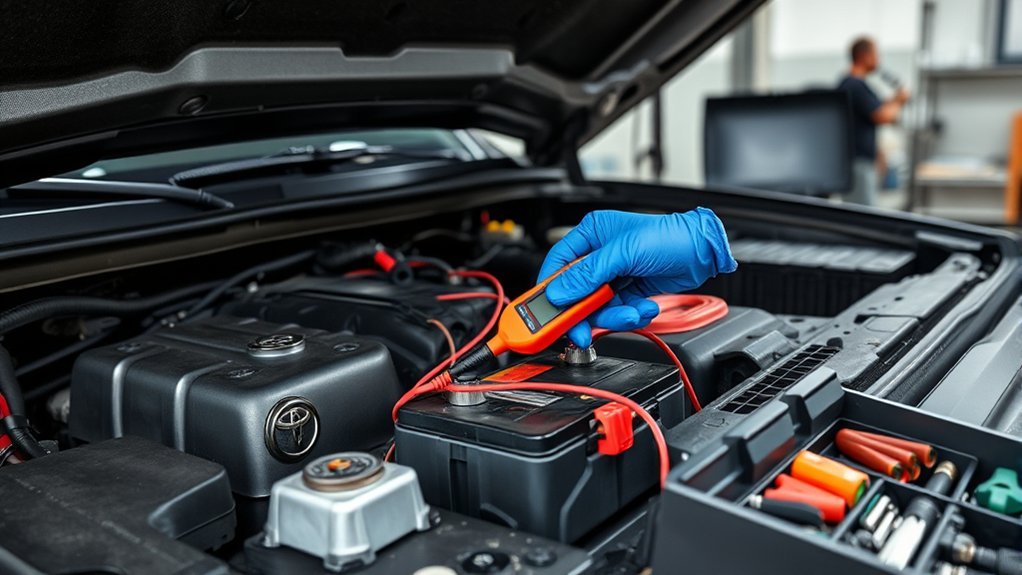
The most common DIY method is the in-series multimeter test. This measures all current leaving the battery while the Tacoma is off.
[Products Worth Considering]

【TRUE-RMS AC DC CLAMP METER】This multimeter can accurately measure AC/DC current, AC/DC voltage, temperature (thermocouple included), NCV, capacitance, frequency, resistance, continuity and diode. Good help for troubleshooting the household solar system, automotive and industrial electrical issues, perfect for electricians, DIY, professionals, etc.

Important Tips - This CM2K0R clamp meter can not test DC Current. If you have any questions about the product, feel free to contact us! Our California-based support team will respond within 24 hours.

【High Accuracy & Dual AC/DC Measurement】Accurately measure both AC and DC currents from 1mA up to 60A with a resolution of 1mA. Features automatic AC/DC recognition with manual switching option—perfect for automotive and electrical applications.
Multimeter In-Series Method
- Charge the battery fully. Do not begin with a weak battery.
- Set the multimeter to DC amps. Use the highest fused amp range first, usually the 10A port.
- Turn the Tacoma off and prepare it for sleep mode. Latch doors and keep the key away.
- Disconnect the negative battery cable. Testing on the negative side is common because it lowers the chance of accidentally shorting positive power to ground.
- Connect the meter in series. Place one lead on the negative battery post and the other lead on the disconnected negative cable end.
- Keep the connection stable. If the lead slips off, modules may reset and you may need to wait again.
- Wait for the reading to settle. Initial current can be high while modules are awake. Judge the reading only after the truck has gone to sleep.
- Read the final draw. Many vehicles settle near 20–50 mA. A higher reading that stays high after sleep mode means you should isolate the circuit.
A 50 mA draw equals 0.05 amps. That sounds small, but over several parked days it can take a noticeable bite out of a starting battery, especially if the battery is older, undercharged, or exposed to heat or cold.
DC Clamp Meter Method
If you have a DC clamp meter that reads low current, clamp it around the negative battery cable, zero the meter, and wait for the Tacoma to sleep. This avoids disconnecting the battery and helps prevent module wakeups. The tradeoff is that not every clamp meter is accurate at very low milliamp readings, so check your meter’s specifications.
Use the Fuse-Pull Method to Find the Bad Circuit
Once you confirm a high draw, isolate the circuit. The fuse-pull method is simple: remove one fuse at a time while watching the meter. When the current drops sharply, the circuit protected by that fuse is likely involved.
- Keep the meter connected and the Tacoma asleep. Avoid opening doors or using the remote.
- Start with the interior fuse panel, then the engine-bay fuse box. Use the fuse diagram for your model year.
- Pull one fuse and watch the current. If nothing changes, reinstall it before moving to the next fuse.
- Look for a major drop. For example, if the draw falls from 350 mA to 35 mA after removing one fuse, that circuit is the lead suspect.
- Identify everything on that fuse. A single fuse can feed more than one device, relay, or control module.
- Inspect the components on that circuit. Look for stuck relays, lights staying on, damaged wiring, water intrusion, or aftermarket wiring tied into the circuit.
Do not assume the fuse itself is bad. The fuse only tells you where to look. The actual cause may be a component, relay, module, switch, wiring harness, or accessory on that circuit.
[Products Worth Considering]

Universal Fuse Compatibility – Works with ATO, ATC, ATM, and MAXI blade fuses for versatile use across most 12V and 24V automotive electrical systems.

Multi-function switch panel: product integrated with dual USB charger, digital voltmeter, 12v outlet, waterproof panel and 5 on/off rocker switches, this 12v/24vdc switch panel can meet your various needs
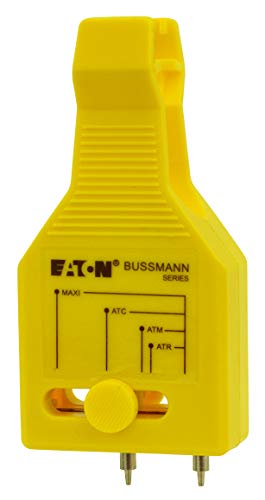
QUICKLY TEST BLADE-STYLE AUTOMOTIVE FUSES – Bussmann FT-3 Fuse Tester helps diagnose blown or functioning blade fuses in seconds, making it easy to identify electrical issues in cars, trucks, SUVs, RVs, boats, and other 12V automotive applications.
Identifying Common Causes of Parasitic Drain in Tacomas
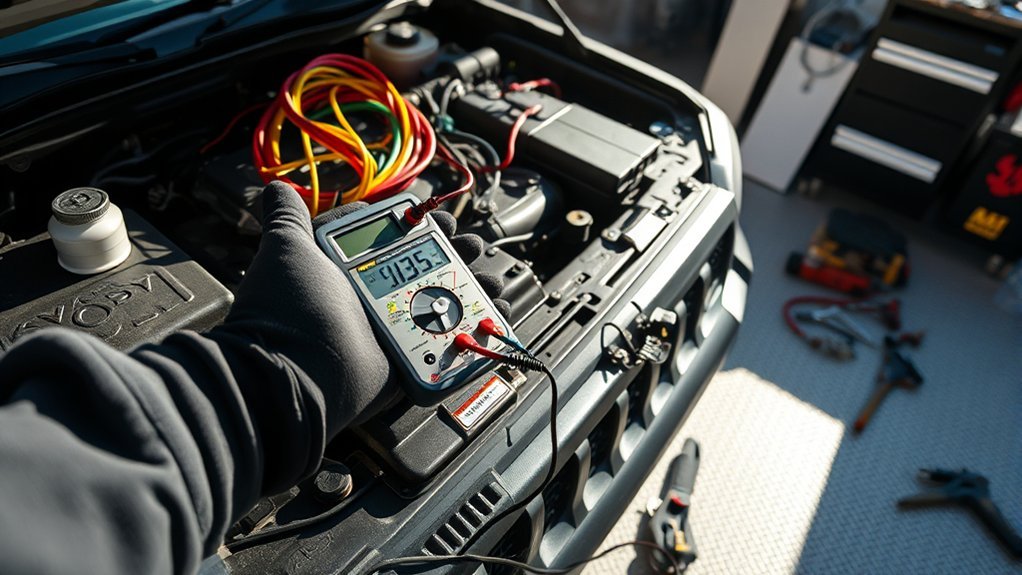
While diagnosing parasitic battery drain in your Tacoma, focus first on the parts most likely to stay powered when the truck is parked.
- Interior, cargo, glove-box, vanity, or bed lights: A small light left on can drain a battery faster than expected, especially overnight.
- Aftermarket electronics: Stereos, amplifiers, dash cams, alarms, remote starts, GPS trackers, and lighting kits are common because they are often wired to constant power.
- Stuck relays: A relay that remains closed can keep a circuit energized after shutdown.
- Trailer wiring and brake controllers: Corrosion, water, or poor splices at trailer connectors can create unwanted current draw.
- Power seat or window circuits: Switches or motors can sometimes remain partially energized.
- Charging-system leakage: A faulty alternator diode can allow current to flow backward when the engine is off.
- Modules that do not sleep: Body control, telematics, security, or infotainment modules can stay awake because of faults, software issues, wiring problems, or repeated wake signals.
Note: A brief draw above 50 mA right after shutdown is not automatically a problem. The concern is a draw that stays high after the vehicle has fully entered sleep mode.
What to Do After You Find the Draining Circuit
After one fuse or circuit causes the meter reading to drop, narrow the problem before buying parts.
- Check the simple items first. Look for lights, switches, chargers, or accessories on that circuit.
- Unplug aftermarket equipment. If the draw disappears, repair or rewire that accessory using proper switched power, fusing, and grounds.
- Swap or test suspect relays. A stuck relay may feel warm or keep a component powered with the truck off.
- Inspect for water and corrosion. Moisture in connectors, trailer plugs, bed lighting, or fuse boxes can create current paths.
- Look up the circuit diagram. Some circuits feed several components, so a wiring diagram can save hours.
- Verify the repair. After fixing the issue, repeat the draw test and confirm the resting current returns to an acceptable level.
If the bad circuit feeds a control module, do not replace the module just because pulling its fuse lowers the draw. The module may be staying awake because another switch, sensor, network line, or accessory is keeping it active.
Effective Strategies to Maintain Tacoma Battery Health
Maintaining your Tacoma’s battery health reduces the chance of false diagnoses and surprise no-starts. Toyota service bulletins for stored vehicles note that storage time, temperature, parasitic drain, and battery load can reduce battery performance and service life.
- Use a maintainer when parked for long periods. This is especially helpful for trucks that sit for weeks, run short trips, or power aftermarket equipment.
- Test the battery before extreme weather. Heat and cold both stress starting batteries.
- Keep terminals clean and tight. Poor connections can imitate battery failure.
- Drive long enough to recharge. Short idle periods may not fully recover the energy used to start the truck.
- Disconnect non-essential accessories. Remove plug-in chargers, dash cams, coolers, and inverters when the truck is parked.
- Replace an aging weak battery after testing. Many car batteries last about 3–5 years, but climate, use, vibration, and maintenance can shorten or lengthen that range.
When to Call a Professional
Call a qualified technician if the draw is on an airbag, security, hybrid, smart-key, body control, infotainment, or networked module circuit. Also get help if the meter reading changes every few minutes, if a fuse drop points to several modules, or if the truck has water damage or non-factory wiring you cannot trace.
A shop can use a scan tool to see which modules are awake, check service bulletins, test relays and wiring under load, and measure current without repeatedly waking the vehicle. That can be faster and cheaper than guessing at expensive parts.
Frequently Asked Questions
What is a normal parasitic draw on a Toyota Tacoma?
A common rule of thumb is about 20–50 mA after all modules are asleep, but the exact acceptable draw depends on the Tacoma year, trim, battery condition, and factory or aftermarket equipment. A brief higher reading right after shutdown is normal; a steady high reading after sleep mode needs diagnosis.
What is the most common cause of parasitic battery drain?
The most common causes are lights that stay on, aftermarket electronics wired to constant power, stuck relays, trailer wiring problems, and control modules that do not enter sleep mode. Start with recent add-ons and simple visual checks before replacing the battery or alternator.
Can a bad alternator drain my Tacoma battery overnight?
Yes. A failed alternator diode can allow current to leak backward through the alternator when the engine is off. If pulling the alternator fuse or disconnecting the alternator output during a proper test drops the draw, have the charging system tested before replacing parts.
Should I disconnect the positive or negative battery cable for a parasitic draw test?
Most DIY tests disconnect the negative cable and place the meter in series between the negative battery post and negative cable end. This reduces the chance of accidentally shorting a positive tool or cable to body ground.
Why did my current reading jump when I opened the door?
Opening a door turns on lights and wakes body modules, so the draw can jump from milliamps to amps. Latch the door switch, keep the key fob away, and wait for the Tacoma to go back to sleep before judging the reading.
Will replacing the battery fix parasitic drain?
Only if the battery itself is weak or internally failing. If an electrical circuit is staying on while the truck is parked, a new battery may work for a while but will eventually discharge too. Test the battery first, then test key-off current draw.
Conclusion
Finding a parasitic battery drain on a Tacoma is a step-by-step process: prove the battery and charging system are healthy, let the truck go to sleep, measure key-off current, then isolate the circuit with a fuse-pull test. Once you find the circuit, check simple causes like lights, relays, aftermarket electronics, and trailer wiring before blaming an expensive module. A careful test protects your battery, avoids unnecessary parts replacement, and keeps your Tacoma reliable when it has been parked for a few days.
Sources
- Toyota Owners: 2024 Tacoma battery discharge and jump-start procedure — supports Tacoma battery safety and manufacturer guidance.
- Fluke: How to Find Parasitic Battery Drain with a Multimeter — supports the in-series multimeter diagnostic method.
- Autobatteries.com: Car Battery Testing & Troubleshooting — supports 12-volt battery state-of-charge voltage checks.
- AAA: Bad Alternator vs. Bad Battery — supports charging-system voltage checks and alternator symptoms.
- Toyota Technical Service Bulletin via NHTSA: Battery Inspection and Maintenance During PDS — supports the effect of storage time, temperature, parasitic drain, and battery load on battery life.