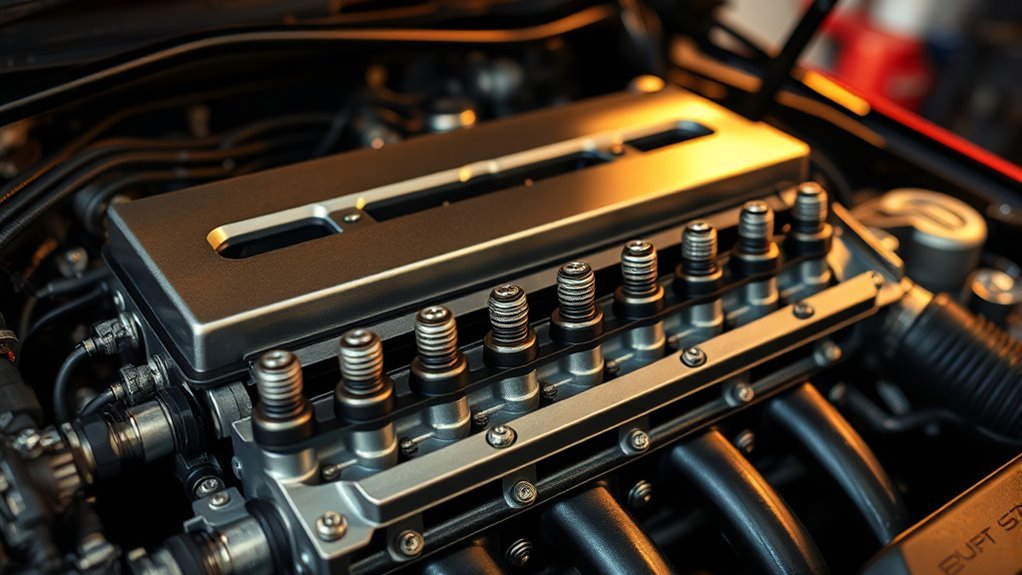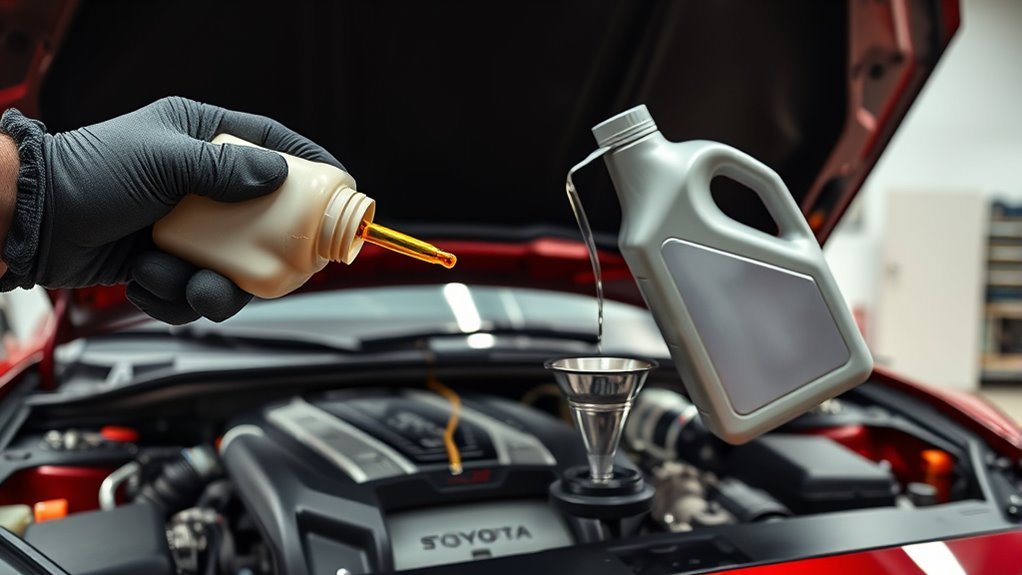
Park your Supra on level ground, run the engine ~10 minutes for a warm check or let it sit 4–8 hours for a cold check, then wait ~5 minutes after shutoff for oil to settle. Use the dash oil readout (no dipstick on some Supras) or the dipstick if equipped, add small amounts of the manufacturer‑recommended viscosity, recheck until level is within spec, and log amounts and dates — continue for troubleshooting tips and service guidance.
Check Supra Oil Now: Quick Warm-Engine Method

Before you check the oil, run the engine about 10 minutes to bring the oil up to operating temperature; then shut it off and wait roughly 5 minutes so the oil can settle. Now access the display menu and read the bars—confirm it shows “OK.” You’ll avoid overfilling by not targeting full bars; aim for the proper range (about 6.5–6.8 quarts). If low, add oil slowly and recheck the display between small pours to prevent excess. Choose the correct oil types recommended for your Supra to maintain performance and protect the engine; using the right grade helps prolong engine lifespan. This method lets you act decisively and responsibly, keeping control of your car’s health without hesitation.
Check Supra Oil Cold: Overnight Method
Let the Supra sit for at least 4–8 hours with the engine off and parked on a level surface so the oil drains fully into the sump; then follow these steps to check cold oil precisely.
- Confirm level ground and engine cool—this guarantees an accurate reading and protects your autonomy over maintenance.
- Remove the dipstick, wipe it with a lint-free cloth, reinsert fully, then withdraw to read between the two marks.
- If level is below the lower mark, add oil using the manufacturer’s recommended oil viscosity to preserve engine performance and longevity.
- Recheck after adding; don’t overfill. Record the amount added and date so you control your Supra’s care and stay free from preventable issues.
Hot or Cold: When to Choose Each
Choose cold oil checks when you want the most stable, repeatable reading—park level, wait 4–8 hours, then pull the dipstick. Use a warm check for quick confirmation after a short 5–10 minute run to let oil circulate. Either way, always measure on a level surface and check regularly.
Cold Oil For Accuracy
While checking oil cold (after 4–8 hours) gives the most stable reading because the oil has fully drained back into the sump, you can still get an accurate hot reading if you wait 5–10 minutes after shutdown. Use cold checks to minimize heat-driven variance and to judge true capacity without oil viscosity or oil additives masking level. Stand the car level, remove dipstick, wipe, reinsert, then read.
- Wait 4–8 hours for cold settle to avoid overfill.
- Park on level ground to eliminate tilt error.
- Note that cold readings run lower than hot; adjust mentally.
- Keep a routine check schedule for engine freedom.
You’ll gain control and clarity over your Supra’s oil — precise, repeatable, and liberating.
Warm Oil For Convenience
If you need a quick check after driving, wait 5–10 minutes with the engine off and then measure—the oil will be at operating temperature and largely circulated, so the dipstick reading reflects what the engine actually runs on. Park level, wipe the dipstick, reinsert and read to confirm level. Warm oil checks show oil temperature effects directly, revealing how circulation and consumption behave under load. That convenience helps you act fast: top off if the level’s low, or schedule service if it drops quickly. Remember readings can fluctuate more when warm, so don’t overreact to small variances. Cold checks give steadier baselines; warm checks give real-world insight. Check regularly to protect engine health and retain control of your Supra.
Prep Your Supra: Safety, Level Parking, and Tools
Start by parking your Supra on a level surface and turning the engine off, then let it sit for at least 10 minutes so the oil cools enough to avoid burns and settle for an accurate reading. Gather the right tools and prepare mentally to take control of your car’s health. Use this checklist to free yourself from uncertainty:
- Clean rag — wipe connections and display area.
- Funnel — pour slowly to avoid spills and overfill.
- Owner’s manual — confirm approved oil types and specs.
- Device or display check — use the dashboard oil-level readout; Supra lacks a dipstick.
Follow practical maintenance tips: cool engine, level parking, and correct tools. This procedural prep keeps you safe, accurate, and empowered to manage your Supra’s oil with confidence.
Add Oil Correctly: Amounts, Oil Type, and Small Increments
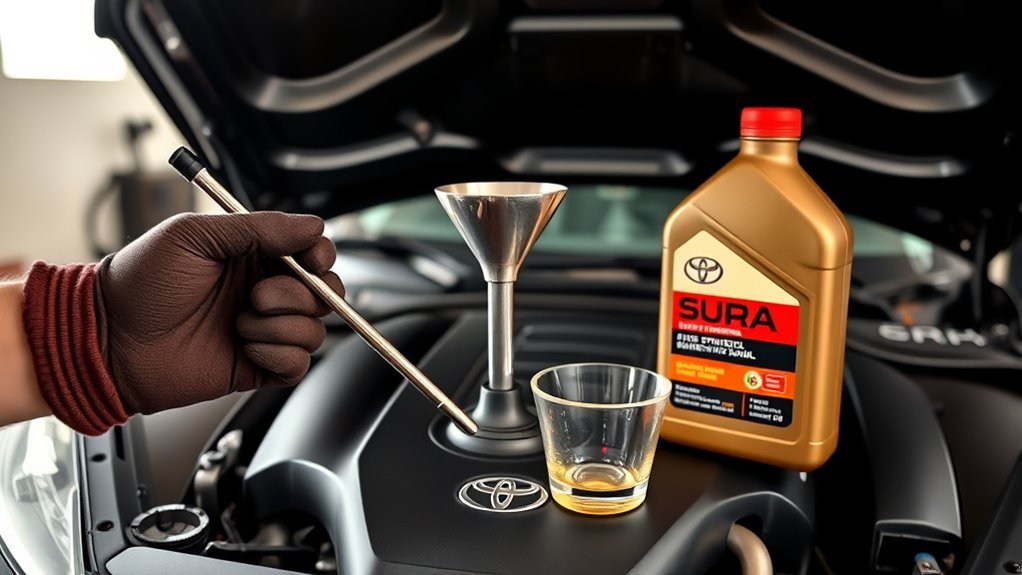
Add oil carefully and in measured steps to avoid overfilling: your Supra typically holds about 6.5 quarts, but always confirm the exact capacity and recommended viscosity in the owner’s manual and choose a synthetic or synthetic blend oil as specified. Park level, shut the engine, wait a few minutes, then add oil in small increments—about a quarter of a quart at a time. After each addition, run the engine for a few minutes, shut it off, wait, and check the digital level to verify progress. Stick to the manufacturer’s oil viscosity to protect seals and optimize engine longevity. Work deliberately and confidently; precise additions protect the motor and preserve your freedom to drive without avoidable engine harm.
Reading Quirks: Sensors, Dipstick, and Temperature Effects
After you’ve topped the oil in measured increments, pay attention to how the Supra reports that level: Toyota uses a digital sensor rather than a traditional dipstick, and readings can shift with temperature and runtime. You’ll act deliberately to free yourself from guesswork.
- Wait 5–10 minutes after shutoff so oil settles; this reduces temperature sensitivity and gives a truer reading.
- Check the digital display; note if levels jump between cold and hot checks—thermal expansion causes variance.
- If readings fluctuate excessively, consider sensor calibration or software updates before replacing hardware; 2020 models may need oil pump attention.
- Add or remove oil only in small increments, rechecking each time to avoid overfill.
Follow these steps to reclaim control and protect the engine.
Troubleshoot Persistent Low-Oil Warnings & When to See a Dealer
First, verify oil level accuracy by checking on a level surface with the engine warm and add a quart if the reading consistently stalls around 16%. If the warning continues after correct measurement and topping, look for pump-failure signs—intermittent pressure loss, unusual noises, or known 2020 Supra plastic-internal failures. If troubleshooting fails, document your checks and maintenance, then contact your dealer to report the issue and request inspection or replacement of the pump or sender.
Check Oil Level Accuracy
When you need to verify oil level accuracy, warm the engine, park on level ground, then wait 5–10 minutes after shutoff so the oil settles before checking the digital display or dipstick. Use clear oil measurement techniques and be aware of sensor calibration issues that can mislead you. Follow these steps to confirm readings and decide when to see a dealer:
- Check the digital display first; “OK” means proper level — note any persistent 16% stops or erratic percentages.
- Confirm with a dipstick if your model has one, avoiding overfill or underfill.
- Add oil incrementally, recheck after each 200–300 ml to prevent overfilling.
- If warnings persist after these checks, schedule dealer diagnosis for sender or pump faults.
Recognize Pump Failure Signs
If your checks from the previous section don’t stop intermittent low-oil alerts, you need to look for pump-related symptoms that go beyond simple level errors. First, run basic oil pump diagnostics: record warning light patterns, oil pressure readings, and repeat level checks cold and hot. Note if level measurements freeze around 16% or fluctuate after short drives — that inconsistency often points to a failing pump. Watch for warning light patterns that return intermittently despite correct fill and stable leaks. Consider oil temperature’s effect: high temp can skew sensor readings and hide pump decline. If you exhaust diagnostics and symptoms persist, prepare documentation of your tests and community reports about updated metal-internal pumps before escalating for replacement.
When To Contact Dealer
Start contacting your dealer after you’ve ruled out simple causes and documented recurring low-oil warnings, because persistent alerts despite correct oil levels often point to a failing oil pump and may be covered under warranty. Log dates, mileage, temperatures, and steps you took (added oil, rechecked dipstick). If warnings persist, take these actions:
- Reproduce the issue and record the dashboard warning and dipstick reading.
- Verify readings after cool-down to avoid oil temperature errors.
- Share your documentation and community threads that show similar oil pump issues.
- Request inspection and ask about warranty coverage or an updated oil pump replacement if level freezes at 16%.
Be decisive: clear records and evidence free you to insist on timely dealer repair.
Supra Maintenance: Service Intervals, Pump Updates, and Recordkeeping
Because regular servicing keeps the Supra reliable, you should follow Toyota’s recommended intervals—typically every 5,000 to 10,000 miles depending on driving conditions—and log each oil change and any repairs. Use oil change tips and a maintenance checklist: warm the engine, let it rest a few minutes, then check levels. Inspect for leaks and note readings and mileage. For 2020 models, verify whether the oil pump has been updated; plastic-internal pumps have known issues affecting pressure and measurement. If a pump replacement is required, document the part number, date, and installer to protect warranty rights. Keep a simple, durable record (digital or paper) that lists date, miles, oil type, filter, and pump work. Review records before resale or dealer visits to claim service freedom.
Frequently Asked Questions
How to Check Supra Oil Level?
You check Supra oil via the infotainment oil level display after warming the engine — there’s no oil dipstick. For engine maintenance, idle ten minutes, read the bar graph, and add oil gradually if the level reads low.
Conclusion
You’ve got the steps: pick hot or cold checking, park level, use the dipstick or monitor, add the correct Toyota-spec oil in small increments, and recheck until the level’s right. If warnings persist after topping, troubleshoot leaks or sensor faults and see a dealer. Keep records and follow service intervals—think of it like maintaining a horse-drawn carriage’s axles: regular attention prevents big problems and keeps your Supra running reliably.