When comparing piston and diaphragm tire inflators, consider performance, noise, and durability. Piston inflators achieve high pressures over 120 PSI, making them faster for large tire inflation but generate noticeable noise. In contrast, diaphragm inflators work quietly at 30-50 PSI, ideal for smaller tasks. Durability varies too; piston models last 2,500-5,000 hours with higher maintenance, while diaphragm models can exceed 10,000 hours with minimal service. Discover which inflator suits your needs best as you explore further.
Understanding Piston vs Diaphragm Tire Inflators
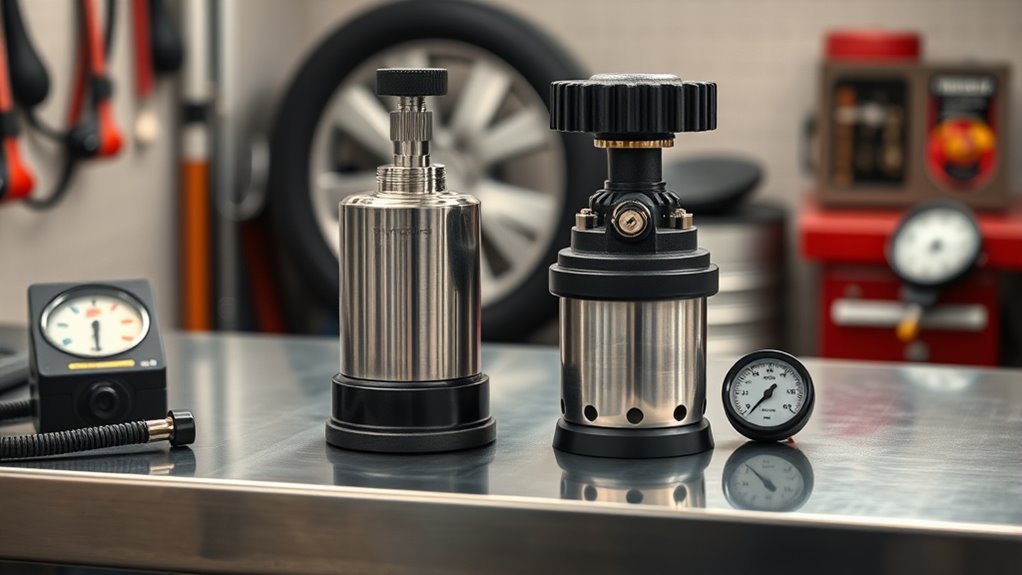
When choosing a tire inflator, understanding the differences between piston and diaphragm models is essential for best performance in your specific applications. Piston inflators utilize mechanical pumps that generate higher pressures, making them ideal for heavy-duty tasks like inflating truck or tractor tires quickly. However, they require regular lubrication and maintenance due to their complex components, and you might find their operation noisy. In contrast, diaphragm inflators are quieter, making them perfect for smaller tires or lower pressure applications, such as bike tires and inflatable toys. They demand less upkeep, offering a longer lifespan if the diaphragm remains intact. While diaphragm models are generally more affordable, piston inflators provide the power and durability needed for demanding applications.
Comparing Performance: Piston vs Diaphragm Inflators
When comparing piston and diaphragm inflators, you’ll notice significant differences in inflation speed and pressure output. Piston inflators excel in generating higher pressures quickly, making them ideal for larger tires. In contrast, diaphragm inflators offer a more efficient performance for smaller, lower-pressure applications while operating quietly.
Inflation Speed Comparison
While both piston and diaphragm tire inflators serve the essential function of inflating tires, their performance differs considerably regarding inflation speed. Piston inflators excel in generating higher pressures, allowing you to inflate larger tires rapidly, which is vital for heavy-duty applications. In contrast, diaphragm inflators operate at lower pressures, making them more suitable for smaller tires and low-pressure needs.
| Inflator Type | Inflation Speed |
|---|---|
| Piston Inflators | Fastest for large tires |
| Diaphragm Inflators | Slower for small tires |
| Heavy-duty Usage | Ideal for trucks and tractors |
| Everyday Use | Perfect for bikes and toys |
If you’re looking for speed, piston inflators will liberate you from waiting around, ensuring you’re back on the road quickly.
Pressure Output Differences
Understanding the pressure output differences between piston and diaphragm tire inflators is essential for selecting the right tool for your needs. Piston inflators excel in generating higher pressure outputs, making them ideal for larger tires, like those on trucks and tractors. Piston moves air rapidly, achieving outputs exceeding 120 PSI. In contrast, diaphragm models are more suited for lower-pressure tasks, typically operating between 30-50 PSI, perfect for small car tires and inflatable toys.
- Piston inflators inflate tires quickly with greater volumes of air.
- Diaphragm inflators maintain consistent airflow but struggle at high pressures.
- Piston designs are better for heavy-duty applications.
- Diaphragm models prioritize efficiency with lower pressure needs.
Durability: Lifespan of Piston vs Diaphragm Inflators
The durability of tire inflators is heavily influenced by their design, with piston and diaphragm models exhibiting distinct lifespans based on their operational mechanics. Piston inflators generally have a lifespan ranging from 2,500 to 5,000 hours, primarily due to wear and tear from friction and the necessity for regular lubrication. This maintenance can include replacing piston rings, which further shortens their longevity. In contrast, diaphragm inflators can exceed 10,000 hours when properly maintained, benefiting from a design that minimizes wear and tear. The diaphragm’s resilience in demanding conditions enhances its durability, making it ideal for lighter-duty applications. Ultimately, if you value longevity, diaphragm inflators present a superior choice for sustained performance.
Inflation Speed Comparison: Which Inflator Is Faster?
How quickly can you inflate your tires? When it comes to inflation speed, piston inflators greatly outpace diaphragm inflators. If you’re working with larger tires, like those on trucks or tractors, piston inflators deliver high pressure and large volumes of air swiftly. Conversely, diaphragm inflators, while quieter, are better suited for smaller tires like bicycles, but they inflate at a slower rate.
- Piston inflators complete tasks faster.
- Diaphragm inflators prioritize noise reduction over speed.
- Piston inflators excel in heavy-duty applications.
- Diaphragm inflators are ideal for low-pressure needs.
Best Applications for Piston vs Diaphragm Inflators
When choosing between piston and diaphragm inflators, consider your specific application needs. Piston inflators excel in heavy-duty tasks like inflating large truck tires, while diaphragm models are ideal for smaller, low-pressure jobs such as bike tires or inflatable toys. Understanding these distinctions helps you select the right tool for the job.
Ideal Use Cases
Choosing between piston and diaphragm tire inflators depends largely on the specific application. Each type serves distinct ideal use cases:
- Piston inflators are perfect for heavy-duty applications, such as inflating truck and tractor tires, due to their higher pressure capabilities.
- Diaphragm pumps excel at inflating smaller tires, like those on bikes or small cars, operating efficiently at lower pressures.
- Piston models are ideal when speed is essential, particularly in professional settings that prioritize time savings.
- Diaphragm inflators are preferred for quieter operation, making them suitable for residential areas where noise control during inflation is necessary.
Specialized Applications Overview
While both piston and diaphragm tire inflators serve distinct purposes, understanding their specialized applications can greatly enhance your tire maintenance efficiency. Piston inflators shine in heavy-duty contexts, such as inflating truck or tractor tires, where high pressure and rapid inflation are critical. Their performance in time-sensitive situations, like roadside emergencies, is unmatched. Conversely, diaphragm inflators excel in lower pressure scenarios, making them ideal for bike tires, small car tires, and inflatable toys. Their quieter operation suits residential areas, minimizing noise disturbances. Additionally, diaphragm inflators require less maintenance, which is beneficial for everyday users. Ultimately, choosing the right inflator depends on your specific needs—whether you prioritize power or quiet efficiency.
Noise Levels: Which Tire Inflator Is Quieter?
How do noise levels compare between piston and diaphragm tire inflators? Diaphragm inflators operate more quietly due to their simpler design, making them ideal for noise-sensitive environments. In contrast, piston inflators generate noticeable noise levels, often producing rattling and banging sounds during operation, particularly under high pressure.
- Diaphragm inflators excel in quiet settings, like residential areas.
- Piston inflators may be less concerning in louder environments, such as garages.
- For applications prioritizing low noise, diaphragm inflators are superior.
- Piston inflators offer powerful performance, albeit at the cost of increased noise.
Ultimately, your choice should align with your noise tolerance and specific usage needs.
Maintenance Expectations for Each Inflator Type
When you consider the maintenance requirements of diaphragm and piston tire inflators, you’ll find significant differences that impact long-term usability. Diaphragm inflators have low maintenance expectations; they primarily need clean air intake to prevent debris buildup. If the diaphragm remains undamaged, it can last long without much fuss. In contrast, piston inflators require regular lubrication to operate smoothly and may need piston ring replacements due to wear over time. Additionally, the air filter in piston inflators demands frequent cleaning or replacement, adding to your maintenance burden. Overall, diaphragm inflators are more durable in harsh conditions and incur lower long-term maintenance costs compared to piston inflators, which can lead to higher expenses due to lubrication and part replacements.
Cost Analysis: Are Piston Inflators Worth the Extra Investment?
When considering a piston inflator, you should weigh the higher initial purchase price against its long-term maintenance costs and performance benefits. While these inflators can handle larger tires and higher pressures, their maintenance needs can increase ownership expenses. Ultimately, your decision hinges on whether the enhanced efficiency justifies the upfront investment in your specific use case.
Initial Purchase Price
Investing in a piston tire inflator typically costs 20-50% more than its diaphragm counterpart, reflecting its complex mechanical design and enhanced power capabilities. While the initial purchase cost may seem steep, consider the following:
- Piston inflators excel in speed and efficiency for high-pressure tasks.
- They’re ideal for quickly inflating larger tires on trucks or tractors.
- The upfront cost is often justified in professional settings where time is money.
- Diaphragm inflators may require frequent replacements, increasing long-term costs.
Ultimately, if you’re prioritizing performance and durability over initial purchase cost, a piston inflator could be a worthwhile investment.
Long-Term Maintenance Costs
While the initial investment in a piston tire inflator might seem justified by its performance, long-term maintenance costs can considerably impact your overall budget. Piston inflators generally require higher maintenance, including regular lubrication and potential replacement of worn piston rings, leading to total ownership costs that are 20-50% higher than diaphragm models. If you’re operating in demanding environments, the frequency of maintenance inspections can affect productivity and overall costs. In contrast, diaphragm inflators offer lower operational costs due to their longer lifespan and minimal service requirements, needing only occasional cleaning. Consequently, if your needs align more with light applications, considering diaphragm and piston air pump meets could provide a more economical choice in the long run.
Performance Versus Budget
Deciding between a piston and diaphragm tire inflator involves weighing performance against budget constraints. While diaphragm inflators are budget-friendly, they may not meet the demands of larger or high-pressure tires. Here’s what to evaluate:
- Piston inflators: 20-50% more expensive, but excel in performance and durability.
- Diaphragm inflators: Lower cost, ideal for small tires, but slower inflation rates.
- Long-term investment: Piston inflators justify their price through efficiency and productivity.
- Maintenance: Piston models require more upkeep, impacting overall lifetime expenses.
Ultimately, if you need rapid inflation for heavy-duty applications, the investment in a piston inflator can be worthwhile despite the initial cost, balancing performance with budget evaluations effectively.
Customer Feedback on Piston vs Diaphragm Tire Inflators
Many customers find themselves weighing the pros and cons of piston versus diaphragm tire inflators based on their specific needs and preferences. Piston inflators are often noted for their rapid inflation times, especially with larger tires, while diaphragm inflators shine in quieter operations. Users appreciate diaphragm pumps for their low maintenance and longevity, making them ideal for smaller tasks.
| Feature | Piston Inflators |
|---|---|
| Inflation Speed | Faster for larger tires |
| Noise Level | Louder |
| Maintenance | Higher |
| Durability | High |
| Cost | Usually higher |
Ultimately, piston pumps deliver exceptional performance in demanding situations, but diaphragm models cater to a different audience focused on convenience and tranquility.
Making the Right Choice: Selecting Your Ideal Tire Inflator
Choosing the right tire inflator hinges on understanding your specific needs and the applications you’ll encounter. When choosing the right pump, consider the following:
- Application: Piston inflators excel for heavy-duty tasks, while diaphragm inflators work best for smaller tires.
- Noise Level: Diaphragm models operate quietly, making them suitable for residential use, unlike the louder piston variants.
- Maintenance: Piston inflators need regular upkeep, whereas diaphragm options require less maintenance and tend to last longer.
- Cost: Diaphragm inflators are budget-friendly, but piston inflators provide superior performance for frequent use.
Frequently Asked Questions
Is a Piston or Diaphragm Sprayer Better?
A piston sprayer offers greater efficiency for thicker materials, while a diaphragm sprayer guarantees reliability for lighter applications. Your choice depends on the specific sprayer applications you need, balancing performance with durability and maintenance concerns.
What Is the Difference Between Piston Pump and Diaphragm Pump?
Piston pumps deliver robust efficiency, releasing high-pressure air for demanding tasks, while diaphragm pumps offer graceful flexibility, ideal for lighter applications. Your choice hinges on the pump applications you need for specific inflation tasks.
What Is the Difference Between Piston Plunger and Diaphragm Pump?
Piston plunger pumps excel in efficiency for high-pressure applications, while diaphragm pumps offer flexibility for various fluids. Each type serves distinct pump applications, balancing performance and adaptability based on your specific operational requirements.
What Is the Difference Between Piston Actuator and Diaphragm Actuator?
Imagine choosing between brute strength and graceful adaptability. Piston actuators utilize a piston mechanism for high efficiency and force, while diaphragm actuators leverage diaphragm flexibility for quieter, smoother operation—each suited for different applications and needs.
Conclusion
In choosing between piston and diaphragm tire inflators, consider your specific needs and preferences. Piston inflators often deliver superior performance and durability, making them akin to a trusty steam engine, powering through inflation tasks with ease. Conversely, diaphragm inflators may suit casual users with their quieter operation and lower price. Ultimately, weigh the benefits and costs to find the inflator that fits your lifestyle best, ensuring you’re always ready to hit the road with confidence.