
You achieve a true 50/50 balance by shifting the engine about an inch rearward, reworking mounts and firewall, and using aluminum and composite parts to trim mass and lower the center of gravity. That setup yields predictable load transfer, reduced understeer, and sharper turn‑in with matched spring/damper rates and an adapted front strut/rear five‑link layout. Staggered 19s, stiff sidewalls, and vented two‑piece rotors complete the package. Use these setup and maintenance steps to maximize your vehicle performance.
Quick Answer
Toyota achieved a 50/50 weight distribution in the GR Supra by shifting the engine one inch rearward and using lightweight materials. This layout improves handling by providing balanced load transfer and reducing understeer. You can maintain this equilibrium through routine alignment checks, precise tire pressure management, and professional corner balancing after any suspension modifications.
How Toyota Moved the Engine Back to Achieve 50/50 in the Supra
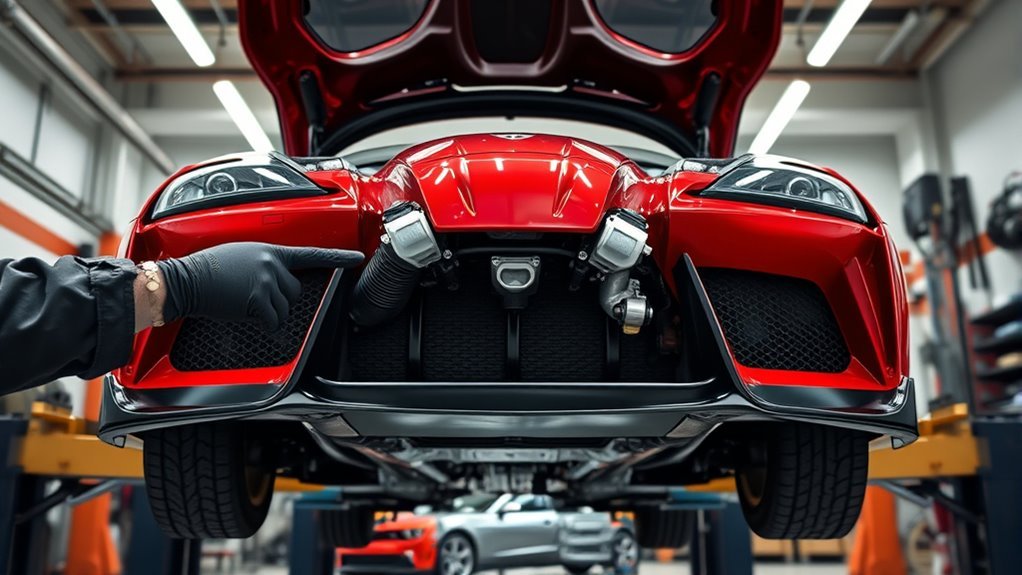
Toyota engineers shifted the Supra engine one inch rearward within the chassis to reach a true 50/50 weight split. This repositioning required reworking engine mounts, firewall packaging, and ancillary systems to preserve crash structures and service access. This choice represents intentional chassis optimization rather than a cosmetic change. Lightweight aluminum and composite components further trimmed forward mass, which helps keep the center of gravity low. This layout allows you to exploit the vehicle’s natural balance for better control.
Why 50/50 Weight Distribution Matters for Supra Handling and Cornering
A true 50/50 front-to-rear balance provides predictable load transfer during cornering. This improves lateral acceleration and steering precision. Because weight transfer occurs symmetrically, tire contact patches evolve evenly between axles during lateral load changes.
You will notice reduced understeer compared to front-heavy layouts because front axle loading stays within ideal grip ranges. Proper suspension tuning extracts consistent responsiveness, which enables you to place the car accurately and recover throttle earlier. Minimizing abrupt weight shifts also reduces uneven tire wear and preserves the traction window. Always consult a qualified professional before making decisions based on this information.
How a Lower Center of Gravity and Material Choices Support the Balance
The Supra’s lowered center of gravity results from the rearward engine placement and the strategic use of aluminum and composites. These materials reduce unsprung and overall mass, which increases responsiveness during transient maneuvers. The combination of a tuned strut-front and multi-link-rear suspension preserves this 50/50 balance while sharpening handling.
Lowering the Center of Gravity
Moving the inline-six engine rearward and using lightweight components drops the center of gravity and sharpens balance. Mass moves inward and lower, which reduces pitch and roll moments during aggressive steering. With a chassis reportedly 2.3 times stiffer than the Toyota 86, the car resists torsion effectively. This rigidity lets your steering and suspension do precise work without compensating for frame flex. Height sensors and electronically controlled dampers continuously adjust to preserve equilibrium through transient loads.
Lightweight Material Use
Targeted use of aluminum and composites shifts mass downward and rearward. This gives you a lower center of gravity that sharpens turn-in and reduces pitch during weight transfer. Lightweight components cut unsprung mass, which improves suspension response and traction under load.
- Aluminum subframe and hub carriers reduce weight and unsprung mass.
- Composite body panels shift mass rearward and reduce polar inertia.
- Stiffer chassis construction transmits inputs with minimal energy loss.
- Optimized packaging preserves 50/50 balance for daily and track use.
Front and Rear Suspension Adjustments
You can compare front strut tuning, rear multi-link geometry, and spring ratios to see how each axis supports the 50/50 balance. Adjusting strut valving and electronic damper responses sharpens turn-in without upsetting weight distribution. Complementary changes to rear link placements, eccentric camber settings, and spring rates preserve lateral grip and load distribution through corners.
Front Strut Tuning
The dual-pivot front strut and electronically controlled dampers influence steering geometry and load transfer. Tuning the front strut helps preserve the 50/50 balance through varying cornering loads. Focus on strut stiffness and damping characteristics to control weight transfer without compromising steering neutrality. Aluminum components reduce unsprung mass, which allows for more aggressive calibration. Height sensors provide real-time inputs that let you adapt damping for confident handling.
- Increase strut stiffness to limit roll while maintaining scrub radius benefits.
- Calibrate damping for fast compression and controlled rebound.
- Use sensor feedback to adapt damping maps to specific driving modes.
- Monitor steering self-centering to retain balance and predictability.
Rear Multi‑Link Geometry
The Supra’s rear five-link geometry preserves the 50/50 balance by allowing independent tuning of camber, toe, and lateral load paths. Discrete links and eccentric inner mounts ensure cornering grip remains consistent as loads shift. Targeted link adjustments help control wheel alignment under load, which keeps tire contact ideal. The steel rear subframe provides rigidity for predictable dynamics, while the aluminum hub carrier reduces unsprung mass for sharper response.
Spring and Damper Ratios
After tuning the rear five-link geometry, match the spring and damper rates front-to-rear to ensure predictable behavior. Use the front’s 0.8 motion ratio to justify stiffer front coil rates, while the rear’s 0.55 motion ratio allows for softer springs to achieve equivalent wheel response. CVSAe damper tuning provides continuous control for pitch and roll neutrality.
Wheels, Brakes, and Tires
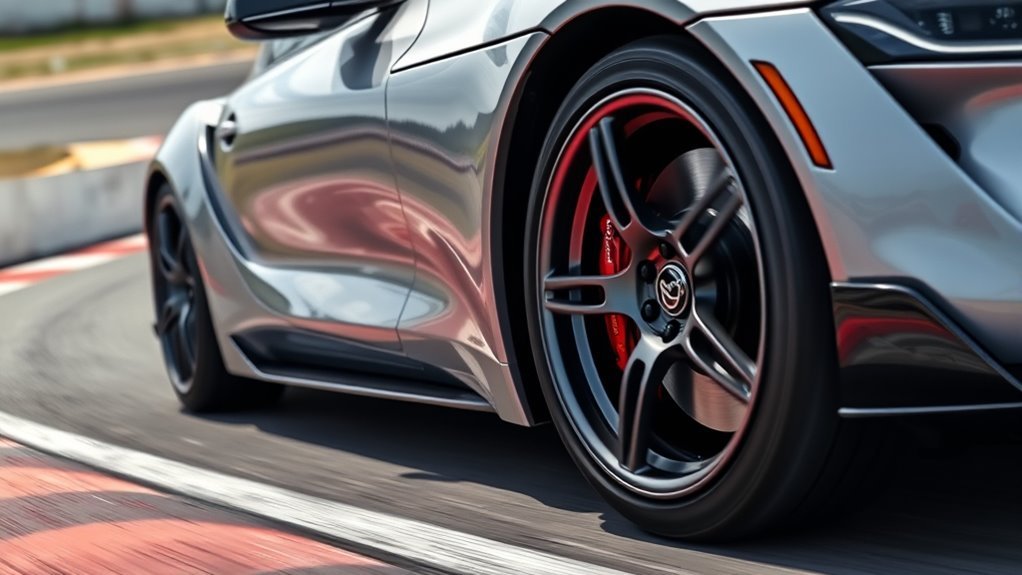
The Supra’s 50/50 weight distribution and staggered 19-inch wheel setup work together to keep contact patches balanced. Michelin Pilot Super Sport tires provide the grip and feedback needed to modulate roll and slip. Tire sidewall stiffness, tread compound, and contact shape determine how quickly load transfers and when the rear reaches its traction limit. Four-piston front brakes with ventilated, composite two-piece rotors provide thermal stability. This prevents brake-induced bias shifts so you can maintain speed through the apex.
Corner-Balancing Checklist
Any change to ride height, springs, or dampers can upset the vehicle balance. Follow this checklist after installing coilovers or other suspension parts.
- Measure static corner weight on level scales and record the distribution per wheel.
- Adjust ride height and spring rates to correct lateral and fore/aft imbalance.
- Perform suspension alignment including caster, camber, and toe settings.
- Recheck measurements after 50 to 200 miles to allow for component settling.
Supra Behavior on Track and Street
The 2020 Supra provides sharper turn-in and neutral cornering balance on both street and track. You can extract higher lateral acceleration without fighting snap-oversteer. The stiff chassis reduces flex, which ensures your inputs translate cleanly to the road. On the track, this balance helps you carry throttle earlier and modulate steering with precision. For street driving, you will feel composed responses to bumps and clearer feedback during spirited runs.
Setup and Maintenance Tips
Routine maintenance preserves the 50/50 balance. Monitor tire pressures, check alignment, and inspect springs and dampers for wear. Any deviation in these areas will alter weight transfer and handling predictability. Match ride height and damping to your specific needs, such as canyon driving or track use. Tire pressure and uneven wear patterns often signal an underlying balance issue.
- Check pressures and tread weekly.
- Inspect springs and dampers for sagging or fluid leaks.
- Re-align the vehicle after any suspension component changes.
- Seek professional corner balancing after installing performance modifications.
Frequently Asked Questions
Why is 50/50 weight distribution good for drifting?
A balanced weight distribution allows you to modulate throttle and steering precisely. Equal axle load improves traction and reduces sudden oversteer or understeer. This allows you to sustain controlled slides with consistent inputs.
Is 60/40 weight distribution good?
A 60/40 distribution offers different handling dynamics. It often improves straight-line stability and braking grip. However, this setup usually compromises performance balance in corners and requires different suspension tuning to achieve similar neutrality.
Conclusion
You will feel the 50/50 balance when you push the Supra through a fast corner. The rearward engine placement, low center of gravity, and tuned suspension work together to ensure the car responds predictably. Keep your adjustments measured and verify corner weights regularly to maintain this performance. Consult a professional mechanic for major suspension changes to ensure your vehicle remains safe and capable.