The Toyota Tacoma’s dashboard warning lights are critical indicators of your vehicle’s status. Red lights signal urgent issues, while yellow lights indicate maintenance that shouldn’t be ignored. For example, the Check Engine Light can mean anything from minor tweaks to serious problems. If you see the Brake System Warning Light, you need to act immediately. Stay proactive with regular maintenance and check your owner’s manual to understand what each light means. There’s more to uncover about these essential signals.
Understanding Dashboard Warning Lights
Understanding dashboard warning lights is essential for every Toyota Tacoma owner, as they serve as vital indicators of your vehicle’s health. These dashboard symbols signify various conditions, helping you stay informed about your truck’s performance. For instance, red warning lights, like the Brake System Warning Light, indicate serious issues that require immediate inspection. On the other hand, yellow lights signal maintenance needs that shouldn’t be ignored.
Pay attention to warning light behavior; a flashing light often indicates a more urgent problem than a steady one. The Low Fuel Level Warning Light activates when you’re down to about 2.8 gallons, reminding you to refuel soon. By grasping the dashboard symbols’ significance and responding promptly, you can maintain your Tacoma’s performance and guarantee your safety on the road. Embrace this knowledge to keep your truck in top shape and enjoy the freedom of a reliable ride.
Key Toyota Tacoma Warning Lights to Watch For
When driving your Toyota Tacoma, it’s essential to keep an eye on key warning lights that can signal important issues. From common indicators like the Check Engine Light to vital safety alerts such as the ABS Warning Light, each one serves a specific purpose. Understanding these signals helps you maintain your vehicle’s performance and safety on the road.
Common Warning Lights Explained
Dashboard warning lights in your Toyota Tacoma serve as essential indicators of your vehicle’s health and performance. Understanding these dashboard symbols can empower you to take immediate action. The Check Engine Light, usually amber, can signal anything from a loose gas cap to serious engine issues, prompting diagnostics for clarity. The ABS Warning Light, often red, indicates a malfunction in the Anti-lock Brake System, important for safe braking. When the Low Fuel Level Warning Light activates, you’ve got around 2.8 gallons left—time to refuel! The TPMS Light alerts you to underinflated tires, affecting handling and fuel efficiency. Finally, if the Oil Pressure Warning Light appears, it’s essential to address low oil pressure immediately to avoid engine damage.
Critical Safety Indicators
While driving your Toyota Tacoma, being aware of important safety indicators can make all the difference in maintaining your vehicle’s performance and your safety. The Check Engine Light can signal anything from a loose gas cap to serious engine issues, so don’t ignore it. The ABS Warning Light indicates a malfunction in your Anti-lock Brake System, vital for control during hard braking. If the Brake System Warning Light appears, it likely means low brake fluid or worn pads, both of which require immediate attention. The Oil Pressure Warning Light points to dangerously low oil pressure, risking engine damage. Finally, the Tire Pressure Monitoring System (TPMS) Light alerts you to low tire pressure, essential for ideal handling and fuel efficiency. Stay vigilant!
Maintenance Reminder Signals
Keeping an eye on your Toyota Tacoma’s maintenance reminder signals can help you avoid costly repairs and guarantee smooth operation. These signals are essential for staying on top of maintenance intervals and ensuring your vehicle runs efficiently. Here are some key lights to watch for:
- Maintenance Required Light: Illuminates after about 4,500 miles, reminding you of upcoming service needs.
- Low Engine Oil Pressure Light: Indicates dangerously low oil pressure, which can lead to severe engine damage if ignored.
- Check Engine Light: Ignoring this can lead to serious mechanical problems, signaling anything from a loose gas cap to major engine issues.
Stay proactive with these service reminders to keep your Tacoma in top shape!
What the Toyota Tacoma Check Engine Light Means?
When you see the Check Engine Light illuminate in your Toyota Tacoma, it’s a signal that something needs attention, whether it’s something as simple as a loose gas cap or a more serious engine issue. A steady amber light typically means you can continue driving to a service center, but a flashing light indicates a critical problem that requires immediate action. Ignoring the Check Engine Light can lead to severe engine damage or performance issues over time.
To pinpoint the issue, you can retrieve Diagnostic Codes using an OBD-II scanner. These codes will inform you of the specific problem triggering the light. Regular maintenance and timely inspections are essential to prevent the activation of the Check Engine Light. By staying proactive, you can guarantee your Tacoma runs smoothly and efficiently, empowering you to tackle any adventure without worry.
Responding to Brake System Warning Lights
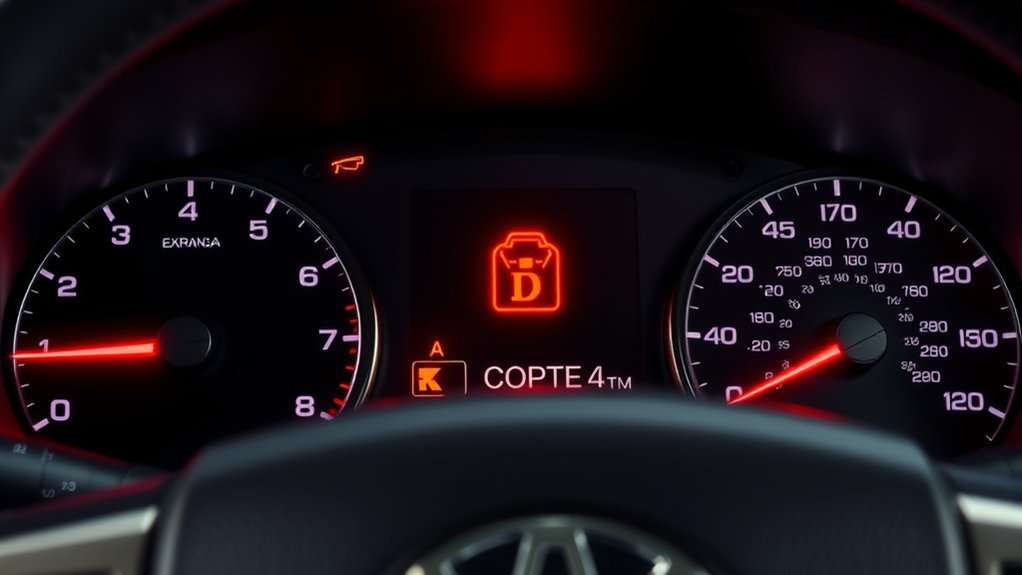
Seeing the Brake System Warning Light pop up on your Toyota Tacoma’s dashboard demands immediate attention. This red icon signals possible issues, such as low brake fluid, worn brake pads, or system leaks. Ignoring it can lead to brake failure and serious safety risks.
The Brake System Warning Light on your Toyota Tacoma signals urgent issues; ignoring it risks brake failure and safety.
Here’s what you should do:
- Pull over safely: If the light illuminates while driving, stop and assess the situation.
- Check brake fluid levels: Inspect to see if you’re low, as this could be the culprit.
- Seek professional help: If the warning light remains after you’ve addressed issues, consult a certified Toyota technician.
Regular maintenance can prevent this warning light from appearing. By monitoring brake fluid levels and pad conditions, you help guarantee your Tacoma remains both safe and reliable on the road.
How to Interpret the Tire Pressure Monitoring System (TPMS) Light
While driving your Toyota Tacoma, you might notice the Tire Pressure Monitoring System (TPMS) light illuminating, which looks like a flat tire with an exclamation point. This light signals that one or more tires are considerably underinflated, so it’s essential to check all tire pressures, including the spare. Proper tire pressure maintenance not only enhances fuel economy but also improves handling and safety.
If the TPMS light stays on after inflating the tires to the recommended levels, you may need to explore TPMS troubleshooting tips for potential leaks or a malfunctioning sensor. Ignoring this warning can lead to increased tire wear and compromised traction, especially in challenging weather conditions. So, take the time to address the TPMS light promptly; your safety and driving experience depend on it. Stay vigilant, and keep those tires in check!
Spotting Battery and Charging System Problems
If you notice the battery/charging system warning light illuminated on your Toyota Tacoma’s dashboard, it’s a signal that something’s amiss with the vehicle’s charging system, often linked to the alternator rather than the battery itself. Ignoring this warning can lead to a complete power failure, so it’s essential to address it promptly.
Here are some common symptoms of charging issues you might experience:
- Dimming headlights
- Electrical accessory malfunctions
- Difficulty starting the engine
When this light is on, turn off unnecessary electrical accessories to reduce strain on your battery. It’s important to monitor your battery performance closely. If the warning light stays illuminated, don’t hesitate to get your vehicle inspected. Serious issues might be brewing that require diagnostic testing of both the battery and alternator to get you back on the road safely.
When to Consult a Professional About Warning Lights?
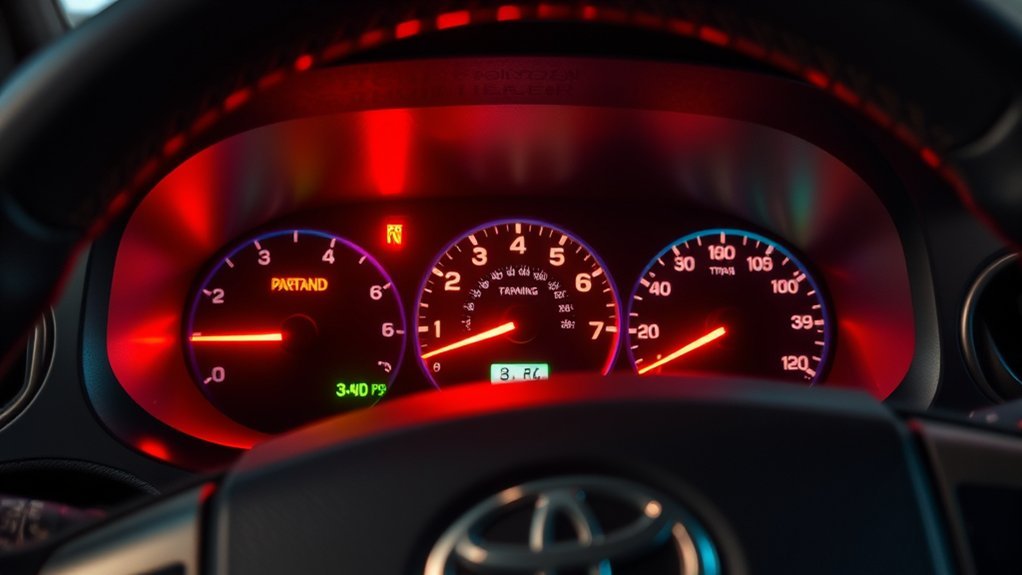
Addressing warning lights promptly can save you from more significant issues down the line. Red warning lights, like the Brake System or Oil Pressure Warning indicators, signal serious problems that need immediate attention. Ignoring them can lead to costly repairs or safety hazards. Yellow or amber lights, such as the Check Engine or Tire Pressure Monitoring System, suggest maintenance needs; while they may not be urgent, addressing them quickly is still vital to avoid complications.
If you’re ever unsure about the meaning of a warning light, don’t hesitate to seek professional diagnostics. This is essential for understanding the urgency behind the warning. Regular vehicle inspections can also help catch issues before they trigger warning lights, ensuring your Tacoma runs reliably. Remember, taking action when warning lights illuminate is key to maintaining your vehicle’s health and your safety on the road.
Tips for Maintaining Your Toyota Tacoma’s Dashboard Health
Maintaining your Toyota Tacoma’s dashboard health is essential for ensuring a smooth driving experience. By following these simple tips, you can keep your dashboard in top shape and avoid unnecessary warning lights:
Maintaining your Toyota Tacoma’s dashboard is key to a smooth driving experience and minimizing warning lights.
- Regular fluid maintenance tips: Check and maintain engine oil and coolant levels to prevent alerts related to low pressure or overheating.
- Tire pressure checks: Always keep tire pressures at manufacturer-recommended levels to avoid triggering the Tire Pressure Monitoring System (TPMS) light.
- Routine inspections: Schedule maintenance every 5,000 miles or as indicated by the Maintenance Required light to catch issues before they escalate.
Familiarize yourself with your Owner’s Manual to understand what each warning light means. Always address red warning lights immediately, as they indicate serious issues that could compromise your vehicle’s safety and performance. Taking these steps will help you enjoy a liberated and worry-free driving experience.
Frequently Asked Questions
What Should I Do if Multiple Warning Lights Activate Simultaneously?
If multiple warning lights activate simultaneously, prioritize them based on severity. Check your owner’s manual for insights. Don’t ignore alerts; they indicate potential issues that need immediate attention to guarantee your safety and vehicle’s performance.
Can Warning Lights Indicate Issues Unrelated to Engine Performance?
Warning lights can signal issues beyond engine performance, like brake system malfunctions or low tire pressure. Stay sharp; addressing these alerts guarantees your ride remains safe and smooth, liberating you to explore without worry.
How Can I Reset the Dashboard Warning Lights?
To reset dashboard warning lights, follow the reset procedure for each warning light type. Turn off the ignition, wait a moment, then restart. If the lights persist, consult your manual or a professional for further assistance.
Are There Specific Warning Lights Unique to Certain Tacoma Models?
Yes, some warning lights are unique to specific Tacoma models. While certain lights indicate general issues, others reveal model differences and specific light meanings, helping you stay informed about your truck’s health and performance.
What Happens if I Ignore a Dashboard Warning Light?
Ignoring a dashboard warning light can lead to serious issues. Those lights signal warning light significance, and potential consequences include costly repairs or safety hazards. Stay proactive and address them promptly to guarantee your vehicle’s reliability.
Conclusion
In closing, staying alert to your Toyota Tacoma’s dashboard warning lights can save you time, money, and stress. Recognizing issues early, responding promptly, and consulting a professional when needed can keep your vehicle running smoothly. By understanding the signals your dashboard sends, maintaining your truck’s health, and ensuring safety on the road, you’re not just driving; you’re driving with confidence. So, keep an eye on those lights, and enjoy every journey ahead!