What’s in This Article
- Quick Answer: DOT3 or DOT4 for a Tacoma?
- Quick Verdict: DOT3 vs DOT4 for First-Gen Tacoma
- Choose DOT3 If…
- Choose DOT4 If…
- How to Decide: Key Criteria for Tacoma Owners
- Boiling Points and Chemistry That Affect Tacoma Brakes
- DOT3 vs DOT4: Compatibility and Mixing Explained
- Wet vs Dry Boiling Point: Why Moisture Matters
- When DOT4 Is Worth the Upgrade
- Master Cylinder and Leak Checks Before Topping Off or Swapping
- How to Flush and Swap Brake Fluid on a Tacoma
- Recommended Fluids and DOT4LV Notes
- Maintenance Schedule and Leak Troubleshooting
- Frequently Asked Questions
A soft brake pedal on an older Tacoma can turn a normal drive into a safety problem fast. The fluid choice matters because heat, moisture, towing, and age all change how your brakes feel under pressure. This guide compares DOT3 and DOT4 for a first-gen Tacoma, then shows when a full flush makes more sense than a simple top-off.
Quick Answer: DOT3 or DOT4 for a Tacoma?
Quick Answer
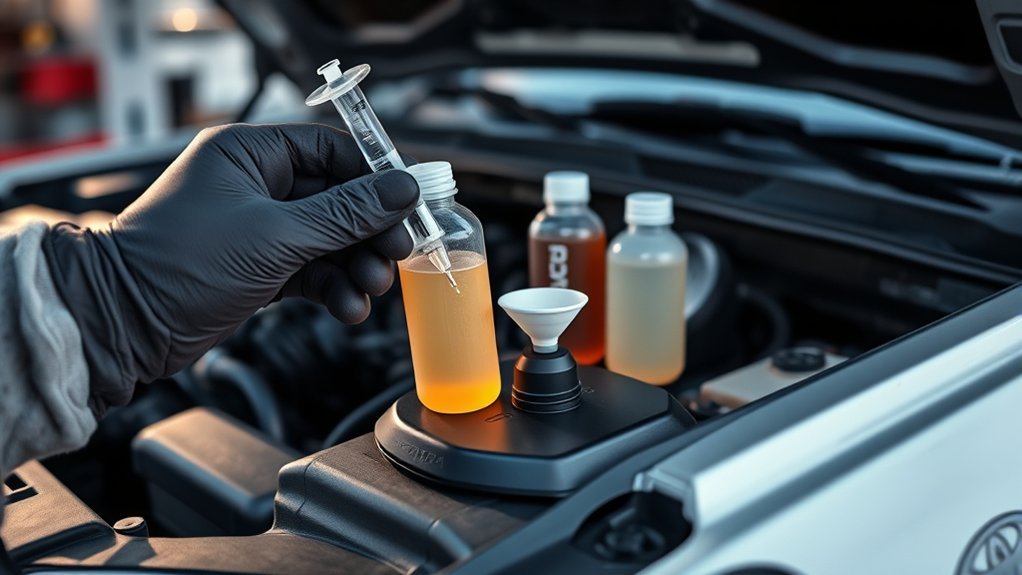
Use the brake fluid grade your Tacoma owner’s manual lists first. For most first-gen Tacoma guidance, Toyota lists FMVSS No.116 DOT3 brake fluid, while DOT4 gives a higher federal minimum boiling point. If you upgrade to DOT4 for towing, mountain driving, or repeated hard braking, flush the system fully and use fresh fluid from a sealed bottle.
Key Takeaways
- Check your Tacoma owner’s manual before you choose DOT3 or DOT4.
- DOT4 has higher minimum dry and wet boiling points than DOT3 under FMVSS No.116.
- DOT3 and DOT4 can mix in an emergency, but a full flush gives you predictable performance.
- Do not use DOT5 silicone brake fluid in a DOT3 or DOT4 Tacoma brake system.
- Flush old brake fluid sooner if you tow, drive steep grades, see leaks, or feel a soft pedal.
Quick Verdict: DOT3 vs DOT4 for First-Gen Tacoma
DOT3 suits normal first-gen Tacoma driving when your manual calls for DOT3 and your fluid stays fresh. DOT4 suits harder use because it gives you a higher heat margin before vapor forms in the hydraulic system.
Pick DOT3 for stock daily use, simple maintenance, and manual compliance. Pick DOT4 only when the label meets FMVSS No.116, your service plan supports more careful flushing, and your truck sees heat-heavy use.
| Fluid | Best For | Main Advantage | Main Caution |
|---|---|---|---|
| DOT3 | Stock daily driving | Matches common first-gen Tacoma guidance | Lower heat margin than DOT4 |
| DOT4 | Towing, steep grades, heavy braking | Higher minimum dry and wet boiling points | Needs full flush and careful service records |
Choose DOT3 If…
Choose DOT3 if your first-gen Tacoma sees normal street driving and your owner’s manual lists DOT3. This route keeps your service simple and follows Toyota’s common fluid guidance for older Tacoma models.
DOT3 still needs clean handling and regular checks. A lower fluid level, dark fluid, or soft pedal means you should inspect the system instead of only adding more fluid.
Choose DOT4 If…
Choose DOT4 if you tow, carry heavy loads, descend long grades, or drive trails that require repeated low-speed braking. DOT4 gives a higher boiling-point floor, so it adds heat margin when brake temperature climbs.
Use DOT4 as a full-system service, not as a casual top-off habit. Keep the bottle sealed until use, mark the service date and mileage, and avoid DOT5 silicone fluid.
How to Decide: Key Criteria for Tacoma Owners
Start with Toyota’s recommendation for your exact Tacoma year, trim, and brake system. Your owner’s manual should guide the minimum DOT rating before any performance preference.
If you tow heavy loads or drive in mountainous terrain, DOT4 can add useful heat margin because it has higher federal minimum boiling points. Plan a full system flush instead of mixing old and new fluid without a service record.
Vehicle Manufacturer Recommendation
Check your owner’s manual before you buy brake fluid. Toyota guidance for first-gen Tacoma manuals commonly lists SAE J1703 or FMVSS No.116 DOT3 brake fluid.
If your cap, manual, or service data lists DOT3, use DOT3 unless you have a clear reason to upgrade. If you choose DOT4, confirm the bottle meets FMVSS No.116 and flush the old fluid out.
| Criterion | DOT3 | DOT4 |
|---|---|---|
| Typical use | Daily driving | Towing or high-heat use |
| Manual match | Common first-gen Tacoma listing | Use only after spec check |
| Heat margin | Lower minimum boiling points | Higher minimum boiling points |
| Swap approach | Top off with same clean grade | Best with full flush |
You protect your braking system when you match the manual and keep moisture out of the fluid. A full fresh service gives you more predictable results than repeated small top-offs.
Boiling Point & Performance
Federal Motor Vehicle Safety Standard (FMVSS) No.116 sets DOT3 minimum dry boiling point at 205°C (401°F) and DOT4 at 230°C (446°F). It sets DOT3 minimum wet boiling point at 140°C (284°F) and DOT4 at 155°C (311°F).
That difference matters when your Tacoma tows, descends long grades, or sees repeated hard stops. Higher boiling points reduce vapor formation, which helps preserve pedal feel under heat.
Moisture still lowers the boiling point of both grades. Fresh fluid matters more than a higher grade that sat open on a shelf or stayed in the truck too long.
Boiling Points and Chemistry That Affect Tacoma Brakes
Compare dry and wet boiling points because your brake fluid works in a hot, sealed hydraulic system. Dry boiling point measures new fluid, while wet boiling point reflects fluid after moisture exposure.
DOT4 raises the minimum dry and wet boiling points through a different additive package. That does not mean every DOT4 fluid gives lower viscosity or better anti-lock braking system (ABS) response in cold weather.
Dry Vs Wet Boiling
Dry boiling point shows how fresh fluid handles heat before it starts to vaporize. Wet boiling point matters more for older fluid because glycol-based brake fluid absorbs moisture over time.
DOT4 gives a higher federal minimum in both tests. That extra margin helps when your Tacoma works harder than a light daily commute.
Do not treat those numbers as a reason to ignore maintenance. Old DOT4 can perform worse than fresh DOT3 if moisture has lowered its boiling point.
Chemical Compatibility
DOT3, DOT4, and DOT5.1 belong to the conventional glycol-based brake fluid family. DOT5 uses silicone chemistry and does not belong in a Tacoma system designed for DOT3 or DOT4.
DOT4 often uses borate ester chemistry to raise boiling points. Some DOT4 fluids may absorb moisture faster than some DOT3 fluids, so you should service by condition, time, and vehicle use.
Standard DOT4 does not guarantee lower viscosity than DOT3. If your vehicle needs low-viscosity fluid for cold ABS or stability-control response, your manual will call out that type.
DOT3 vs DOT4: Compatibility and Mixing Explained
DOT3 and DOT4 can mix because both use conventional glycol-based chemistry. That does not make mixing the best service choice for your Tacoma.
When you mix fluids, the system no longer performs like a clean fill of the higher-grade fluid. In practice, you should treat the result as a temporary fix until you can flush the system.
Warning: Do not mix DOT5 silicone brake fluid with DOT3 or DOT4 because it can create serious brake-system problems.
| Property | Practical Effect |
|---|---|
| Boiling point | Changes fade resistance under heat |
| Viscosity | Can affect cold pedal feel and ABS response |
| Fluid age | Moisture lowers real-world performance |
Consult your owner’s manual before changing grades. If you mix DOT3 and DOT4 during an emergency, schedule a full flush soon so the system returns to a known fluid condition.
Wet vs Dry Boiling Point: Why Moisture Matters
Brake fluid must stay liquid to transfer pedal force to the calipers and wheel cylinders. When heat turns wet fluid into vapor, the pedal can feel soft because vapor compresses more than liquid.
DOT3’s federal minimum dry and wet boiling points are 205°C and 140°C. DOT4’s federal minimum dry and wet boiling points are 230°C and 155°C.
Dry Boiling Point
Dry boiling point measures fresh, sealed fluid before moisture exposure. It gives you the best-case heat margin for a new bottle of brake fluid.
DOT4 starts with a higher minimum dry boiling point than DOT3. That higher threshold helps when your Tacoma sees long downhill braking or heavy load use.
You still need clean service habits. Open bottles absorb moisture, so use fresh fluid from a sealed container whenever you flush the system.
Wet Boiling Point
Wet boiling point shows why old brake fluid becomes risky. FMVSS No.116 measures wet ERBP after moisture conditioning, and the minimum values drop sharply compared with dry ratings.
DOT4 keeps a higher minimum wet boiling point than DOT3. That extra margin can help under heat, but it does not erase the need for scheduled service.
| Fluid | Minimum Dry ERBP | Minimum Wet ERBP |
|---|---|---|
| DOT3 | 205°C / 401°F | 140°C / 284°F |
| DOT4 | 230°C / 446°F | 155°C / 311°F |
Test old fluid or replace it when you do not know the service history. A clean fill matters more than the number printed on an old bottle.
Moisture Absorption Effects
Glycol-based brake fluid absorbs moisture through hoses, seals, and reservoir exposure. That moisture lowers boiling point and raises corrosion risk inside metal brake parts.
BASF notes that a vehicle can absorb up to 1.5% water in the brake fluid per year on average. Your actual result can vary by climate, age, storage, and service habits.
A spongy pedal, dark fluid, or unknown service history should push you toward inspection and a flush. Do not rely on color alone if you suspect contamination.
When DOT4 Is Worth the Upgrade (Towing, Off-Road, Heavy Loads)
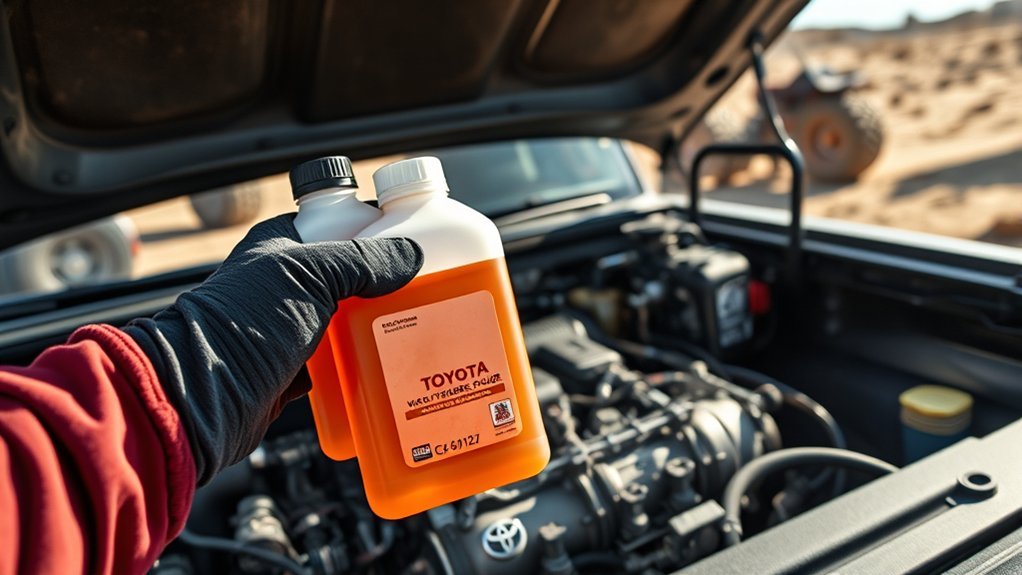
DOT4 can make sense when your Tacoma faces heat that normal street driving rarely creates. Towing, heavy payloads, mountain descents, and slow trail braking can all raise brake temperature.
DOT4’s higher minimum boiling points add thermal margin in those conditions. That margin can help preserve pedal feel when repeated braking builds heat in the calipers.
Use DOT4 with a full flush and clear records. If your truck stays stock and your manual lists DOT3, fresh DOT3 remains the safer default choice for routine service.
Master Cylinder and Leak Checks Before Topping Off or Swapping
The master cylinder reservoir gives you an early warning about brake condition. A low level can point to pad wear, a leak, or a recent service error.
Inspect the reservoir and nearby parts before you top off or change fluids. Do not keep adding fluid until you rule out leaks.
- Inspect the master cylinder housing, cap seal, and reservoir for cracks or wet residue.
- Check brake lines, fittings, caliper boots, and wheel cylinders for fresh fluid or damp spots.
- Compare the fluid level with the MIN and MAX marks after pad service.
- Press the pedal and watch for a soft, sinking, or inconsistent feel.
- Document the date, mileage, fluid type, and any leak findings.
Brake fluid damages paint, so clean spills right away with care. Use gloves, keep dirt out of the reservoir, and dispose of old fluid under local rules.
How to Flush and Swap Brake Fluid on a Tacoma (Step-by-Step)
Set aside enough time to work slowly and keep the reservoir from running dry. You’ll need fresh brake fluid, a clear hose, a catch bottle, a wrench for the bleeder valves, wheel chocks, gloves, and eye protection.
- Park the Tacoma on level ground, chock the wheels, and open the master cylinder reservoir.
- Remove old fluid from the reservoir with a clean extractor, then add fresh fluid to the proper mark.
- Start at the wheel farthest from the master cylinder unless your service manual gives a different order.
- Attach a clear hose to the bleeder valve and place the other end in a catch bottle.
- Ask an assistant to press the brake pedal while you open the bleeder valve briefly.
- Close the valve before the assistant releases the pedal, then repeat until clean fluid appears.
- Check the reservoir often and add fluid before the level drops too low.
- Repeat the process at each wheel, then confirm a firm pedal and correct fluid level.
- Reinstall the reservoir cap, clean spills, and record the date, mileage, and fluid grade.
If air enters the system, the pedal may stay soft after bleeding. Stop and get professional help if you cannot restore a firm pedal.
Recommended Fluids and Brands for Tacomas (DOT4 and DOT4LV Notes)

Choose brake fluid by specification first, not by brand name alone. The bottle should list the DOT grade and a recognized standard such as FMVSS No.116.
DOT4LV means low-viscosity DOT4-style brake fluid, and it matters most for systems that need fast ABS or stability-control response in cold weather. Do not assume your first-gen Tacoma needs DOT4LV unless service data says so.
- Use Toyota-recommended DOT3 when your manual lists DOT3 for your Tacoma.
- Choose a sealed DOT4 bottle only when you want more heat margin and plan a full flush.
- Check ATE, Toyota, Motul, Castrol, Valvoline, or similar brands by the exact label specification.
- Use low-viscosity fluid only if your service manual calls for it.
- Discard old opened bottles when you cannot confirm clean, dry storage.
Maintenance Schedule, Leak Troubleshooting, and When to Get Professional Help
Follow your Tacoma owner’s manual for fluid type and maintenance checks. For an older truck with unknown brake-fluid history, test the fluid or flush it before hard use.
Inspect the master cylinder level monthly and after brake work. A level drop can point to pad wear, but damp lines, wet calipers, or fluid trails point to a leak.
Get professional help if the pedal sinks, the ABS light stays on, fluid keeps dropping, or any brake line shows corrosion or seepage. Safe braking matters more than saving one service visit.
Frequently Asked Questions
Can You Mix DOT3 and DOT4 Brake Fluid on a Toyota?
DOT3 and DOT4 can mix because both use conventional glycol-based chemistry. You should still treat mixing as temporary and flush the system when you can.
Does Toyota Use DOT3 or DOT4?
Many older Toyota manuals, including first-gen Tacoma guidance, list SAE J1703 or FMVSS No.116 DOT3 brake fluid. Always check the manual, reservoir cap, or service data for your exact model year.
Should I Upgrade to DOT4?
Upgrade to DOT4 only when you need more heat margin for towing, steep grades, heavy loads, or repeated hard braking. Keep DOT3 if your Tacoma sees normal use and your manual lists DOT3.
Is DOT4LV the Same as Regular DOT4?
No. DOT4LV refers to low-viscosity fluid for systems that need faster flow in cold conditions. Use it only when your service manual calls for low-viscosity brake fluid.
How Often Should You Flush Tacoma Brake Fluid?
Follow Toyota’s maintenance guidance first. If you do not know the service history, tow often, drive steep grades, or find moisture in the fluid, flush it sooner.
Safety Disclaimer: This article is for informational purposes only and does not replace advice from a qualified automotive technician. Brake work affects vehicle safety, so get professional help if you find leaks, air in the system, ABS faults, or an unstable pedal.
Conclusion
DOT3 remains the default choice when your first-gen Tacoma manual lists DOT3 and your driving stays normal. DOT4 can add useful heat margin when towing, descending long grades, or braking hard often.
Check the manual first, inspect for leaks, then choose a full flush when you change grades or find old fluid. Fresh, clean brake fluid gives your Tacoma the safest and most predictable pedal feel.
References
- 49 CFR § 571.116, Standard No. 116, Motor Vehicle Brake Fluids – Legal Information Institute, current e-CFR text
- Toyota Tacoma Owner’s Manual, OM35814U – Toyota, first-gen Tacoma owner guidance
- Toyota Tacoma Owner’s Manual, OM35766U – Toyota, first-gen Tacoma owner guidance
- Brake Fluids – BASF, brake-fluid boiling point and moisture information
- Brake Fluid FAQs – NAPA, brake-fluid types, moisture, and service guidance