How to Calibrate Your Tire Pressure Gauge for Accurate Readings

What’s in This Article
- Before You Begin: Tools, Time, and Setup
- Step-by-Step Tire Pressure Gauge Calibration Process
- Digital vs. Analog Tire Pressure Gauges: What Changes During Calibration
- Preparing Your Gauge for Calibration: Cleaning and Inspection
- How to Check and Adjust an Analog Tire Pressure Gauge
- How to Check and Reset a Digital Tire Pressure Gauge
- Common Calibration Problems and How to Fix Them
- Best Practices for Maintaining Tire Pressure Gauge Accuracy
- How Often Should You Calibrate Your Tire Pressure Gauge?
- Where to Get Reliable Tire Gauge Calibration Help
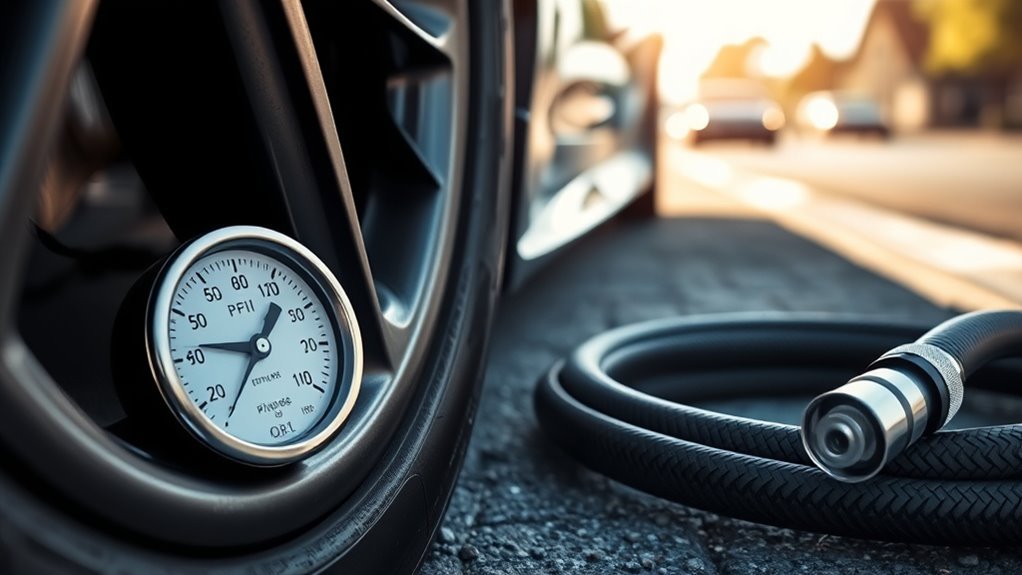
A tire pressure gauge that reads wrong can push you toward the wrong tire pressure. That small error can affect handling, tire wear, and fuel use. This guide shows you how to check your gauge, compare it with a reference gauge, and decide when to adjust, reset, or replace it.
Quick Answer
To calibrate a tire pressure gauge, compare it with a more accurate reference gauge at the same pressure. If your gauge supports adjustment, follow the manufacturer’s reset or calibration steps. If it cannot be adjusted, write down the offset or replace it when the reading stays wrong.
Key Takeaways
- Compare your tire pressure gauge with a more accurate reference gauge before you trust the reading.
- Check tire pressure when tires are cold for the most accurate result.
- Use the pressure listed on your vehicle placard or owner’s manual, not the number on the tire sidewall.
- Replace a gauge that stays off by several pounds per square inch and has no adjustment option.
- Check gauge accuracy at least once a year, before long trips, and after drops or rough use.
Before You Begin: Tools, Time, and Setup
Plan about 10 to 20 minutes for a basic tire gauge accuracy check. Work at a steady room temperature when possible, and use the same tire or pressure source for each comparison.
You’ll need a tire pressure gauge, a more accurate reference gauge, and access to an air source or tire with stable pressure. A reference gauge should list its accuracy and should read in the same pounds per square inch (PSI) range as your tire gauge.
Warning: Use your vehicle placard or owner’s manual for the correct PSI, not the maximum pressure printed on the tire sidewall.
Step-by-Step Tire Pressure Gauge Calibration Process
Most home users do a calibration check, not a lab calibration. You compare your gauge with a better gauge, then decide whether you can adjust it.
- Clean the gauge. Wipe the nozzle and face so dirt does not block the valve seal or hide the reading.
- Check the gauge condition. Look for cracks, leaks, bent parts, weak batteries, or a needle that does not return to zero.
- Set a stable pressure point. Use a cold tire or a controlled air source that holds pressure long enough for repeated checks.
- Measure with the reference gauge. Press it firmly on the valve stem and record the PSI reading.
- Measure with your gauge. Use the same valve stem and pressure condition, then record the reading.
- Repeat the comparison. Take at least three readings with each gauge so one poor seal does not mislead you.
- Calculate the difference. Subtract your gauge reading from the reference gauge reading.
- Adjust the gauge if possible. Use the reset or calibration feature only if your model includes one.
- Record the offset if needed. If your gauge always reads 2 PSI high, subtract 2 PSI when you use it.
- Replace the gauge when readings stay unstable. A gauge that jumps around or changes offset often no longer gives you safe guidance.
NHTSA says proper tire pressure affects safety, tire durability, and fuel use. It also recommends checking all tires, including the spare, at least once a month when tires are cold.
Digital vs. Analog Tire Pressure Gauges: What Changes During Calibration
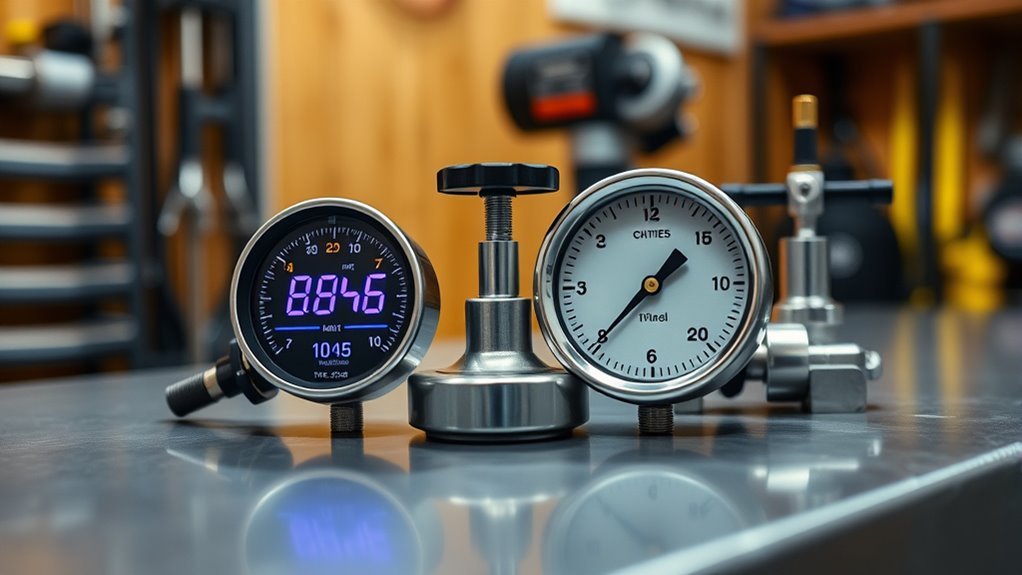
Digital and analog tire pressure gauges can both work well, but they fail in different ways. Many digital gauges use electronic pressure sensors, so weak batteries or electronic faults can cause wrong readings.
Analog dial gauges often use mechanical parts, such as a Bourdon tube and needle movement. These parts can wear, stick, or shift after drops and rough storage.
Digital gauges reduce viewing mistakes because they show a number on a screen. Analog gauges need careful viewing because the needle can look different when you read it from an angle.
Preparing Your Gauge for Calibration: Cleaning and Inspection
Before calibrating your tire pressure gauge, make sure it stays clean and works smoothly. A quick inspection helps you catch problems before you trust the reading.
- Clean the nozzle to remove dust, grit, or rubber debris.
- Inspect the case for cracks, corrosion, or signs of impact damage.
- Check the battery in digital gauges before you compare readings.
- Look for leaks or cloudy fluid if you use a liquid-filled gauge.
- Confirm that an analog needle returns to zero before use.
Store your gauge in a protective case and keep it away from moisture and extreme heat. Rough storage can damage the seal, screen, or needle movement.
How to Check and Adjust an Analog Tire Pressure Gauge

Start by applying pressure across the gauge’s normal range a few times. This helps the needle movement settle before you compare it with a reference gauge.
Next, press the gauge firmly on the same valve stem used for the reference gauge. View the dial straight on so you avoid parallax error, which happens when the needle looks shifted from an angle.
If the gauge has an adjustment screw or zero set feature, follow the manufacturer’s instructions. If it does not, record the offset or replace the gauge when the error affects safe tire inflation.
How to Check and Reset a Digital Tire Pressure Gauge
Start by checking the battery. A weak battery can cause dim displays, slow readings, or inconsistent pressure results.
Compare your digital tire pressure gauge with a reference gauge under the same pressure condition. If your digital gauge has a reset button or calibration mode, follow the owner’s manual exactly.
Note: Many consumer digital gauges do not offer true user calibration, so replacement may make more sense than adjustment.
Checking Battery Levels
Battery condition matters because a digital gauge needs steady power for accurate measurements. Replace the battery if the low-battery icon appears or if readings change without a clear reason.
- Use the battery type listed in the gauge manual.
- Replace weak batteries before long trips.
- Clean the battery contacts if the display flickers.
- Test again after battery replacement to confirm steady readings.
Comparing Reference Gauges
Use a reliable reference gauge with stated accuracy. NIST pressure calibration services show why calibrated pressure instruments matter when you need traceable pressure measurements.
Measure the same tire with both gauges while the tire stays cold. Record three readings from each gauge, then compare the average result.
If the difference stays small and consistent, you can note the offset. If the difference changes from one reading to the next, stop trusting that gauge.
Common Calibration Problems and How to Fix Them
Calibration problems often come from poor sealing, angle errors, weak batteries, or worn mechanical parts. You can fix many reading problems with careful setup before you replace the gauge.
Common Calibration Errors
- Poor valve seal: Press the gauge straight onto the valve stem until the hissing stops.
- Parallax distortion: Read analog gauges from directly in front of the dial.
- Mechanical sticking: Apply pressure a few times to help the needle movement settle.
- Weak battery: Replace digital gauge batteries before comparing readings.
- Temperature change: Check tires cold because heat from driving can raise the reading.
Addressing Mechanical Issues
Analog gauges can lose accuracy when the internal movement wears or sticks. Gently tap the gauge face after applying pressure if the needle fails to settle.
Never hit the gauge hard or force the needle. Replace the gauge if the needle sticks, fails to return to zero, or gives a different reading each time.
Ensuring Consistent Readings
Consistent readings depend on the same pressure source, the same angle, and a firm valve seal. Take multiple readings before you decide that your gauge needs adjustment.
Bridgestone notes that tire pressure can change by about 1 PSI for every 10 degrees Fahrenheit change in ambient temperature. That makes cold-tire checks more reliable.
Best Practices for Maintaining Tire Pressure Gauge Accuracy
Check your tire pressure gauge against a reference gauge at least once a year. Check it sooner if you drop it, store it in extreme heat, or see readings that do not match your vehicle’s tire pressure monitoring system (TPMS).
NHTSA explains that TPMS warnings usually appear only when a tire becomes significantly underinflated. You should still use a gauge for monthly pressure checks.
Keep your gauge dry, clean, and protected. Dirt in the nozzle or damage to the seal can cause air leaks during measurement.
Pro tip: Keep one trusted gauge in your vehicle and one reference gauge at home for quick accuracy checks.
How Often Should You Calibrate Your Tire Pressure Gauge?

You should check your tire pressure gauge accuracy at least once a year. Check it before long road trips, track days, towing, or any drive where tire pressure matters more than usual.
Check your tire pressure gauge against a reliable reference gauge at least once a year.
- Check more often if you use the gauge every week.
- Check right away if you drop the gauge or damage the nozzle.
- Check before long trips because wrong tire pressure can affect safety.
- Check analog gauges more often if the needle sticks or fails to return to zero.
Ashcroft notes that pressure gauges lose accuracy over time and recommends regular calibration checks. For consumer tire gauges, a yearly accuracy check gives you a practical maintenance habit.
When to Replace Instead of Calibrate
Replace your gauge when it gives unstable readings, leaks at the nozzle, or stays several PSI away from a trusted reference gauge. A cheap gauge with no adjustment feature may cost less to replace than to service.
Replace it right away if you use it for towing, heavy loads, motorsports, or any situation where tire pressure affects control and tire heat. A reliable gauge gives you a safer starting point before you drive.
Where to Get Reliable Tire Gauge Calibration Help
Use your gauge manual first because reset steps vary by model. For higher accuracy needs, ask a tire shop, motorsports shop, or calibration lab to compare your gauge with a traceable pressure standard.
NIST maintains pressure measurement standards and provides pressure calibration services for specialized instruments. That level of calibration usually exceeds what most home drivers need, but it shows why a trusted reference gauge matters.
You can also ask a local tire shop to compare your gauge during service. This quick check helps you find a bad gauge before it causes repeated tire pressure mistakes.
Frequently Asked Questions
Can You Calibrate a Digital Tire Pressure Gauge?
Yes, you can check a digital tire pressure gauge against a reliable reference gauge. You can only calibrate or reset it if the model includes that feature.
How Do You Calibrate an Analog Tire Pressure Gauge?
Compare the analog gauge with a more accurate reference gauge at the same pressure. If the gauge has an adjustment feature, follow the manual. If it does not, record the offset or replace the gauge.
How Do You Reset a Digital Tire Pressure Gauge?
Many digital gauges reset by pressing a power, zero, or mode button. Some models need battery removal or a specific reset sequence, so check your owner’s manual.
Do Digital Pressure Gauges Need Calibration Checks?
Yes, digital gauges still need accuracy checks. Sensors, batteries, and electronic parts can drift or fail, especially after drops or long storage.
What Should You Do If Your Tire Gauge Is 2 PSI Off?
If the error stays consistent, you can note the offset and adjust your reading. Replace the gauge if the error changes or if you need more confidence for towing, heavy loads, or long trips.
Conclusion
A calibrated tire pressure gauge helps you set tire pressure with more confidence. Compare your gauge with a trusted reference, check tires cold, and replace any gauge that gives unstable readings.
Make this check part of your yearly vehicle care routine. A few minutes with the right gauge can support safer handling, longer tire life, and a smoother drive.
References
- Tire Safety Ratings and Awareness: TireWise – National Highway Traffic Safety Administration, 2026
- Pressure/Vacuum Calibrations – National Institute of Standards and Technology, updated 2026
- Proper Tire Inflation and Tire Pressure Information – Bridgestone Americas
- How To Check the Calibration of a Pressure Gauge – Ashcroft, 2025