To maximize your Camry’s regenerative braking efficiency, anticipate stops and ease off the accelerator early. This approach enhances energy recovery and keeps the dashboard needle in the CHG zone. Avoid hard braking to prevent energy waste from friction brakes. Maintain your battery charge between 20% and 80% for best results, and use EV mode in low-speed situations. Regularly monitor dashboard indicators to refine your technique and improve battery management. There’s still more to uncover about efficient driving strategies.
How Regenerative Braking Works in Your Camry
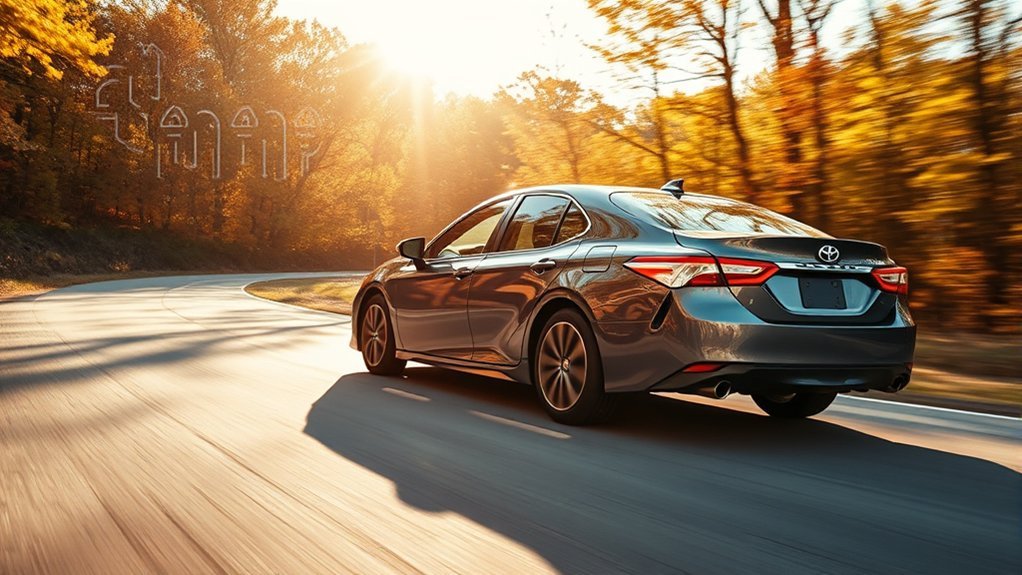
When you decelerate in your Camry, regenerative braking activates to recover kinetic energy, converting it into electrical energy that recharges the hybrid battery. This system leverages advanced braking mechanics, allowing you to harness energy typically lost during braking. As you gently apply the brakes, the dashboard needle moves into the CHG (charge) zone, indicating successful energy capture.
To optimize energy conversion, anticipate stops and brake softly, minimizing the use of traditional disc brakes that generate heat and waste energy. The hybrid system favors regenerative braking, but hard braking can compromise efficiency by engaging friction brakes. By monitoring the needle position, you can fine-tune your driving behavior, maximizing energy recovery and enhancing fuel economy. Embracing this approach not only liberates you from excessive fuel consumption but also promotes a more sustainable driving experience.
How to Optimize Regenerative Braking Energy Recovery
To optimize regenerative braking energy recovery, anticipate stops and brake gently. This approach allows your Camry to reclaim more energy while slowing down, enhancing overall efficiency. By practicing smooth driving habits, you’ll maximize the potential of the regenerative braking system.
Anticipate Stops Strategically
Anticipating stops strategically can greatly enhance your Camry’s regenerative braking efficiency. By looking ahead and easing off the accelerator early, you enable your vehicle to harness regenerative braking effectively as it slows down. Focus on your stop timing, and keep traffic awareness in mind to plan your route, avoiding sudden stops and heavy congestion.
| Action | Benefit | Result |
|---|---|---|
| Look Ahead | Better stop timing | Smooth braking |
| Ease Off Accelerator | Engage regenerative braking | Increased energy recovery |
| Plan Routes | Avoid abrupt stops | Extended brake life |
| Brake Gently | Maximize CHG zone | Efficient energy use |
| Practice Early Braking | Manage battery better | Overall efficiency boost |
Implementing these techniques not only conserves energy but also extends the life of your brakes.
Brake Gently and Smoothly
Braking gently and smoothly is essential for optimizing regenerative braking energy recovery in your Camry. By employing effective braking techniques, you maximize the system’s ability to convert kinetic energy into electrical energy, enhancing energy conservation. Anticipate stops well in advance; this allows you to engage regenerative braking effectively, maintaining momentum while reducing reliance on friction brakes. Aim for gradual deceleration to minimize abrupt stops, which can lead to energy loss as heat when friction brakes engage. Monitor the dashboard needle in the CHG zone; a slight dip indicates effective energy recovery. Practicing early braking not only improves battery management but also extends the life of both your hybrid battery and friction brakes, ultimately contributing to a more efficient driving experience.
Top Tips for Smooth Driving to Enhance Regenerative Braking
When you ease off the accelerator early, the Camry’s regenerative braking system kicks in, allowing for efficient energy recovery without the need for abrupt stops. This simple adjustment in your driving habits is essential for energy conservation. By braking gently and smoothly, you keep the vehicle in the CHG (charge) zone on the dashboard, maximizing energy recovery.
Maintaining a steady speed and avoiding rapid accelerations not only reduces energy demand but also enhances the overall efficiency of your hybrid system. In low-speed driving situations, utilize the EV mode to operate silently and optimize battery usage, especially during urban commutes.
Additionally, regularly check and adjust tire pressure to the recommended levels. Underinflated tires increase rolling resistance, negatively impacting regenerative braking efficiency. By implementing these tips, you’ll enhance not just your driving experience but also contribute to sustainable energy use.
How Battery Charge Affects Your Regenerative Braking
The efficiency of your Camry’s regenerative braking system largely depends on the battery’s state of charge. When the battery’s full, regenerative braking may be limited or disabled to prevent overcharging, which means valuable energy recovery is lost. To enhance regenerative braking, aim to keep your battery charge between 20% and 80%. This range not only boosts energy recovery but also safeguards battery health.
If your battery nears full capacity, any energy that could be harnessed through regenerative braking may dissipate as heat when you rely on traditional friction brakes. Monitoring your dashboard indicators can help you gauge battery levels and adjust your braking techniques accordingly. Anticipating stops and employing gentle braking will further improve regenerative braking efficiency, especially when your battery is within an ideal charge range. Effective charge management is key to liberating the full potential of your regenerative braking system.
When Should You Use Regenerative Braking for Best Results?

To maximize the benefits of your Camry’s regenerative braking system, focus on using it primarily in urban environments where frequent stops occur. This approach enhances energy recovery considerably compared to highway driving. Here are some effective urban driving strategies:
- Anticipate Stops: Engage regenerative braking early to smooth your deceleration and optimize energy recovery.
- Brake Gently: Use light braking pressure to reduce energy loss, enhancing the regenerative braking benefits.
- Minimize Friction Brakes: Limit their use, as they convert energy into heat, undermining your efficiency.
- Monitor Energy Recovery: Keep an eye on dashboard indicators to verify you’re staying in the CHG (charge) zone, adjusting your technique as needed.
How to Monitor Dashboard Indicators for Better Efficiency
To maximize efficiency, keep a close eye on the CHG needle movement on your dashboard. Recognizing the charge zone limits helps you adjust your braking strategy effectively, ensuring ideal energy recovery. By understanding these patterns, you can enhance your fuel economy and reduce unnecessary energy loss.
Understand Needle Movement Patterns
Monitoring dashboard indicators, specifically the needle movement in the energy recovery gauge, is essential for optimizing your Camry’s regenerative braking efficiency. Understanding needle behavior helps you adapt your braking dynamics effectively. Here are some key actions to reflect on:
- Track Needle Position: Keep the needle in the CHG (charge) zone to maximize energy capture during braking.
- Observe Dips: A slight dip indicates minimal energy recovery; adjust your braking accordingly.
- Anticipate Stops: Recognizing how the needle behaves in various situations aids in planning your stops, reducing excessive braking.
- Check Regularly: Frequent monitoring enhances fuel economy by allowing you to refine your driving habits.
Recognize Charge Zone Limits
While driving your Camry, recognizing the charge zone limits on the dashboard is essential for improving regenerative braking efficiency. Keep an eye on the needle; its movement into the CHG (charge) zone signifies successful energy capture during braking. A slight dip indicates minimal energy recovery, while reaching the maximum charge limit shows peak recapture. Adjust your braking strategy based on the needle’s position, aiming to maintain it within the charge zone to enhance fuel economy. Anticipating stops will maximize energy recovery, as you’ll notice the needle rise during gradual braking. Understanding these dashboard indicators allows you to manage regenerative braking effectively, ultimately contributing to a more liberated driving experience.
Optimize Braking Strategies Effectively
Effective braking strategies hinge on your ability to interpret the dashboard indicators accurately. By monitoring these, you can enhance your braking patterns for ideal energy conservation. Here’s how:
- Keep an Eye on the Needle: Regularly check that it’s in the CHG (charge) zone for effective energy recovery.
- Brake Gently: Aim for soft braking to maximize regenerative efficiency; hard braking wastes energy as heat.
- Anticipate Stops: Gradually reduce speed to let the regenerative system recharge the hybrid battery efficiently.
- Adjust When Full: If the needle hits its maximum charge limit, modify your braking strategy to prevent unnecessary energy loss.
Understanding these indicators allows you to refine your techniques, ultimately improving fuel economy and battery management.
Frequently Asked Questions
Can Regenerative Braking Wear Out My Brake Pads Faster?
Regenerative braking doesn’t wear out your brake pads faster; instead, it enhances brake pad longevity by reducing their use. Proper regenerative braking maintenance guarantees peak performance, so you can enjoy a longer-lasting braking system.
Does Driving Speed Affect Regenerative Braking Efficiency?
Yes, driving speed notably affects regenerative braking efficiency. By optimizing your speed, you can reduce braking distance and enhance energy recovery. Adjusting your driving habits promotes better performance and prolongs overall brake lifespan.
Can I Disable Regenerative Braking Entirely?
Yes, you can disable regenerative braking entirely. However, you’ll lose its benefits, which enhance efficiency and extend range. Adjusting your driving habits might be necessary to maintain performance without this system actively supporting your vehicle.
How Does Weather Impact Regenerative Braking Performance?
Weather affects regenerative braking by reducing battery performance in cold temperatures and wet conditions. Slippery road surfaces can hinder braking efficiency, while your driving habits play a vital role in optimizing energy recovery during these conditions.
Is There a Range Limit for Regenerative Braking Effectiveness?
Yes, regenerative braking has limits influenced by efficiency factors like speed and battery charge. As conditions change, effectiveness may decrease, making it essential for you to understand these limits to maximize your vehicle’s performance.
Conclusion
Incorporating regenerative braking into your driving routine is like harnessing the wind to sail smoothly through your day. By optimizing your techniques and understanding your Camry’s systems, you can effectively capture and reuse energy, enhancing efficiency with every stop. Remember, a well-charged battery and mindful driving habits are your allies. Keep an eye on those dashboard indicators, and you’ll not only boost your vehicle’s performance but also contribute to a greener tomorrow.