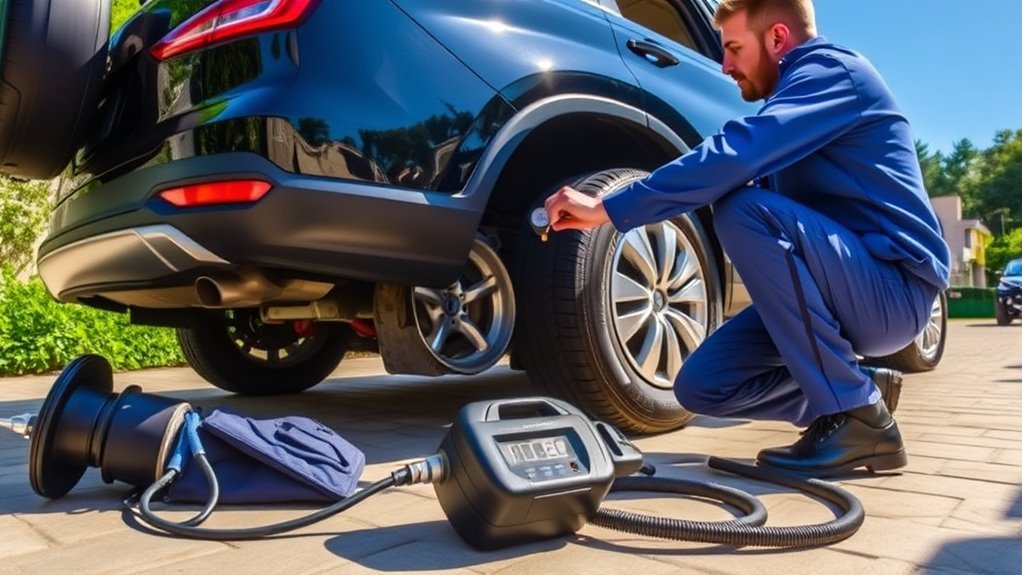
To maintain your tire inflator air filter, keep an eye out for signs of clogging, like longer fill times and a dark brownish hue on the filter. Clean the filter monthly using a soft brush or compressed air, and replace it every 6 to 12 months if you notice decreased airflow or persistent issues. Neglecting maintenance can lead to inefficiencies and higher energy costs. Learn more about proper care techniques and additional signs of wear and tear.
Signs Your Tire Inflator Air Filter Is Clogged

When you notice your tire inflator taking longer to fill tires than usual, it might be a sign that the air filter is clogged. Look for visible discoloration; a once-clean filter may turn a dark brownish hue due to dirt buildup. This dirty air filter can drastically reduce airflow, forcing your inflator to work harder and increasing energy consumption. You might also hear strange noises or notice frequent overheating, both indicating strain on the motor from restricted airflow. Additionally, dust and debris accumulation around the air vents suggests the filter isn’t capturing contaminants effectively. To mitigate rising operational costs, regularly inspect and maintain your tire inflator’s air filter, ensuring peak performance and longevity.
How to Clean Your Tire Inflator Air Filter
Cleaning your tire inflator’s air filter is essential for maintaining its efficiency and prolonging its lifespan. Start by unplugging and allowing the inflator to cool. Remove the air filter according to the manufacturer’s instructions, usually by unscrewing or unclipping it. Use a soft brush or compressed air to clean the filter, ensuring you don’t damage it. If it’s washable, rinse it with mild soap and water, then let it dry completely before reinstalling.
| Step | Action |
|---|---|
| 1 | Unplug and cool the tire inflator. |
| 2 | Remove the air filter as per instructions. |
| 3 | Brush off dust and debris carefully. |
| 4 | Wash with soap and water if applicable. |
| 5 | Allow to dry completely before replacing. |
Regular checking can help maintain ideal airflow and prevent clogging.
Signs It’s Time to Replace Your Tire Inflator Air Filter?
Maintaining your tire inflator’s air filter is essential, but there comes a time when cleaning isn’t enough. Recognizing the signs of a failing air filter can save you from inefficiencies and increased costs. Here are three clear signs it’s time to replace your air filter:
Recognizing when to replace your tire inflator’s air filter is crucial for maintaining efficiency and avoiding unnecessary costs.
- Decreased Airflow: If you notice a significant drop in airflow, clogged filters may be obstructing performance.
- Discoloration: A dark brownish tint indicates dirt accumulation, signaling the need for replacement.
- Increased Energy Bills: Higher electricity usage while inflating suggests your unit is working harder due to a dirty filter.
Address these issues promptly to maintain peak air quality and performance. Don’t let a clogged filter compromise your tire inflator’s efficiency.
Impact of Ignoring Tire Inflator Filter Maintenance on Performance and Safety

Neglecting tire inflator filter maintenance can severely impact both performance and safety. A clogged filter restricts airflow, causing your inflator to work harder and take longer to inflate tires, which can lead to overheating. Inconsistent air pressure readings from the clogged filter increase the risk of underinflated or overinflated tires, jeopardizing vehicle safety. Additionally, dirt and debris entering the inflator can damage internal components, resulting in costly repairs. This inefficiency also raises energy consumption, driving up your electricity bills. Regularly checking and replacing your tire inflator filter not only enhances performance but also extends its lifespan, ensuring reliable tire inflation and improved overall vehicle safety. Don’t ignore the signs it’s clogged; proactive maintenance is essential.
Essential Maintenance Tips for Your Tire Inflator
To guarantee peak performance from your tire inflator, regular maintenance is key. Follow these essential maintenance tips to keep your inflator running efficiently:
Regular maintenance is crucial for optimal performance of your tire inflator; follow key tips for efficient operation.
- Inspect the air compressor filter monthly for signs of clogging or damage, like discoloration or dirt buildup.
- Clean the air filter at least once a month to prevent dust and debris from hindering airflow, which can reduce efficiency.
- Know when it’s time to replace the filter, typically every 6 to 12 months, or when you notice performance issues. Always use high-quality filters to confirm you maintain the inflator’s effectiveness and avoid increased energy consumption. Regular attention to these details will help you achieve peak performance and longevity from your tire inflator.
Frequently Asked Questions
How Do You Know if Your Air Filter Is Clogged?
You’ll know your air filter’s clogged if you notice performance issues, discolored filters, or unusual noises. Regular maintenance tips include cleaning techniques and knowing replacement frequency to guarantee ideal air quality and filter lifespan. Avoid common mistakes!
How Do You Know if Your Filter Is Clogged?
You’ll know your filter’s clogged if airflow drops, efficiency suffers, or you notice discoloration. Regular maintenance, including cleaning methods and tracking replacement frequency, maximizes lifespan and guarantees peak air quality and performance. Common issues can often be addressed with DIY solutions.
How Do I Unclog My Air Filter?
To unclog your air filter, inspect and use DIY cleaning methods like compressed air. Regular maintenance extends filter lifespan, and knowing symptoms of a clogged filter can enhance performance and air quality. Replace as needed for ideal function.
What Are Three Symptoms of a Clogged Cabin Air Filter?
Three symptoms of a clogged cabin air filter include reduced airflow from the vents, unpleasant odors due to trapped moisture, and increased noise levels, all of which indicate the need for timely maintenance and filter replacement.
Conclusion
In conclusion, maintaining your tire inflator air filter is essential for peak performance and safety. Just like a car’s engine needs clean oil to run smoothly, your inflator requires a clean filter to function effectively. Regularly check for signs of clogging, clean the filter as needed, and replace it when necessary. Neglecting this maintenance can lead to decreased efficiency and potential safety hazards. Keep your inflator in top shape, and it’ll serve you well for miles ahead.