You’ll hear a steady humming or grinding from the front that grows with speed or changes when you turn; jack the Tundra, grasp the tire at 12 and 6 o’clock and check for play, then spin the wheel to feel roughness. Distinguish bearings from brakes (squeal when applied), CVs (clicks on turns) and tires (thump/vibrate). Sealed bearings hide wear; water, rims, load or poor lubrication cause failure. Keep driving limited and consult repair options, costs and inspection steps to learn more.
Quick Diagnostic Checklist for Tundra Wheel‑Bearing Noise
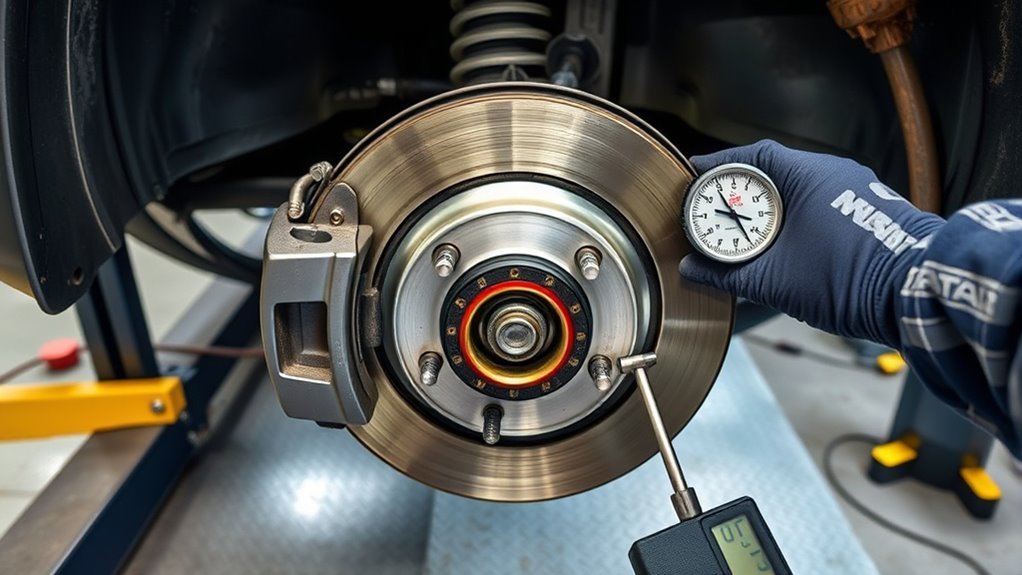
When you hear a loud humming or grinding from the front wheels that grows with speed or shifts when you turn, start a quick diagnostic check to isolate a failing wheel bearing. You’ll follow a focused sequence: listen while driving at varied speeds to confirm consistent front-wheel origin, then park safely and jack the truck. Grip the tire at 12 and 6 o’clock and wobble it; any perceptible play—even slight—warrants further inspection. Spin the wheel by hand and note grinding or roughness that indicates internal bearing damage. Inspect the brake area for debris between pads and rotors; clear contaminants to support wheel bearing maintenance and noise prevention. Log findings and, if symptoms persist or play exists, don’t drive aggressively—consult a professional for detailed inspection and replacement. This checklist arms you with practical checks that free you from uncertainty and prioritize safety and vehicle longevity.
Top Tundra Wheel‑Bearing Symptoms to Watch For
You’ll first notice a loud humming or grinding from a front wheel that often changes when you turn. The noise may persist at low speeds and grow louder with speed, or shift pitch when you steer left or right. Because wheel play can be minimal, these auditory changes are the primary clues you need to act on.
Loud Humming Or Grinding
A loud humming or grinding from a front wheel—often heard clearly inside the cab—usually signals worn wheel bearings on a Toyota Tundra; the noise typically persists at low speeds, grows with velocity, and changes character when you turn or swerve, which helps isolate the faulty side.
You’ll want to act fast: wheel bearing damage can progress to failure and wheel lockup. Use a focused noise diagnosis routine and inspect immediately if you detect grinding when spinning the tire by hand.
- Listen for steady hum that rises with speed.
- Note rough grinding during manual tire spin.
- Record when noise appears (idle, low speed, highway).
- Prioritize replacing a suspect bearing to avoid catastrophic failure and reclaim control.
Change When Turning
Why does the noise change as you steer? You feel grinding or humming shift because steering loads the bearing differently; weight transfer presses on compromised rollers or races, making the tone louder or more pronounced at speed. Use controlled tests: note baseline noise at speed, then steer left and right to isolate which side amplifies or silences it. If the sound fades when turning opposite, that confirms wear on the loaded side. Apply noise identification techniques—road-speed sweeps, steady throttle, and short turns—to pinpoint the fault quickly. Prioritize bearing maintenance tips: inspect seals, clean debris after off-road use, check axial play, and replace damaged hubs promptly. Don’t ignore directional noise; it can progress to wheel lock-up and loss of freedom on the road.
What to Listen for While Driving Your Tundra (Speed, Turning, Load)
As you drive, note any humming or grinding that changes with speed—higher RPMs often amplify bearing noise. Listen for shifts in tone or volume when turning left or right, since cornering loads will reveal uneven wear. Also check whether noise varies with passenger or cargo load and after off‑road use, because added weight and rough terrain accelerate bearing failure.
Speed-Dependent Noise Changes
When you drive your Tundra, listen for a loud, persistent noise from a front wheel that grows with speed—this often indicates wheel bearing wear. You’ll notice humming, scratching, or grinding that changes with velocity and load; addressing it ties directly to wheel bearing maintenance and long-term noise reduction. Don’t ignore speed-related escalation—bearing damage progresses under higher RPM and weight.
- At low speed you may hear a steady hum that becomes louder as you accelerate.
- Under load (towing or climbing), the noise can intensify, signaling imminent failure.
- If grinding appears when you spin the tire by hand, stop and inspect immediately.
- If noise shifts with steering inputs, note which side sounds louder for diagnosis.
Act promptly to preserve freedom from roadside breakdowns.
Noise When Turning
Speed-related humming or grinding you noticed at highway speeds can change character during turns, so pay close attention when steering your Tundra through corners. Listen for shifts in noise patterns as you alter steering angle—a louder hum or grinding when turning often points to worn wheel bearings. If the sound persists at low speeds, suspect internal bearing damage and act fast. Note that CV joints or suspension can mimic these symptoms, so include them in your inspection. You’ll liberate yourself from roadside risk by addressing faults early.
| Condition | Turning dynamics | Likely cause |
|---|---|---|
| Hums increase | More during turn | Bearing wear |
| Hums decrease | Less during turn | Opposite wheel |
| Grinding persists | Any speed/steer | Internal damage |
| Intermittent | Swerves | CV/suspension |
Load And Tire Effects
If you load your Tundra or fit larger tires, pay attention to how humming or grinding changes with speed and steering—additional weight and wider rims increase bearing load and accelerate wear. Listen for pitch or volume shifts as speed rises; a steady hum that grows louder under load suggests bearing stress. Noise that changes when you turn often signals uneven wear from altered load distribution.
- Check sound differences at cruising speeds versus under heavy load.
- Note noises during left and right turns to detect side-specific wear.
- Monitor tire pressure and wider-tire effects; underinflation increases bearing torque.
- Consider oil analysis or differential checks to isolate bearings from drivetrain issues.
Act early to preserve freedom on the road and avoid costly failures.
Tell Wheel Bearings Apart From Brakes, CVs, and Tires
Although several driveline and braking issues can sound similar, you can distinguish a worn wheel bearing by its steady humming or grinding that rises with vehicle speed, unlike brakes that squeak or grind only when applied, CV joints that click or pop during turns, or tires that thump or vibrate inconsistently. You should run targeted checks: perform a brake pad inspection to rule out rotor contact and debris that cause intermittent squeal under braking. For CVs, follow CV joint maintenance cues—listen for turn‑linked clicks and inspect boots for grease loss. Tires usually thump or vibrate unevenly due to tread wear or imbalance; that vibration changes with speed and road texture. Spin the wheel by hand to isolate grinding originating at the hub: a consistent roughness points to bearings. Finally, grab the wheel at 12 and 6 o’clock; absence of play makes loose bearings unlikely and redirects focus to brakes or CV components. These steps free you to pinpoint the fault efficiently.
Hands‑On Wheel‑Bearing Checks You Can Do at Home
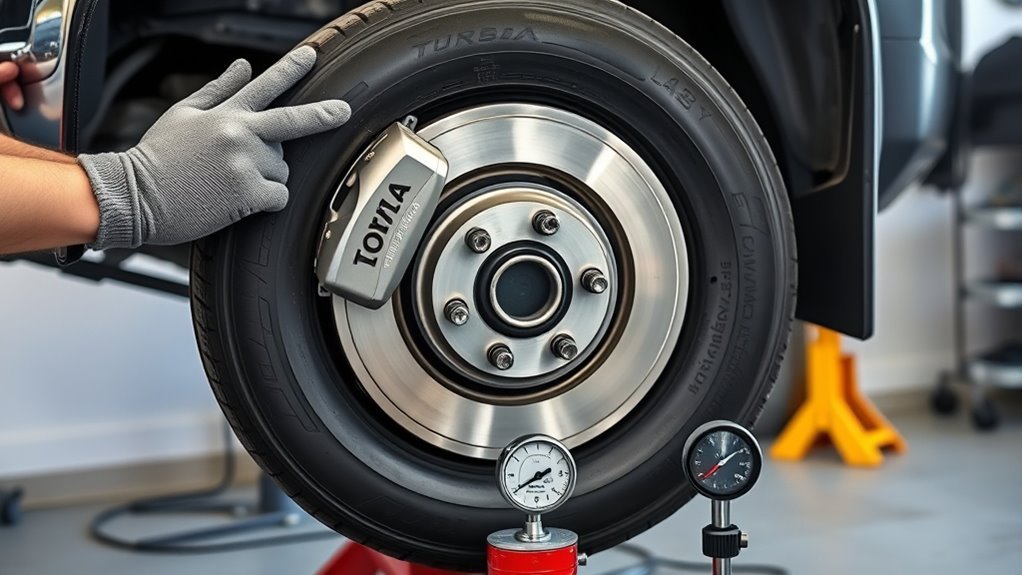
Before you hit the road, jack up the Tundra and check for wheel play by grabbing the tire at 12 and 6 o’clock—any noticeable wiggle points to bearing wear. Spin the tire by hand and listen closely for grinding or roughness that would confirm internal damage. These quick checks help you separate bearing issues from brakes or tires before further diagnosis.
Wheel Play And Wiggle
When you check for wheel play, grab the tire at 12 and 6 o’clock and try to wiggle it—minimal to no movement is normal, while any noticeable fore‑aft motion usually points to worn bearings. Check 3 and 9 o’clock as well to detect lateral play; any looseness undermines control and can affect wheel alignment. You’re freeing yourself from surprise failures by doing these simple checks.
- Inspect for fore‑aft and lateral movement; document any play.
- Note changes in noise when you turn or sway the wheel during a drive.
- Even without play, feel for roughness when spinning the tire by hand.
- Maintain bearing lubrication and proper wheel alignment to extend service life.
Act promptly on detected play to prevent escalation and costly repairs.
Spin Test For Grinding
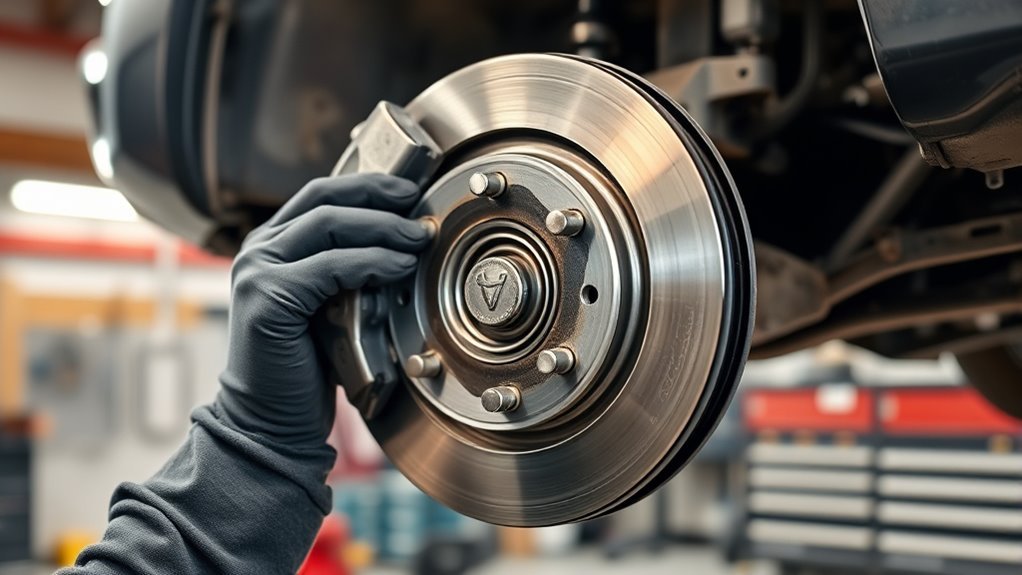
Start by safely lifting the wheel off the ground and give the tire a firm spin by hand, listening closely for any grinding or roughness that would point to contaminated or failing bearings. You’ll use a controlled wheel spin as a basic bearing inspection: rotate the tire, note any persistent grinding, and repeat while slightly turning the wheel inward and outward to see if noise changes. Grinding suggests dirt, grit, or degraded rollers and warrants disassembly or replacement. At 12 and 6 o’clock, check for vertical play — minimal movement is normal, excessive play signals bearing failure. Perform this spin test regularly to catch wear early, keep you mobile, and avoid abrupt failures. This hands‑on check empowers you to act before problems compound.
Inspecting Brakes, Rotors, and CV Boots (What to Look For)
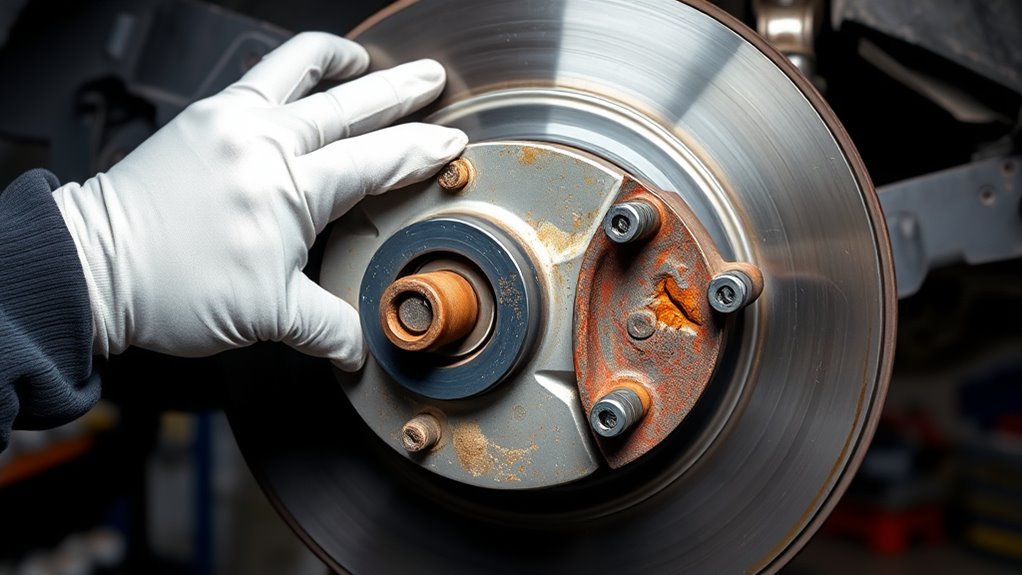
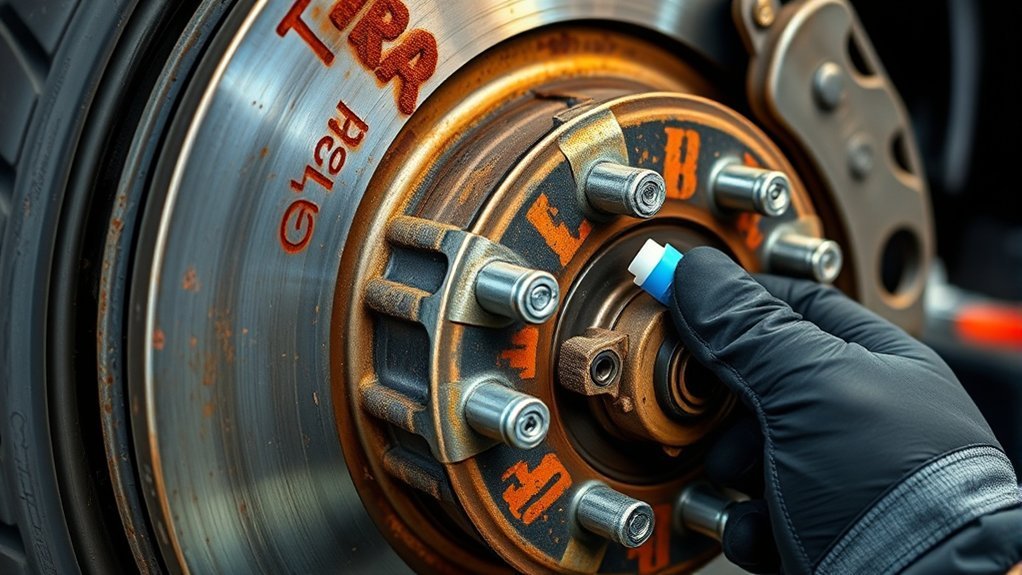
If you suspect bearing or brake issues, lift the wheel and inspect the brake pads, rotors, and CV boots visually and by feel. You’ll want to combine basic brake maintenance with a focused CV boot inspection to prevent small problems from becoming failures. Spin the wheel slowly and listen for grinding; feel for roughness or resistance that points to worn pads, scored rotors, or bearing drag.
- Check pads for uneven or thin wear and debris trapped between pad and rotor that reduces braking efficiency.
- Examine rotors for smooth surfaces; deep grooves, heat discoloration, or corrosion mean resurfacing or replacement.
- Inspect CV boots for cuts, splits, or grease leakage; any compromise lets dirt in and accelerates joint failure.
- Clean components, remove debris, and recheck for noise; regular cleaning and inspection extend service life and preserve your vehicle’s autonomy.
How Sealed Bearings Hide Problems (Oil & Parts Signs)
Although sealed wheel bearings reduce routine maintenance, they can also hide early failure signs until damage is advanced. You’ll lose routine access for inspection and lubrication, so failure indicators often show only as noise, heat, or sudden part breakage. Sealed design creates lubrication challenges: grease can degrade, overheat, or contaminate internally without external evidence. You must rely on indirect checks and proactive monitoring to stay free from unexpected failure.
| Visible sign | What it signals |
|---|---|
| Unusual humming/roaring | Bearing race wear or roller damage |
| Noise change with speed/turn | Load-related internal degradation |
| Metal in oil analysis | Advanced wear, imminent failure |
| Sudden wheel play | Catastrophic seal/roller failure |
Use oil analysis to catch abnormal metal particles before collapse. Don’t wait for obvious symptoms; schedule targeted inspections and replace sealed hubs on suspicion. That’s how you reclaim control and minimize risk from hidden bearing failures.
Common Causes: Water, Rims, Tires, and Load Stress
Sealed hubs hide early signs, but external factors still drive most failures — water intrusion, wheel/tire choices, and heavy or off‑road loads all shorten bearing life. You’ll see heat damage and pitting when water breaches seals; moisture mixes with grease, raises temps, and removes lubrication. Aftermarket wide rims shift radial loads outward, increasing flange stress and accelerating wear. Bigger tires add rotational inertia and sidewall torque, multiplying bearing strain, especially during turns or sudden maneuvers.
Sealed hubs mask early warning signs; water, oversized rims/tires, and heavy use accelerate bearing failure—inspect and maintain proactively.
- Inspect after wet crossings or mud runs; spot discoloration or rough rotation.
- Prefer properly sized rims/tires to avoid offset load transfer.
- Note symptoms sooner if you’ve done heavy towing or repeated off road impact.
- Use scheduled bearing maintenance tips: check play, repack where possible, and swap worn hubs early.
You’re aiming for mechanical freedom—preventable external stresses shorten service life, so act proactively to preserve performance and avoid catastrophic failure.
Repair Options, Costs, and Why Pressed Bearings Matter
When bearings start showing wear, you’ll need to weigh repair options, costs, and whether to press in new units professionally; replacing a Tundra wheel bearing typically runs $300–$800 depending on labor and parts, and pressed bearings demand the right tools and technique to seat correctly. You can choose OEM or aftermarket parts — OEM favors fit and longevity, aftermarket can lower cost — and you should factor a cost analysis that includes parts, labor, and potential follow-up service. Pressed bearings require a hydraulic press and skill: improper seating causes premature failure, so you’ll either invest in tooling and practice or hire a shop. Change bearings in pairs to preserve balance and extend service intervals; routine inspections and timely swaps can push bearing life toward 400,000 miles. For a liberated owner, prioritize reliable installation over minimal upfront price: pay for correct pressing and quality parts to avoid repeated repairs and regain control of your vehicle’s safety and performance.
When to Stop Driving and How to Explain the Issue to a Shop
If you hear a loud, persistent noise from a front wheel that gets louder with speed, stop driving and have it inspected immediately—continued use can worsen bearing wear, damage related components, or even cause the wheel to lock. You’re forcing a failure that limits freedom; pull over safely and don’t drive unless necessary. Grinding when spinning the tire by hand is a clear diagnostic symptom that demands immediate inspection.
When you call or drop the truck at a shop, be concise and factual. Describe these points:
- The noise profile: persists at low speed, rises with speed, changes when turning or swerving (diagnostic symptoms).
- Any grinding felt when rotating the wheel by hand.
- Changes in steering feel or handling and when they started.
- Request inspection of brakes, CV joints, and hub assembly due to likely shared repair implications.
This gives technicians targeted info, speeds diagnosis, and avoids unnecessary delays.
Frequently Asked Questions
How Long Do Toyota Tundra Wheel Bearings Typically Last?
Typically 85,000–150,000 miles, but you’ll replace them sooner with poor wheel bearing maintenance or aggressive driving habits. You’ll monitor noise, play, and heat, inspect regularly, and prioritize preventative service to stay free and safe.
Are Wheel Bearing Replacements Covered Under Extended Warranties?
Silent, steady spin: yes, you’ll often see wheel bearing replacements fall under extended warranty coverage, but you’ll check coverage limits and exclusions. Cost factors like labor, parts, and deductible will determine your out‑of‑pocket responsibility.
Can Wheel Bearing Noise Affect Awd/4wd Systems?
Yes — wheel bearing noise can impair AWD/4WD driveline sensing and stress differentials; you’ll want prompt wheel bearing maintenance and noise troubleshooting to prevent binding, uneven torque distribution, component wear, and compromised traction control systems.
Do Heated or Upgraded Brakes Impact Bearing Lifespan?
Yes — upgraded or heated brakes can shorten bearings’ life if increased heat or altered loads degrade lubrication or add stress. You should monitor brake performance, follow strict bearing maintenance, and choose components that dissipate heat.
Should I Use OEM or Aftermarket Bearings for Longevity?
You should choose OEM for longevity, though aftermarket advantages can be tempting — they often cut installation costs. OEMs offer proven materials, tighter tolerances, and consistent lifespan; you’ll keep freedom from repeat repairs and roadside risks.
Conclusion
You’ve got the signs, checks, and fixes—now act. Treat a whining Tundra bearing like a loose trailer hitch: my buddy ignored one, then a sudden growl at 55 mph destroyed the hub and doubled repair cost. Don’t gamble—sealed bearings hide heat and water damage until failure. If you hear steady drone, get it lifted, wheel rocked, and hub inspected; pressed bearings and labor drive most costs, so plan repair or tow before metal shreds.