Monthly tire pressure checks are essential for your safety and vehicle performance. Underinflated tires can lead to decreased stability and higher accident risks, while low pressure raises fuel consumption by up to 3%. You can find the recommended PSI on a sticker inside the driver’s door or in the owner’s manual. Use a reliable gauge, check tires when cold, and adjust as necessary. Understanding these steps helps maintain your tires, and there’s more to discover about why this matters.
Why Monthly Tire Pressure Checks Are Essential for Safety
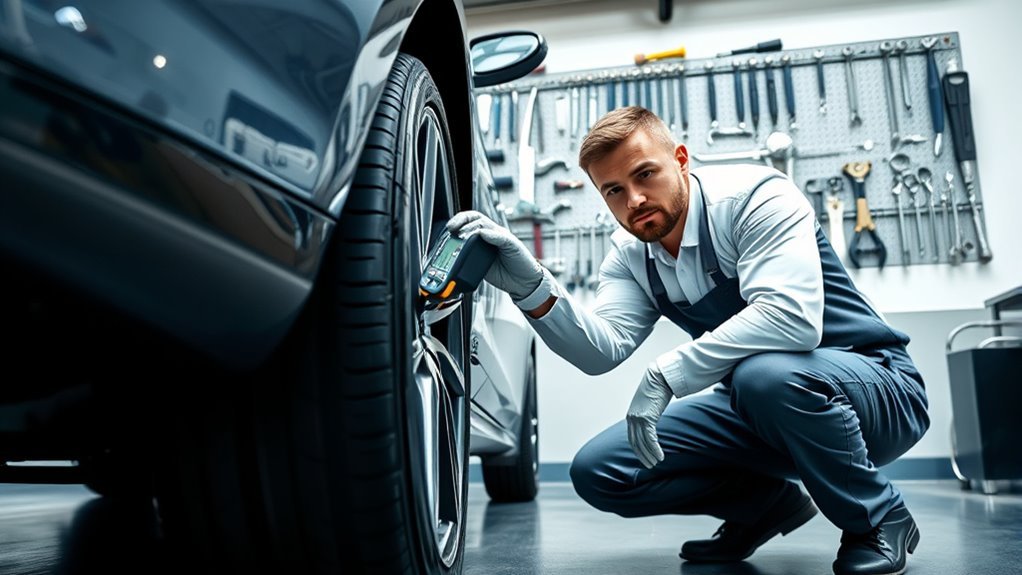
While you might think that checking your tire pressure is a minor task, it’s essential for ensuring your safety on the road. Underinflated tires can greatly decrease vehicle stability and increase your risk of accidents. In fact, the U.S. Department of Energy reports that low tire pressure can raise fuel consumption by up to 3%. Relying solely on your TPMS isn’t enough, as it only alerts you when pressure drops by about 25%. Monthly checks enable you to spot uneven wear and potential damage, prolonging tire lifespan and preventing blowouts. With over 11,000 tire-related crashes reported annually, regular maintenance isn’t just a recommendation—it’s a necessity for your safety and overall driving experience.
How to Find Your Vehicle’s Recommended Tire Pressure?
To find your vehicle’s recommended tire pressure, start by checking the sticker located inside the driver’s side door jamb. If you can’t find it there, consult your owner’s manual for the specific PSI information. Alternatively, reliable online resources can also provide the necessary details for your vehicle.
Locate Door Jamb Sticker
Finding your vehicle’s recommended tire pressure is essential for peak performance and safety, and you can usually locate this information on a sticker inside the driver’s side door jamb. This sticker displays the ideal PSI (pounds per square inch) for both front and rear tires, ensuring you achieve the correct PSI as specified by your vehicle manufacturer. Always use this recommended tire pressure instead of the maximum PSI listed on the tire itself, as it reflects the safest and most efficient settings. If you can’t find the sticker, some vehicles also provide tire pressure details inside the fuel door. For further confirmation, check your owner’s manual or rely on your vehicle’s pressure monitoring system (TPMS). Proper tire care starts here.
Check Owner’s Manual
If you’re unsure about your vehicle’s recommended tire pressure, checking the owner’s manual is a reliable method to find this essential information. The manual details the manufacturer’s recommended PSI (pounds per square inch), which varies based on your vehicle’s size, weight, and type. This information is important for achieving proper inflation, ensuring ideal performance and safety. Relying on the maximum PSI printed on the tire itself can lead to incorrect tire pressure readings, resulting in uneven tire wear and compromised vehicle handling. Additionally, some fuel doors may also provide this significant information. By consulting your owner’s manual, you can confidently maintain your tires, enhancing your driving experience and prolonging tire life.
Consult Online Resources
How can you quickly access your vehicle’s recommended tire pressure? Start by consulting online resources, which can provide specific details based on your vehicle model. You’ll find the manufacturer’s recommended PSI listed in your owner’s manual, on a sticker inside the driver’s side door jamb, or inside the fuel door. Make sure to use the manufacturer’s recommended PSI rather than the maximum PSI on the tire to avoid improper inflation. This step is vital for maintaining properly inflated tires, enhancing fuel efficiency, and ensuring safety. Additionally, consider utilizing pressure monitoring systems or online tire pressure tools for convenience. Regularly checking tire pressure as part of your monthly tire pressure check can greatly prolong tire life and improve handling.
Choose the Right Tools for Measuring Tire Pressure
Choosing the right tools for measuring tire pressure is essential for maintaining ideal vehicle performance and safety. Invest in a reliable tire pressure gauge, whether digital or manual; digital gauges offer easier readability, while manual gauges are cost-effective and dependable. To check tire pressure accurately, always do it when tires are cold, ideally three hours after driving. Although many gas stations have built-in pressure gauges on air pumps, personal gauges are typically more reliable and help you avoid inaccuracies. Remember to reference the recommended PSI in your owner’s manual or a sticker inside the driver’s door, rather than the maximum PSI on the tire itself. Regular monitoring guarantees proper tire maintenance, preventing issues related to underinflation or overinflation.
Step-by-Step Guide to Checking and Adjusting Tire Pressure
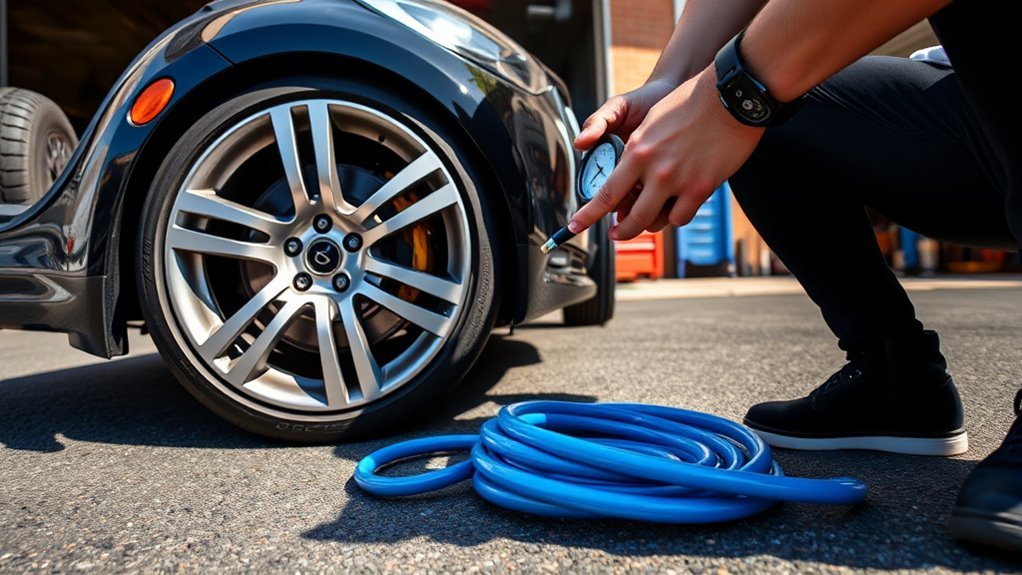
Checking and adjusting tire pressure is a straightforward process that can greatly enhance your vehicle’s performance and safety. Follow these steps for precise results:
- Remove the valve cap from the tire valve stem.
- Firmly press a tire pressure gauge onto the stem until the hissing sound stops.
- Check the gauge reading against the manufacturer-recommended PSI, usually found on a sticker inside the driver’s door or in the owner’s manual.
- If the tire pressure is low, add air using an air compressor; if it’s too high, carefully release some air until it reaches the correct PSI.
- Recheck all tires, including the spare, and replace the valve caps to keep them clean and secure.
Your vehicle will benefit from proper tire pressure maintenance.
Avoid These Common Tire Pressure Checking Mistakes
Maintaining accurate tire pressure is essential for your vehicle’s safety and efficiency, yet many drivers fall into common pitfalls when checking it. One mistake is checking tire pressure immediately after driving; heat can cause false high readings. Always check your tire pressure when the tires are cold. Relying solely on the TPMS can be misleading, as it only alerts you to significant drops in pressure and won’t detect issues like sidewall damage. Don’t forget to consult the manufacturer’s recommended PSI to avoid incorrect inflation. Additionally, inspect your tires and spare tire regularly, as neglected tires can lose pressure over time. Finally, invest in a quality pressure gauge to guarantee your readings are accurate and reliable.
Why Keeping Your Tires Properly Inflated Matters
Proper tire inflation is essential for ensuring your vehicle operates safely and efficiently. Maintaining correct tire pressure not only improves safety but also enhances fuel economy and prolongs tire life. Here’s why properly inflated tires are vital:
- Reduces rolling resistance, improving fuel economy by up to 3%.
- Minimizes premature tire wear, saving you money in the long run.
- Enhances vehicle stability and braking performance.
- Lowers the risk of tire-related accidents, as reported by the NHTSA.
- Helps you stay aware of air loss through regular monthly checks and the TPMS system.
How Weather Changes Affect Tire Pressure: Key Considerations?
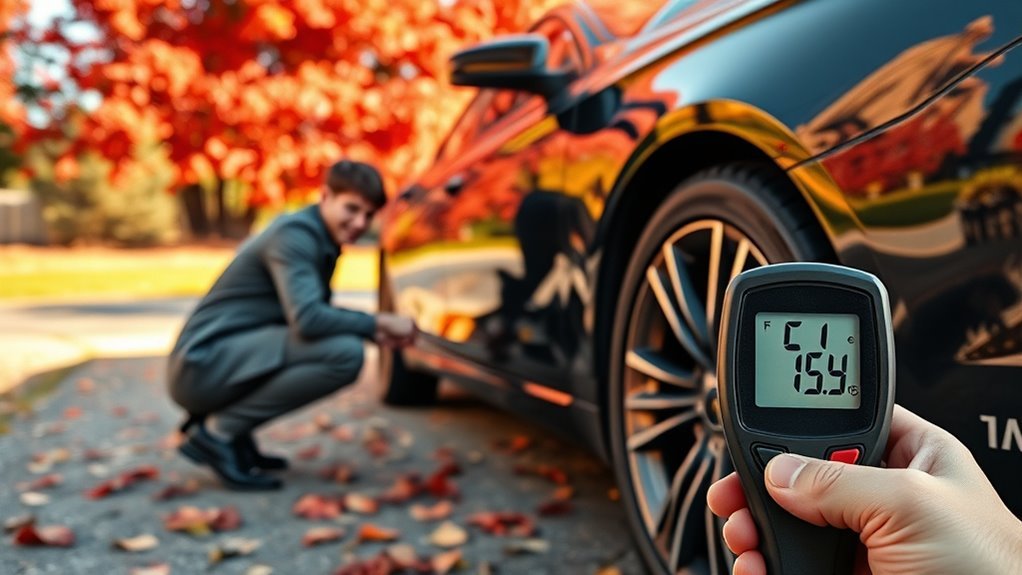
Weather changes considerably affect your tire pressure, with cold temperatures causing drops of about 1 PSI for every 10°F decrease. This seasonal fluctuation can lead to underinflation and increased tire wear, impacting your vehicle’s fuel efficiency. Conversely, warmer weather can raise tire pressure, risking overinflation and potential blowouts, making regular monthly checks essential for peak performance.
Temperature Effects on PSI
As temperatures fluctuate throughout the year, tire pressure can be significantly affected, which is why regular checks become essential for safe driving. Here’s what you need to take into account regarding temperature effects on PSI:
- Tire pressure drops about 1 PSI for every 10°F decrease.
- Cold tires can lead to underinflation if not monitored in colder months.
- Warmer temperatures can cause overinflation, risking uneven tire wear.
- Monthly checks help counteract constant fluctuations in tire pressure.
- Underinflated tires can reduce fuel efficiency by up to 3%.
To maintain peak performance and safety, always check your tire pressure when tires are cold. Staying on top of these changes keeps you and your vehicle liberated on the road.
Seasonal Pressure Fluctuations
While you might not think about it, seasonal pressure fluctuations can have a significant impact on your tires’ performance and safety. Tire pressure can drop by about 1 PSI for every 10°F decrease in temperature, leading to underinflation during colder months. Seasonal changes cause tires to lose air at a rate of 1-2 PSI monthly due to temperature fluctuations and natural air loss. That’s why regular monthly checks are vital to maintain the manufacturer-recommended PSI. Keeping tire pressure in check guarantees safety, enhances fuel efficiency, and promotes equal tire wear. Ignoring these fluctuations can increase the risk of tire-related accidents, so stay vigilant to keep your driving experience safe and efficient.
Frequently Asked Questions
Why Is It Important to Check Tire Pressure Regularly?
Regularly checking tire pressure enhances safety, improves handling performance, and boosts fuel efficiency. It helps manage tire wear and tread life, accommodating seasonal changes and temperature effects, ensuring driving comfort with an accurate inflation gauge and pressure monitoring.
What Is the 3% Tire Rule?
The 3% tire rule states you shouldn’t let tire pressure drop more than 3% from recommended levels. This guarantees ideal fuel efficiency, enhances performance, reduces tread wear, and maximizes safety benefits, especially during seasonal changes.
Should You Check Tire Pressure Every Month?
You should definitely check tire pressure every month. Regular maintenance boosts fuel efficiency, extends tire lifespan, and guarantees safe driving. Use a pressure gauge and look for warning signs; weather effects can easily alter PSI levels.
What Is the 4 PSI Rule?
The 4 PSI rule states that if your tire pressure’s 4 PSI below recommendations, inflate immediately. This maintains tire safety, enhances driving performance, improves fuel efficiency, and minimizes tread wear, especially during seasonal temperature changes.
Conclusion
So, go ahead and embrace your inner tire guru! Regularly checking your tire pressure isn’t just a chore; it’s a heroic act of preventing blowouts and saving on fuel. Who knew that a simple gauge could turn you into a vehicle savior? Remember, ignoring tire pressure is like ignoring a friend’s advice about bad relationships—it’s bound to lead to trouble. Keep those tires inflated, and you’ll ride smoother than a well-oiled machine, all while keeping safety in style!