You should check your tire pressure at least once a month to guarantee peak performance and safety. If you have a fleet vehicle, a weekly check is recommended due to increased usage. It’s also wise to check your tire pressure before long trips and more frequently during colder months, as temperatures can affect readings. Maintaining proper pressure can enhance handling and fuel efficiency. Keep going to discover best practices for checking and maintaining your tire pressure.
Why Checking Tire Pressure Is Essential For Safety
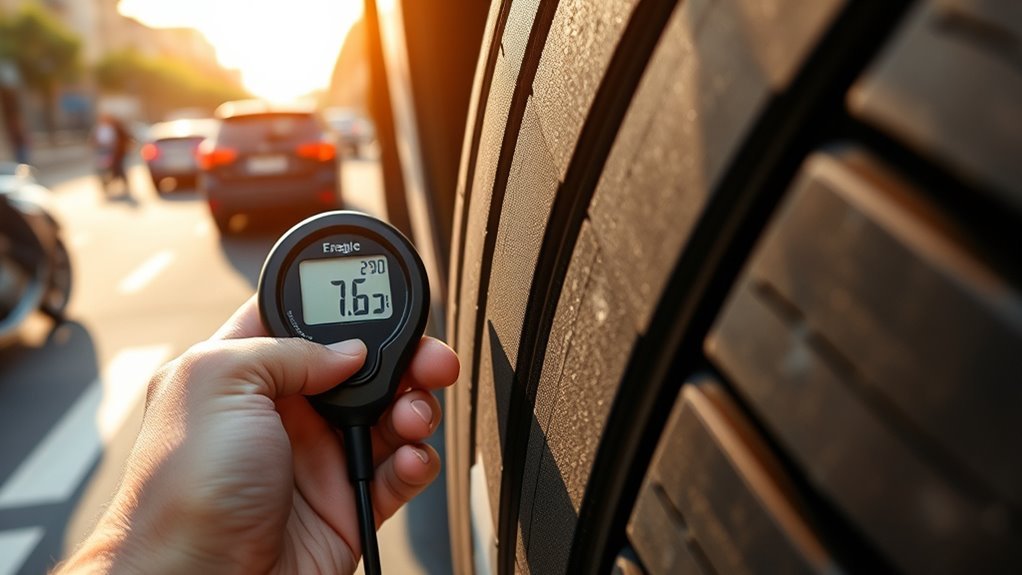
While driving may seem routine, ensuring your tire pressure is correct is a critical aspect of vehicle safety. It’s important to check your tire pressure regularly, as under-inflated tires can lead to decreased control and even accidents. When tires aren’t properly inflated, they can overheat, increasing the risk of blowouts that threaten your safety. Regular checks not only protect you but also enhance fuel efficiency by reducing rolling resistance. Maintaining the recommended tire pressure can extend tire life, preventing accelerated wear and tear. Aim to check your tire pressure monthly, as tires can lose about 1 PSI each month. Empower yourself with this knowledge; your safety and that of your passengers depend on it.
Where To Find Your Vehicle’s Recommended Tire Pressure?
Where can you easily find your vehicle’s recommended tire pressure? Start by checking the sticker located inside the driver’s door frame; it typically displays the manufacturer’s recommendations for both front and rear tires. This information is essential, as different tires may require varying pressures based on load distribution. For more detailed specifications tailored to your specific model, refer to your owner’s manual. It outlines the recommended tire pressure and any adjustments needed for fleet vehicles, especially when carrying different weight loads. Regularly checking tire pressure is critical for peak safety and performance, so make sure you consult these resources to maintain your vehicle’s efficiency and safety on the road.
How Often Should You Check Tire Pressure For Optimal Performance?
To guarantee your vehicle performs at its best, it’s crucial to check your tire pressure at least once a month. Regular tire pressure checks help prevent underinflated tires, which can compromise safety and fuel efficiency. Here’s a simple schedule to follow:
- Monthly Checks: Guarantee peak vehicle performance.
- Weekly for Fleet Vehicles: Higher usage demands more attention.
- Before Long Trips: Confirm handling and avoid potential issues.
- Seasonal Adjustments: Check more frequently during colder months as pressure can drop considerably.
How To Check Your Tire Pressure Like A Pro
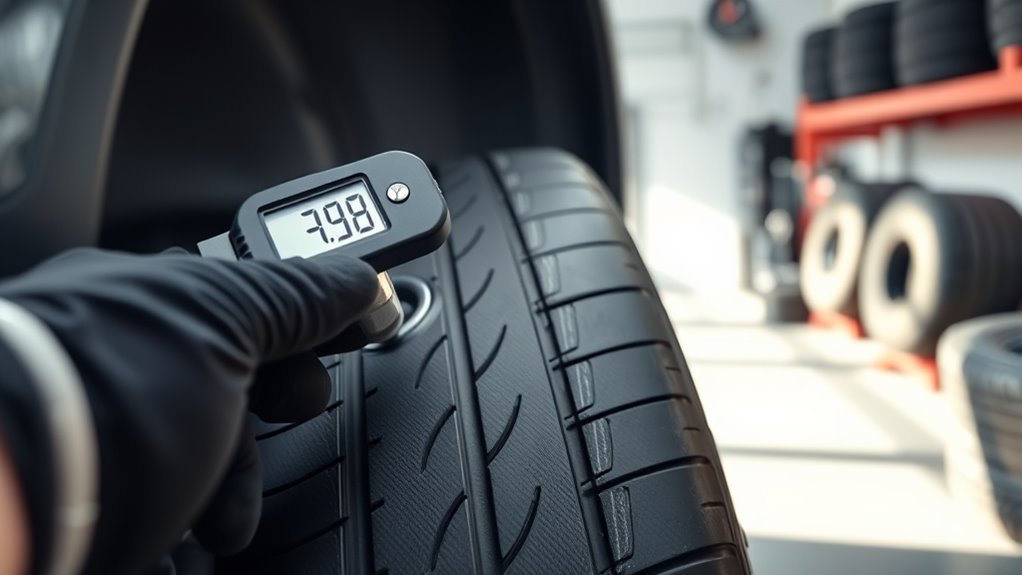
Maintaining the right tire pressure is only part of the equation; knowing how to check it accurately is equally important. Start by using a reliable tire pressure gauge, whether digital or manual. Always check the tire pressure when the tires are cold to avoid false readings. Remove the valve cap and firmly attach the gauge to the valve stem. For accuracy, take multiple readings—three is ideal. Refer to your vehicle owner’s manual or the sticker inside the driver’s door for the recommended proper tire pressure values. While you’re at it, regularly inspect your tires for visible defects like bulging or uneven wear, as these can signal pressure issues or potential tire failure. Checking and filling your tires properly enhances safety and performance.
Common Tire Pressure Checking Mistakes To Avoid
One of the most common mistakes you can make is checking tire pressure when the tires are hot, which skews your readings. It’s essential to measure when the tires are cold for accurate results. Additionally, inconsistent measurement techniques can lead to discrepancies that affect your vehicle’s performance and safety.
Ignoring Cold Tires
While it might be tempting to check your tire pressure after a drive, doing so can lead to significant inaccuracies. Here’s why you should prioritize checking your tires when they’re cold:
- Temperature Impact: Tire pressure can increase by about 1 PSI for every 10 degrees Fahrenheit rise in temperature.
- Timing Matters: Check your tires first thing in the morning or after they’ve been parked for hours for an accurate reading.
- Prevent Under-Inflation: Ignoring cold checks can lead to under-inflation, reducing fuel efficiency and increasing tire wear.
- Enhance Safety: Regular cold checks can help prevent blowouts, ensuring your safety on the road.
Stay vigilant and keep your tires properly inflated for peak performance and safety.
Inconsistent Measurement Techniques
Inconsistent measurement techniques can lead to frustrating inaccuracies when checking tire pressure, making it crucial to adopt a systematic approach. First, always check your tire pressure when the tires are cold for accurate pressure readings. Use a quality tire pressure gauge; poor-quality tools can give faulty measurements, resulting in improper inflation. To guarantee accuracy, take multiple readings—ideally three—on each tire to minimize human error. Don’t forget to replace valve caps after checking; failing to do so exposes the valve stem to dirt, potentially causing slow leaks. Finally, adhere to the manufacturer-recommended pressure values to prevent issues like uneven tire wear and decreased fuel efficiency. Precise measurement techniques are key to peak tire performance.
Top Benefits Of Regular Tire Pressure Checks For Your Vehicle
Regular tire pressure checks can greatly enhance your vehicle’s safety and fuel efficiency. By ensuring your tires are properly inflated, you reduce the risk of blowouts and improve handling, making your rides safer. Additionally, maintaining ideal tire pressure helps you save on fuel costs, as even a small drop in PSI can lead to decreased efficiency.
Enhanced Vehicle Safety
Making sure your tires are properly inflated plays an essential role in enhancing vehicle safety and performance. By making regular checks, you can greatly reduce risks associated with poor tire performance. Here’s how maintaining the correct tire pressure benefits you:
- Improved Handling: Proper tire pressure boosts vehicle responsiveness, enhancing your control on the road.
- Reduced Blowout Risk: Regular checks help prevent uneven wear and mitigate blowout chances.
- Enhanced Stability: Well-inflated tires make certain better stability, giving you peace of mind while driving.
- Increased Tire Life: Monthly checks can extend tire life, saving you money in the long run.
Improved Fuel Efficiency
While you might not think about it often, keeping your tires properly inflated can greatly enhance your vehicle’s fuel efficiency. Regularly checking tire pressure guarantees your tires remain at their ideal level, preventing the rolling resistance that under-inflated tires cause. Studies show that for every 1 PSI increase in tire pressure, fuel economy can improve by up to 3%.
| Tire Pressure Status | Impact on Fuel Efficiency |
|---|---|
| Under-inflated (<30 PSI) | Increases fuel consumption |
| Ideal (30-35 PSI) | Optimizes fuel efficiency |
| Monthly Check | Maintains ideal tire pressure |
| 1 PSI Increase | Up to 3% fuel economy boost |
| Proper Inflation | Saves ~$200 annually |
How Seasonal Changes Affect Tire Pressure?
As temperatures shift with the changing seasons, tire pressure can fluctuate considerably, impacting your vehicle’s safety and performance. It’s essential to check tire pressure regularly, especially during seasonal changes. Here’s what to remember:
- Winter: Expect a drop of up to 5 PSI due to air contraction; check tire pressure monthly.
- Spring: As temperatures rise, monitor for expansion; adjustments may be needed.
- Summer: Tire pressure can lose about 1 PSI each month; consistent monthly checks are important.
- Fall: Prepare for temperature changes; recalibrate your pressure to avoid under-inflation.
Resources For Tire Pressure Assistance And Monitoring
Maintaining proper tire pressure is essential for your vehicle’s performance and safety, and there are plenty of resources to help you with this task. As a vehicle owner, you can check your tire pressure at various service centers, like Zimbrick in Madison, WI, which offers assistance without an appointment. Utilize the AAA locator tool to find over 7,000 AAA Approved Auto Repair facilities across North America for trusted tire maintenance. Your vehicle owner’s manual and door stickers provide recommended tire pressure values for quick reference. Consider investing in a Tire Pressure Monitoring System (TPMS) that alerts you to low tire pressure, simplifying regular monitoring. Websites like AutoFair Subaru also offer valuable resources and support for tire pressure inquiries.
Frequently Asked Questions
How Long Does Air Last in a Tire?
Air in a tire doesn’t last indefinitely; it’s affected by temperature effects, air loss factors, and seasonal adjustments. For proper tire maintenance, monitor pressure regularly, debunk tire inflation myths, and consider pressure monitoring systems for accuracy.
How Often Should You Fill Air in Your Tires?
You shouldn’t wait for a warning light. Regularly fill your tires monthly, adjusting for seasonal changes. Using a proper gauge guarantees accurate readings, enhancing tire safety and efficiency—essential tire maintenance tips for your freedom on the road.
What Is the 3% Tire Rule?
The 3% tire rule means you should keep tire pressure within 3% of the manufacturer’s recommendation. This maintenance tip enhances safety, addresses temperature effects, and promotes tire longevity while preventing inflation issues and potential hazards.
How Often Should a Driver Check Tire Pressure?
You should check your tire pressure at least once a month. Seasonal changes can impact PSI, affecting safety and fuel efficiency. Use tire wear indicators and pressure monitoring systems to guarantee peak tire performance.
Conclusion
In summary, keeping an eye on your tire pressure isn’t just a chore—it’s an essential step in ensuring your safety and vehicle performance. By following the simple schedule we outlined, you can avoid costly repairs and enhance fuel efficiency. So, why gamble with your safety and savings? Make tire pressure checks part of your routine, and you’ll drive with confidence. After all, a well-maintained tire is the unsung hero of your journey!