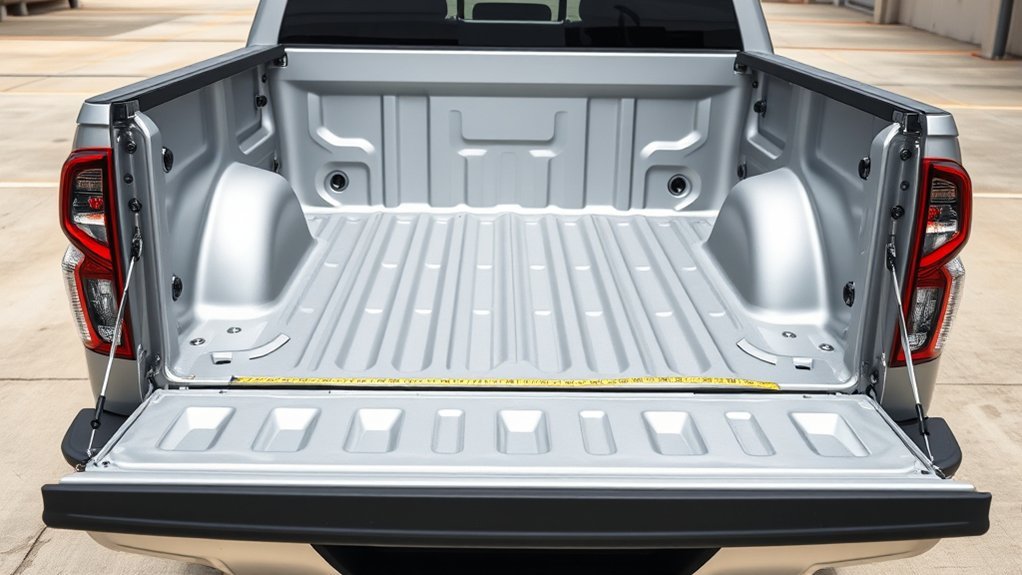
You’ll find exact interior bed lengths of 66.4″ (5.5′), 78.7″ (6.5′) and 97.6″ (8.1′), with a consistent width of 66.4″, depth of 22.2″ and 48.5″ wheel‑well spacing that fits 4×8 sheets flat. Double Cab supports longer beds and higher payloads; CrewMax favors rear comfort with shorter beds. Beds include composite liners, adjustable tie‑downs, LED lighting and optional power. Keep going and you’ll get cab pairings, payload impacts and accessory options to choose the right setup.
Quick Recommendation: Which Tundra Bed to Choose (5.5′, 6.5′, 8.1′)
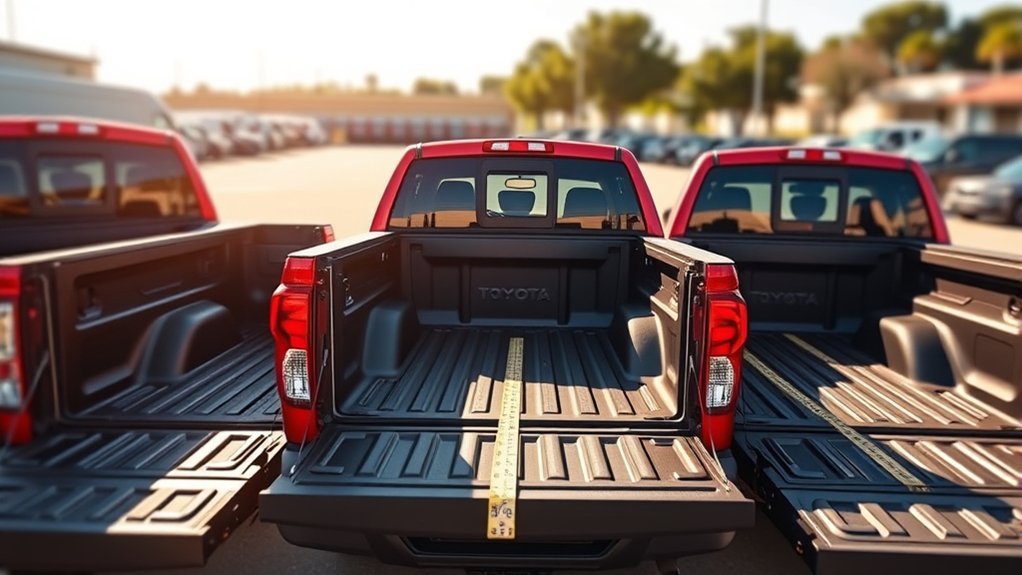
If you mostly drive in the city and need easier parking, choose the 5.5-foot bed for its tighter maneuverability without sacrificing useful cargo space; pick the 6.5-foot bed if you want a versatile balance for weekend hauling and DIY gear, and go with the 8.1-foot bed when longer loads and heavy equipment at job sites are your priority—note that all beds are 22.2 inches deep and CrewMax models with the 6.5-foot bed still deliver ample rear legroom for family use. You’ll pick the 5.5′ when urban suitability and nimble handling free you from cramped streets while keeping meaningful cargo versatility. Opt for the 6.5′ when you need a true multipurpose truck: it carries tools, lumber, or bikes and still seats passengers comfortably. Choose the 8.1′ if your work demands transporting long materials or large machinery regularly. Each choice preserves bed depth consistency, so you get reliable load stability regardless of configuration, letting you reclaim time and freedom on the road.
Exact Tundra Bed Interior Dims (5.5′, 6.5′, 8.1′) + Wheel‑Well Spacing
Dimensions matter when you’re planning a load: the Tundra’s beds all share a 66.4-inch interior width and 22.2-inch depth, with lengths of 66.4 inches (5.5′), 78.7 inches (6.5′), and 97.6 inches (8.1′); wheel-well spacing is about 48.5 inches, letting you lay standard 4×8 sheets flat across the wells without trimming. You’ll use these exact dims to match materials, racks, or modular storage to the bed footprint. The consistent width and depth simplify planning: length is the variable that dictates whether long lumber or furniture fits without overhang. Wheel-well spacing matters for palletized loads and cargo accessibility—48.5 inches gives a broad, unobstructed center section. Consider bed height relative to your truck’s step and your typical lifting capacity; lower bed height improves repeated loading and speeds work. Measure combined load height against the inner depth and tailgate allowance to keep items secure. Use these precision figures to choose the bed that frees you to haul what you need, efficiently and confidently.
Tundra Bed Width, Depth, and Load‑Floor Features (Liner, Tie‑Downs, Lighting)
While the Tundra’s 66.4-inch bed width and 22.2-inch depth give you a predictable, roomy platform for plywood, drywall, and bulky gear, the real hauling advantage comes from the load‑floor features: a composite liner resists dents and corrosion, adjustable tie‑downs let you secure odd‑shaped items precisely, and optional LED lighting plus a 120V outlet keep work going after dark and power tools running at the tailgate. You get a stable cargo footprint that fits standard sheet goods without overhang and a 22.2-inch depth that centers weight low for enhanced cargo stability. The factory composite durability minimizes maintenance and protects resale value; it soaks up impacts, sheds rust, and tolerates solvents. The adjustable tie downs slide to match load geometry, letting you tension straps where they matter. Lighting options include bright LED strips to illuminate the bed and the 120V outlet powers tools or inflators at the tailgate. Together these features free you to load, secure, and finish jobs faster and with confidence.
Bed and Cab Pairings: Double Cab vs CrewMax (Trim Availability)
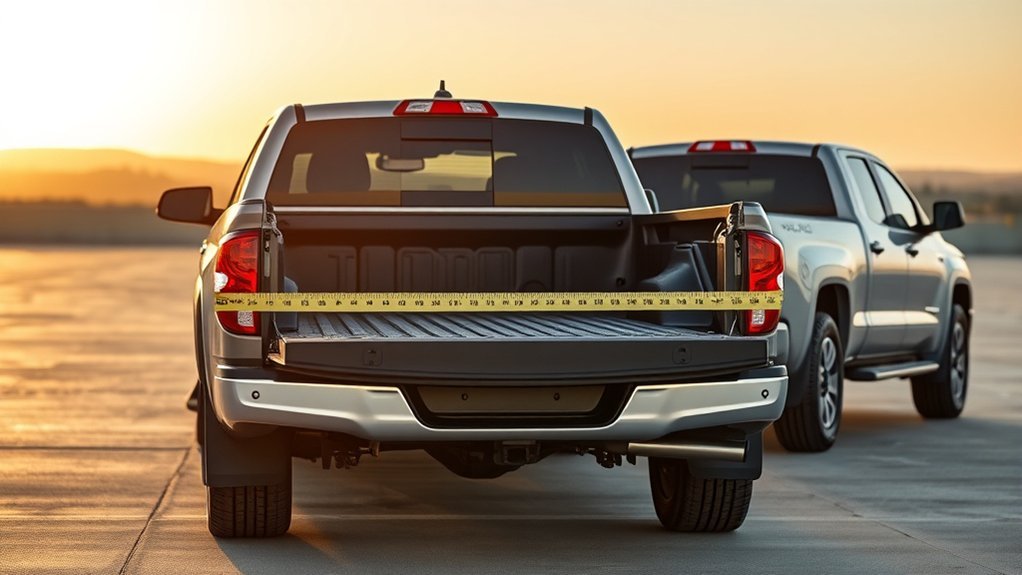
Because your Tundra’s intended balance between cargo haul and passenger comfort starts with the cab choice, pick Double Cab for maximum bed length (6.5′ or 8.1′) and higher payload or CrewMax for rear-seat comfort with shorter beds (5.5′ or 6.5′); both cab styles are offered across key trims—SR5, Limited, Platinum, 1794 Edition, TRD Pro, and Capstone—and each bed configuration retains the same durable composite liner, LED bed lighting, and 120V outlet so you don’t sacrifice usability when you prioritize space or passenger room.
When weighing a Double Cab vs CrewMax comparison, focus on mission not marketing. Choose Double Cab if you regularly carry long gear or want the option of the 8.1′ bed. Choose CrewMax if rear-seat space and passenger comfort free your daily life. Trim differences matter only for amenities and styling; the core bed materials and conveniences remain consistent across SR5 through Capstone. That clarity lets you pick the combination that liberates your use case without trading practical bed features.
How Bed/Cab Choice Affects Payload and Towing
When you choose between Double Cab and CrewMax, you’re also choosing how much payload and towing performance you’ll get: Double Cab setups typically deliver higher payloads than CrewMax, so you’ll optimize payload optimization when you need maximum cargo mass. The Double Cab with an 8.1-foot bed maximizes usable cargo length and is best for heavy hauling and work tasks that demand long, heavy items.
CrewMax sacrifices some payload for interior space, but it still provides ample towing capability; pairing CrewMax with shorter beds can improve maneuverability while maintaining solid towing performance. Longer beds—especially the 8.1-foot option—enhance towing stability and load distribution, reducing sway and concentrating weight more evenly across the chassis. Choosing between 6.5- and 8.1-foot beds materially shifts your maximum payload and towing envelope, so match cab and bed to the loads and tow profiles you want to free yourself to carry confidently.
Choosing the Right Bed: Garage Fit, Hauling Types, and Passenger Tradeoffs
When planning which Tundra bed to pick, check your garage length and door height so a 5.5-foot bed will actually fit without blocking access. Balance bed length against seating needs — CrewMax tends to limit you to 5.5- or 6.5-foot beds for maximum rear comfort, while Double Cab lets you choose the longer 8.1-foot option for bigger loads. Also confirm the ~48.5-inch wheel-well width if you need to carry sheet goods like plywood or drywall.
Garage Clearance Considerations
If you regularly park in a tight garage, pick the 5.5-foot bed—the Tundra’s overall length stays about 228.9 inches, making it far easier to maneuver and fit into limited spaces. Check your garage dimensions and use parking tips like marking stop points and trimming obstructions to protect bodywork. If you haul occasionally for weekends, the 6.5-foot bed keeps that same 228.9-inch footprint while giving extra cargo without sacrificing most parking ease. For frequent heavy-duty hauling, the 8.1-foot bed expands overall length to 247.8 inches and may exceed typical garage capacity. Factor in whether you value cargo capacity or freedom from tight maneuvers. Choose the bed that liberates your routines—maximize utility without creating constant parking friction.
Bed Length Vs. Seating
Because your choice of cab ties directly to bed length, you’ll weigh passenger comfort against cargo needs: CrewMax gives generous rear legroom (42.3 in) but limits you to 5.5- or 6.5-foot beds, while Double Cab lets you fit the 8.1-foot bed for maximum payload yet still seats five. You’ll choose based on garage fit, hauling type, and how many people you free to carry. Bed versatility matters: 5.5 ft for tight parking, 8.1 ft for work sites, 6.5 ft for mixed use.
- CrewMax: prioritize passenger comfort, urban garages, and short-bed practicality.
- Double Cab: prioritize cargo length, heavy loads, and open-road utility.
- 6.5-ft: balanced bed versatility for weekend projects and daily freedom.
Tundra Bed Accessories: Liners, Covers, Rack Systems, and Mods
Although you might treat the Tundra’s bed as just a cargo area, outfitting it with the right accessories turns it into a durable, secure, and highly functional workspace; you’ll notice liners durability improves resistance to dents, dings, and rust while preserving resale value. Choose between the composite factory liner or heavier aftermarket options to match your use. For cargo security, add hard or soft bed covers—hard covers lock and streamline aerodynamics, soft covers balance weight and accessibility. An adjustable deck rail system gives you modular tie-down points so straps and mounts remain where you need them, freeing you from improvisation. The available 400-watt power inverter turns the bed into a mobile power station for tools or campsite gear, and integrated LED bed lighting keeps tasks precise after dark. For racks and mods, pick low-profile systems if you prioritize stealth or heavy-duty racks for hauling bikes, ladders, or kayaks. Equip thoughtfully to maximize freedom and function without excess.
Frequently Asked Questions
What Are the Different Bed Sizes for Tundras?
You get three Tundra bed types: 5.5‑ft, 6.5‑ft, and 8.1‑ft. You’ll choose based on cab and hauling needs, and consider Tundra bed materials for durability and liberated, long‑lasting utility.
How Long Is a Toyota Tundra Crewmax With 5.5 Bed?
You’ll find a Toyota Tundra CrewMax with the 5.5-foot bed measures about 233.6 inches overall; you’ll enjoy CrewMax features and confident Tundra towing capability while retaining maneuverability and passenger-focused freedom.
Is the Tundra Bed Wider Than the Tacoma?
Yes — you’ll enjoy the wider Tundra. In a Tundra vs Tacoma Bed width comparison, the Tundra’s roughly 66.4″ bed beats the Tacoma’s 56.7″, giving you freer, more capable hauling and steadier cargo support.
Conclusion
You’ve got the facts to pick the right Tundra bed for your needs—measure garage space, match hauling types, and weigh passenger versus cargo priorities. Choose the shorter bed for maneuverability and the longer for max cargo; remember how cab choice shifts payload and towing. Outfit the bed with the right liner, tie‑downs, and lighting to protect loads. Like a toolbox, the bed’s dimensions and accessories shape what you can carry and how efficiently.