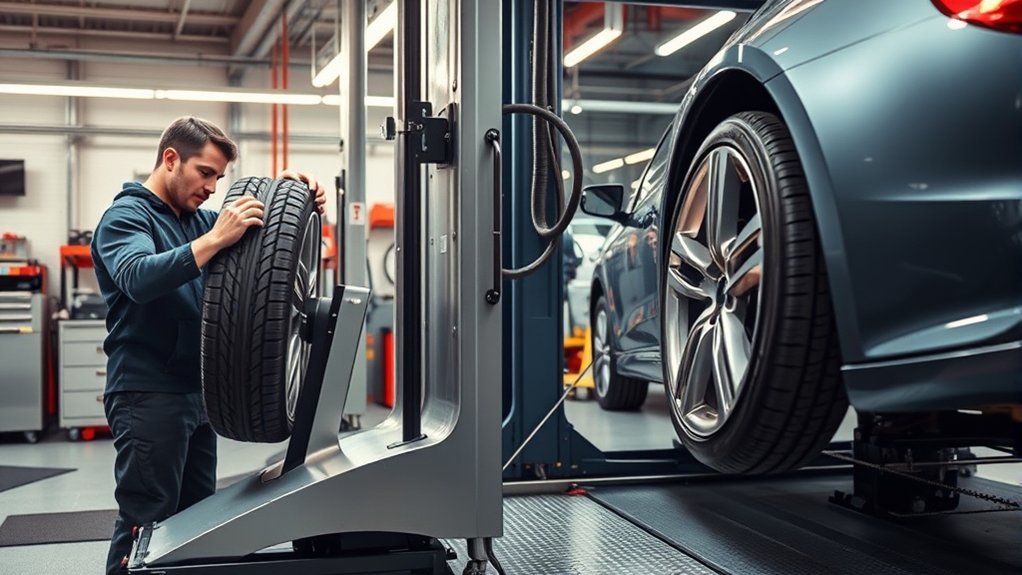
When you’re tackling wheel balancing and wheel alignment, remember they serve distinct purposes. Wheel balancing corrects uneven weight distribution in tires, preventing vibrations and ensuring smooth rides. In contrast, wheel alignment adjusts tire angles for proper contact with the road, promoting even tire wear and enhancing fuel efficiency. Neglecting either can lead to costly issues. To keep your vehicle performing at its best, knowing the signs of each need is vital, and there’s more to uncover about these essential services.
What Is Tire Balancing, Why It Matters, and How to Know If You Need It?
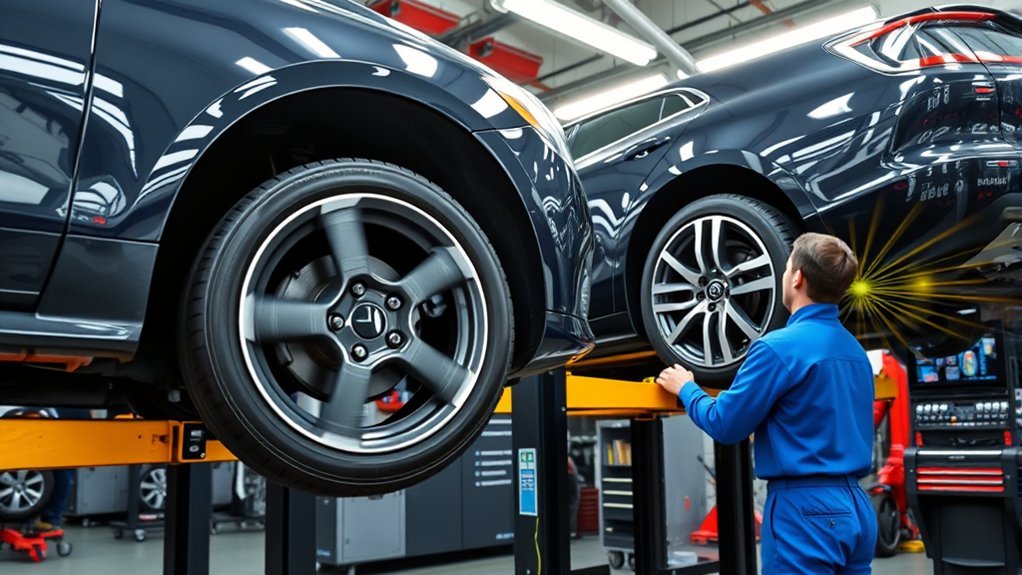
When your tires aren’t properly balanced, you might notice vibrations that can compromise your driving experience and vehicle performance. Tire balancing, or wheel balancing, corrects uneven weight distribution in your tire and wheel assemblies. This process is essential, as it prevents excessive tire wear and enhances ride comfort. Utilizing precise balancing techniques, a technician mounts your tires on a specialized machine that detects imbalances. Small metal weights are then strategically placed to guarantee even distribution.
It’s recommended to have your tires balanced every 5,000 to 6,000 miles, particularly after tire rotations or new installations. Proper tire balancing not only improves tire performance but also minimizes stress on your drivetrain and suspension components, fostering overall vehicle longevity. By addressing balance issues proactively, you liberate your vehicle from unnecessary strain, ensuring a smoother, safer ride.
Identifying Signs Your Tires Need Balancing
Proper tire balancing is essential to maintaining peak vehicle performance, but how can you tell if your tires need attention? Here are key signs to watch for:
Proper tire balancing is crucial for optimal vehicle performance; watch for signs that your tires may need attention.
- Noticeable vibrations in the steering wheel, floorboard, or seat while driving
- Uneven wear indicators, such as cupping or bald spots on tires
- Vibrations that intensify as speed increases, especially in the front tires
- Difficulty in steering or a pulling sensation to one side
- Regular maintenance checks after tire rotations, flat repairs, or hitting potholes
Ignoring these symptoms can exacerbate tire vibration causes and lead to excessive wear on both your tires and suspension components. Addressing these issues promptly not only enhances safety but also optimizes your vehicle’s overall performance. Stay vigilant, and don’t let imbalance disrupt your drive!
What’s Wheel Alignment and Why Should You Care?
Wheel alignment adjusts your tire angles to guarantee they’re properly positioned, which maximizes both tire life and overall vehicle performance. If you notice your steering wheel off-center, your vehicle pulling to one side, or uneven tire wear, it’s likely time for an alignment check. Regular maintenance not only enhances handling and fuel efficiency but also prevents costly repairs down the road.
Importance of Proper Alignment
Ensuring your vehicle’s wheels are aligned correctly is crucial for maintaining ideal contact with the road, which directly influences handling and tire longevity. Proper alignment techniques and alignment tools can make all the difference. Here’s why you should care:
- Promotes even tire wear, extending lifespan.
- Enhances vehicle handling for a smoother ride.
- Improves fuel efficiency by reducing drag.
- Prevents costly repairs from suspension damage.
- Recommends checks every 6,000 miles or biannually.
Ignoring alignment can lead to uneven wear and premature tire replacement, costing you considerably. A well-aligned vehicle not only feels better to drive but also keeps your investment safe, ensuring that you experience liberation on every journey. Don’t overlook this crucial aspect of vehicle maintenance!
Signs of Misalignment Issues
Have you noticed your vehicle pulling to one side or a crooked steering wheel while driving straight? These signs indicate misalignment issues that can compromise your driving safety and handling performance. Uneven tire wear is often a culprit, leading to costly replacements if ignored. Additionally, vibrations in the steering wheel during acceleration may signal underlying alignment problems. Regular checks, especially after hitting potholes, can prevent long-term damage.
| Sign of Misalignment | Impact |
|---|---|
| Vehicle pulls to one side | Uneven tire wear |
| Crooked steering wheel | Poor driving safety |
| Vibrations in the steering | Affects handling performance |
| Premature tire tread wear | Increased replacement costs |
Addressing these symptoms quickly helps maintain your vehicle’s efficiency and comfort.
Key Signs Your Vehicle Needs Wheel Alignment
Are you noticing your vehicle pulling to one side while driving? This could be a critical sign that your wheels need alignment. Addressing these alignment indicators promptly is vital for safe handling and tire longevity. Here are key signs to look out for:
- An off-center steering wheel while driving straight.
- Premature or uneven tire tread wear.
- Squealing noises from tires during turns.
- Vibration in the steering wheel at various speeds.
- Difficulty in steering, especially while turning.
These steering anomalies not only compromise your safety but can also lead to more significant vehicle issues. Regular checks, ideally every 6,000 miles or after hitting a pothole, can help you identify these problems early. Staying vigilant about these signs guarantees better performance and extends the lifespan of your tires. Don’t ignore these critical indicators; they can make a significant difference in your driving experience.
Benefits of Regular Tire Balancing and Wheel Alignment
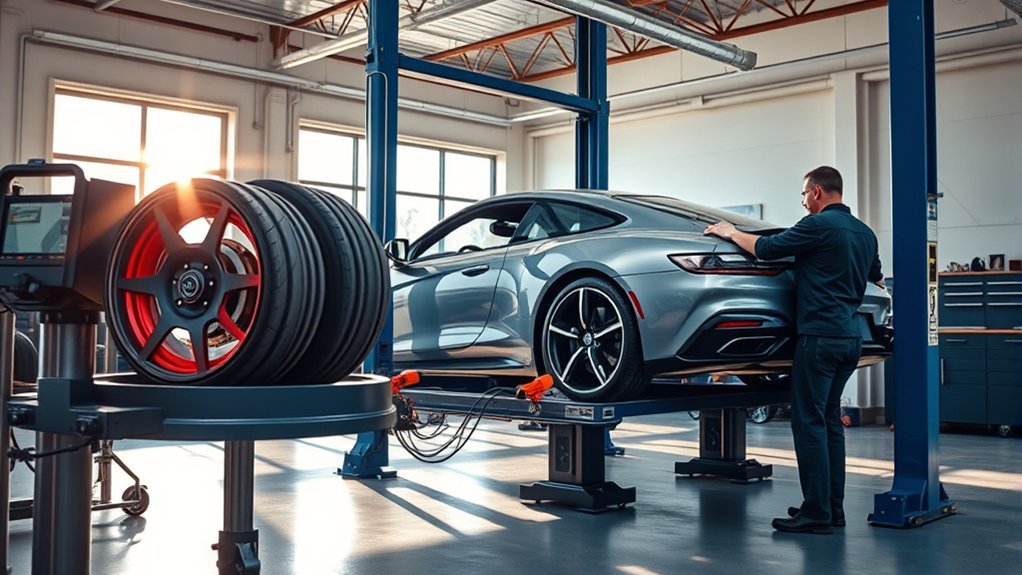
Regular tire balancing and wheel alignment are essential for enhancing tire longevity and improving vehicle handling. By maintaining ideal tire performance, you’ll also notice increased fuel efficiency, making your drives more economical. Addressing these aspects not only guarantees a smoother ride but also contributes to overall safety on the road.
Enhanced Tire Longevity
When you prioritize tire balancing and wheel alignment, you greatly enhance tire longevity and overall vehicle performance. Regular tire maintenance not only extends the life of your tires but also guarantees peak handling. Here’s how:
- Prevents premature tread wear by guaranteeing even weight distribution.
- Reduces the risk of misalignment, which can cut tire life by up to 25%.
- Improves fuel efficiency by up to 10%, minimizing friction and enhancing tire lifespan.
- Maximizes tire performance, extending usable life by hundreds of miles.
- Encourages consistent handling and stability for a safer driving experience.
Improved Vehicle Handling
Improved vehicle handling hinges on the essential maintenance of tire balancing and wheel alignment. Regular tire balancing minimizes vibrations, enhancing your steering response and comfort while driving. It prevents premature tire tread wear, ensuring that your tires maintain ideal contact with the road. Consistent wheel alignment plays a crucial role in cornering stability, allowing your vehicle to navigate turns smoothly and accurately. These adjustments refine tire angles, which not only boosts handling but also promotes overall vehicle performance. Neglecting these services can lead to excessive wear on tires and suspension components, resulting in costly repairs. To sustain your vehicle’s agility and responsiveness, have your wheel alignment checked every 6,000 miles and tire balancing every 5,000 to 6,000 miles.
Increased Fuel Efficiency
Maintaining ideal tire contact with the road considerably enhances fuel efficiency, as it minimizes rolling resistance. By ensuring your tires are properly balanced and aligned, you can enjoy significant fuel savings and improved driving comfort. Here’s how:
- Reduces rolling resistance for better fuel economy
- Enhances vehicle handling, leading to smoother rides
- Prevents uneven tire wear that causes drag
- Minimizes vibrations that increase fuel consumption
- Extends tire lifespan, maintaining efficiency over time
Regular tire balancing and wheel alignment can prevent misalignment-induced losses of up to 10% in fuel efficiency. By prioritizing these services, you not only save on fuel but also improve your overall driving experience.
How Often to Schedule Balancing and Alignment?
How frequently should you schedule tire balancing and alignment? Tire balancing should be performed every 5,000 to 6,000 miles or whenever you rotate, replace, or repair your tires. For wheel alignment, aim for every 6,000 miles or at least biannually to guarantee peak handling and tire longevity. Keep in mind that factors like driving conditions, tire quality, and vehicle usage can affect these service intervals.
Regular inspections are essential, especially after hitting potholes or curbs, as these impacts can disrupt both balance and alignment. Consult your vehicle’s owner’s manual for specific manufacturer recommendations tailored to your model, making sure you meet those tire maintenance standards. By adhering to these guidelines, you can maximize the performance and lifespan of your tires, granting you the freedom to navigate the road with confidence.
Debunking Myths: What You Need to Know About Tire Balancing and Wheel Alignment
What misconceptions do you have about tire balancing and wheel alignment? Let’s address some common myths to clarify the alignment differences and guarantee your vehicle’s performance.
- Myth: Tire balancing and wheel alignment are the same.
- Fact: Alignment adjusts tire angles; balancing corrects weight imbalances.
- Signs of misalignment: Crooked steering wheel, vehicle pulling to one side.
- Signs of imbalance: Vibrations in the steering wheel, floor, or seat.
- Reality: Improper alignment affects tire wear and fuel efficiency, not just steering.
Regular tire balancing is recommended every 5,000 to 6,000 miles, while wheel alignment checks should occur every 12,000 to 15,000 miles or annually. Misconceptions addressed here highlight that both services are essential for safety. Neglecting either can lead to costly repairs and diminished handling. Understanding these concepts empowers you to maintain your vehicle effectively.
Frequently Asked Questions
How Much Does It Cost to Balance a Wheel?
Balancing a wheel typically costs between $15 and $50 per tire, influenced by service frequency, balancing techniques, and potential discounts for multiple tires. Always inquire about additional fees that might apply to your total.
Conclusion
In summary, maintaining proper tire balancing and wheel alignment is crucial for ideal vehicle performance and safety. Did you know that improperly balanced tires can reduce fuel efficiency by up to 10%? By regularly checking and adjusting your tires, you not only enhance ride quality but also extend tire lifespan. Make it a habit to schedule these services to prevent costly repairs down the road and guarantee a smooth, safe driving experience. Your car—and wallet—will thank you.