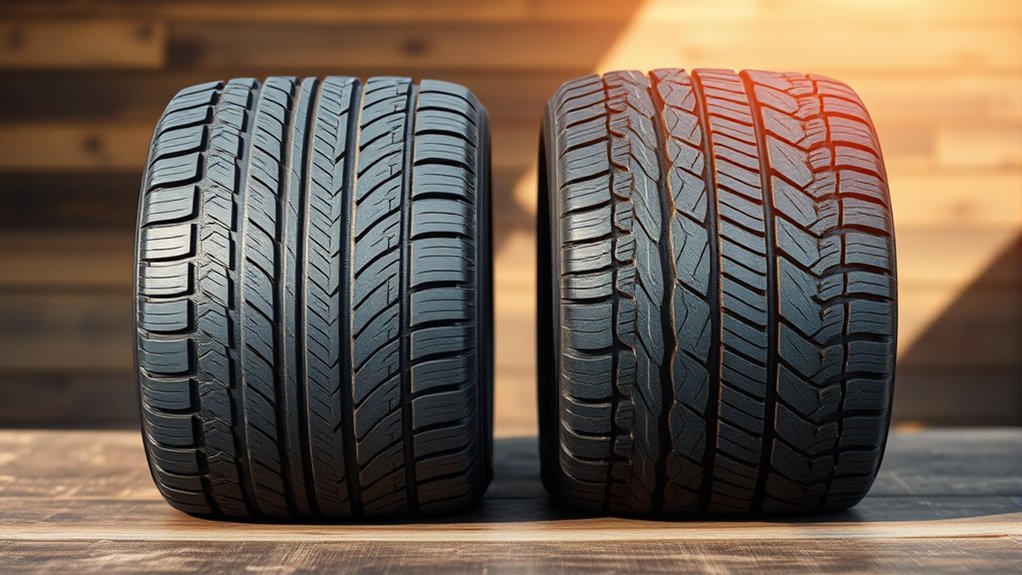
All-season tires offer versatility for moderate climates, providing a smooth ride and handling light snow and rain. However, their performance drops below 45°F, leading to reduced grip and longer stopping distances. In contrast, winter tires excel in cold conditions, featuring a flexible rubber composition and aggressive tread designs for enhanced traction on ice and snow. Choosing the right tire depends on your local climate and driving habits, and you’ll discover more important factors that influence your decision.
What Are All-Season Tires and Their Benefits?
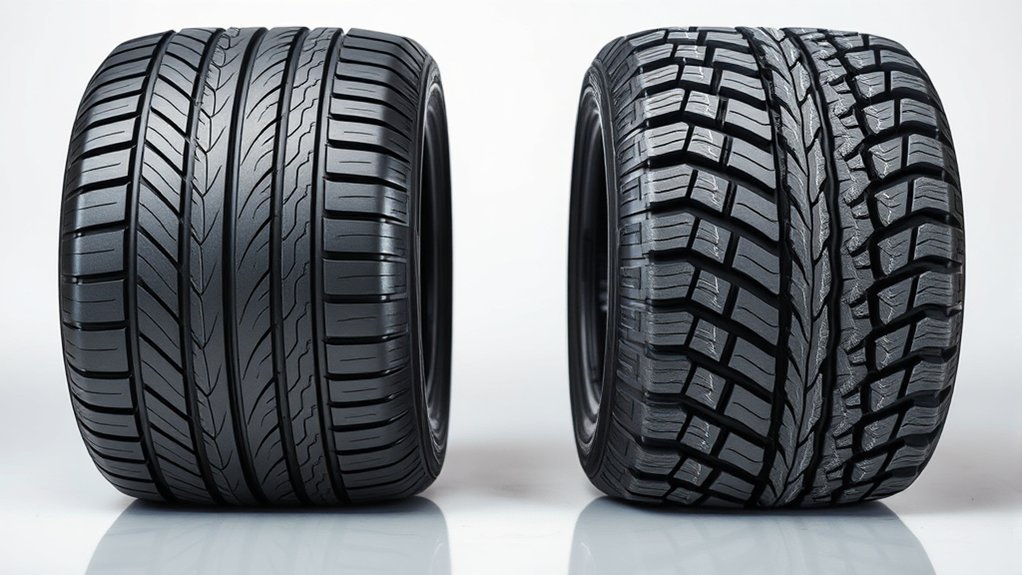
All-season tires are your versatile solution for various driving conditions, striking a balance between performance and convenience. Designed for moderate climates, they offer a smooth, quiet ride while effectively handling light snow and rain. By combining features of both summer and winter tires, these tires provide impressive tire lifespan and reduce the hassle of seasonal changes.
Optimized for temperatures above 45°F, their symmetrical tread pattern with shallower grooves enhances comfort and road contact, ensuring safety in dry and wet conditions. Not only do all-season tires deliver reliable performance, but they also boast cost efficiency, typically being lower in price than dedicated winter tires. This makes them a practical choice for drivers in mild climates, allowing you to enjoy freedom on the road without the extra expense or maintenance of switching tires. Embrace the convenience and versatility that all-season tires bring to your driving experience.
Understanding the Limitations of All-Season Tires
While all-season tires offer versatility, their performance in cold weather can be a concern. When temperatures drop below 45°F, you’ll notice a decline in grip on icy surfaces and longer braking distances. Plus, in heavy snow, their shallower tread grooves limit effectiveness, making them a less reliable choice for harsh winter conditions.
Performance in Cold Weather
As temperatures drop below 45°F, the performance of all-season tires diminishes greatly, putting drivers at risk in cold weather conditions. These tires become rigid, which severely compromises grip and braking performance. While they can manage light snow, their effectiveness plummets in severe winter weather, making a tire safety comparison with winter tires essential. All-season tires feature shallower tread grooves designed for comfort rather than enhanced traction, resulting in longer braking distances and less control. In contrast, winter tires maintain flexibility and provide considerably shorter stopping distances, ensuring better handling on snow and ice. If you’re maneuvering through harsh winter conditions, relying solely on all-season tires can jeopardize your safety and driving experience.
Grip on Icy Surfaces
When maneuvering icy surfaces, the limitations of all-season tires become even more apparent. These tires lose grip and harden below 45°F, drastically reducing ice traction. Their tread designs, while versatile for various conditions, lack the aggressive patterns and biting edges of winter tires, resulting in longer stopping distances on ice. Additionally, their shallower grooves fail to channel snow and slush effectively, further compromising traction. The harder rubber compounds in all-season tires don’t remain flexible in extreme cold, which greatly affects performance. If you frequently face icy conditions, investing in dedicated winter tires is essential for ideal grip and safety, ensuring you navigate winter roads with confidence and peace of mind, while also considering tire longevity.
Limitations in Heavy Snow
Though all-season tires offer versatility for various driving conditions, they fall short in heavy snow. Their rubber compounds can harden below 45°F, reducing grip and increasing stopping distances. In snowy conditions, all-season tires often resemble “tennis shoes,” lacking the traction you need for safe driving. With shallower tread depths and less aggressive patterns, they struggle to channel snow and slush effectively, compromising your snow performance. If you live in areas with consistent heavy snowfall, relying solely on all-season tires can jeopardize tire safety and vehicle control. For true winter conditions, dedicated winter tires provide the necessary grip and confidence, ensuring you navigate through snow with ease and security. Make the switch for a safer driving experience.
How Winter Tires Enhance Safety in Snow and Ice?
When you’re traversing snowy or icy roads, winter tires are your best bet for safety. Their flexible rubber composition remains pliable in cold temperatures, giving you superior grip where all-season tires falter. Plus, the enhanced traction design and shorter stopping distances mean you can maintain control and stop more effectively in harsh conditions.
Enhanced Traction Design
While all-season tires may seem adequate for mild winter conditions, winter tires are specifically engineered to tackle snow and ice with enhanced safety. Their deeper tread depths and aggressive patterns effectively channel snow and slush away, considerably boosting traction. The unique tire compounds used in winter tires remain flexible in temperatures below 45°F, allowing for superior grip on icy surfaces. Increased biting edges and high sipe densities create more contact points with the road, enhancing stability during winter driving. This design can reduce braking distances on snow and ice by as much as 30% compared to all-season tires. Look for the 3PMSF symbol on winter tires, confirming they meet rigorous snow traction standards for severe winter conditions.
Flexible Rubber Composition
The rubber composition of winter tires plays a vital role in enhancing safety on snowy and icy roads. Designed with specialized compounds that remain flexible below 45°F, these tires offer superior grip and traction, essential for maneuvering through treacherous conditions. Their unique tread patterns, featuring deeper grooves and aggressive designs, efficiently channel snow and slush away, boosting stability and control. Enhanced biting edges and high sipe densities greatly improve traction on ice, promoting better rubber performance. Additionally, proprietary compounds, like those found in Bridgestone Blizzak, help eliminate thin water layers that can cause slippage. By maintaining ideal performance in cold weather, winter tires not only enhance safety but also contribute to tire longevity, ensuring you stay secure through winter’s harshest challenges.
Improved Stopping Distances
As temperatures drop, winter tires become essential for maintaining safety on snowy and icy roads, primarily by considerably improving stopping distances. Their specialized tread designs and softer rubber compounds remain flexible below 45°F, enhancing braking efficiency. With an increased number of biting edges and deeper tread depths, winter tires offer superior traction, allowing you to stop 30-40% sooner on slippery surfaces compared to all-season tires. The unique tread patterns effectively channel away snow and slush, improving road contact and overall braking performance. In contrast, all-season tires harden in colder temperatures, leading to longer stopping distances and reduced control, which heightens the risk of accidents. Embracing advanced tire technology can truly liberate your driving experience in winter conditions.
Essential Features of Winter Tires for Enhanced Traction
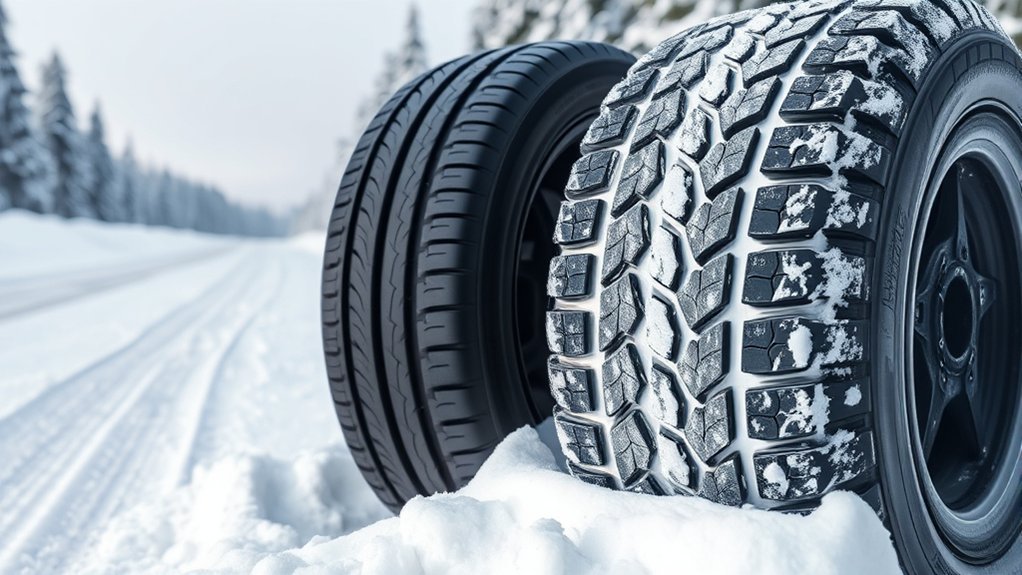
When temperatures drop below 45°F, winter tires become essential for maintaining grip and stability on icy roads. These tires are engineered with specialized tread rubber that stays flexible in cold conditions, enhancing winter performance. Their deeper tread depths and unique patterns effectively channel snow and slush away, providing superior traction on slick surfaces.
Moreover, winter tires feature an increased number of biting edges and high sipe densities, which greatly improve grip on both ice and snow, reducing braking distances compared to all-season tires. Look for the 3PMSF (Three-Peak Mountain Snowflake) symbol to identify tires capable of handling severe snow conditions. Additionally, these tires are designed to prevent snow buildup within the tread, ensuring consistent traction and control during challenging winter drives. With advancements in tire technology, investing in winter tires empowers you to navigate winter’s harshest conditions with confidence.
Comparing Tread Design: All-Season vs. Winter Tires
Tread design plays an essential role in determining how well your tires perform under various conditions. When comparing all-season and winter tires, you’ll notice key differences in their tread patterns that greatly affect performance.
- All-Season Tires: Feature a symmetrical tread pattern with shallower grooves for comfort and quiet rides, effective in moderate conditions and light snow.
- Winter Tires: Boast deeper tread depths and aggressive patterns that enhance traction on snow and ice, ensuring better grip in harsh winter conditions.
- Biting Edges: Winter tires incorporate more biting edges and high sipe densities, improving grip on icy surfaces compared to all-season options.
- Hydroplaning and Evacuation: All-season tires prioritize water channeling to reduce hydroplaning, while winter tires focus on maximizing snow and slush evacuation for superior cold-weather performance.
Understanding these differences helps you make informed choices about your tire needs.
Choosing Between All-Season and Winter Tires: When to Decide?
How do you know when it’s time to switch between all-season and winter tires? It’s essential to evaluate your local climate and driving conditions. If temperatures consistently dip below 45°F, winter tires become vital for safety and performance, offering improved traction on snow and ice. On the other hand, all-season tires are ideal for moderate climates, providing versatility but compromising in severe winter weather.
Here’s a quick reference:
| Factor | All-Season Tires | Winter Tires |
|---|---|---|
| Temperature Range | Above 45°F | Below 45°F |
| Traction | Moderate | Superior |
| Tire Longevity | Longer in mild conditions | Shorter lifespan in warmer months |
| Cost Considerations | Generally less expensive | Higher upfront cost |
| Best For | Varied conditions | Heavy snow/ice |
Assessing these factors will help you make an informed decision, optimizing both safety and vehicle control.
How Weather Impacts Tire Selection
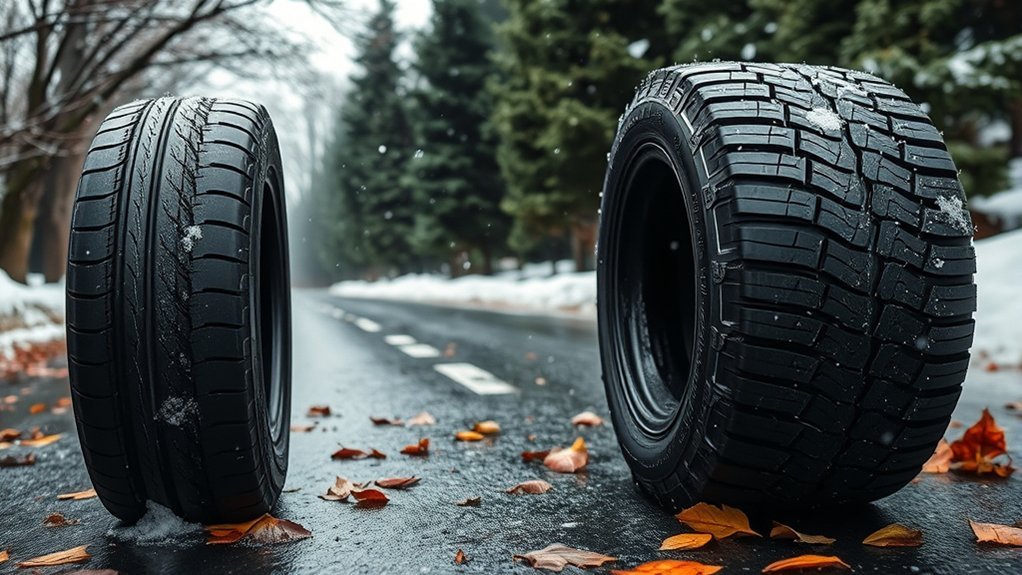
As temperatures drop and weather conditions shift, your tire selection becomes critical for maintaining safety and performance on the road. Understanding how weather patterns and temperature fluctuations affect your tires can keep you safe:
- All-Season Tires: Best for moderate climates above 45°F; they handle light snow and rain but lack grip in extreme winter.
- Winter Tires: Designed for temperatures below 45°F; they use a flexible rubber compound for enhanced traction on ice and snow.
- Tread Design: Winter tires have deeper grooves and aggressive patterns, while all-season tires prioritize a quieter ride.
- All-Weather Tires: Marked with the 3PMSF symbol, these offer a hybrid solution for regions with fluctuating temperatures, combining winter capabilities with all-season convenience.
Choosing the right tires based on these factors not only enhances your vehicle’s performance but also guarantees your safety in varying weather conditions.
Proper Tire Maintenance for All Seasons
While it might be tempting to overlook tire maintenance, regular upkeep is essential for ensuring your safety and optimizing your vehicle’s performance throughout the year. Start by checking your tire pressure monthly; underinflated tires can lead to increased wear and reduce fuel efficiency. Next, monitor your tread depth using a gauge or the penny test—if it’s 2/32″ or less, it’s time for replacement. Don’t forget to rotate your tires every 5,000 to 7,500 miles to promote even wear. Regularly inspect for visible damage like cuts or bulges, addressing any issues immediately to prevent blowouts. Additionally, schedule seasonal changes and alignments to adapt to seasonal changes, enhancing your vehicle’s handling and safety. By sticking to a maintenance schedule, you’ll not only extend the lifespan of your tires but also enjoy a smoother, safer ride every day.
What to Consider When Buying Tires From a Dealer
When you’re ready to buy tires from a dealer, understanding your specific needs can greatly impact your decision. Here are key factors to take into account:
- Local Climate: Assess whether all-season or winter tires suit your driving conditions.
- Tire Markings: Look for the 3PMSF symbol for winter tires and M+S markings on all-season options for clarity on performance.
- Dealer Services: Inquire about maintenance services, including seasonal tire storage, rotations, and alignments to extend tire life.
- Financing Options: Prepare questions about tire financing options and warranty details to guarantee a sound investment.
Consulting with the dealer’s experts can help you evaluate your vehicle’s requirements, matching them with the best tire options for maximum safety and performance. Taking these steps can liberate you from uncertainty, leading to a confident purchase.
Frequently Asked Questions
Can I Use Winter Tires Year-Round?
You shouldn’t use winter tires year-round. They excel in winter performance but wear quickly in warmer conditions, compromising tire safety. Stick to all-season tires for balanced performance and longevity in varying climates.
How Often Should I Replace My Tires?
You should replace your tires every 6 years or when tread depth falls below 2/32 inches. Regularly check for uneven tire wear, as it signals alignment or inflation issues that need addressing.
Are All-Season Tires Suitable for Off-Road Driving?
While all-season tires can handle light off-road conditions, they often lack the aggressive tread design necessary for serious off-road performance. If you’re hitting rugged terrain, specialized tires will serve you better.
What Is the Lifespan of Winter Tires?
Winter tires typically last three to five seasons, depending on tread wear and usage. Regularly check their traction performance; worn tires can compromise safety in snowy conditions, so replace them when tread depth gets low.
How Do Tire Pressure Needs Differ by Season?
Tire pressure needs shift with seasonal changes. In winter, cold temps can lower pressure, while heat in summer can increase it. Regularly check and adjust your tire pressure for peak performance and safety year-round.
Conclusion
In summary, choosing between all-season and winter tires is essential for your safety and driving comfort. Did you know that winter tires can improve traction by up to 50% compared to all-season tires on snow and ice? This significant advantage makes them a wise investment if you live in colder climates. Always consider your local weather patterns and driving habits when selecting tires, and remember, the right tires can make all the difference in your journey.