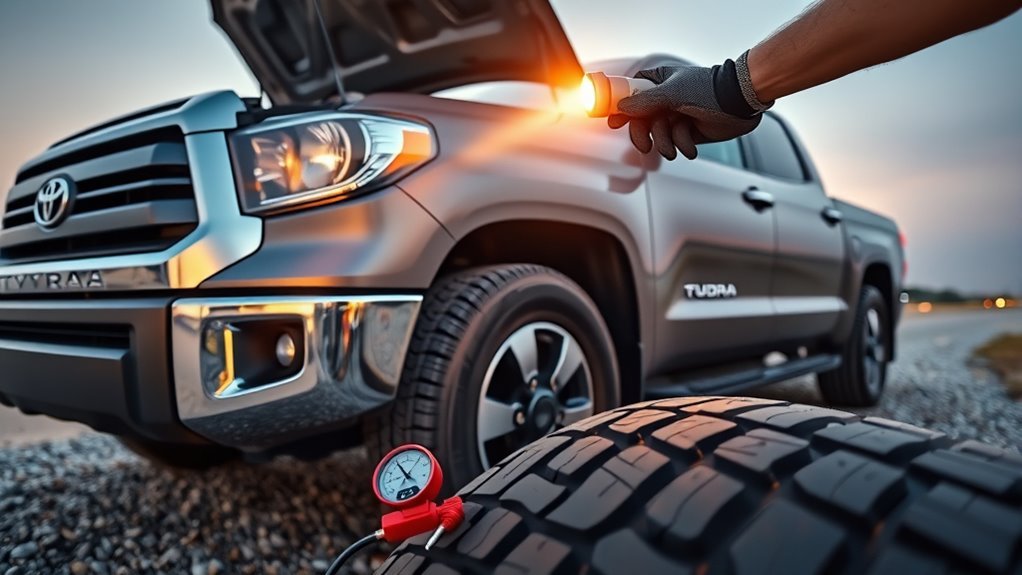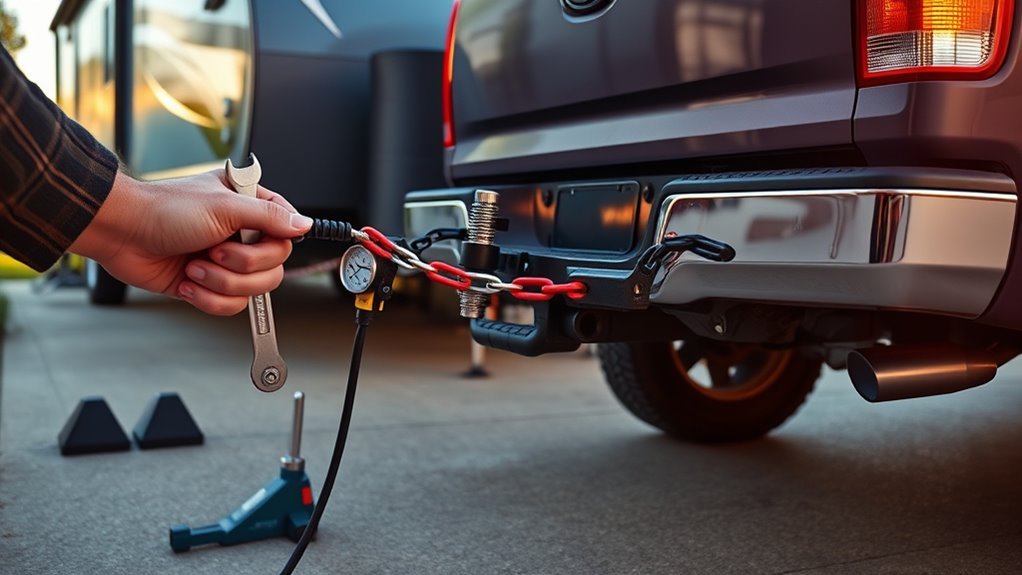
Before every trip, inspect your hitch, pins, and safety chains, confirm ball size matches the coupler, and set tongue weight to about 10–15% of trailer weight. Check tire pressure, tread, lug torque, and load rating; test brakes and brake controller, and verify lights and a 7‑pin connection with a multimeter. Use a weight‑distributing hitch over 5,000 lb loads, secure cargo, and confirm underbody clearance and skid plates — continue for detailed step‑by‑step checks and gear lists.
Quick Go/No‑Go Towing Checklist
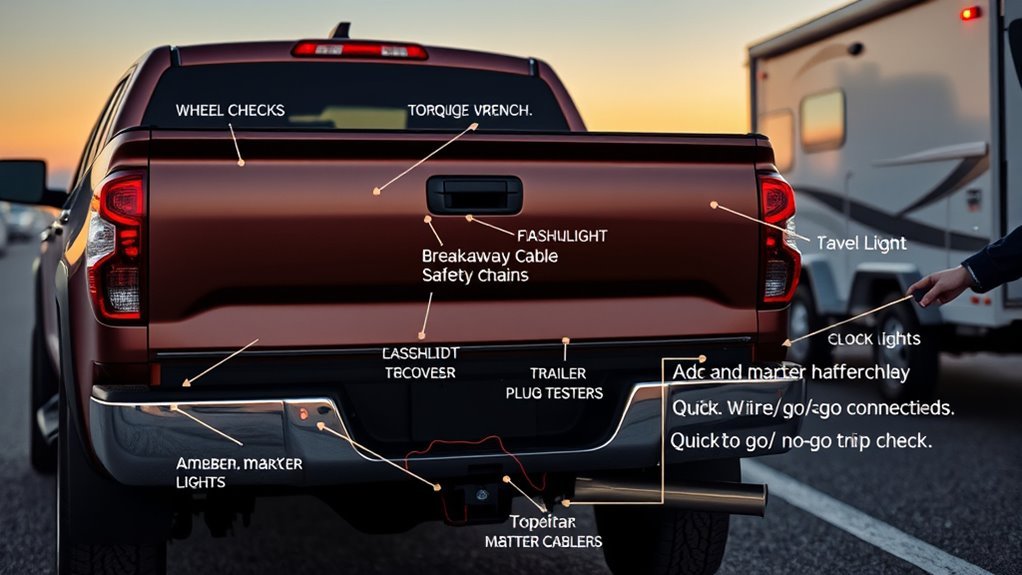
Before you pull away, run this quick go/no‑go checklist to catch common towing hazards: inspect hitch setup—verify the hitch is secured, pins and bolts tightened, and the ball size matches the trailer coupler so your connection won’t fail. Check weight distribution and adjust the distribution hitch until tongue weight sits around 10–15% of trailer weight for stable handling. Review tire condition: scan tread depth and sidewalls for cuts or bulges, and inflate all tires, including the trailer’s, to manufacturer specs to avoid blowouts. Test braking system: confirm trailer brakes engage correctly and set the brake controller for the current load to prevent lock‑up. Inspect lights and electrical connections: make sure turn, brake, and running lights work and that safety chains are crossed and secured. These focused steps support towing safety and routine trailer maintenance, freeing you to move confidently and responsibly without unnecessary risk.
Tundra Towing Limits & Payload Math
When you’re planning a tow, start by matching the Tundra’s limits to your load: the 2025 GCWR is 25,300 lb and certain trims can tow up to 9,000 lb, but every passenger, gear item and tongue load reduces what you can safely haul. You’ll calculate payload by subtracting your curb weight, passengers (about 80 kg/176 lb per adult), cargo and tongue weight (up to 1,500 lb rating) from the vehicle’s gross vehicle weight rating to see real-world capacity. Aim to keep trailer weight 10–15% below max towing capacity for stable, confident travel. Check the math before you hitch: add occupants, fuel and gear, then verify GCWR and payload limits aren’t exceeded. Prioritize towing safety and proper weight distribution—shift cargo to control tongue load, avoid overloading the rear, and rebalance as needed. When you respect numbers, you free yourself to tow with control and confidence.
Essential Towing Gear & Hitch Requirements
Before you hitch up, confirm the receiver type and rating match the trailer’s gross trailer weight and tongue weight so you don’t exceed the Tundra’s capacities. Use a weight-distributing hitch for loads over 5,000 lb, an integrated brake controller for electric brakes, and a 7-pin connector to guarantee lights and brakes work. Carry crossed safety chains, a quality tow strap, D-ring shackles, and a compact recovery kit so you can safely manage detachments or stuck trailers.
Hitch Type & Rating
Although it may seem straightforward, choosing the correct hitch type and confirming its rating are critical to safe towing with your Tundra—you’ll want a hitch rated well above your expected load and a weight-distributing hitch for trailers over 5,000 lb to maintain stability. Match hitch type to the application: receiver class, pintle, or gooseneck as needed. Verify the hitch rating sits at least 10–15% below your truck’s towing capacity to preserve performance margins. Confirm ball mount and coupler sizes align to avoid improper attachment. Inspect hitch pins, mounting bolts, and safety chains—cross chains under the hitch for a fail-safe. Use corrosion-resistant hitch materials and follow a regular hitch maintenance schedule so you stay liberated on the road, confident and secure.
Essential Recovery Gear
One simple checklist can make the difference between a smooth tow and a dangerous recovery: inspect both front and rear recovery points, confirm hitch-mounted gear (safety chains, pins, and couplers) is intact and properly rated, and verify your emergency breakaway lanyard is the correct length and functioning. You’ll keep recovery gear maintenance strict: check welds, mounting bolts, and ratings against your trailer tongue weight. Use a weight-distributing hitch for loads over 5,000 pounds to improve control and reduce sway. When you travel solo or far from help, prioritize solid, reliable components and spare pins, shackles, and a quality tow strap. These towing safety practices free you from avoidable risks—inspect, replace worn parts, and pack redundancies so you can keep moving with confidence.
Hitch, Recovery Points & Tongue‑Weight Setup
You’ll confirm the correct hitch and ball size for your trailer and lock the connection with a rated pin or coupler to prevent detachment. Check the Tundra’s recovery points and any hitch-mounted gear for proper load ratings and signs of wear or rust before every trip. Calculate tongue weight to be about 10–15% of trailer weight and cross the safety chains under the hitch for added security.
Proper Tongue Weight
When towing, make sure tongue weight is 10–15% of the trailer’s total weight and is counted toward your Tundra’s payload so you don’t exceed GCWR. You’re responsible for stable, liberating travel: correct tongue weight prevents trailer sway and lets you control weight distribution across axles. Use a scale or tongue‑weight gauge, verify ball size matches the coupler, and choose a weight‑distributing hitch for trailers over 5,000 lb.
- Measure tongue weight and add it to vehicle payload; adjust load forward/back to hit 10–15%.
- Install a weight‑distributing hitch when required to balance axle load and reduce sway risk.
- Cross safety chains, connect wiring and emergency brake cable, then recheck tongue weight before departure.
Secure Recovery Points
Although securing recovery points might feel routine, treat them as safety-critical: inspect front and rear hooks for proper rating and tight fastening so they’ll handle loads without failure. Verify the hitch pin is locked and all mounting bolts meet manufacturer torque specs; this is recovery point maintenance in action. Confirm tongue weight sits near 10–15% of trailer weight and is evenly distributed to improve stability and handling. Cross safety chains under the hitch and examine them for wear; they’re your backup if a disconnection occurs. Test electrical connections and trailer brakes for reliable operation and regulatory compliance. You’re responsible for towing safety—do these checks consistently so you stay free to travel with confidence and control.
Correct Hitch Selection
After checking recovery points, shift attention to selecting the correct hitch, recovery hardware, and tongue‑weight setup to keep the Tundra stable and safe on the road. You’ll choose a hitch with proper hitch compatibility for your trailer: confirm ball size matches the coupler and the hitch type fits the trailer’s requirements. Verify recovery points are rated for the expected load. Calculate tongue weight at 10–15% of trailer weight and use a weight distribution hitch when towing over 5,000 pounds to improve weight distribution and stability. Inspect hitch pin and mounting bolts for security before departure.
- Match ball size, hitch type, and trailer rating.
- Check recovery point ratings and attachment hardware.
- Measure tongue weight; use weight distribution if needed.
Tundra Suspension & Steering Pre‑Trip Checks
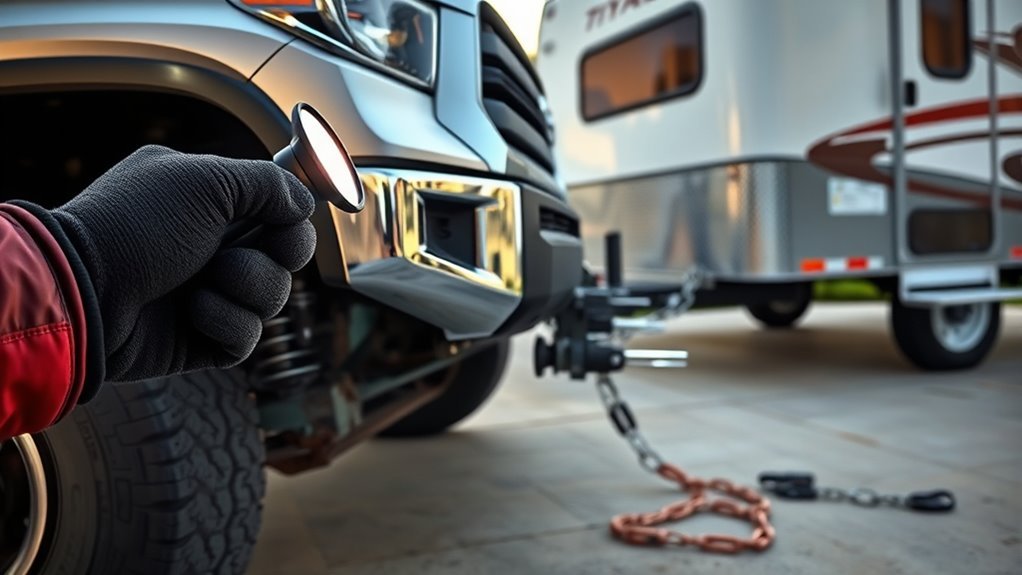
Before you hit the road, give the Tundra’s suspension and steering a thorough hands-on check to guarantee safe, predictable towing performance. Use suspension maintenance tips: inspect upper and lower control arms for wear or damage and confirm mounting bolts are tight. Check ball joints and tie rod ends for play or deterioration—any looseness undermines steering stability. Examine shock mounts and hardware for rust or looseness so the ride stays controlled under load.
Perform steering alignment checks visually and note uneven tire wear or steering pull that suggests misalignment. Review sway bar links and bushings for wear; replace damaged parts to stop clunking and sharpen handling. If you hear clunks or feel vague steering, don’t postpone repairs—address issues before towing. These focused, proactive inspections free you to tow with confidence and keep your Tundra responsive, safe, and steady on every trip.
Underbody Clearance & Skid‑Plate Inspection
When you’re prepping the Tundra for a tow, check the underbody clearance and skid plates to make sure the oil pan, transmission, and transfer case are protected and won’t strike obstacles when the truck’s loaded. You want freedom on the road; that starts with inspecting skid plate durability and underbody maintenance so nothing pins you down.
- Inspect skid plates for dents, cracks, or deformation that could compromise protection; replace or reinforce if damage reduces coverage or structural integrity.
- Verify all fasteners are present and torqued to spec to avoid hardware loss on rough roads; missing bolts mean exposed components and risk to your mobility.
- Measure clearance with your expected trailer tongue weight applied; confirm clearance remains adequate over likely obstacles and consider upgraded skid plates for frequent off-road towing.
Regularly examine the underbody for wear or corrosion as part of routine underbody maintenance to keep towing safe and liberating.
Tundra Wheels, Tires & Brakes Checklist
Although you’re focused on hitching and load distribution, don’t overlook the wheels, tires, and brakes—inspect lug-nut torque (typically 80–100 ft‑lbs), tire sidewalls for cuts or bulges, tread depth (minimum 2/32″), and uneven wear that signals alignment or loading problems; also verify each tire’s load index is at least 124 (total tire capacity 14,108 lbs, respecting the rear-axle rating of 7,050 lbs), and check brake lines and rotors for leaks, damage, or excessive wear so braking performance won’t be compromised under tow. Do a quick walkaround and confirm lug nuts are torqued to spec to prevent loosening under load. Scan sidewalls and measure tread depth; replace tires that show bulges, cuts, or under 2/32″. Note any uneven wear pattern—correct alignment or redistribute cargo to restore balance. For brake inspections, look for fluid leaks, cracked lines, thin pads, or scored rotors and address issues before you hit the road. Regular tire maintenance and brake inspections free you to tow confidently and responsibly.
Electrical Connections & Trailer Lighting Checks
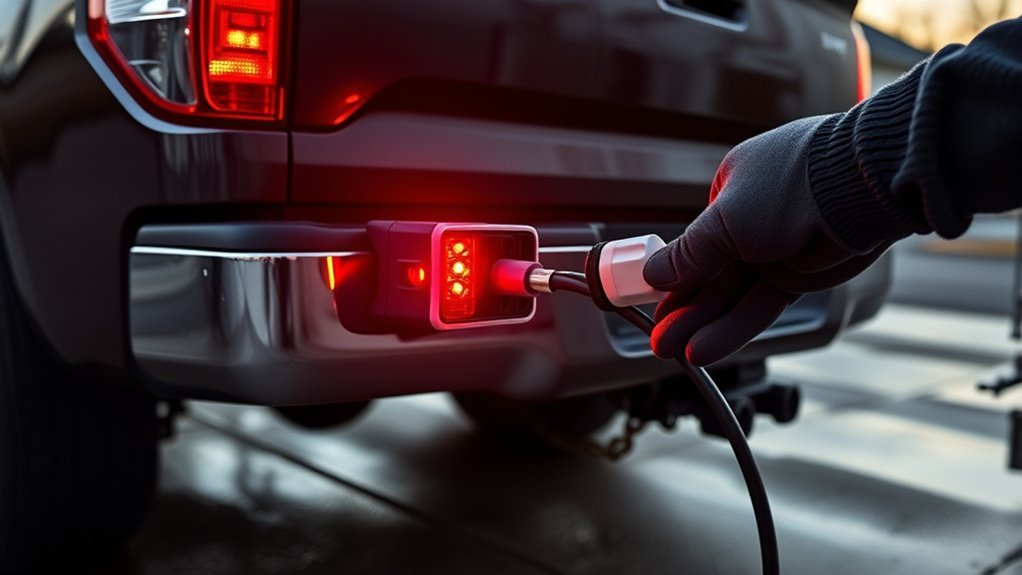
If you want safe, legal towing, you’ve got to verify the trailer’s electrical system and lights before you leave: confirm the connector type (most heavy-duty setups use a 7‑pin round), inspect wiring for abrasion or loose terminals, and test brake lights, turn signals, and reverse lights for correct operation. You’re responsible for electrical safety and effective trailer maintenance; a quick, systematic check preserves freedom on the road and prevents roadside stops.
- Use a multimeter to confirm voltage at the trailer connector — guarantee proper power to lights and electric brakes; note any voltage drop or intermittent readings.
- Visually inspect wiring harnesses and connector pins for corrosion, frays, or loose fittings; secure any exposed wiring and replace damaged sections before departure.
- Confirm the emergency breakaway cable is connected and the breakaway switch functions; test lighting with a partner or portable tester to verify brake, turn, and reverse circuits work under load.
Stay precise, perform these steps every trip, and tow with confidence.
Cargo Loading, Weight Distribution & Final Walkaround
After you verify lights and electricals, shift attention to how you load and secure the trailer—proper cargo placement and a thorough walkaround keep the rig stable and legal. You’ll aim for cargo balance with tongue weight at 10–15% of total trailer weight and never exceed the Tundra’s towing capacity in the owner’s manual. For loads over 5,000 lb, fit a weight-distributing hitch to equalize axle loads and aid sway prevention. Cross and attach safety chains, confirm electrical and brake connections, and test the trailer brakes with the Tundra’s controller before departing.
| Item | Target | Action |
|---|---|---|
| Tongue weight | 10–15% | Shift cargo fore/aft |
| Total weight | Below Tundra limit | Weigh trailer fully loaded |
| >5,000 lb | Use hitch | Install weight-distributing hitch |
| Final check | All secured | Walkaround, chains, lights, brakes |
Walk deliberately, tighten straps, free yourself from roadside risk.
Frequently Asked Questions
What Year Does Tundra Tow the Most?
2025: you get the highest towing capacity. Check engine specifications—properly equipped hybrids and V6s deliver up to 12,000 pounds. You’ll inspect mounts, brakes, and fluids to tow safely and liberate your adventures.
How to Tow With a Toyota Tundra?
Like a steady captain steering, you’ll verify towing capacity, install a proper hitch installation, distribute tongue weight, connect brakes and lights, inspect tires and brakes, and drive confidently but cautiously, prioritizing safety and freedom on the road.
Conclusion
You’re ready: review, rectify, and run. Routinely recheck tongue weight, tire tread, tow ratings, and trailer lights before rolling. Prioritize payload limits, proper hitch fitment, and secure cargo to prevent sway. Confirm clearances, skids, suspension settings, and recovery points for rugged routes. Test brakes, bearings, and electrical connections for trouble-free towing. Stay systematic, stay safe, stay sober—small sensible steps save stress, strain, and serious snags on every trip.