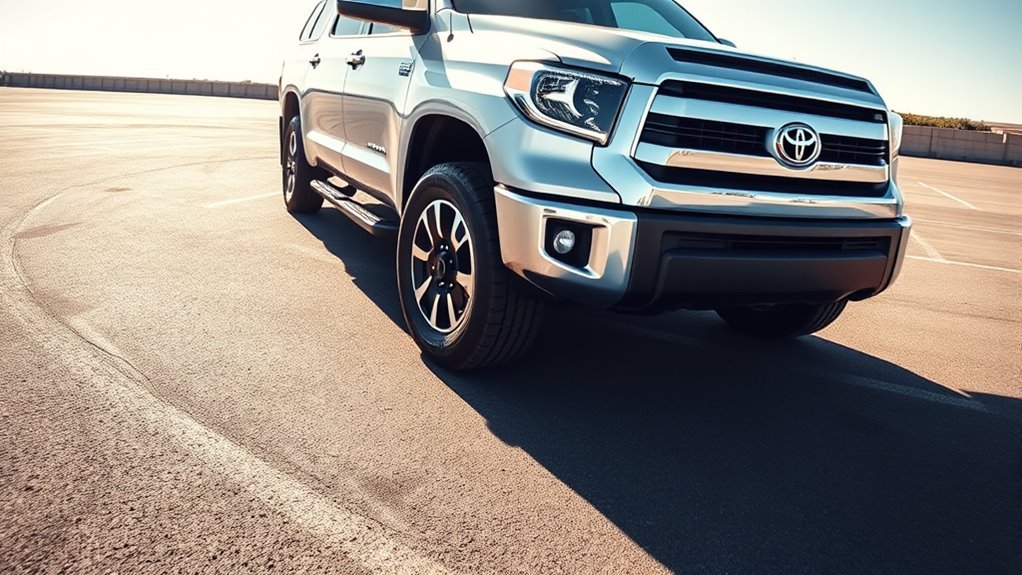
You should target 9–11% of your trailer’s loaded mass as tongue weight for a Toyota Tundra, balancing stability and control while ensuring the hitch and truck limits aren’t exceeded. Calculate by multiplying trailer mass by your chosen percent, then verify against the Tundra’s tongue-weight and axle ratings and measure with a calibrated scale. Use a weight-distribution hitch and/or airbags if tongue weight or trailer size requires it; continue for setup, limits, and step-by-step checks.
How to Choose the Right Tongue-Weight Percent for Your Toyota Tundra
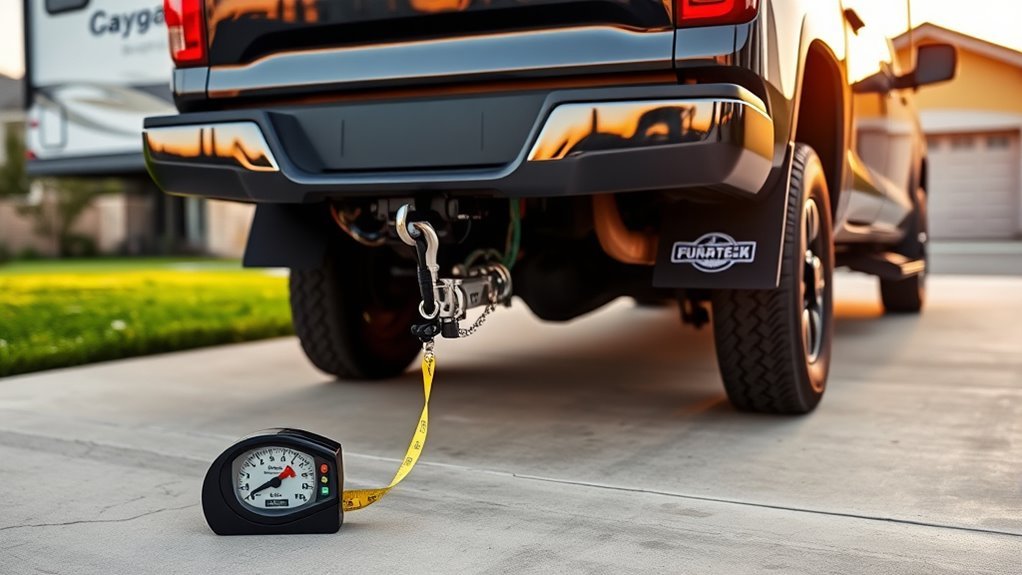
Wondering how much of your trailer’s weight should sit on the Tundra’s hitch? You’ll target 9–11% tongue weight of total trailer mass to maximize trailer stability and control. For example, with a 12,000 lb towing limit, that’s 1,080–1,320 lbs on the hitch—but note the Tundra’s published maximum tongue weight may cap at 1,200 lbs, so you’ll respect the lower limit if specified. Check your owner’s manual for the exact GVWR and tongue-weight limit for your model before loading. Distribute cargo forward or aft inside the trailer to dial tongue weight into the target band without exceeding the vehicle’s limit. Maintaining that percentage reduces sway, preserves steering feel, and keeps braking predictable. You’re liberating yourself from guesswork by applying a clear numeric rule, confirming vehicle limits, and adjusting load placement to meet precise tongue weight targets for safe, controlled towing.
Quick Calculation: Step-by-Step Tongue Weight for Trailers and Hitch Carriers
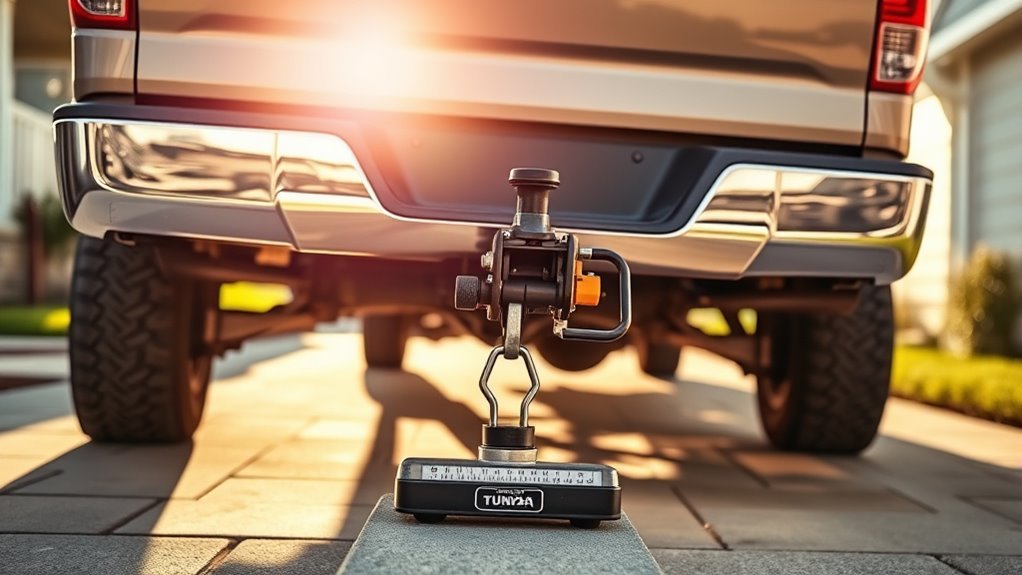
Now that you know the target 9–11% tongue-weight band and your Tundra’s published limits, here’s a concise, step-by-step method to calculate actual tongue weight for trailers and hitch-mounted carriers. Step 1: determine total loaded trailer or carrier mass (include cargo, fluids, accessories). Step 2: choose your target percent within 9–11% based on stability needs. Step 3: multiply total mass by the chosen percent (e.g., 6,800 lb × 0.10 = 680 lb) to get target tongue weight. Step 4: confirm this value doesn’t exceed your Tundra’s tongue-weight limit (typically 1,120–1,200 lb). Step 5: measure actual tongue weight with a calibrated scale or tongue-weight gauge at the hitch when the trailer/carrier is hitched and level. Step 6: adjust load or move gear forward/backward, or use weight-distributing equipment, until measured tongue weight matches the calculation. These calculation methods give you control and freedom—ensure accuracy before every trip.
How Your Hitch, Truck, and GAWR Determine the Max Tongue Weight
Start by recognizing that the maximum safe tongue weight isn’t set by the trailer alone but by the weakest link among your hitch, the Tundra’s rear GAWR, and the vehicle’s published tongue‑weight rating; exceed any one of these and you risk axle overload, compromised braking and steering, and premature component wear. You must confirm hitch specifications (class rating, ball load) and add the hitch assembly and any carriers to the tongue‑weight calculation. Target 9–11% of trailer weight for ideal stability; for a 6,800 lb trailer that’s roughly 612–680 lbs, including hitch and cargo. Compare that total to the Tundra’s rear GAWR and the vehicle tongue‑weight limit in your owner’s manual; the lowest value is your cap. Monitor gross axle load on a scale before departure. If measured tongue weight approaches any listed limit, redistribute cargo to shift weight forward or reduce trailer load. This disciplined approach frees you to tow confidently within safe mechanical and legal margins.
When to Use a Weight-Distribution Hitch or Airbags : What They Actually Change
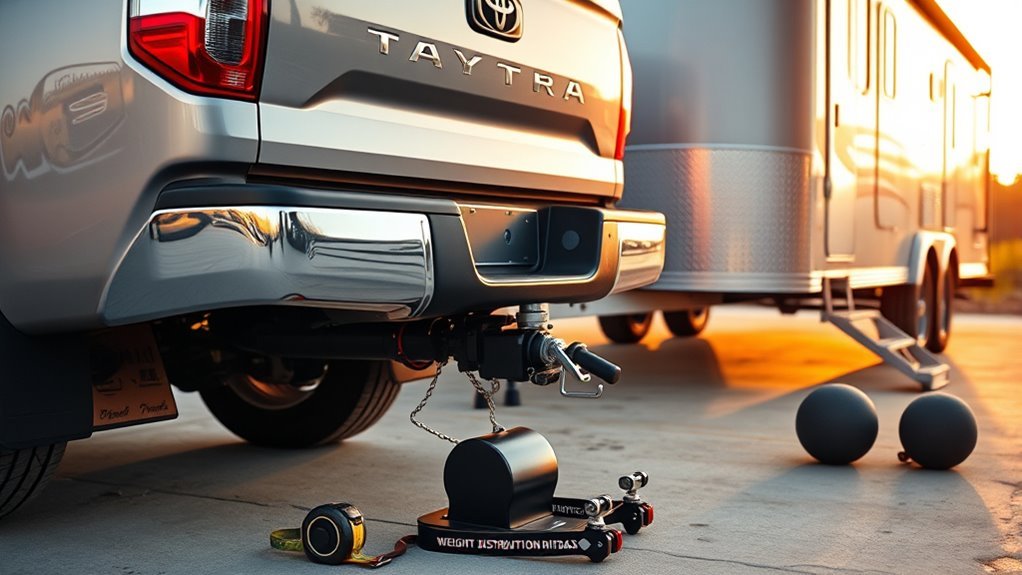
When should you add a weight-distribution hitch or airbags? You add a WDH when tongue weight exceeds about 500 lbs or when trailer mass surpasses 5,000 lbs; it actively shifts load distribution from the rear to the front axle, reducing effective tongue weight at the hitch and restoring steering traction. Use airbags when rear suspension sags under load; they support ride height and improve handling without changing tongue weight itself. Both systems target towing stability: the WDH counters sway and redistributes forces across axles, while airbags maintain geometry and prevent rear-axle overload. Implementing either lets you reclaim control and freedom to tow safely—WDH for dynamic redistribution and sway control, airbags for static support and consistent ride height. Combine them when payloads and trailer setups demand both improved axle load balance and suspension support. Always match hardware ratings to your Tundra’s GAWR and trailer specs to preserve liberation through safe, predictable towing performance.
Pre-Tow Checklist: Weigh, Load, and Verify Before Every Tow
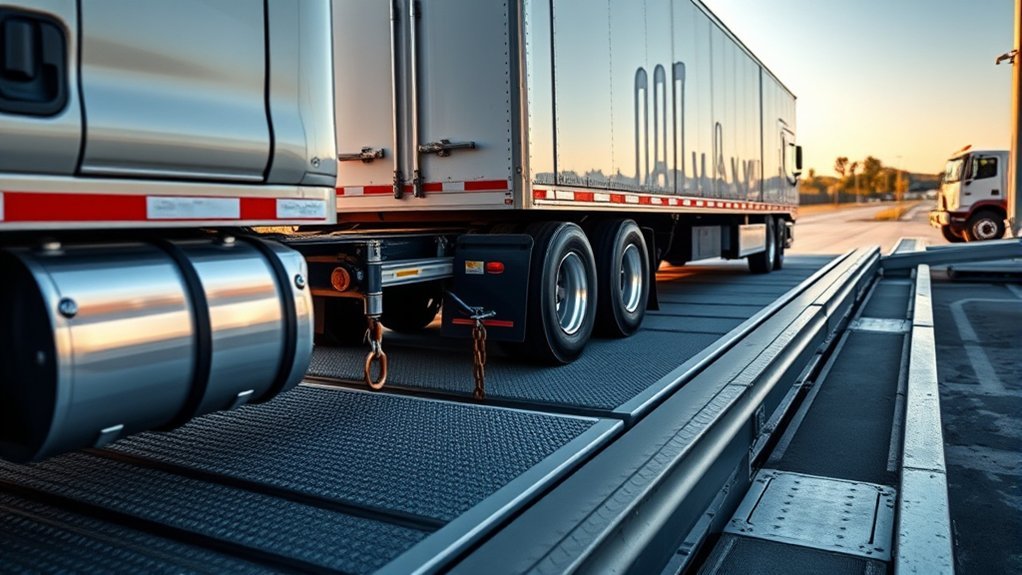
A calibrated commercial scale is your first step: weigh the truck and trailer together and separately so you can verify GCWR compliance, confirm rear-axle and payload limits from the door-jamb sticker, and calculate exact tongue weight. Use scale readings to confirm combined weight stays below GCWR, rear axle load is under GAWR, and the truck’s payload budget covers passengers and gear. Measure trailer weight, then compute tongue weight target: aim for 9–11% of trailer mass for ideal stability while ensuring it falls within your Tundra’s max tongue capacity (typically 1,120–1,200 lb).
Load cargo with intent: position heavier items forward of the axle but not all the way at the tongue to manage weight distribution and minimize sway. Reweigh after loading and adjust until rear-axle and tongue loads meet specs. Verify hitch rating and, if limits are exceeded, add a weight-distribution hitch or airbags. Confirm fasteners, lights, and brakes before departure.
Frequently Asked Questions
What Is the Ideal Tongue Weight Percentage?
You should target 9–11% of trailer weight for ideal tongue weight; that balance optimizes trailer safety and respects towing capacity, so you’ll maintain control, reduce sway, and liberate yourself from risky, unstable towing conditions.
What Is the Tongue Weight on a Toyota Tundra?
Like a keel steadying a ship, the Tundra’s tongue weight maxes around 1,120–1,200 lbs; you’ll aim for 10–15% of trailer weight to guarantee towing safety and proper load distribution for confident, liberated hauling.
What Is the Weight Limit on the Toyota Tundra Hitch?
Your Tundra hitch weight limit typically ranges up to 1,200 lbs tongue and varies by trim; check hitch specifications and owner’s manual. You’ll prioritize towing safety, liberating yourself by confirming exact ratings before towing.
Conclusion
You’ve measured tongue weight, matched it to your Tundra’s GAWR and hitch rating, and still wonder if 10–15% is “just a suggestion.” It isn’t. That percent keeps trailer sway, suspension travel, and braking behavior polite instead of catastrophic. Use a scale, redistribute cargo, or fit a weight-distribution hitch/airbags when numbers exceed limits. Do the math every tow—because irony aside, assuming “close enough” is how problems start.