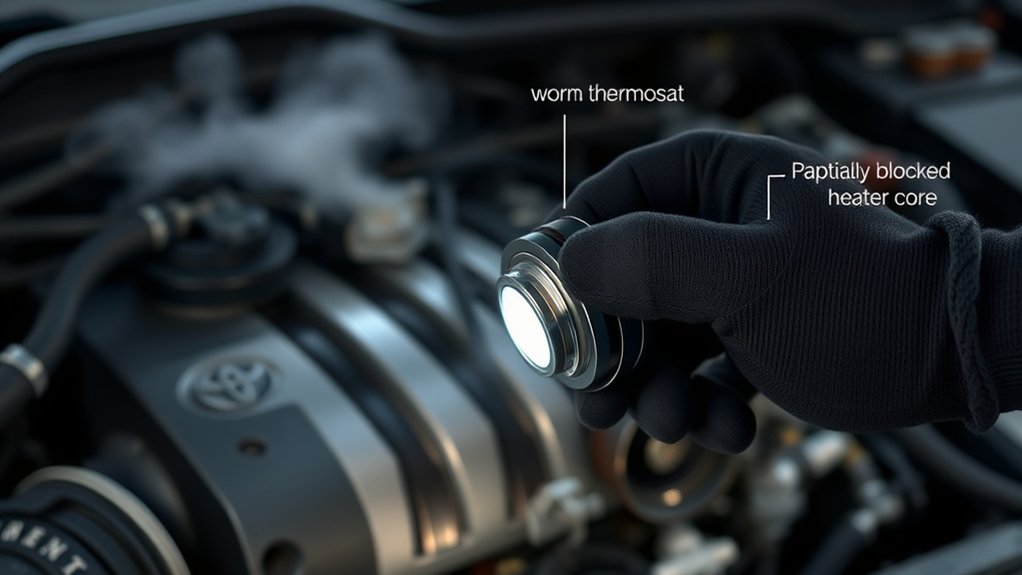
If your Toyota Camry has no heat at idle, check for several potential issues. A malfunctioning heater control valve, clogged heater core, or a stuck-open thermostat might be obstructing hot coolant flow. Trapped air in the system or incompatible coolant can also be culprits. Start by inspecting coolant levels and hoses. You’ll enhance your heating performance by flushing the system and bleeding out any air. Stick around to uncover further diagnostic steps and maintenance tips.
Why Your Camry Has No Heat at Idle
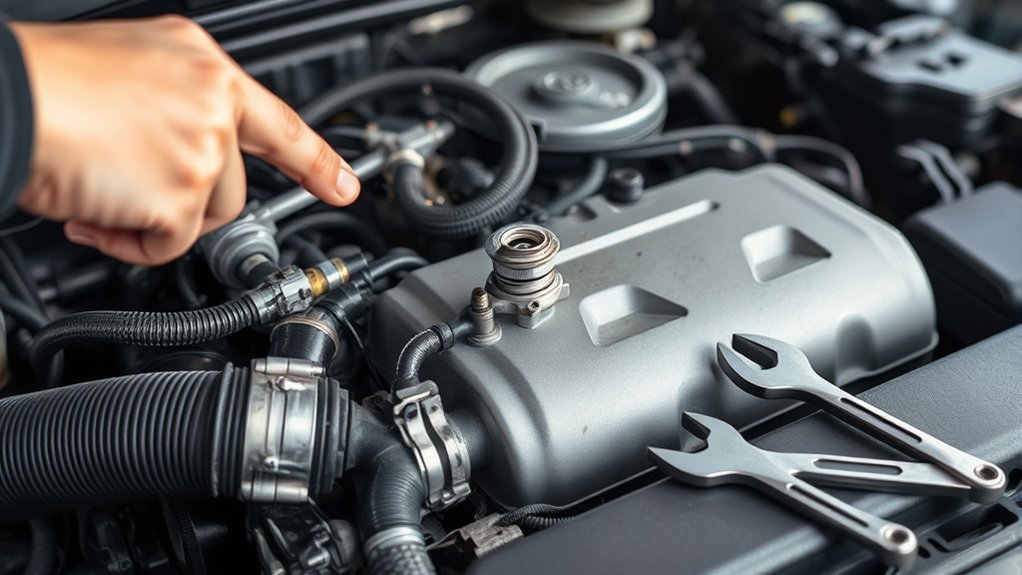
When your Toyota Camry has no heat at idle, it often points to several potential issues. One common culprit is a malfunctioning heater control valve, which fails to allow hot coolant to flow into the heater core. Without this essential flow, warm air can’t reach the cabin when your engine is idling. Additionally, insufficient coolant circulation caused by a clogged heater core can further hinder heating efficiency.
A stuck-open thermostat can also disrupt the coolant flow, preventing the engine from reaching ideal temperatures and compromising heat output. Moreover, air trapped in the cooling system can obstruct proper coolant circulation, leading to inadequate heat from the vents. To combat these issues, regularly check your coolant type and levels to avoid gelling and blockages. By addressing these factors, you can guarantee your Camry delivers warm air even when stationary.
Common Causes of No Heat in Your Toyota Camry
Several factors can contribute to the lack of heat in your Toyota Camry. A malfunctioning heater control valve is a common culprit, preventing hot coolant from flowing into the heater core at idle. Similarly, clogged heater cores can restrict coolant flow, leading to inadequate heat output when the engine’s not revving. If your thermostat is stuck open, the engine may not reach ideal temperature, resulting in cold air blowing from the vents.
Air trapped in the cooling system can create hot and cold spots, impacting consistent heating in the cabin. Additionally, mixing incompatible coolant types—like red and green—can lead to gelling and blockages, severely affecting heater functionality. Regular maintenance and using the correct coolant types will help guarantee efficient heating and a comfortable driving experience. Keep an eye on these issues to maintain your Camry’s heating system.
How to Diagnose Your Heater Problems?
To effectively diagnose heater problems in your Toyota Camry, start by checking the coolant level in both the radiator and the overflow reservoir, as low coolant can greatly affect heating performance, especially at idle. Next, inspect the heater control valve; a malfunction here may prevent hot coolant from reaching the heater core. Monitor the temperature of the hoses entering the firewall; if they’re cool or unevenly warm, there may be a blockage in the heater core.
Additionally, look for air pockets in the cooling system, as trapped air can disrupt coolant circulation. Finally, verify your thermostat is functioning correctly; a stuck open thermostat can hinder the engine from reaching ideal operating temperature.
| Step | Action | Expected Result |
|---|---|---|
| Check Coolant Level | Verify levels in both areas | Adequate heating performance |
| Inspect Heater Valve | Test for proper operation | Hot coolant to heater core |
| Monitor Hose Temperature | Check for temperature variance | Identify blockages |
| Check Thermostat | Confirm functionality | Ideal engine temperature |
Step-by-Step Fixes to Restore Heat in Your Camry
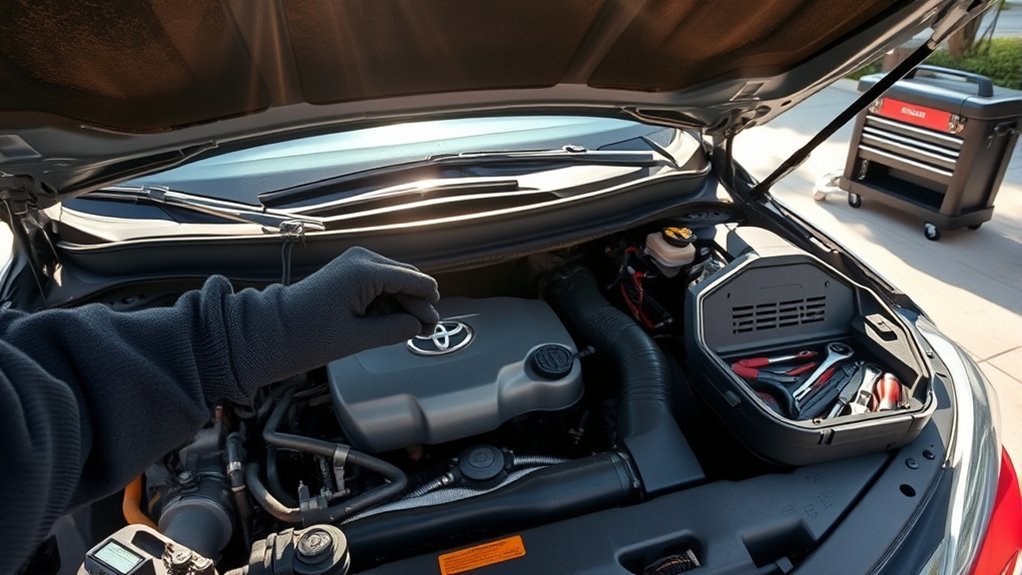
After diagnosing the heater problems in your Toyota Camry, it’s time to implement specific fixes to restore heat, particularly at idle. First, check the heater control valve (VSV) for proper operation; a malfunctioning valve can block coolant flow to the heater core. Next, perform a coolant flush to remove any blockages caused by sediment or mixed coolant types that might restrict heat transfer.
Inspect the thermostat to verify it isn’t stuck open, which can lead to insufficient cabin heat due to coolant bypassing the heater core. Additionally, monitor the temperature of the hoses entering the firewall; they should be hot when the heater’s on, indicating adequate coolant flow. Finally, bleed the cooling system to remove air pockets that can impede circulation. By following these steps, you’ll restore effective heating in your Camry, guaranteeing comfort during your drives.
Essential Maintenance Tips to Keep Your Heat Running Smoothly
While it might seem straightforward, maintaining your Toyota Camry’s heating system requires consistent attention to several key components. Start with regular coolant maintenance; check levels in both the radiator and overflow reservoir. This guarantees peak heating performance and prevents overheating. Every 30,000 miles, or as recommended, flush the cooling system to eliminate deposits that could block the heater core and radiator.
Don’t forget the thermostat replacement; inspect and replace it every few years or if you notice heating issues. A malfunctioning thermostat disrupts coolant flow, affecting heating efficiency. Additionally, verify the heater control valve operates correctly; a stuck or clogged valve can prevent hot coolant from reaching the heater core.
Lastly, monitor for air pockets in the cooling system. Trapped air hinders coolant flow and leads to inadequate heating, so bleeding the system regularly can help resolve this issue.
Frequently Asked Questions
Why Does My Heat Not Work When My Car Is Idling?
Your heat might not work at idle due to thermostat issues, low coolant levels, a clogged heater core, or airflow problems. Check these components to verify proper coolant circulation and effective heating at low RPMs.
Why Is My Toyota Camry Not Blowing Hot Air?
Your Toyota Camry might not blow hot air due to thermostat issues or a clogged heater core. Check coolant levels and guarantee proper circulation. Addressing these can restore heat effectively, especially at idle.
Why Does My Heat Only Work When My Car Is Moving?
When your heat only works while moving, it’s often due to thermostat issues or restricted coolant flow. At idle, lower RPMs reduce pressure, limiting hot coolant circulation to the heater core.
Why Is My Car Blowing Cold Air at Idle?
Your car blows cold air at idle due to coolant circulation issues, often caused by thermostat problems. Check for a malfunctioning thermostat or air pockets in the cooling system to restore proper heating performance.
Conclusion
To summarize, if your Toyota Camry has no heat at idle, addressing the issue promptly can prevent further complications. Notably, about 70% of heating problems stem from a faulty thermostat or low coolant levels. By diagnosing and fixing these common causes, you can restore comfort during colder months. Regular maintenance is key—keep an eye on your coolant levels and check your heating system annually to guarantee it runs smoothly when you need it most.