You’ll pick a short bed when you want tight turning, easier parking, and enough room for furniture, bikes, or camping gear; it’s ideal in cities and for daily driving. Choose a long bed if you regularly haul full 4×8 sheets, long lumber, or heavy tools and need simpler cargo organization and better towing stability. Measure inside bulkhead to tailgate when comparing models. Keep going to see specific fit examples, towing tips, and smart upgrades.
Quick Recommendation: Short Bed vs Long Bed
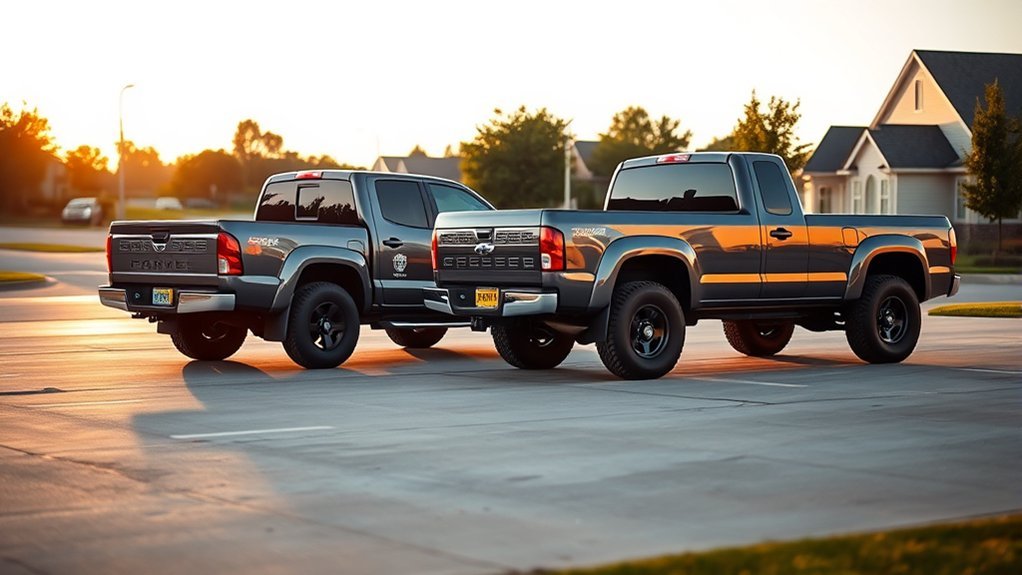
Looking for a quick call on short bed versus long bed? You want freedom from needless compromise: pick a short bed if you navigate cities, park in tight spots, and value passenger room—crew cabs pair well with shorter beds. You’ll sacrifice some cargo capacity, but smart cargo organization and targeted bed accessories will stretch usability for most daily tasks. Choose a long bed if you routinely haul oversized loads, carry full 4×8 sheets with the tailgate closed, or tow heavy trailers where a longer wheelbase boosts stability; it’s the pragmatic choice for frequent hauling or fifth-wheel setups. You’re choosing between maneuverability and maximum utility. Ask how often you move large items versus how often you need nimble parking and more rear passengers. Then match bed accessories and cargo organization systems to your chosen length so your truck becomes a tool for liberation, not a compromise you tolerate.
Truck Bed Length Definitions (Short, Standard, Long)
Think of bed lengths in three practical buckets: short beds (about 5.5–6 feet) prioritize maneuverability and city parking, a 6’5″ “standard short” often shows up on crew cabs for extra rear-room tradeoffs, and long beds (roughly 8 feet) give you the space to carry bulky materials or set up work rigs—measure from the inside of the bulkhead to the inside of the tailgate and double-check manufacturer specs since sizes can vary. You’ll choose based on how you value agility versus load capacity. Short beds (≈55–65 inches) let you navigate tight streets and park freely; the 6’5″ standard short balances passenger comfort with better cargo versatility. Long beds (~8 feet) deliver true hauling capability for lumber, appliances, or mobile work setups. For liberated living—where freedom means hauling what you need without compromise—understand these bed size comparisons, recognize manufacturer variability, and match the bed profile to your lifestyle instead of trading autonomy for needless length.
How to Measure Your Truck Bed Correctly
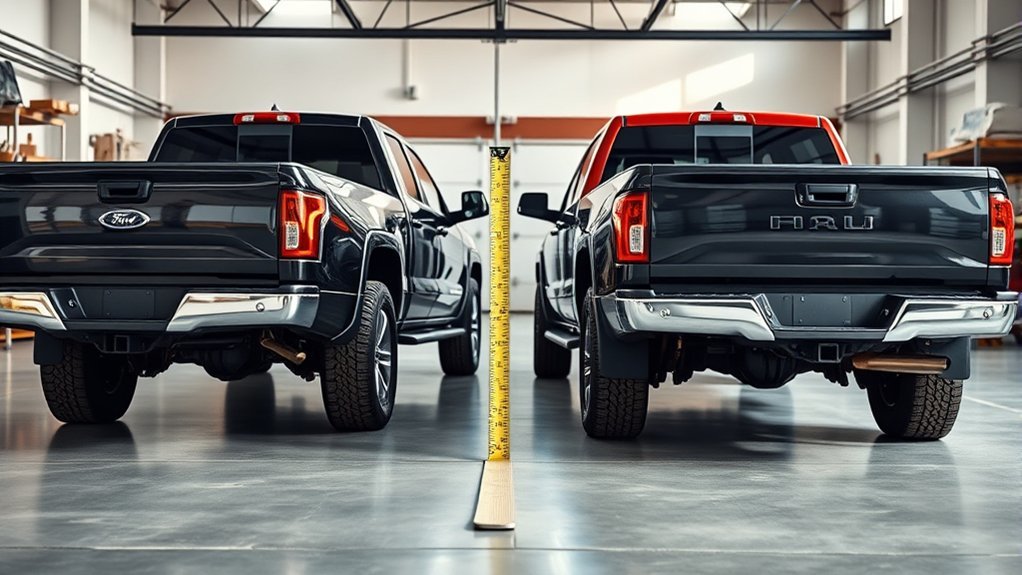
Measure from the inside of the bulkhead straight to the inside of the tailgate to get the true bed length, since external bodywork can mislead you. Also check the bed’s widest point for width measurements—most beds fall between about 55 and 65 inches but models vary. Accurate inside measurements guarantee you pick the right short- or long-bed accessories and avoid costly mistakes.
Measure From Bulkhead
Start by placing your tape at the inside face of the bulkhead and run it straight to the inside of the tailgate to get an accurate bed length; keep the tape fully extended and taut to avoid errors from bends or slack. When you perform this bulkhead measurement, you get the true usable length that distinguishes short bed from long bed configurations. Measure width at the bed’s widest point too, since models vary and external bodywork can mislead you. Double-check both dimensions; accessory fit and load planning depend on precision. Compare your numbers to manufacturer specs rather than curbside impressions. Embrace accuracy as freedom—knowing exact bed size lets you choose gear that liberates your work and play without trial, error, or wasted trips.
Measure Tailgate Interior
When you measure the tailgate interior, place the tape against the inside face of the tailgate and pull it straight to the inside of the bulkhead so you capture the true usable length; keep the tape taut and aligned with the bed floor to avoid errors from bends or gaps. You’ll then confirm tailgate dimensions by repeating the length measure from bulkhead inward and using consistent measuring techniques. Use a tape for precision, compare results to manufacturer specs, and remember external bodywork can mislead. Accurate numbers free you to choose the right accessories and cargo. Below is a compact reference to guide quick checks.
| Step | Tool | Purpose |
|---|---|---|
| 1 | Tape | Length |
| 2 | Level | Alignment |
| 3 | Notes | Specs |
Check Widest Point
How wide is the real cargo area? Measure the interior at the widest point—usually between the wheel wells or along the top rails—so you know what truly fits. Don’t rely on external bodywork; those measurements can mislead when you’re buying bed accessories like toolboxes or extenders. Use a measuring tape and repeat measurements to confirm accuracy. Compare that width against accessory specs and the typical short-bed (5.5–6.5 ft) versus long-bed (~8 ft) lengths to see how capacity and fit change. These measurement techniques free you from guesswork and poor purchases, letting you choose gear that matches real dimensions. Be exact, deliberate, and confident—your truck should serve your plans, not restrict them.
Decision Framework: Cargo, Towing, Passengers, Parking
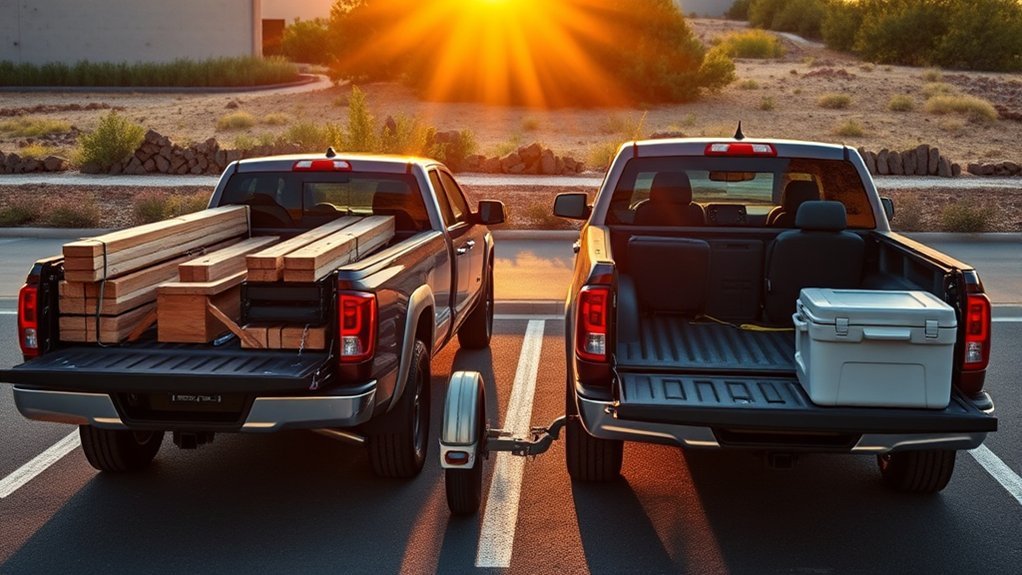
Decide based on what you haul most: long beds handle larger cargo like full plywood sheets, while short beds suit frequent small loads and city use. For towing and stability, a long-bed truck’s longer wheelbase gives better balance and control under heavy tow. If you carry people or park in tight spots often, a short bed paired with a crew cab will usually be the more practical choice.
Cargo Capacity Needs
If you regularly haul large or heavy loads, a long bed gives you clear advantages in cargo space and payload, while a short bed favors maneuverability and everyday parking. You’ll choose based on how often you need to move big items versus freedom in tight urban settings. Long beds let you fit full sheets of plywood and simplify cargo organization; they reduce creative load management and compromise. Short beds force smarter packing, modular racks, and frequent decisions about what to carry so you stay nimble.
- Long bed: maximizes payload, simple cargo organization, better for trade work and liberation from size limits.
- Short bed: excels at city parking, demands efficient load management and flexible planning.
- Compromise: mid-size solutions or bed extenders.
Towing And Stability
You’ve weighed cargo needs and parking trade-offs; towing and stability add another layer to the bed-length choice. You’ll find long beds, with longer wheelbases, offer superior stability factors and better weight distribution for heavy trailer types and rough driving conditions. That reduces sway and eases towing techniques. Short beds gain maneuverability but may need sliding hitches for certain fifth-wheel setups—check hitch compatibility. If you haul big gear plus a trailer, a long bed frees you to tow confidently; if you prioritize urban freedom, accept some towing compromises.
| Feature | Implication |
|---|---|
| Wheelbase | Long bed = more stability |
| Sway risk | Short bed = higher |
| Hitch options | Long bed = broader compatibility |
| Cargo while towing | Long bed = more room |
| Urban maneuvering | Short bed = advantage |
Passenger And Parking
Space and maneuverability matter as much as cargo and tow ratings when you’re choosing between short and long beds. You’ll balance passenger comfort and parking strategies depending on bed length and cab choice. Short beds (≈5.5 ft) with crew cabs give roomy rear seats while keeping overall length manageable for daily life; they free you to park in tighter urban spots and navigate neighborhoods with a tighter turning radius. Long beds (~8 ft) increase cargo capacity for big loads but limit easy parking and urban maneuvering.
- Short bed + crew cab: better passenger comfort, easier parking strategies, ideal for family and commuting.
- Long bed: superior cargo space, harder to park, better for work hauling.
- Tradeoffs: pick liberation—mobility or maximum cargo.
What Fits: Cargo Examples for Short vs Long Beds
Think regarding scale: short beds (roughly 5.5–6.5 feet) handle furniture, smaller appliances, bicycles, and camping gear without fuss, while long beds (about 8 feet) let you load full 4×8 plywood sheets, longer lumber, large toolboxes, and other construction materials without overhang. You’ll find cargo types split clearly: short beds suit everyday moves, weekend trips, and lighter trade runs; long beds serve builders, landscapers, and anyone hauling full-length materials.
You can free yourself from compromise by matching missions to bed length. Short beds plus smart bed accessories—tailgate extenders, bed dividers, soft covers—stretch capability for varied loads. Long beds give you room for bulky toolboxes, long lumber, and stacked pallets, reducing tie-down work and risk. If you value flexibility, pick the bed that fits your regular cargo types rather than occasional needs. That way you move farther, faster, and with less hassle.
How Bed Length Affects Towing Stability and Hitching
Moving from cargo fit to towing, bed length also shapes how a truck handles a trailer and how you connect one. You’ll feel the difference: a long bed’s extended wheelbase improves towing performance and stability, especially with heavy loads or fifth-wheel rigs, while a short bed limits capacity and can increase sway on rough roads or tight turns. Long beds let you mount hitch types closer to ideal weight distribution, often eliminating sliding hitches for fifth-wheel setups and simplifying hookup. Short beds may force compromises, requiring specialized hitches or added sway control.
- Stability: Long bed = better tracking and less trailer yaw; short bed = more sensitivity during maneuvers.
- Hitching: Long bed accommodates fixed fifth-wheel placement; short bed often needs sliding or extended gear.
- Use case: For full-time RV living or heavy towing, choose long bed; for occasional modest trailers, short bed can work.
Choose liberation: pick the bed that frees you to tow confidently.
Maneuverability, Parking, and Garage-Fit Trade-Offs
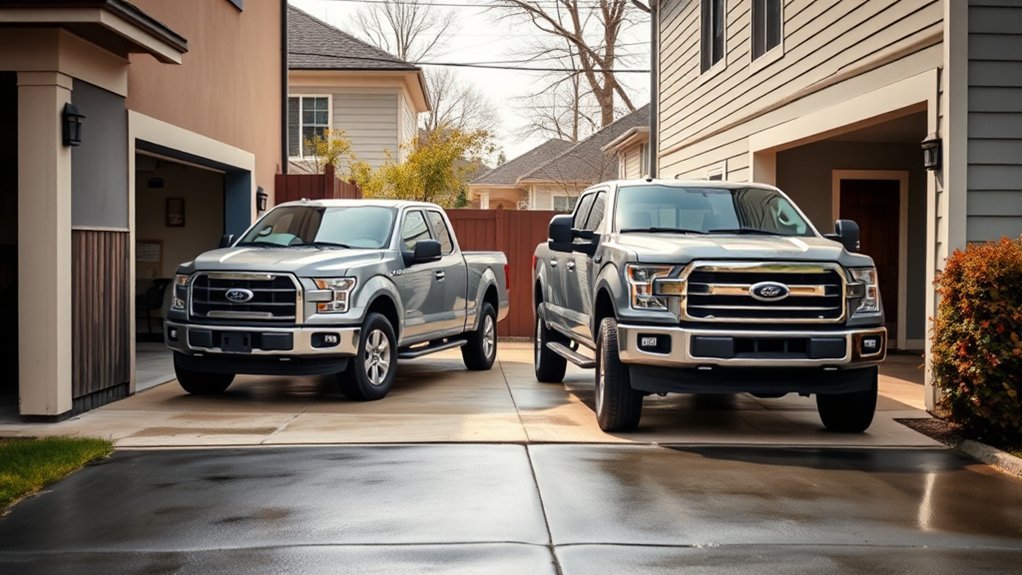
Although a long bed gives you more hauling room, a short bed makes tight turns and urban parking much easier, so you’ll maneuver with less stress in crowded streets and parking lots. You’ll feel the difference: short beds (about 5.5–6.5 ft) have a tighter turning radius, letting you thread through congested blocks and execute sharper maneuvers without constant three-point turns. Long beds (around 8 ft) demand more clearance and planning when you back into spaces or pivot out of alleys.
When freedom matters, choose the bed that matches your daily environment. For city dwellers, short beds fit standard residential garages and support compact parking strategies like angled-in stalls or stacking close to curb edges. If you regularly need long-bed capacity, accept trade-offs—seek wider driveways, dedicated outdoor parking, or adjust routes to avoid tight spots. Balance cargo need against everyday mobility so you stay liberated on the road rather than constrained by vehicle size.
Work Needs: Toolboxes, Materials, and Contractor Use
If you haul tools and materials regularly, a long bed gives you clear advantages: it fits full 4×8 sheets with the tailgate up, swallows larger toolboxes and equipment, and improves stability when you’re towing heavy loads. You’ll find tool storage and workspace organization feel liberated—everything has a proper place, nothing hangs off the tailgate, and material management becomes predictable. Short beds clip your options; they’re nimble, but you’ll compromise on full-size sheets and big toolboxes.
- Tool storage: Long beds accept large, integrated boxes and mobile cabinets; short beds need compact or bed-extending solutions.
- Material management: Long beds let you stack lumber and sheet goods securely; short beds force overhangs or split loads.
- Contractor preferences: Pros who need daily hauling choose long beds for efficiency and safer towing; occasional users might prefer short beds for urban freedom.
Choose the bed that frees your workflow, not one that confines it.
Which Bed to Pick: Families, Contractors, and Overlanders
If you mostly shuttle kids and groceries through the city, a short bed gives you the tight turning radius and crew‑cab comfort that make daily driving easier. If your work demands hauling full sheets, ladders, or heavy toolboxes, a long bed delivers the capacity and load stability you’ll appreciate on job sites. For mixed needs—family trips plus occasional heavy loads—compare maneuverability, cargo dimensions, and towing requirements to pick the best compromise.
Family-Friendly Maneuverability
When you’re choosing a bed length, think about daily maneuverability versus cargo needs. You’ll find short beds (about 5.5–6.5 ft) free you from tight parking, easing urban living and simplifying family outings. Crew cabs keep passengers comfortable while you manage cargo organization for weekend adventures. Long beds give bigger payloads but reduce nimbleness.
- Short bed — best for dense streets, easier parking, better daily usability.
- Crew cab pairing — preserves passenger space so you don’t sacrifice comfort for utility.
- Long bed trade-off — more cargo space but harder to maneuver; choose only if larger items are frequent.
If you want freedom in city life and weekend plans, the short bed usually liberates your routine.
Contractor Hauling Capacity
For hauling needs you’ll face on the job, pick the bed that matches typical loads: short beds (around 5.5–6.5 ft) give you city-friendly maneuverability and enough room for everyday family gear, while long beds (about 8 ft) handle full 4×8 sheets, larger toolboxes, and heavier towing with greater stability—making them the go-to for contractors and overlanders who routinely carry bulky or heavy equipment. If you want freedom from load-size limits, long beds align with contractor preferences: they fit plywood without overhang, accept sizable toolboxes, and improve trailer stability via a longer wheelbase. Short beds free you from tight urban constraints and suit light-haul jobs. Think cargo organization and typical routes: choose the bed that liberates your workflow, not just your parking.
Short-Bed Upgrades: Extenders, Racks, and Toolboxes
Short-bed owners often upgrade with extenders, racks, and toolboxes to squeeze more utility from 5.5–6.5 foot beds, and these accessories vary in how they trade space, access, and security. You’ll find bed extender benefits immediately: they let you carry longer loads safely without overhanging gear, preserving stability and legal compliance. Aftermarket racks free the bed for bulky items—ladders, kayaks, lumber—while keeping the deck available for other cargo. Toolboxes designed for short beds deliver toolbox organization by fitting tight to the bulkhead, giving quick access without stealing usable floor space.
- Bed extenders — extend length for long items, maintain safety margins, and work with bed liners/covers.
- Racks — move tall/bulky cargo above the bed, increasing capacity without cluttering the deck.
- Short-bed toolboxes — centralize tools, secure gear, and preserve cargo area for bigger hauls.
Choose combinations that maximize freedom: mix extenders, racks, and snug toolboxes to liberate utility without sacrificing access or security.
Frequently Asked Questions
What’s the Difference Between Short and Long Beds?
You’ll find bed length dictates cargo capacity: short beds boost maneuverability ease and daily freedom, while long beds increase cargo capacity and towing capability for heavy work, so choose based on how much hauling versus city agility you want.
Why Do People Prefer Short Bed Trucks?
Like a nimble fox, you prefer short bed trucks for better maneuverability advantages, compact cargo capacity tradeoffs, solid towing efficiency, and lifestyle suitability that frees you for urban driving, weekend projects, and practical, liberated living.
Can an Adult Sleep in a Shorty Bed?
Yes — you can sleep in a shorty bed, but adult comfort depends on bed dimensions: you’ll often need to curl, lie diagonally, or use a specialized mattress to maximize space; longer beds usually feel freer and more spacious.
Is It Better to Have a Tall Bed or Short Bed?
You’ll choose tall if mattress height and cargo capacity matter, but pick short for better bed accessibility, maneuverability, and efficiency; weigh towing needs, accessories, and liberation from constraints to decide what empowers you most.
Conclusion
Pick the bed that fits how you live and work: short beds win for parking, maneuvering, and family duty while long beds carry more lumber, gear, and contractor tools. Measure before you buy, consider racks or extenders as workarounds, and weigh passenger needs against payload. If you regularly haul long loads, don’t cut corners; if daily drives weave through tight spots, save space with a short bed. Choose wisely — don’t bite off more than you can chew.