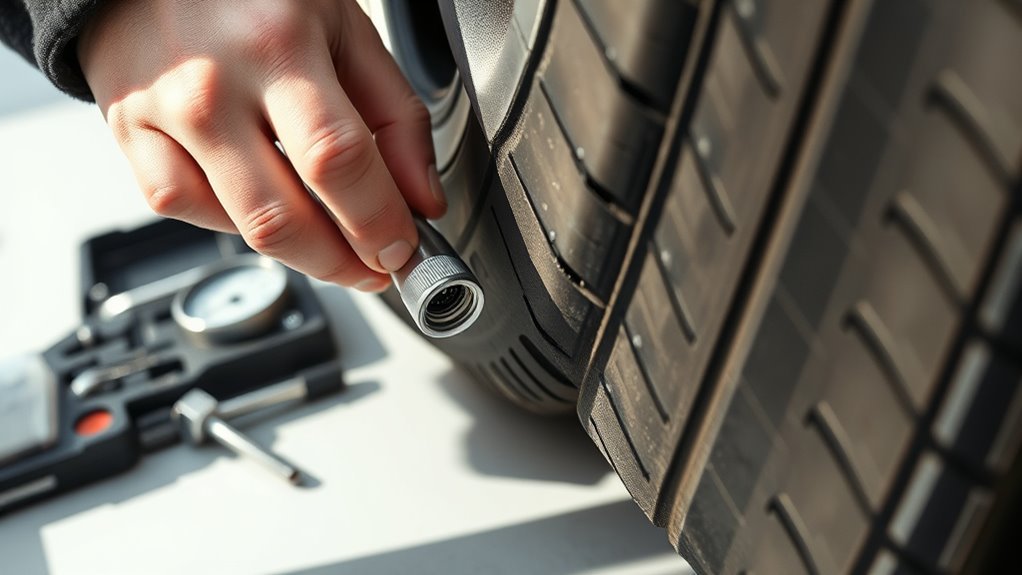
To prevent valve stem damage, regularly inspect for cracks or corrosion, especially at the base. Keep valve cores tight and replace missing caps to guarantee a proper seal. Be cautious during tire changes, as improper installation can cause misalignment. Maintain tire pressure within recommended levels to reduce stress on the stems. Schedule routine tire rotations to extend their lifespan. Understanding these simple fixes and identifying early signs can greatly enhance your tires’ performance and safety. Explore more strategies to keep your tires functioning at their best.
Common Causes of Valve Stem Damage
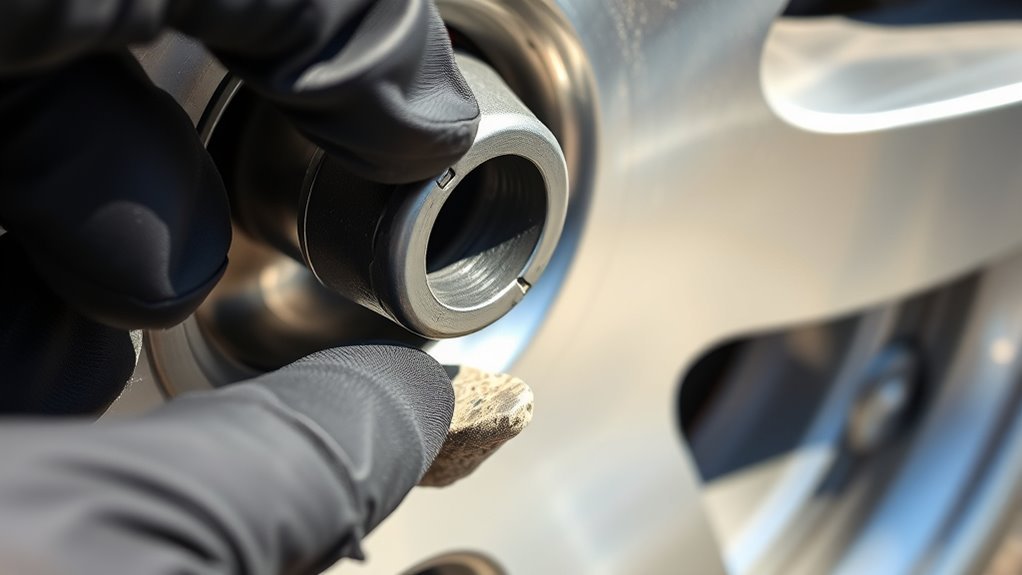
Valve stem damage can stem from several common causes that are essential for drivers to understand. Age-related deterioration often affects rubber valve stems, causing cracks and loss of flexibility, which leads to air leaks. In moist environments or areas with salted roads, metal valve stems can corrode, weakening their structural integrity over time. Additionally, road debris can impact valve stems, resulting in bends or breaks that prevent proper sealing. Incorrect installation during tire changes by untrained personnel can also lead to misalignment, increasing the risk of leaks. To mitigate these issues, regular inspections for visible signs of wear, such as cracks or corrosion, can help you identify potential valve stem problems before they escalate into serious air leaks.
Signs Your Valve Stem Needs Attention
You should keep an eye out for visible cracks or damage on your valve stem, as these can lead to air loss and compromise performance. Frequent air loss, especially if you’re refilling your tires regularly, signals a potential issue that needs addressing. Additionally, if you notice unusual noises during operation, it’s time to investigate further, as these could indicate underlying valve stem problems.
Visible Cracks And Damage
Visible cracks and damage on a valve stem can signal serious issues that require prompt attention. These visible cracks, especially at the base where the stem meets the rim, often indicate age-related deterioration, risking air leaks. Metal stems may show corrosion, while rubber stems can develop splits from sun exposure. Regular inspections are essential to catch these warning signs early.
| Type of Damage | Indicator |
|---|---|
| Visible Cracks | Deterioration risk |
| Corrosion | Compromised integrity |
| Splits in Rubber | Need for replacement |
| Dry Patches | Potential air leaks |
| Regular Inspections | Prevent costly repairs |
Addressing these issues before they escalate guarantees safe driving conditions and maintains tire performance.
Frequent Air Loss
Frequent air loss in tires can often point to issues with the valve stem that require immediate attention. If you notice your tire losing a few PSI each week, it may indicate a valve stem leak. A flat tire in the morning could signal valve core failure or damage from impacts, necessitating a close inspection of the valve stem. Rubber stems may develop cracks at the base, while metal stems can show corrosion, leading to slow air leaks, particularly in damp conditions. Additionally, persistent tire pressure monitoring system (TPMS) alerts after changing cores and caps could suggest valve stem damage that calls for professional evaluation. Addressing these signs promptly can help maintain tire integrity and guarantee safe driving.
Unusual Noises During Operation
How can you tell if your valve stem needs attention? Unusual noises during operation, like rattling or tapping, often signal valve issues that require immediate inspection. These sounds can worsen with high oil consumption, usually stemming from faulty valve stem seals. Performing a cold engine test can reveal abnormal noises at startup, indicating potential damage.
- Listen for odd sounds while idling.
- Monitor for increased oil consumption.
- Schedule regular maintenance of valve stem seals.
- Conduct cold engine tests for early diagnosis.
- Address any unusual noises promptly to prevent further damage.
Stay vigilant and proactive about these signs. Regular maintenance can help you avoid severe problems, ensuring ideal engine performance and longevity.
How to Identify Valve Stem Problems
Have you noticed your tire pressure dropping unexpectedly? This could signal valve stem problems. Look for slow air loss, where your tires lose a couple of PSI weekly. Inspect the rubber valve stems for cracks, particularly at the base. These cracks often indicate aging due to environmental exposure. If you have metal valve stems, check for corrosion, which appears as rust or green buildup; this affects the seal’s effectiveness. A flat tire in the morning may suggest valve core failure or impact damage, so inspect the valve stem for leaks. Additionally, if you have a TPMS, slow leaks might occur where the sensor attaches, requiring careful examination to verify the seals are intact.
Simple Fixes for Valve Stem Problems
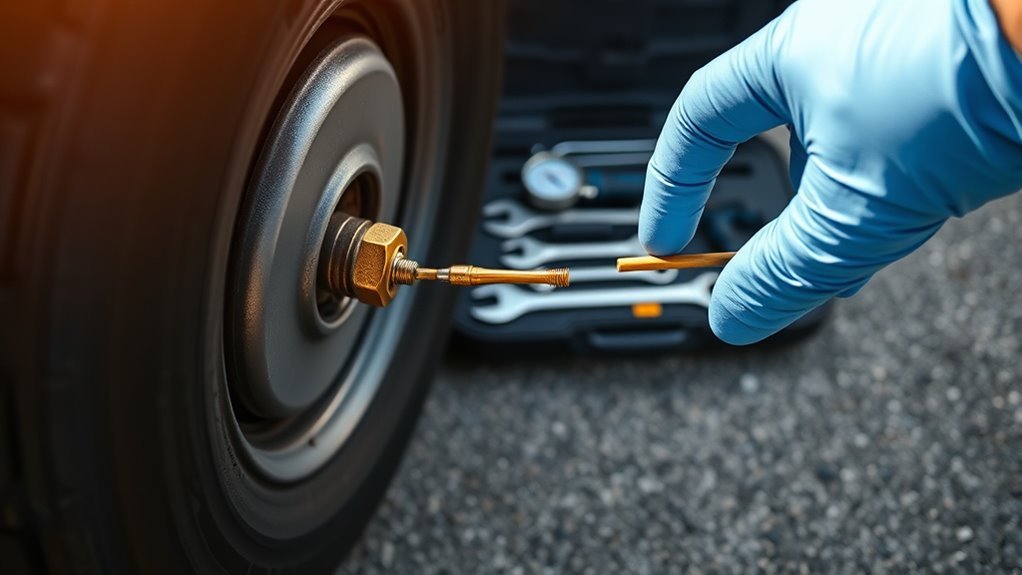
While valve stem issues can lead to air leaks and tire problems, there are several simple fixes you can implement to maintain their integrity.
- Regularly check and tighten valve cores with a valve core tool to prevent slow air leaks.
- Replace any missing or cracked valve stem caps to guarantee a proper seal and protect against dirt and moisture.
- Inspect valve stems for corrosion, especially in salty or moist environments, and replace damaged ones immediately.
- Use temporary repair kits for small leaks, but avoid patching cracked or corroded stems as they require full replacement.
- Educate yourself on proper tire inflation techniques and refrain from overtightening valve nuts to extend valve stem lifespan.
When to Completely Replace Valve Stems
You need to completely replace valve stems when you notice severe damage, such as cracks or significant corrosion. Frequent air loss, even after attempts to repair, can signal that the valve stem has degraded beyond simple fixes. Additionally, if you spot any wear or bending from improper use, it’s essential to prioritize a full replacement to maintain tire safety and performance.
Severe Damage Assessment
When severe damage occurs to valve stems, such as deep cracks, significant corrosion, or visible bends, immediate replacement becomes vital to maintain tire integrity and safety. If you notice air loss, leaks are often a sign of deeper structural issues requiring full stem replacement. Irregular tire pressure can lead to uneven wear and compromised handling, so don’t delay in addressing visible damage. Regular inspections are essential; look for:
- Rust or green buildup on metal stems
- Compromised seals at the base
- Persistent TPMS alerts after core replacement
- Signs of bending or deformation
- Deep cracks or extensive corrosion
Taking these steps guarantees your vehicle remains safe and reliable on the road.
Frequent Air Loss
Severe damage to valve stems often leads to air loss, indicating the need for immediate attention. If you experience frequent air loss, especially if it exceeds a couple of PSI weekly, it’s vital to inspect the valve stem thoroughly. Look for cracks or visible damage at the base. A consistently flat tire in the morning may signal valve core failure, prompting you to replace the entire valve stem. If tightening or replacing the valve core doesn’t resolve the issue, the valve stem itself is likely compromised. In the case of visible corrosion or damage on metal stems, complete replacement is necessary to maintain proper tire inflation and guarantee your safety on the road. Don’t delay; address these issues promptly.
Corrosion and Wear
Corrosion and wear on valve stems can greatly compromise tire performance and safety. If you notice any of the following issues, it’s essential to replace your valve stems immediately:
- Visible cracks or splitting at the base
- Rust or green buildup around the rim
- Frequent air loss from tires
- Rubber deterioration, leading to brittleness
- Any signs of significant corrosion or damage
Addressing these problems promptly prevents air leaks and maintains tire integrity. Ignoring corrosion or wear can lead to unsafe driving conditions and costly repairs. Regularly inspect your valve stems to guarantee they’re in good condition, allowing for peak performance and safety on the road. Don’t compromise your freedom of movement; stay vigilant about your vehicle’s health.
Preventing Valve Stem Issues for Longevity
To guarantee the longevity of valve stems, it is crucial to regularly inspect them for early signs of wear, such as cracks or corrosion. Addressing these common problems early guarantees proper tire inflation and safety. Always replace missing or damaged valve caps, as they prevent dirt and moisture from entering the valve, which can lead to leaks. Periodically check the tightness of valve cores with a valve core tool to avoid slow air leaks. Avoid overtightening valve nuts during installation, as this can damage threads and cause air loss. Finally, maintain proper tire pressure and perform routine tire rotations to reduce stress on valve stems, ultimately extending their lifespan and improving overall vehicle performance.
Seeking Professional Help for Persistent Valve Stem Issues

Regular inspections and maintenance can help prevent many valve stem issues; however, when problems persist despite your best efforts, it’s time to contemplate seeking professional help. Continuous air loss or alerts from the Tire Pressure Monitoring System (TPMS) could signal deeper problems, such as sensor issues or improper valve core installation. Professionals possess the specialized tools and knowledge necessary for effective repairs.
- They guarantee accurate valve stem installation.
- They recalibrate systems for peak performance.
- They address potential unseen damage.
- They provide long-term solutions, preventing future issues.
- They enhance vehicle safety and efficiency.
Frequently Asked Questions
What Causes a Valve Stem to Go Bad?
Valve stems go bad due to valve wear from age, corrosion, physical damage, and improper installation. To maintain performance, follow maintenance tips like regular inspections, timely replacements, and protecting from UV exposure and harsh environments.
Can You Fix a Damaged Valve Stem?
Yes, you can fix a damaged valve stem. For minor issues, try valve stem repair with a core tool. However, if corrosion or cracks appear, a valve stem replacement is necessary to guarantee reliability and safety.
How Do You Quick Fix Bad Valve Seals?
To quickly fix bad valve seals, check for oil level drops and blue exhaust smoke. Inspect for unusual engine noises. If issues persist, disassemble the engine for a thorough inspection to restore ideal engine performance.
What Can I Use to Seal a Valve Stem?
You can use specialized valve sealants options to effectively seal a valve stem. Consider various sealing techniques, such as temporary tire sealant for minor leaks or tightening the valve core to prevent air loss.
Conclusion
In conclusion, preventing valve stem damage hinges on recognizing early signs and taking proactive measures. For instance, if you notice a slow tire leak, a simple inspection could reveal a cracked valve stem, allowing you to replace it before it leads to a flat tire during your morning commute. By staying vigilant and addressing issues promptly, you’ll guarantee the longevity of your tires and enhance overall vehicle safety. Don’t wait—act now to keep your valve stems in top condition.