You should rinse your Tundra’s undercarriage immediately after salt exposure to stop corrosion, working while the truck’s cool to avoid thermal stress. Use a pressure washer (1,500–2,000 PSI) with an undercarriage attachment and a narrow wand for tight spots; keep 12–18 inches back and use a 25° nozzle, switching to 0° for stubborn crust. Force water into wheel wells, frame rails and suspension mounts, dry thoroughly, remove any rust, then apply Fluid Film or similar — continue for detailed steps.
Quick Action: Rinse Your Tundra’s Undercarriage Now
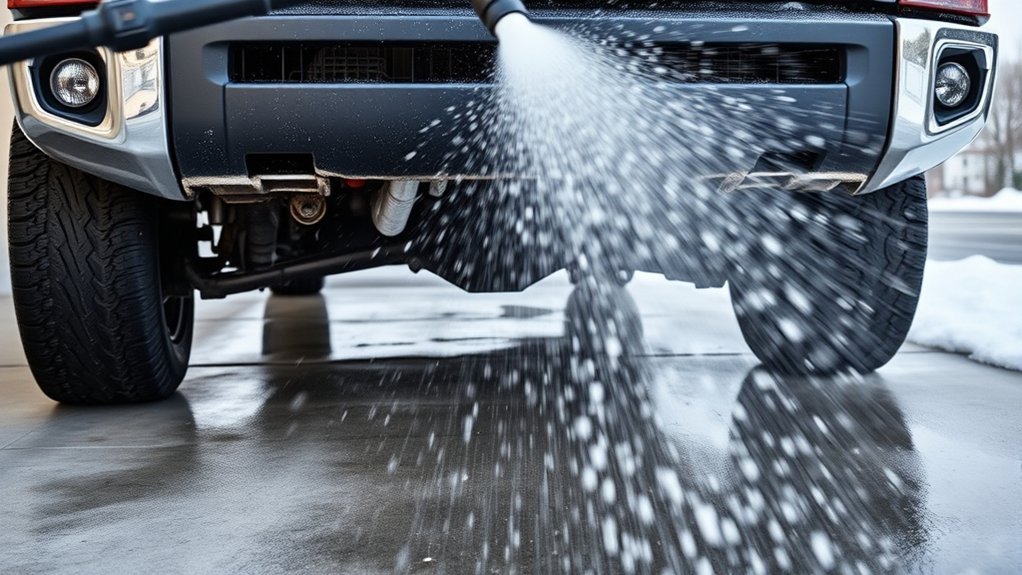
Act now: rinse your Tundra’s undercarriage immediately after winter to strip away road salt that accelerates corrosion and rust. You’ll want to act fast—salt bonds to metal and speeds deterioration—so prioritize this winter maintenance step as freedom from future repairs. Rinse while the vehicle’s cool to prevent thermal stress and to let water flush stubborn deposits.
Use a focused spray pattern to target wheel wells, frame rails, and suspension components so salt won’t linger in crevices. If you can’t use heavy equipment, a garden hose with an undercarriage attachment still delivers effective reach for salt removal. Schedule cleanings after snowstorms and inspect areas prone to buildup; routine checks let you spot early surface changes and take corrective measures.
This is practical corrosion prevention: remove the contaminant, verify results, and repeat on a predictable cadence so your Tundra stays durable and you stay unburdened.
Gather Tools & Products: Pressure Washer, Wand, Rust Protectant
Now that you’ve rinsed away salt, assemble the right tools to finish the job: a pressure washer with an undercarriage wand or specialized attachment, a narrow-radius spray wand for tight spots, and a corrosion inhibitor such as Fluid Film or Amsoil HDMP to coat frame rails and suspension components. You’ll pick equipment based on durability and reach; know your pressure washer types and match PSI/flow to safe cleaning.
- Pressure washer with undercarriage attachment for broad coverage
- Narrow-radius spray wand to access axle boots, steering linkages, and crevices
- Rust protectant options like Fluid Film or Amsoil HDMP for long-term corrosion control
- Basic PPE and extension hoses to keep you mobile and protected
You’ll want a unit that balances power and control—hot-water models help dissolve salts, while cold-water electric units are lighter. After cleaning, apply a rust protectant evenly to vulnerable metals. Regular tool selection and product choices free you from recurring corrosion headaches and extend your Tundra’s life.
Rinse Underbody: Pressure Washer Tips & Nozzle Settings
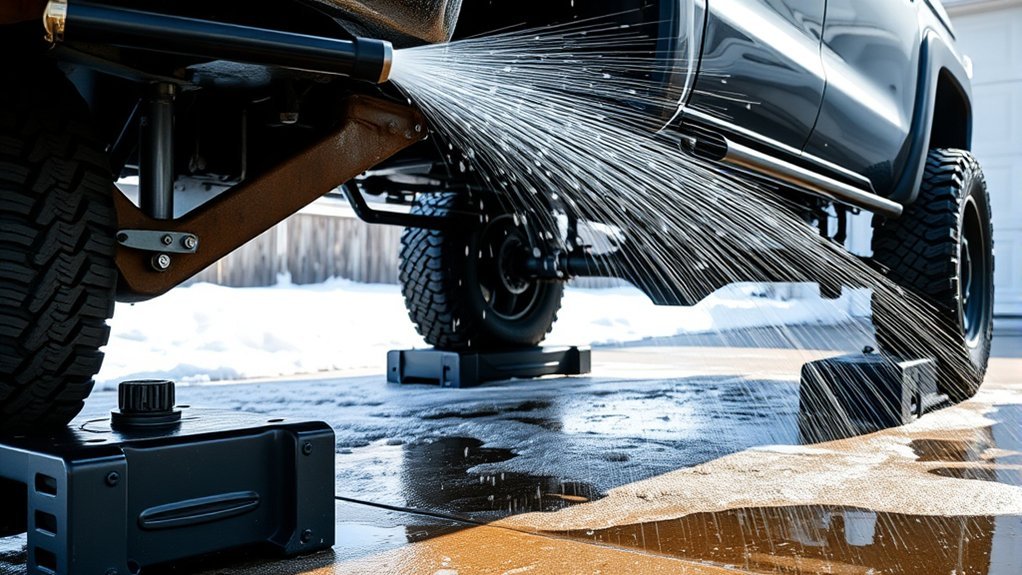
Set your pressure washer to about 1500–2000 PSI and choose a fan-pattern nozzle to rinse road salt without harming paint or sensitive components. Hold the wand at a shallow angle and sweep from front to rear so water and debris flow out efficiently, using an undercarriage attachment to reach tight spots. Rinse immediately after salt exposure while surfaces are still wet for best corrosive-removal results.
Optimal Nozzle Pressure
For effective undercarriage rinsing without harming paint or components, use a pressure washer set between 1,500 and 2,000 PSI and pair it with a 25-degree nozzle for general rinsing, switching to a 0-degree nozzle only for short bursts on stubborn salt or compacted grime; keep the wand 12–18 inches away, consider an upward-spraying undercarriage attachment for hard-to-reach areas, and rinse promptly after salt exposure—ideally with warm water—to reduce corrosion risk. You’ll control nozzle selection and pressure impact to balance cleaning power and component safety. Stay disciplined with distance and timing so salt never lingers. Use this concise checklist to free yourself from corrosion worries:
- Set washer to 1,500–2,000 PSI for safe, effective cleaning
- Start with a 25° nozzle; use 0° briefly on tough spots
- Keep 12–18 inches clearance from surfaces
- Use upward undercarriage attachment and warm water
Spray Angle Techniques
Aim the spray to attack salt and grime from beneath rather than just blasting surfaces head-on: hold the wand 12–18 inches from the undercarriage, use a 25° fan to cover broad areas, then angle the nozzle upward into wheel wells, frame rails, and suspension bays to dislodge trapped debris; switch briefly to a 0° pinpoint stream only on stubborn, compacted deposits, keeping short bursts and maintaining distance to avoid component damage. You’ll use deliberate spray techniques to free hard-packed salt while protecting lines, sensors, and bushings. Make nozzle adjustments as you move: widen to 25° for coverage, narrow to 0° for targeted removal. Work systematically from front to back, flipping angles to reach crevices. This lets you reclaim control and extend undercarriage life.
Clean Wheel Wells, Frame Rails & Hidden Salt Pockets
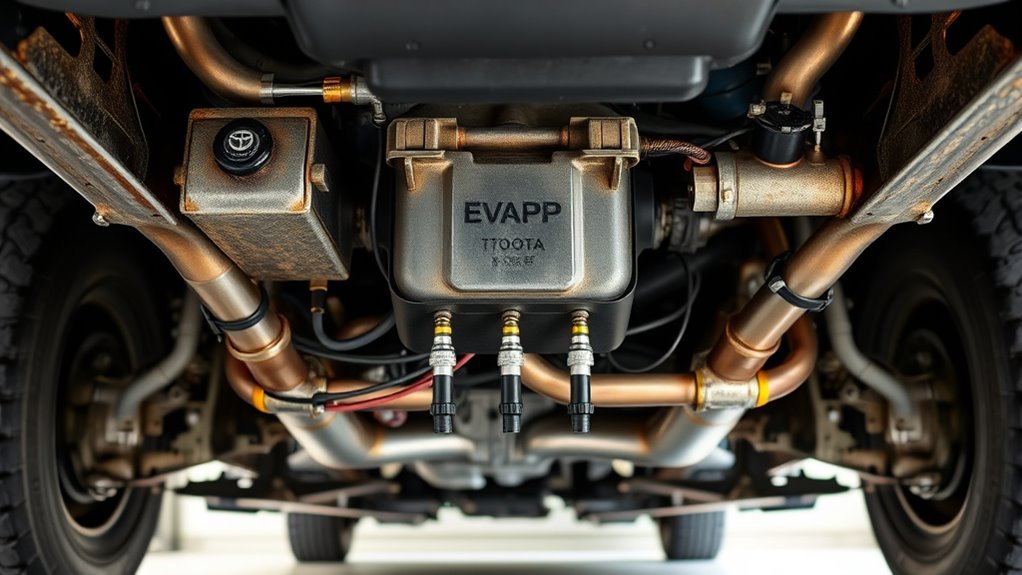
When you rinse the wheel wells and frame rails, use a garden hose with a spray nozzle or a pressure washer to force water into hidden salt pockets and debris so corrosion-prone areas get a thorough flush. Focus on wheel well care to stop salt corrosion before it spreads. Use an undercarriage wand to reach frame rails and tight voids.
When rinsing wheel wells and frame rails, force water into hidden salt pockets with a hose or pressure washer for a thorough flush.
- Target suspension mounts and brake-line routes where salt hides.
- Run the wand along frame rails, flipping angles to dislodge crust.
- Scrub crevices with a soft brush if deposits remain after rinsing.
- Finish with a light protective coat like Fluid Film on cleaned metal.
You’ll free trapped salt and moisture, reducing immediate corrosion risk and reclaiming control over vehicle longevity. Work methodically: rinse, probe, agitate, protect. That disciplined approach minimizes damage and gives you the confidence to drive salt season without compromise.
Dry, Inspect & Treat Rust Spots Immediately
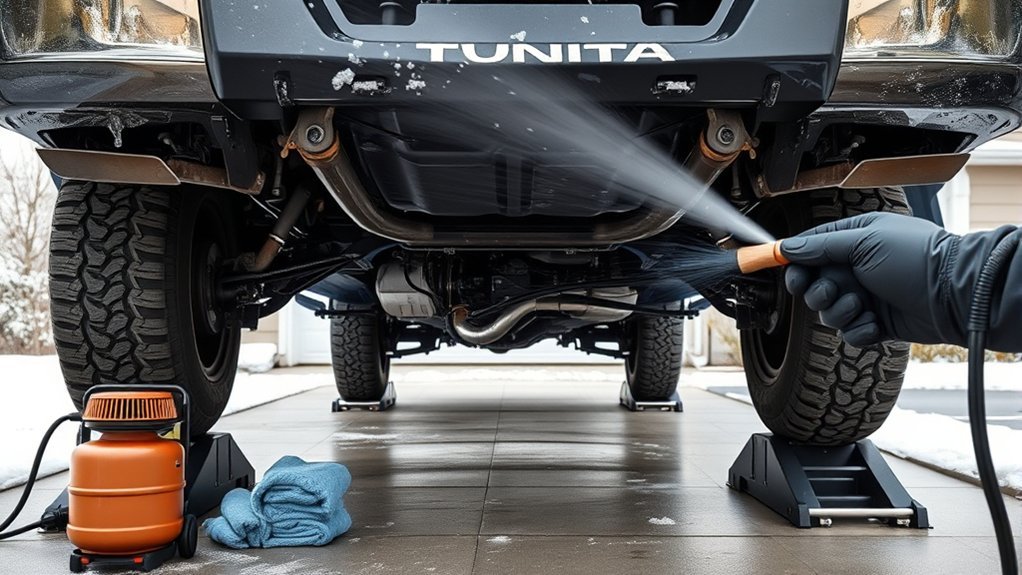
After rinsing, let the undercarriage dry completely so you won’t trap moisture that accelerates corrosion, then inspect frame rails, suspension mounts and brake-line routes for any active rust or paint loss. You’ll perform targeted rust detection by scanning seams, welds and fasteners with a flashlight; tap suspect areas—hollow sounds can indicate deeper corrosion. Prioritize vulnerable spots exposed to road salt.
When you find surface rust, remove loose scale with a wire brush or 80–120 grit sandpaper until you reach solid metal. Deburr edges and wipe with a solvent so treatments adhere. Immediately apply a rust-inhibiting product to the cleaned area to seal bare metal; follow manufacturer dwell times and safety directions.
Log locations treated and set calendar reminders for follow-up inspections. These preventative measures stop small issues from becoming structural problems, keep your Tundra safe, and free you from the slow, costly erosion that salt invites.
Protect the Undercarriage: Fluid Film, Alternatives & Reapply Timing
With rust addressed and treated, protect the undercarriage next by applying a proven corrosion inhibitor like Fluid Film to seal seams, suspension parts and brake-line routes against salt and moisture. You’ll gain clear Fluid Film benefits: long-lasting barrier, penetration into seams, and reduced maintenance cycles when applied pre-winter. After rinsing with warm water to improve adhesion, choose the right product and apply evenly.
- Apply Fluid Film before winter for best Rust prevention strategies and longevity.
- Consider alternatives (Wool Wax, Krown) if availability or budget dictate; Fluid Film remains top choice.
- Reapply after any thorough undercarriage wash—especially in spring—to restore the protective layer.
- Inspect regularly through winter; touch up sprayed areas and treat new corrosion immediately.
You want liberation from constant repairs: a disciplined schedule—warm rinse, inspect, spray, reapply—keeps your Tundra protected, extends component life, and reduces long-term costs.
Frequently Asked Questions
Should I Wash My Car After They Salt the Roads?
Yes—you should wash your car after roads are salted. It’s essential for car maintenance and safer winter driving; regular undercarriage rinses prevent corrosion, extend vehicle life, and let you drive freer without salt-induced damage.
How to Clean Undercarriage After Off-Roading?
Rinse promptly, use a pressure washer on adjustable settings while on ramps or jack stands, inspect for trapped debris, apply protective coating, and schedule routine undercarriage maintenance—these off roading tips keep you free from rust and constraints.
How to Clean a Vehicle if There Was Salt on the Road?
Rinse thoroughly, targeting undercarriage and wheel wells to prevent salt damage; scrub with degreaser, flush with a pressure washer, dry, then apply protective coating—you’re protecting vehicle maintenance and reclaiming corrosion-free freedom.
What Neutralizes Salt Corrosion?
Vinegar, baking soda and warm water neutralize salt corrosion; you’ll rinse salt damage away, apply protective coatings for corrosion prevention, and maintain regular cleaning so your vehicle stays liberated from rust and costly deterioration.
Conclusion
Don’t wait — blast that salt off now or your Tundra will look like it’s auditioning for the rust hall of fame. Use a pressure washer, targeted wand, and focused rinses on wheel wells, frame rails, and hidden pockets. Dry and inspect every fastener, treat any bare metal immediately with a rust inhibitor like Fluid Film or a quality alternative, and reapply seasonally. Do this and you’ll keep structural integrity, resale value, and driving confidence intact.