
If your Camry shows a ‘Cruise Unavailable’ warning, it’s often due to dirty sensors, low battery voltage, or temporary resets. Check for obstructions on sensors, inspect battery connections for corrosion, and consider rebooting your vehicle’s systems. Using a diagnostic tool can help identify underlying issues. Regular sensor maintenance is key to preventing these alerts. For a deeper understanding and more effective solutions, explore further insights on keeping your adaptive cruise control running smoothly.
Immediate Reasons for ‘Cruise Unavailable’ Warning
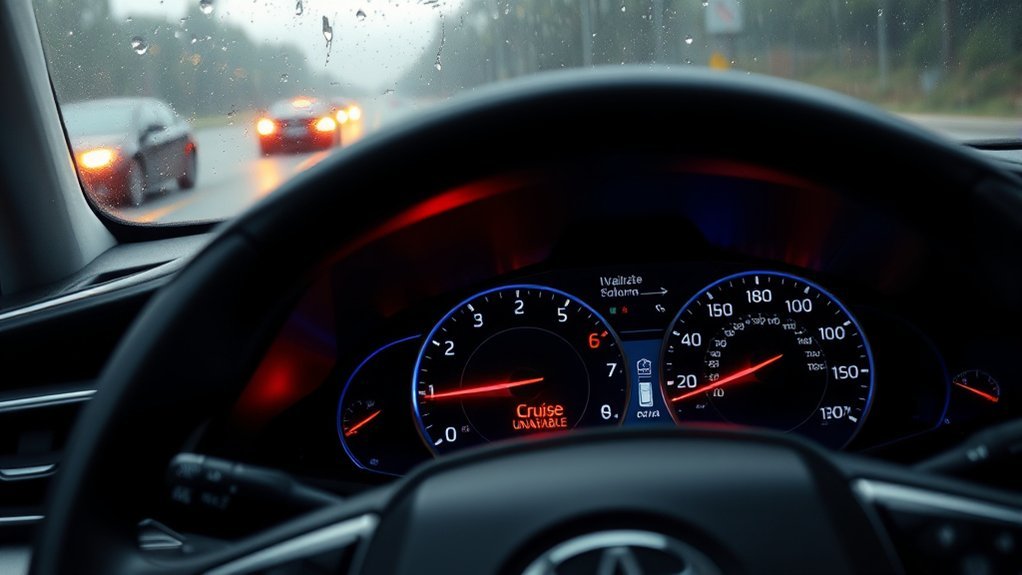
When you see the ‘Cruise Unavailable’ warning in your Camry, it often points to immediate issues that need your attention. Dirty or obstructed radar and camera sensors, typically found behind the front bumper and near the rearview mirror, are common culprits. Dirt, bugs, snow, or ice can interfere with sensor calibration, so regular cleaning is essential for peak performance. Additionally, low battery voltage or recent battery issues can lead to power fluctuations, triggering temporary system shutdowns. If you encounter this warning, try restarting your vehicle or disconnecting the negative battery terminal briefly; this may reset the system and resolve the issue. Inspecting the radar sensor connector and performing system updates can further help identify underlying problems impacting adaptive cruise control functionality. Staying proactive with these checks not only enhances your driving experience but also liberates you from unnecessary disruptions on the road.
How Dirt and Obstruction Affect Sensor Performance
Dirt and obstructions can greatly impair the performance of your Camry’s adaptive cruise control sensors. These sensors, including radar and camera systems, rely on clear visibility to function correctly. The radar sensor, usually behind the front bumper, easily collects dirt, bugs, and ice, especially during winter months. The camera sensor, located near the rearview mirror, can be affected by condensation and smudges, which confuse its functionality.
To guarantee peak performance, follow some sensor maintenance tips: regularly inspect these areas for build-up and clean them with a microfiber cloth. Environmental effects like seasonal changes can exacerbate obstructions, so routine checks are essential. By maintaining clear sensors, you can reduce the chances of cruise control warnings and enhance your driving experience, liberating you from frustrations that arise from system unavailability. Prioritize cleanliness to keep your adaptive cruise control running smoothly.
Why Regularly Cleaning Sensors Matters
Regularly cleaning your sensors boosts performance and enhances safety features in your Camry’s adaptive cruise control system. By keeping them clear of dirt and debris, you prevent potential issues that could lead to costly repairs. A simple cleaning routine not only guarantees reliability but also saves you time and money in the long run.
Enhanced Sensor Performance
Keeping your sensors clean is essential for ensuring your adaptive cruise control operates smoothly. Regular maintenance enhances performance and reliability, especially in challenging conditions. Here are some sensor maintenance tips to take into account:
- Wash the Radar Sensor: Located behind the front bumper, a simple wash can resolve many issues without professional help.
- Clean the Camera Sensor: Found behind the windshield near the rearview mirror, it’s crucial to remove smudges and condensation for accurate readings.
- Seasonal Checks: Pay extra attention during winter or dusty conditions, as these can quickly diminish sensor effectiveness.
Improved Safety Features
While you might not think about it often, the cleanliness of your vehicle’s sensors plays an essential role in enhancing safety features like adaptive cruise control. Dirt, bugs, and ice can obstruct radar and cameras, impairing functionality and leading to false warnings or system unavailability. Regularly cleaning sensors guarantees accurate readings, allowing the adaptive cruise control system to maintain safe distances and speeds in varying driving conditions. Seasonal changes, such as winter snow and summer dust, greatly affect sensor performance, making it vital to include this task in your maintenance schedule. By prioritizing sensor calibration and cleanliness, you can enhance overall vehicle safety, contributing to a more reliable and responsive driving experience. Don’t underestimate the impact of clean sensors!
Preventing Costly Repairs
To prevent costly repairs, it’s vital to maintain the cleanliness of your vehicle’s radar and camera sensors. Dirt, bugs, and ice can obstruct functionality, leading to warnings and expensive diagnostics. Regular cleaning not only guarantees peak performance but also enhances safety by keeping advanced driver-assistance systems effective.
Here are three sensor maintenance tips to keep in mind:
- Routine Checks: Inspect your sensors weekly, especially during winter or in dusty conditions.
- Use Proper Cleaning Techniques: Use a microfiber cloth and gentle cleaners to avoid scratching the sensors.
- Address Issues Promptly: If you notice unavailability warnings, a quick wash may resolve the problem.
Investing a few minutes regularly can save you from significant electronic malfunctions down the line.
How to Check Battery Health for Low Voltage
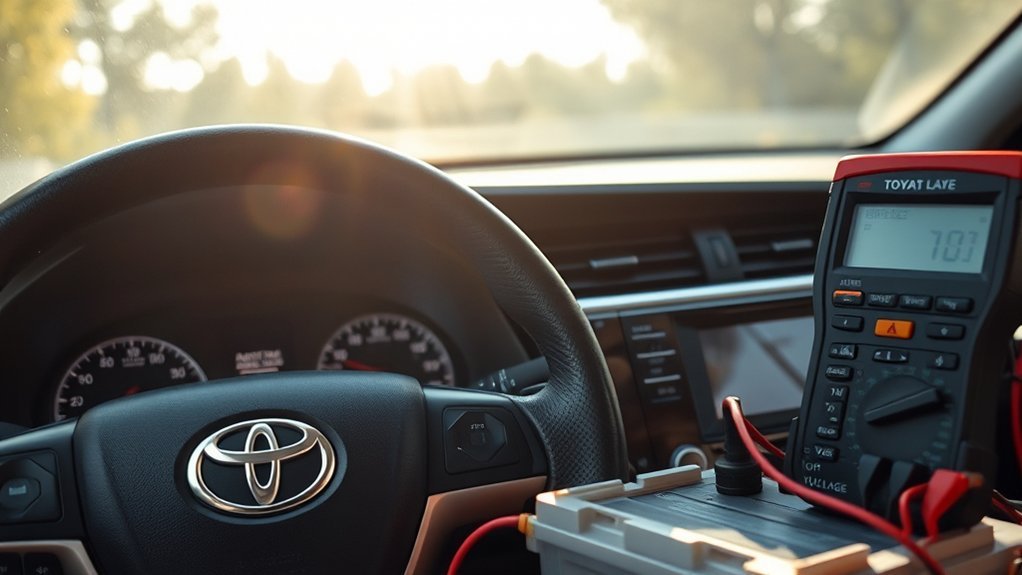
To guarantee your Camry’s battery is healthy, start with a visual inspection of the terminals and cables for any corrosion or loose connections. Next, use a multimeter to check the voltage; a reading below 12.4 volts suggests potential issues. Finally, consider a battery load test at an auto parts store to gauge its ability to hold a charge under stress.
Visual Inspection Of Connections
When checking your Camry’s adaptive cruise control, a thorough visual inspection of the battery connections is crucial for identifying potential low voltage issues. Here’s what to look for:
- Terminal Corrosion: Inspect for any corrosion on battery terminals, as this can hinder electrical flow and cause low voltage problems.
- Connection Stability: Verify connections are tight and secure; loose connections can result in intermittent power loss affecting your cruise control.
- Battery Age: Check how old your battery is. If it’s over 3 to 5 years, it may struggle to hold a charge, leading to issues.
If you find voltage below 12 volts, consider recharging or replacing the battery to keep your adaptive cruise system functioning smoothly.
Use A Multimeter
After confirming your battery connections are secure and free of corrosion, the next step is to assess the battery’s health using a multimeter. Set the multimeter to the DC voltage setting, then connect the red lead to the positive terminal and the black lead to the negative terminal. A healthy battery should read between 12.4 to 12.7 volts with the engine off and 13.7 to 14.7 volts when running. If your reading is below 12.4 volts, the battery might be weak, impacting systems like adaptive cruise control. Additionally, check for voltage drops during cranking; anything below 9.6 volts signals a potential issue. Regular voltage testing guarantees ideal vehicle performance and helps you avoid electronic malfunctions.
Battery Load Testing
Battery load testing is essential for evaluating the health of your vehicle’s battery, especially when you notice low voltage issues. Here’s how you can perform this important battery maintenance:
- Measure Voltage: Use a multimeter to check the battery’s voltage; a healthy battery should read between 12.4 to 12.7 volts when off.
- Conduct a Load Test: With a dedicated battery load tester, apply a load equal to half the battery’s rated capacity for 15 seconds, ensuring it doesn’t drop below 9.6 volts.
- Inspect Connections: Check battery terminals for corrosion or loose connections, as these can cause voltage stability issues.
If your battery consistently shows low voltage, consider replacement or professional inspection to maintain peak performance.
How Do You Reboot Your Vehicle’s Electronics?
How can you effectively reboot your vehicle’s electronics? First, turn off your car completely for 5 to 10 minutes. This simple act can often clear temporary electronic glitches. For a more thorough reset, disconnect the negative battery terminal for 10 to 15 minutes. This process resets the power to your vehicle’s electronics control modules. After reconnecting the terminal, make sure it’s securely attached and let the car idle for a few minutes to stabilize the system.
Additionally, if you’ve recently cleaned sensors, restarting your car can refresh the electronic system and potentially eliminate warnings related to adaptive cruise control. If issues still persist after these steps, performing a diagnostic scan can help identify deeper electronic faults that may need professional attention. Vehicle rebooting is a practical approach to resolving many common electronic problems and can restore functionality swiftly.
Step-by-Step Advanced Troubleshooting for Cruise Control Issues
When troubleshooting cruise control issues, start by inspecting the radar sensor connections for any damage or loose wires. Next, use an OBD-II scanner to conduct diagnostic scans and identify any trouble codes that could indicate specific problems. This systematic approach will help you pinpoint the root cause and guide your next steps for resolution.
Inspect Radar Sensor Connections
To guarantee your Camry’s adaptive cruise control functions correctly, start by inspecting the radar sensor connections. Follow these steps:
- Locate the Radar Sensor: It’s usually behind the front bumper or in the lower grill. Make sure it’s free from dirt or obstructions that can affect sensor alignment.
- Check the Wiring Harness: Inspect for damage, corrosion, or loose connections. Proper wiring insulation is essential for functionality.
- Test Voltage: Use a multimeter at the radar sensor connector to confirm it’s receiving the correct power supply as specified in the service manual.
If you spot any issues, repair or replace the connections to restore communication between the sensor and the vehicle’s electronic control unit. This step is significant before considering further diagnostics.
Conduct Diagnostic Scans
While it’s tempting to overlook minor issues with your Camry’s adaptive cruise control, conducting a diagnostic scan is essential for pinpointing specific problems. Using diagnostic tools, you can uncover trouble codes that indicate the root causes affecting your system. Many auto parts stores offer free scans, making it an affordable option to identify issues without a mechanic’s help. The diagnostic scan may reveal faulty sensors, wiring problems, or other model-specific issues impacting cruise control functionality. After retrieving the trouble codes, consult your vehicle’s service manual or reliable online resources to understand what each code means. Regular diagnostic checks can also help maintain your vehicle’s electronic systems, preventing future adaptive cruise control issues.
How to Use Diagnostic Tools for Troubleshooting
Utilizing diagnostic tools effectively can streamline troubleshooting for your Camry’s adaptive cruise control system. Here’s how to make the most of them:
- Use an OBD-II Scanner: This tool reads diagnostic trouble codes (DTCs) that can reveal sensor malfunctions or wiring issues.
- Take Advantage of Free Scans: Many auto parts stores offer complimentary diagnostic scans, saving you money while quickly identifying potential problems.
- Check Compatibility: Confirm the scanner you’re using is compatible with your Camry’s make and model to get accurate data for troubleshooting.
After scanning, compare the retrieved codes with your manufacturer’s service manual to determine necessary repairs. Regularly performing these diagnostic scans not only maintains your adaptive cruise control system’s functionality but also helps catch issues before they escalate. Use these troubleshooting techniques to empower yourself and keep your Camry in peak condition.
What to Do If You Can’t Fix Cruise Control Yourself

If your efforts to fix the adaptive cruise control system aren’t successful, it’s vital to know when to seek professional help. Start by checking for any loose connections or damaged wiring related to the radar sensor and camera. These can disrupt the system’s function. If sensor maintenance like cleaning hasn’t worked, consider visiting a professional mechanic for a thorough diagnostic scan to identify trouble codes.
You can also take advantage of free diagnostic scans offered by some auto parts stores. This can save you time and money before committing to a mechanic visit. Additionally, verify your vehicle’s battery is in good condition—fluctuating power can impact cruise control operation. Always refer to your vehicle’s manual for specific troubleshooting steps. If all else fails, a professional can provide the expertise needed to restore your adaptive cruise control effectively.
Preventive Tips for Your Cruise Control System
To keep your adaptive cruise control system functioning smoothly, regular maintenance is vital. By following these sensor maintenance tips, you can guarantee your system operates effectively and enjoy the numerous cruise control benefits:
- Clean Sensors Regularly: Check the radar and camera sensors behind the front bumper and windshield for dirt, bugs, or ice. This is especially important in winter or dusty conditions, as obstructions can lead to cruise control unavailability.
- Inspect Battery Health: Confirm your vehicle’s battery is in good shape. Low voltage or weak connections can trigger cruise control warnings, disrupting your driving experience.
- Routine Connector Checks: Perform inspections on the radar sensor’s connectors. Catching potential issues early can prevent system disruptions and save you time and hassle.
Understanding the Adaptive Cruise Control System
Adaptive cruise control in the Camry is a sophisticated system that enhances your driving experience by automatically adjusting speed based on the distance to the vehicle ahead. It relies on radar and camera sensors, strategically placed behind the front bumper and near the windshield, to maintain a safe following distance. While this convenience boosts safety, external factors like dirt, ice, or obstructions can interfere with sensor calibration, resulting in system unavailability warnings.
To guarantee peak performance, regular maintenance is key. This includes cleaning the sensors and checking your battery health. Additionally, consider system upgrades that may enhance functionality or address known issues. By staying proactive, you not only enjoy the benefits of adaptive cruise control but also contribute to a safer driving environment. Understanding these elements empowers you to make informed decisions, ensuring your Camry’s system operates smoothly and reliably.
Frequently Asked Questions
What Can Cause Adaptive Cruise Control Not to Work?
Adaptive cruise control might not work due to sensor malfunctions, software glitches, dirty sensors, environmental factors, radar obstructions, or improper system calibration. Regular maintenance can help guarantee peak performance and prevent these issues from arising.
Conclusion
To sum up, if your Camry’s adaptive cruise control shows an ‘unavailable’ warning, don’t panic. Start by checking for dirt on sensors and battery health. A quick reboot could work wonders. If problems persist, using diagnostic tools can pinpoint issues. Remember, regular maintenance keeps your system running smoothly. When you stay proactive, you’ll enjoy safe, stress-free driving. Coincidentally, the care you give today can prevent headaches tomorrow. Keep cruising with confidence!